
Hello again, Prague!
5 days after returning from the Lake District in England (high point #6), I hopped on a flight to Prague for a short (3-day) trip. This was the cheapest combination of flights and allowed for some flexibility with weather for the summit, as it can be a bit unpredictable in April. There weren’t any big events happening at the O2 Arena, so I was able to get a hotel near there covered with points for the full stay. The weather also ended up cooperating perfectly all weekend, so I had time to explore a few areas I hadn’t in my previous two trips here (one was exactly a dozen years before, as a ‘Maymester’ study abroad student!).
When I landed, I picked up a rental car from the airport and headed right to Stages Hotel to park. It was too early to check in, but it was easier to leave the car and my things there, then head out for some exploring. Public transportation is great and cheap, but Bolt is surprisingly cheap too (especially relative to London) if you’re short on time.
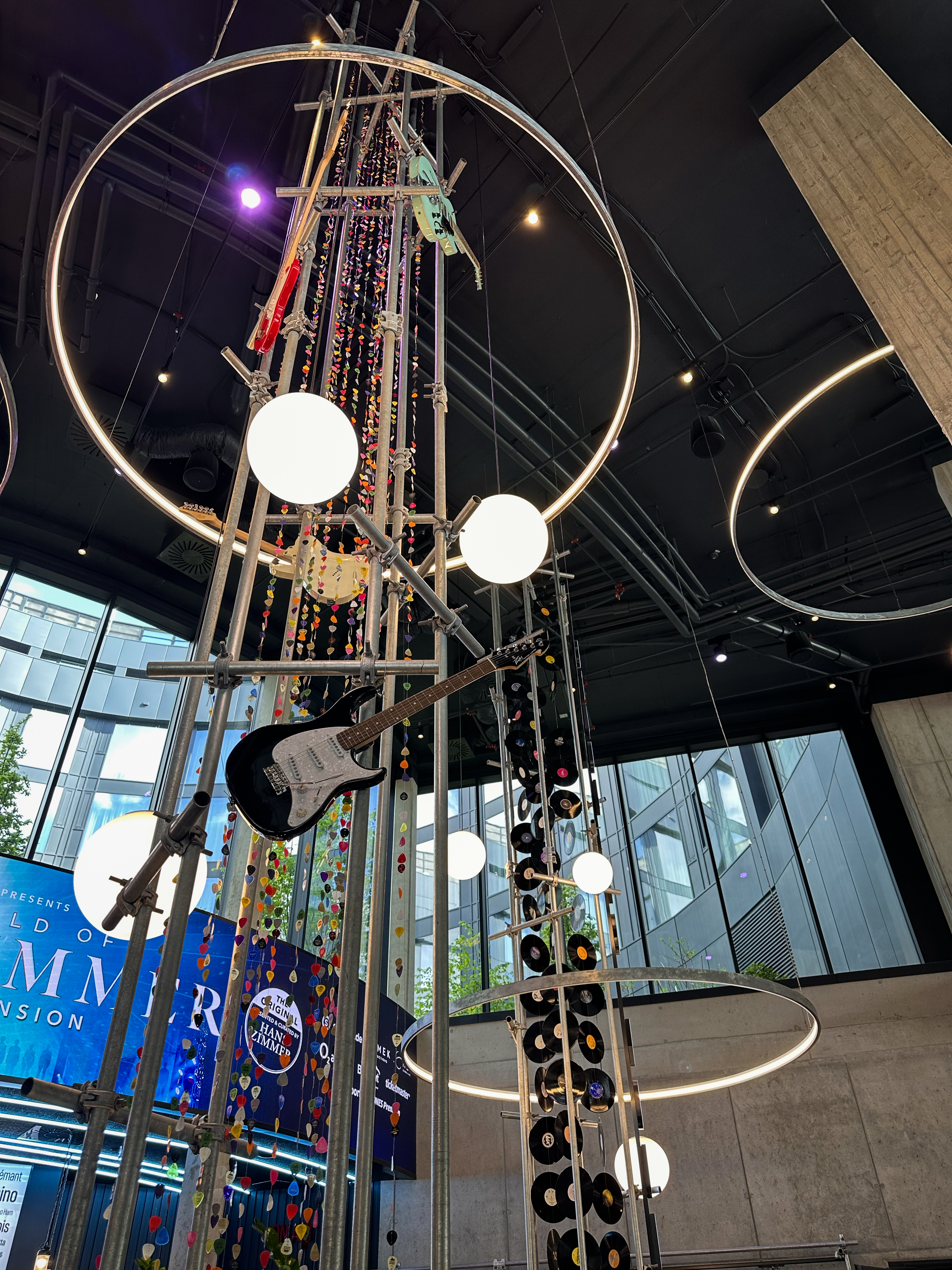
As it’s right at the O2 Arena, this hotel really leans into the ‘concert venue’ theme, with music/stage decor everywhere. It was a big step up from the ultralight tent setup from the previous weekend in England, comfort-wise. It was just missing sheep and a fire pit.
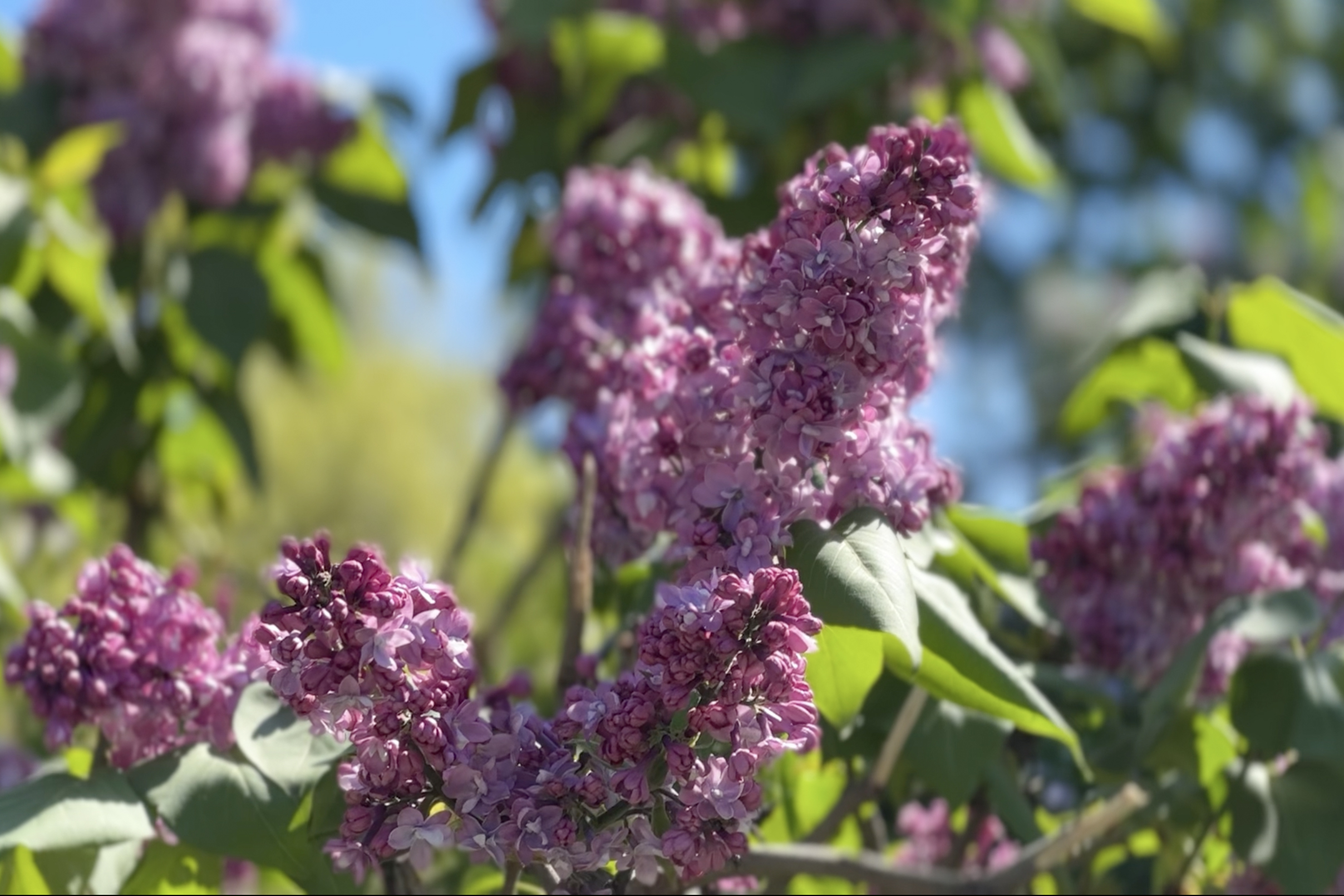
Not far from this hotel, there is a park that I hadn’t yet been to called Riegrovy Sady. It was on the way into the old city, so I planned to walk around there, then continue onward into the city. I don’t think my brain registered that it was springtime, so when I saw the colorful flowers blooming all around the park, I was pleasantly surprised! (:
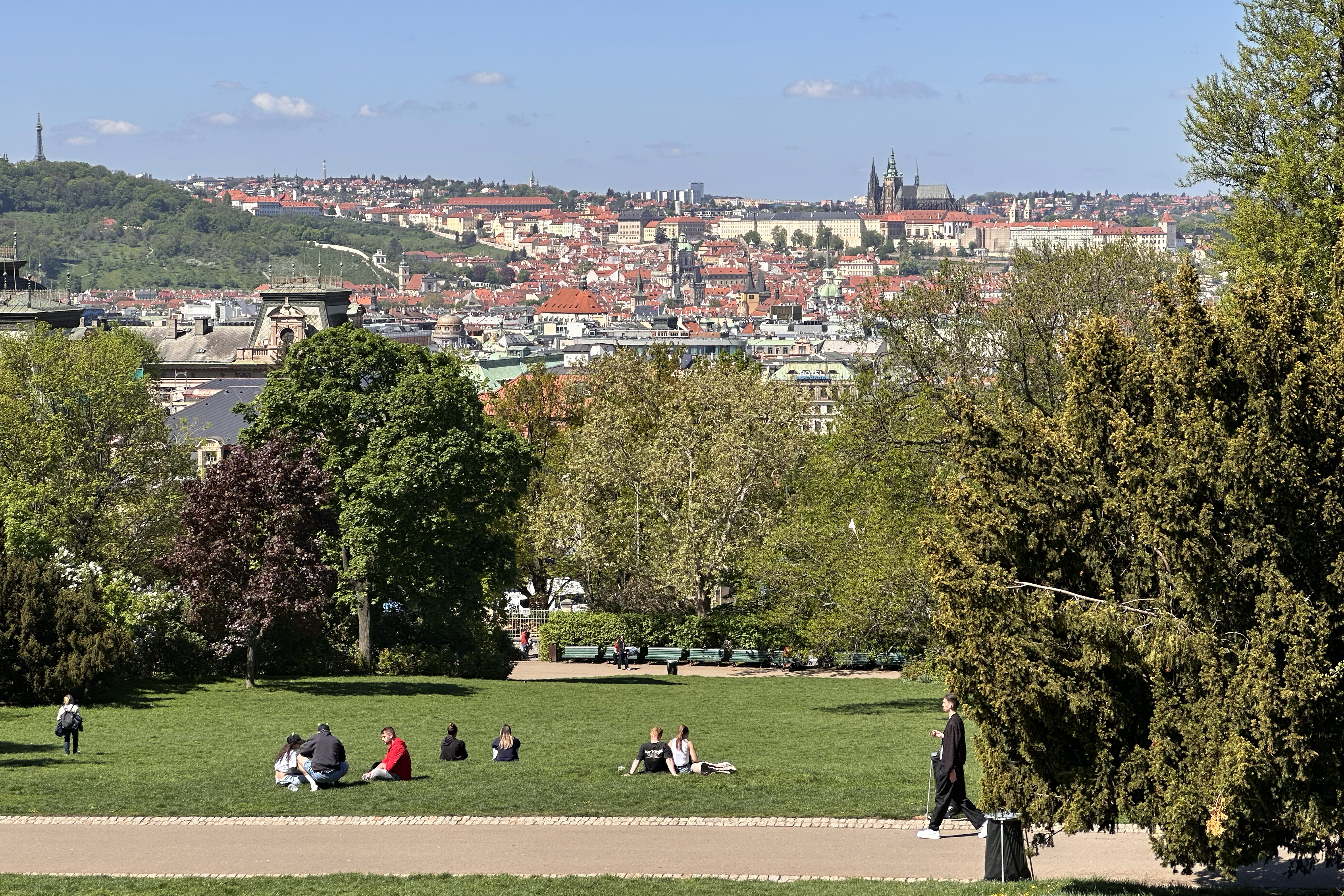
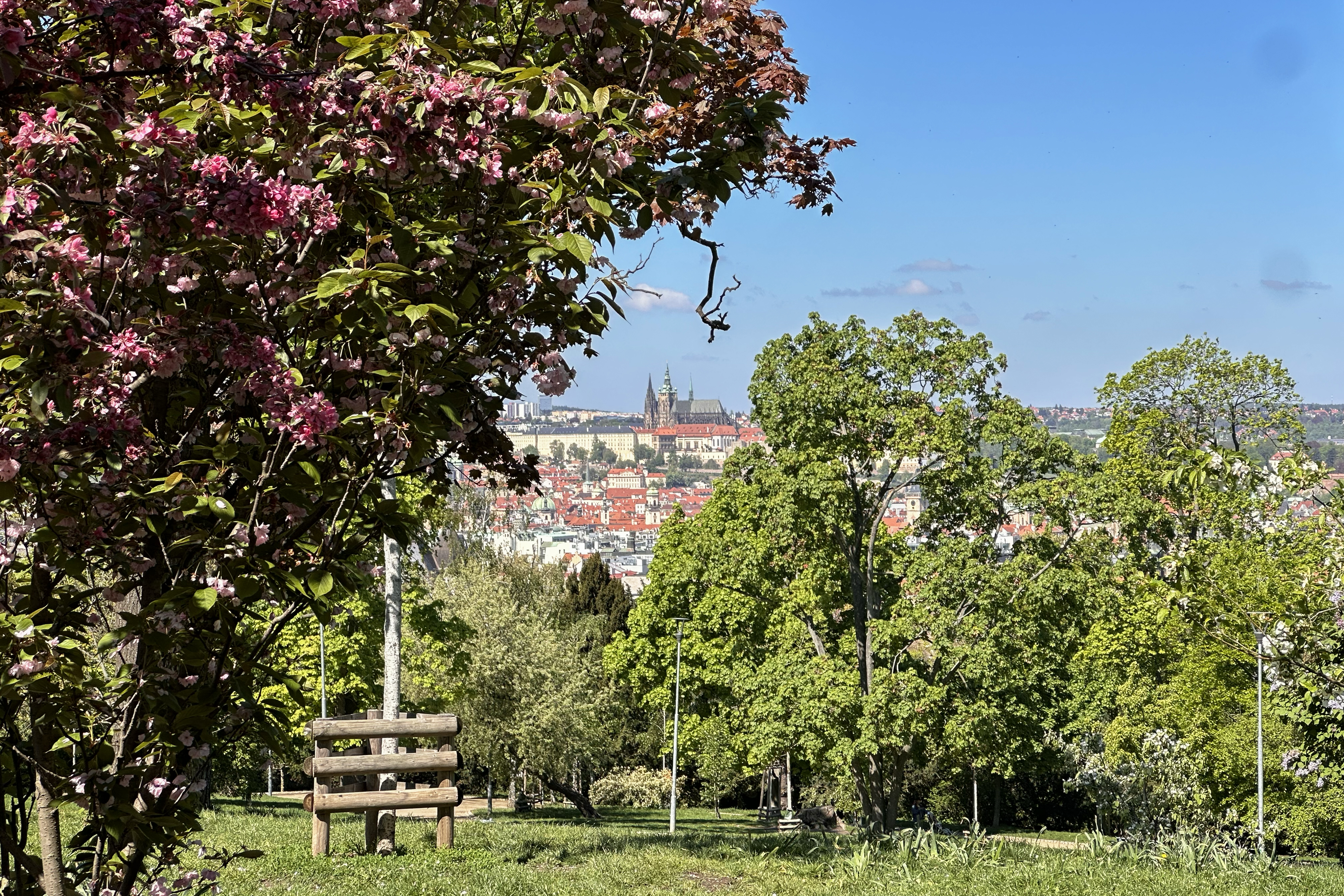
Riegrovy Sady sits on a hill, with sweeping views over the old city and across the Vltava River to Prague Castle. It sits in Prague’s Vinohrady district, and it was once home to vineyards (vinohrady = vineyards…pretty straightforward). These were destroyed several centuries ago, though, during the Thirty Years’ War (1618-1648). They were then converted to gardens. In 1902, a few gardens were linked together and named after František Ladislav Rieger. Rieger was a key Czech nationalist nicknamed the “Leader of the Nation”. He also founded the first Czech encyclopedia! He passed one year later, at 84, so he lived long enough to see the park named after him, but not quite long enough to see the statue erected in his memory 10 years later.
From 1904-1908, it was properly established as an English-style public park. It was briefly renamed Smetanovy Sady during World War II (no…not for cream “smetana”, but for the Czech composer Bedřich Smetana). While he lived from 1824-1884, well before the war, this renaming was a form of resistance against Nazi Germany. He was known as the “father of Czech music”, and his poem, Vltava (also “die Moldau”) from his cycle Má Vlast, inspired resistance movements in Nazi-occupied Czechoslovakia. Original names were restored after the war, though. Today, the park is also home to open-air pub that can seat 1,200 people, and it celebrated its 120th anniversary last year! Throughout the summer, there are concerts, beer/wine/food festivals, and other events. In the winter, there’s also ice skating. Still, what it’s most known for might be its sunsets – more on that later in this post.
It was early afternoon on a Saturday, and many were out enjoying the fresh air and sunshine. I spent longer than expected there, including probably 10 minutes just taking videos of a tree (with Prague Castle in the background…in the third story on the Czech Instagram highlights!). My last meal had been some breakfast early that morning at the airport, so I was ready for a proper lunch (the only reason I dragged myself away from that peaceful place). I noticed that a fully gluten-free restaurant I’d bookmarked over a year ago was just a 15-minute walk away. Off I went!
The menu was clearly labeled with numbered allergens, so I’d recommend Restaurace U Agamy to anyone with dietary restrictions! The food was really good. Prague has changed a ton since I was first there in 2013, and it’s much easier to find gluten-free options these days, even outside of dedicated restaurants like this. I remember surviving study abroad on doner kebab salads and paper maps…a lot has changed in the last decade, everywhere. Smartphones have pros and cons, but I often take for granted how much it’s opened up solo travel. eSIMs, rideshare apps, AI language translators replacing pocket dictionaries, no more dealing with broken hotel printers for boarding passes before flights, offline Google Maps downloads, and online Google Maps searches including keyword searches for ‘gluten-free’ in restaurant reviews. Luxuries! I digress.
From there, I went to check in at the hotel. Unfortunately, I had some work to do that day, so I spent the rest of the afternoon/evening in the room, except for a quick run to the Lidl down the road. I’d recommend it as a place to stay if you can get a good deal or have points, otherwise there are more cost-effective options closer to the old city! They just might not have lifts/elevators, which is one thing that hasn’t changed much in the historic center since 2013. (:
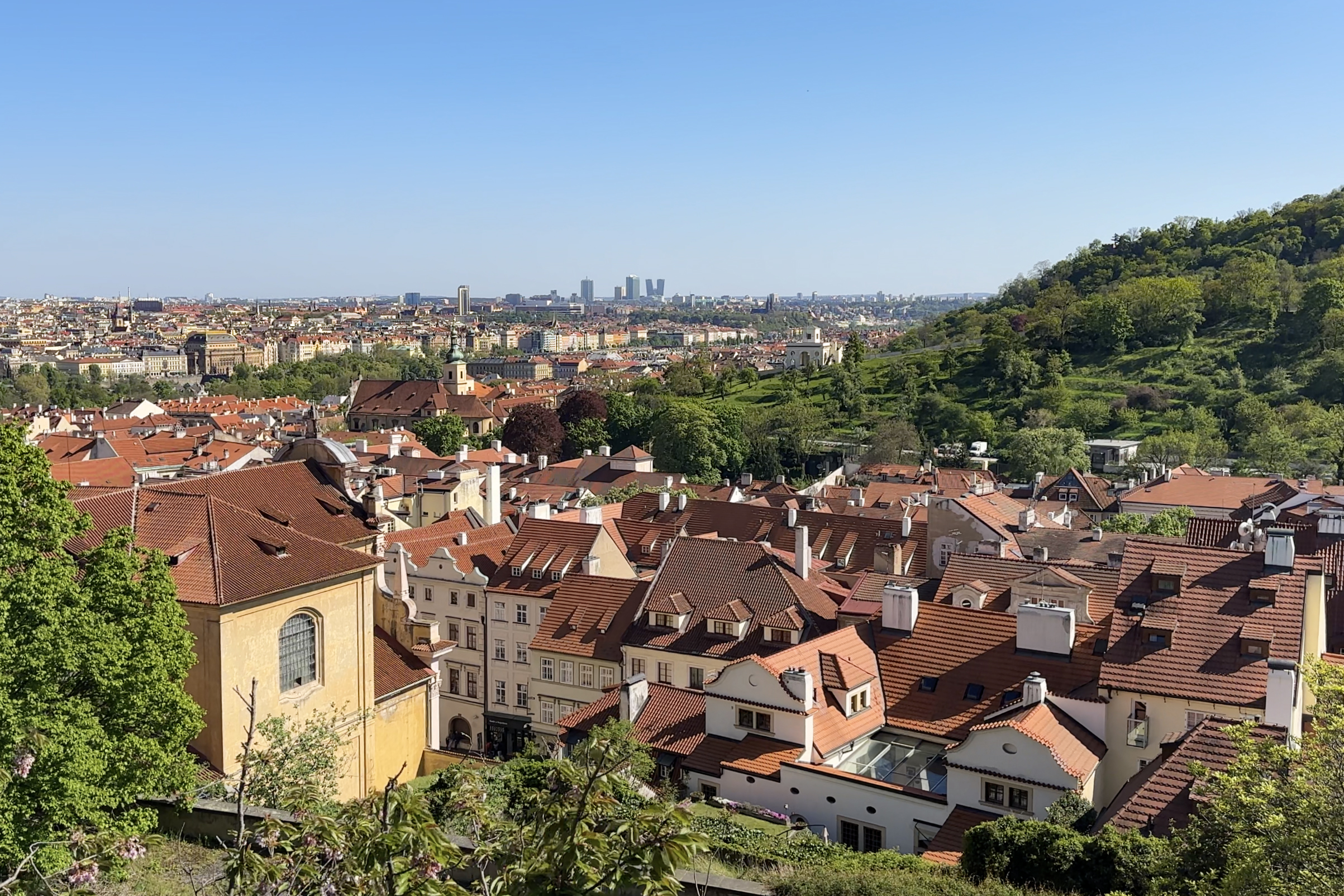
The next morning, I caught up on some cumulative sleep deprivation, finished up some work and school things, and headed to Prague Castle to begin an afternoon of tourism. It had been a dozen years since I’d seen many of these sights. For the study abroad program, we’d stayed mainly in Wenceslas Square, and we had museum visits and classroom time during the day. The program was ‘Economy and Policy’ in the Czech Republic (as it was called at the time) and Poland, so it also included educational things outside the city like Kutná Hora, Český Krumlov, and the Śkoda factory. I’d never heard of this car brand before the trip, so I learned it as ‘Shkoda’ (Š makes a “sh” sound), while others referred to it as Skoda in English. I probably sound pretentious, but I still say it this way. (: I’ll include info about these and other locations in Czechia at the end of this post (including the usual end-of-post map).
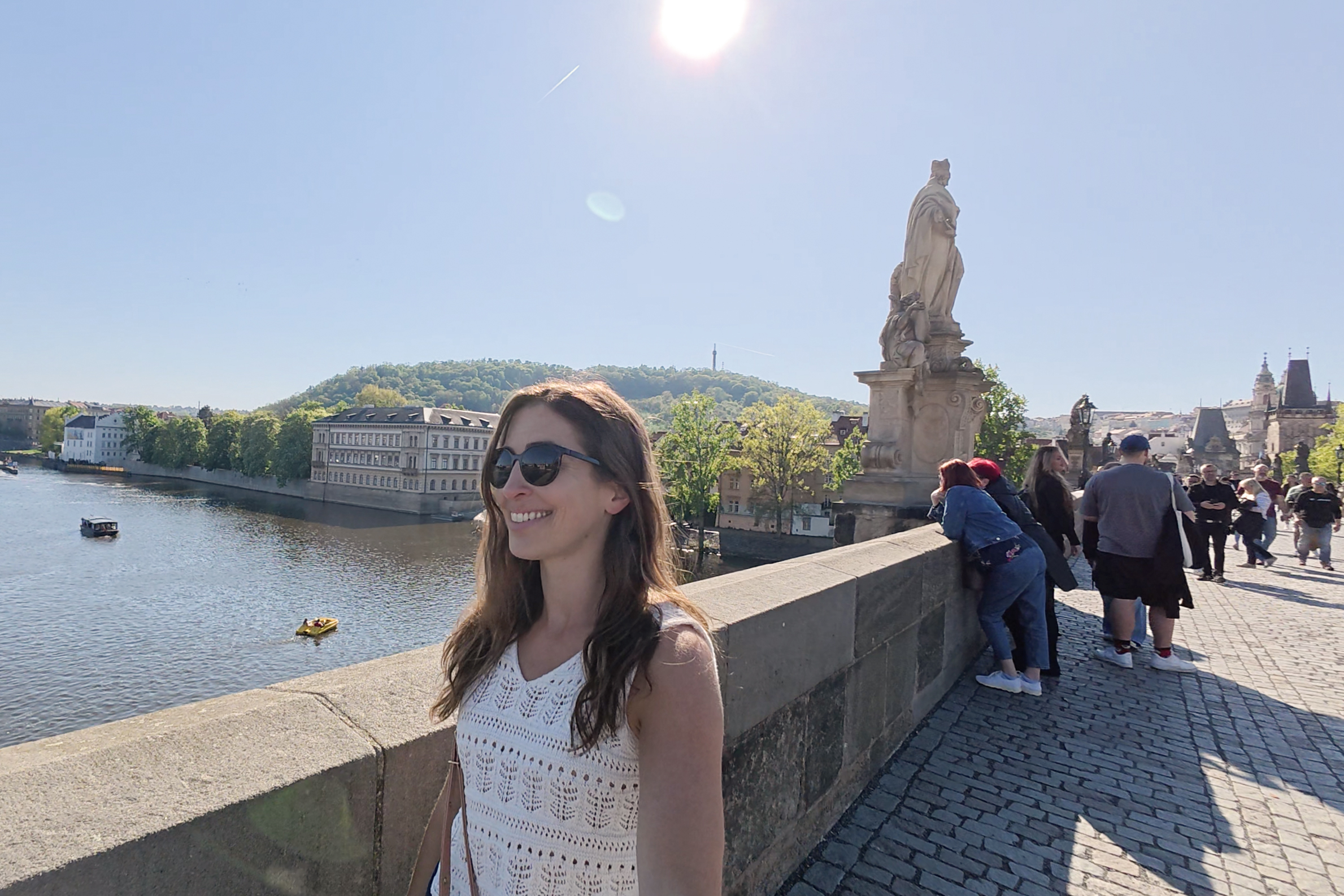
From Prague Castle, I headed down to Charles Bridge. My uni bestie and I have a 7-hour time zone difference and are both a bit chaotic, so our texting is sporadic. She happened to text right when I was walking onto the bridge. She had been on that study abroad trip in 2013 and hadn’t been back since, so I FaceTimed her from there! This is adulthood: having long-distance friendships where you have virtual catch-ups from random places with impromptu calls…like the old days, before texting. Nostalgic digressions again.
Charles Bridge, or Karlův most in Czech, is said to have begun construction at a very precise time: 5:31am on July 9, 1357, when Charles IV laid the first of 60,000 stones (he didn’t proceed to do the rest himself). Apparently, he was into numerology and thought this palindromic date would bring strength to the bridge (1357 9/7 5:31 … 135797531). It was completed in 1402 and wasn’t named Karlův most until 1870. Previously, it had been called Stone Bridge (Kamenný most) or Prague Bridge (Pražský most). It was designed by the same architect (Peter Parler) who designed the St. Vitus Cathedral within Prague Castle. Six years ago, a 20-year restoration project began on the bridge. They’ll be inspecting each of those 60,000 stones!
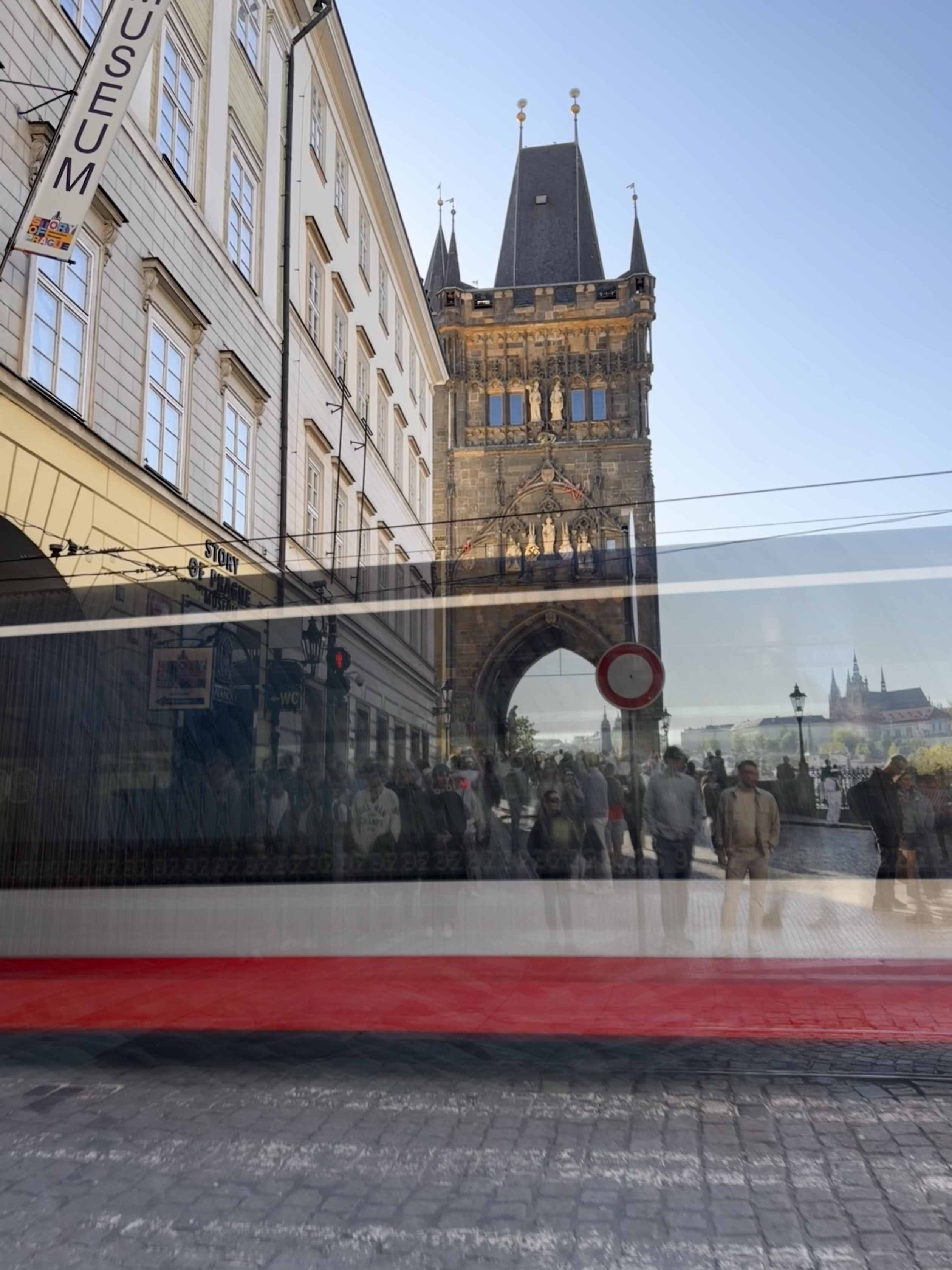
This is typically one of the most congested tourist areas in the city, and during the peak summer season, people are packed like Rockefeller Center at Christmas on that bridge. This day wasn’t too bad!
After taking in the views from there, I wandered through the old city toward the famous square (Old Town Square, or Staroměstské náměstí) with the clock tower (Orloj). This is one of the most recognizable parts of Prague and often hosts seasonal markets (including Christmas markets, along with Wenceslas Square). Easter had been a full week prior, so I was surprised to see Easter markets still in full swing! Apparently. they run for three weeks, from 2 weeks before Easter Sunday to 1 week later. I managed to catch them on the last day! Considering that Christmas markets only run for 5 weeks, these are up for over half that time, so they’re also a big deal.
While the timing of Christmas markets is pretty consistent, Easter can be any Sunday from March 22nd to April 25th, depending on when the first Sunday following the first full moon after the Spring equinox lies. If you’re planning a trip to see these, check the opening dates! For 2026, they will be from March 20th to April 12th. They tend to be open from 10am to 10pm daily, with musical performances (typically ~4-7pm), wooden huts selling local crafts and foods, and plenty of Easter-themed goodies. A great souvenir is a hand-painted Easter egg, some of which are sold as Christmas ornaments! The most popular Christmas market towns/squares around Czechia seem to have the largest Easter markets, as well. Some areas to Czech out (sorry) are Old Town Square and Wenceslas Square in Prague, Brno, Plzeň, České Budějovice, Český Krumlov, Ostrava, and Olomouc. See the end of this post for more info on two of these spots!
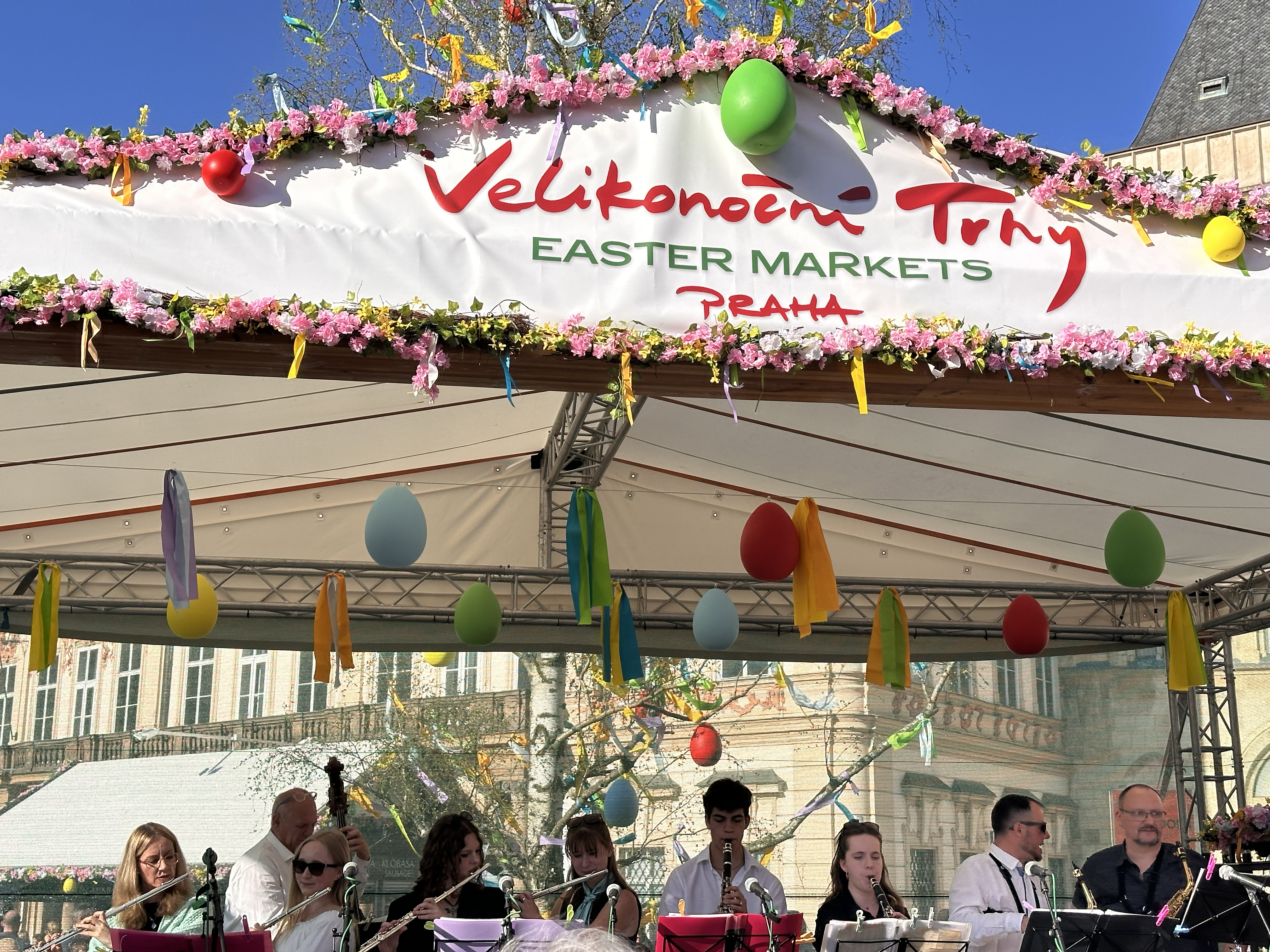
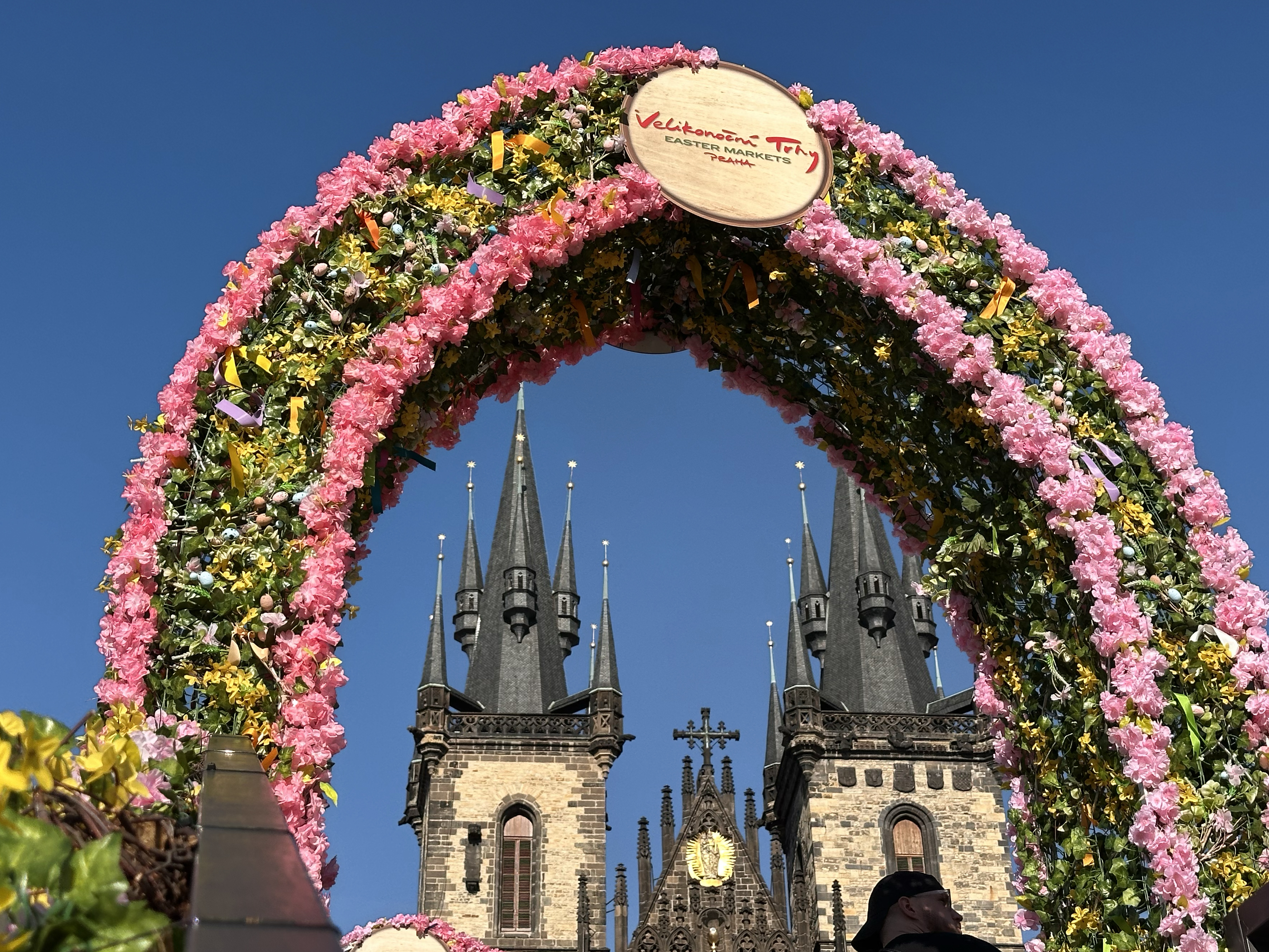
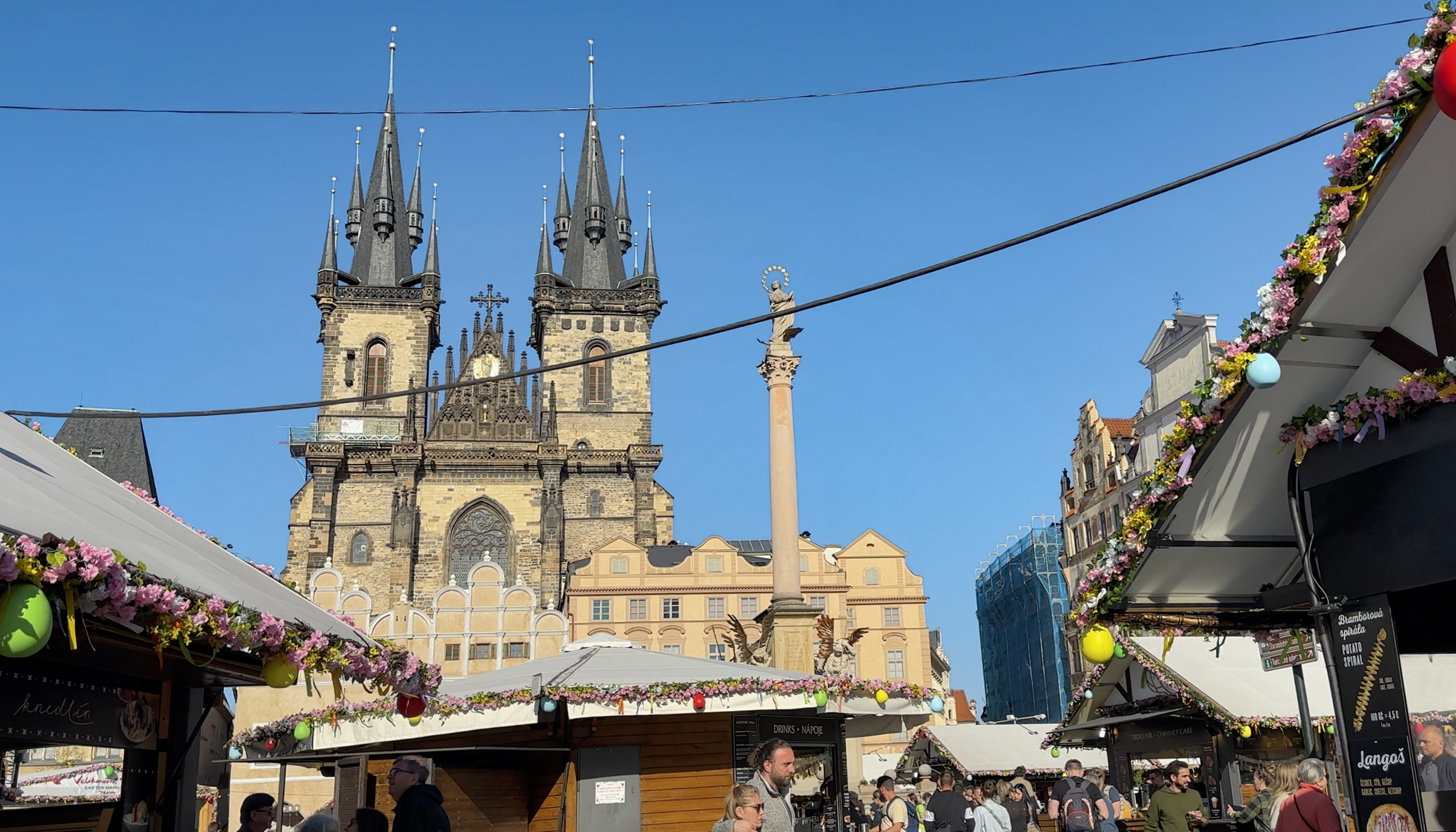
Not far from the stage where musicians were performing traditional songs in traditional clothing, there was something called the “Observation Bridge”. It looks a bit like a stationary parade float. There are flowery arches on both sides to enter, and it has a nice view overlooking the markets and square from a bit higher. It’s free, but if it’s not enough for you, there’s always the Old Town Hall Tower, which is high enough to even have views of Prague Castle in the distance. This is usually open from 9am-8pm, except from January to March when it’s 10am-7pm.
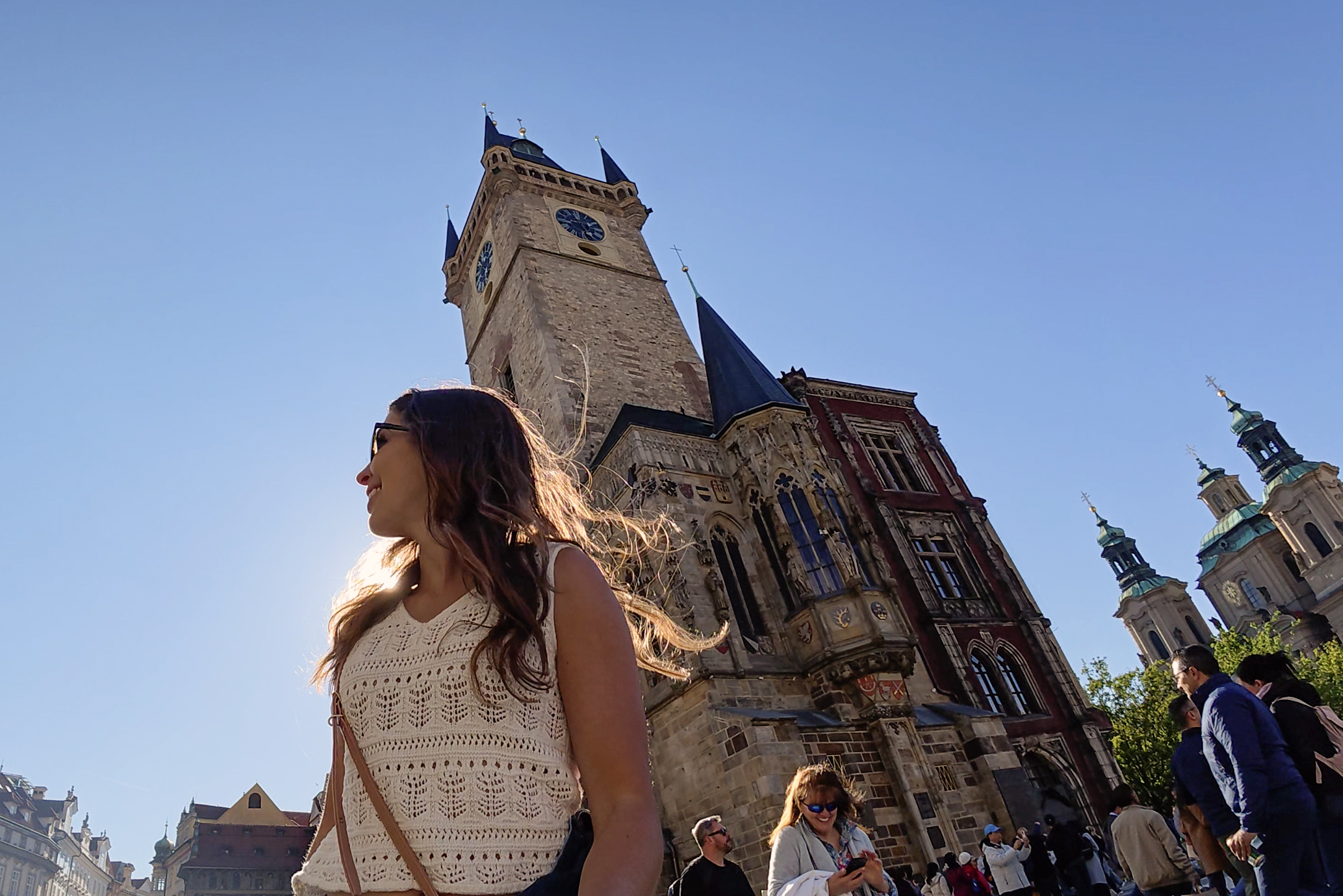

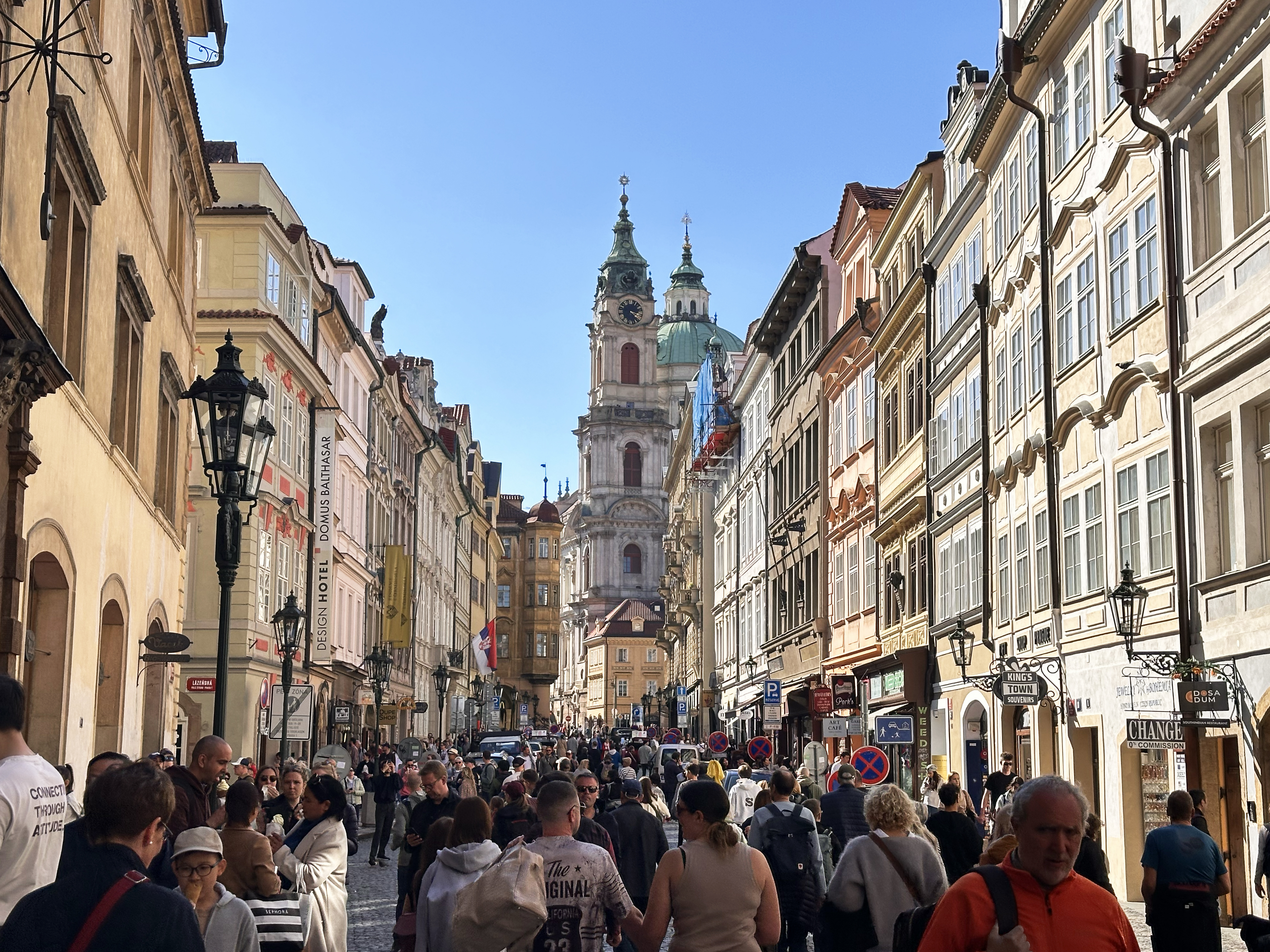
Whether there are holiday markets when you go or not, it’s still worth seeing the square and clock tower. Every hour from 8am to 11pm (double check these times before you go), the clock puts on a show, and the 12 apostles appear. This clock was installed in 1410 and is the oldest astronomical clock in the world that’s still in operation.
The three main squares in Prague are this one (Old Town Square), Wenceslas Square (Václavské náměstí), and Lesser Town Square (Malostranské náměstî). I’d strolled through that last one on the way from Prague Castle to Charles Bridge and didn’t realize it until I was doing some research for this post.
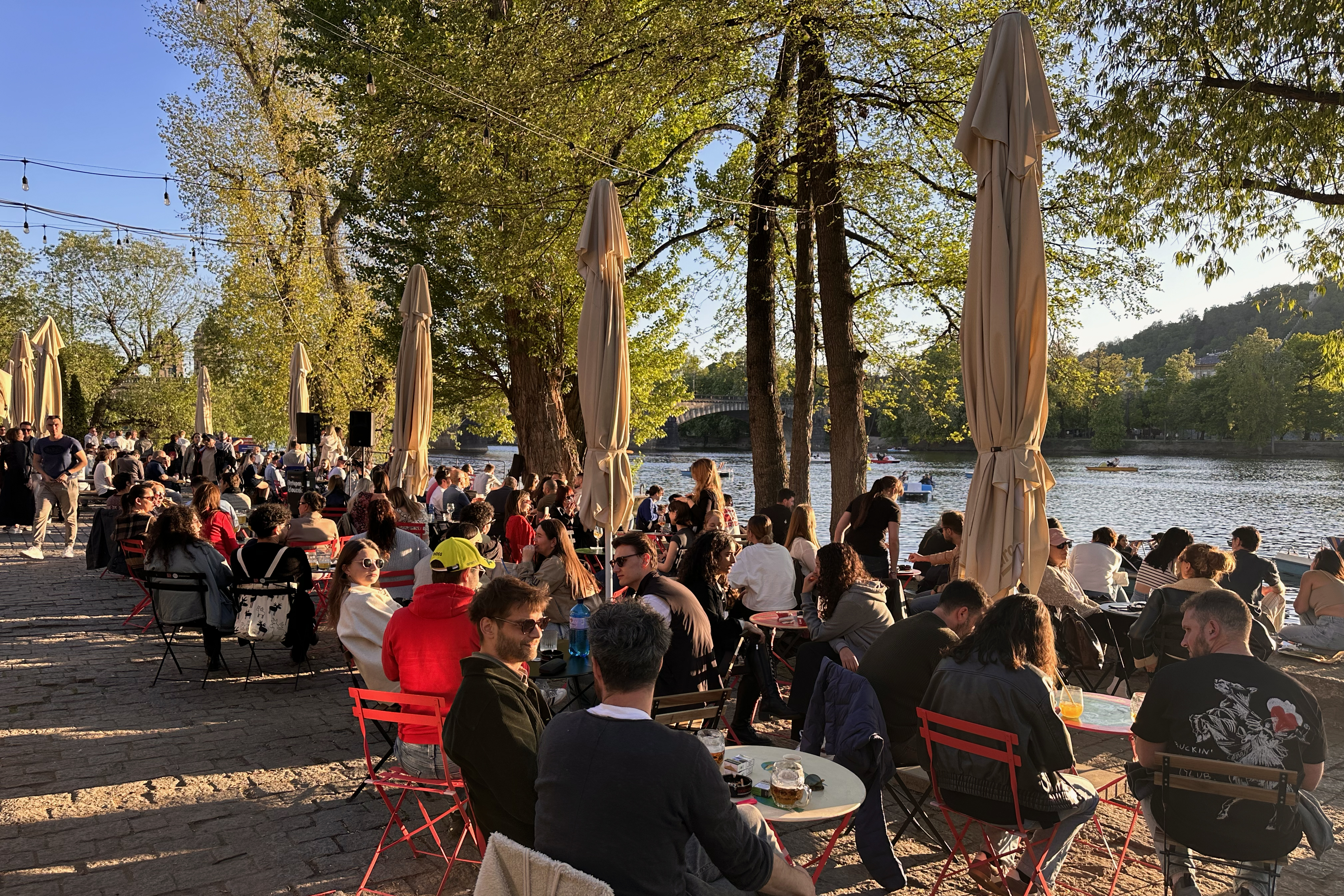
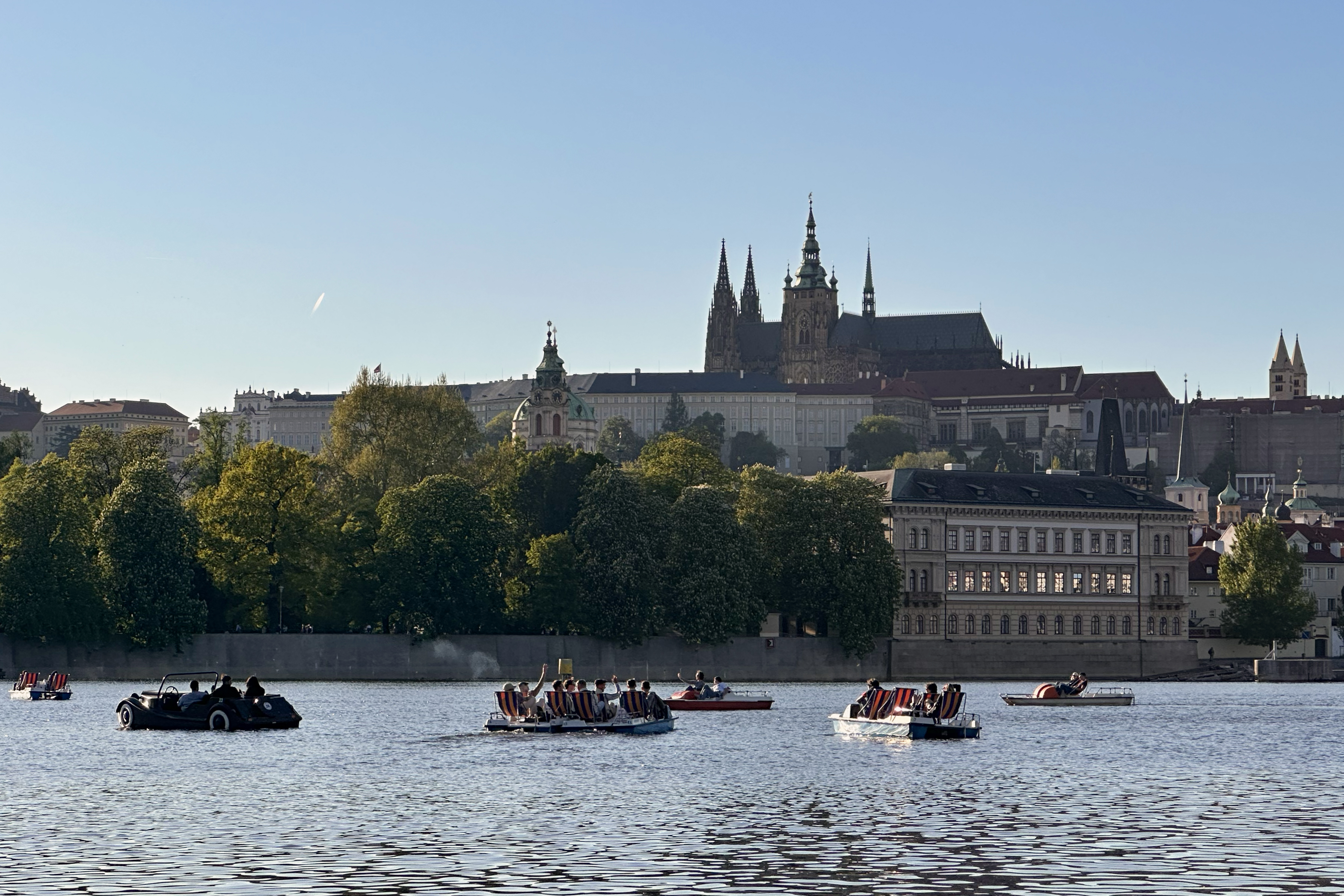
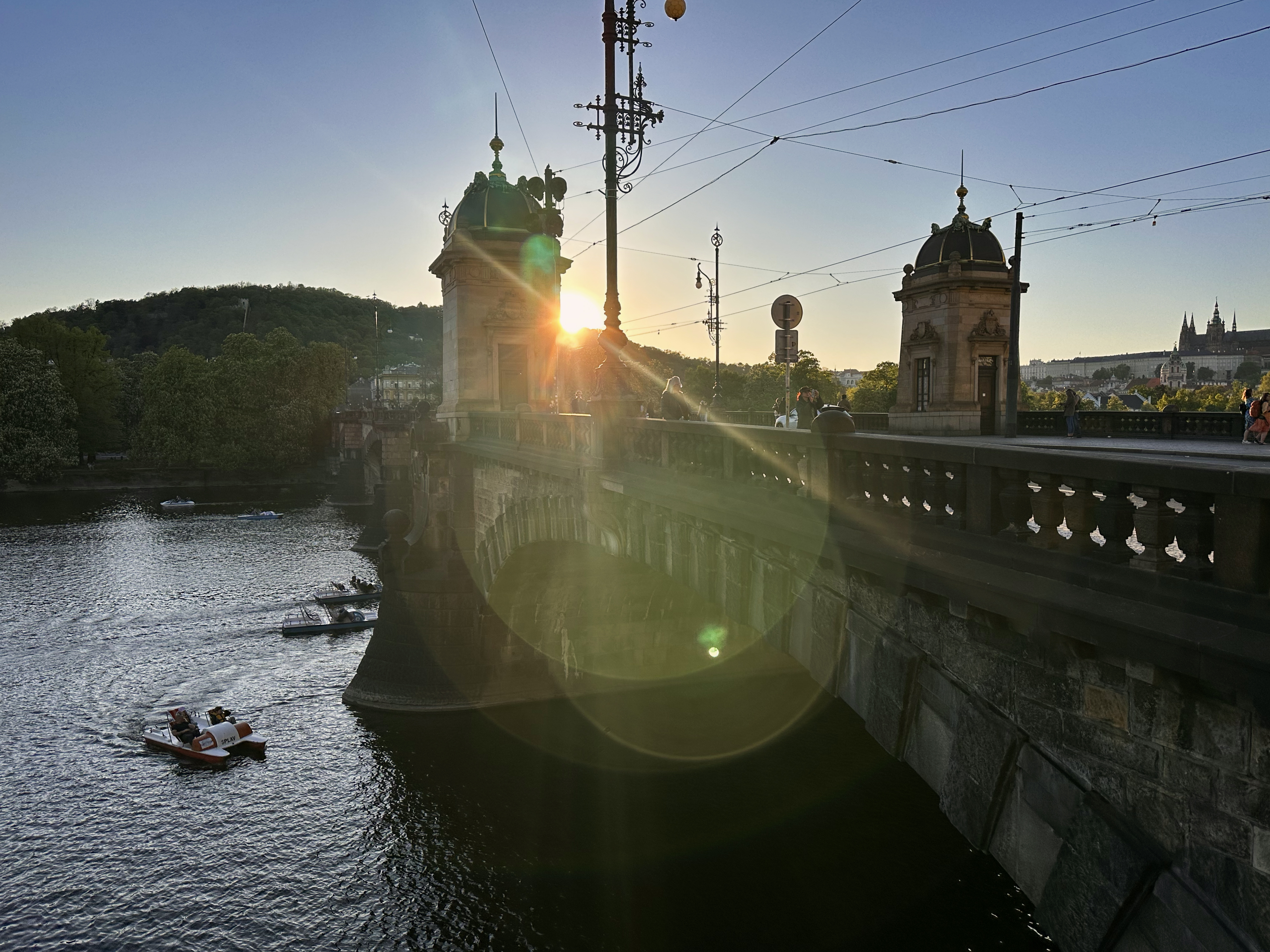
I retraced my steps back toward Charles Bridge to walk along the river path. It’s a beautiful place for a stroll on a sunny day, with boats available for rent (and floating bars to pull up to!) and views of Prague Castle. Not long into the walk, I heard some live music (a theme on these trips so far, and something I love stumbling across). It was coming from the Čapadlo Summer Terrace, which is apparently a ‘hidden gem’ beer garden, but if nice music is playing and you’re out for a river stroll, it’s not very hidden! There are self-service food and drinks for purchase. This isn’t something I’ve commonly seen, but it seems pretty typical in Prague, and I saw this on some of the floating bars along the river later in my walk. They have an Instagram page @capadlo_summer_terrace if you want to check out more of their performers! (:
I ended up just sitting on a rock right at the edge of the river, listening to the music and watching the sun approaching the castle on the horizon. I was probably there for over an hour, then I continued the walk along the path toward Tančící dům (Dancing House).
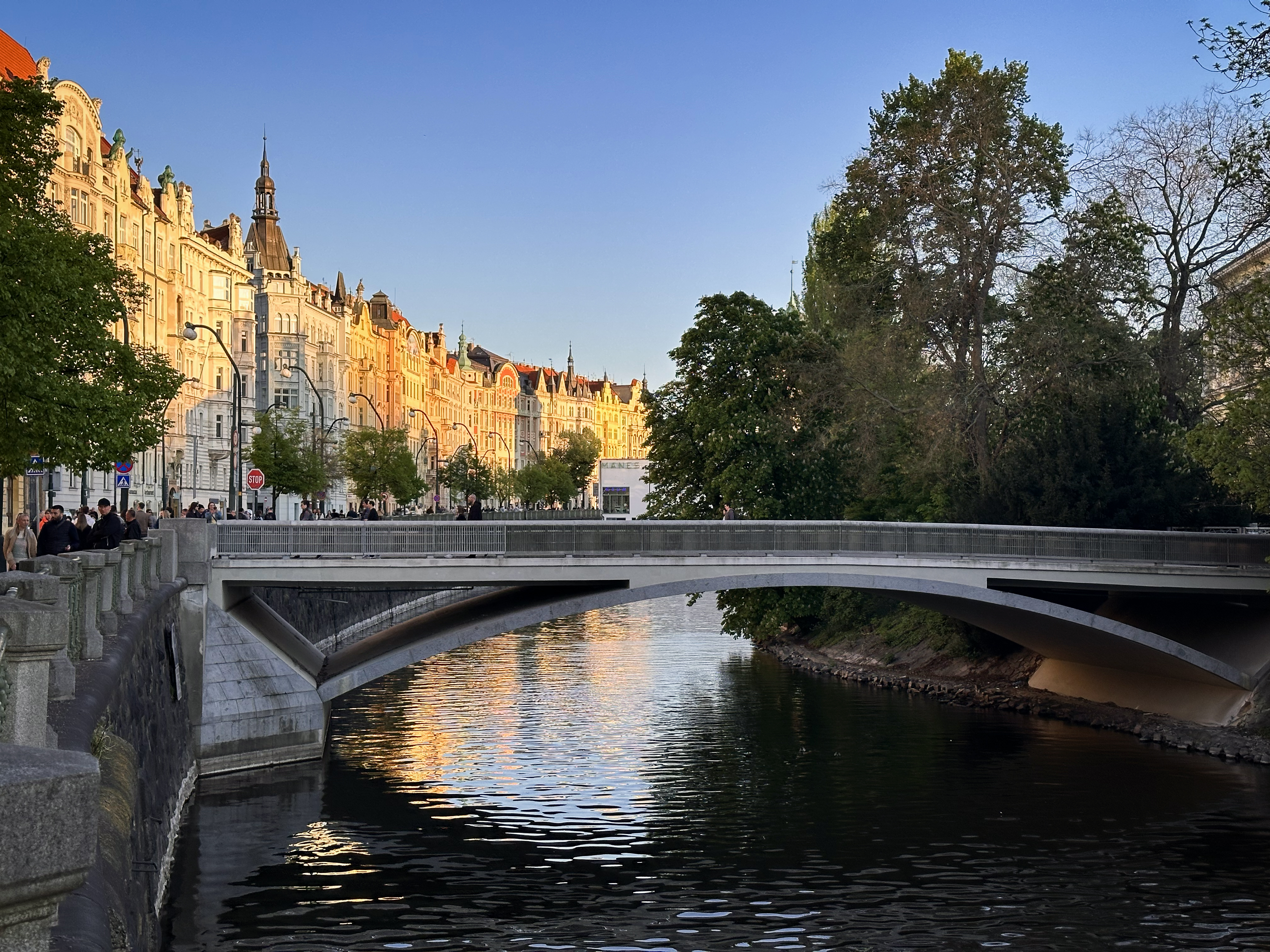
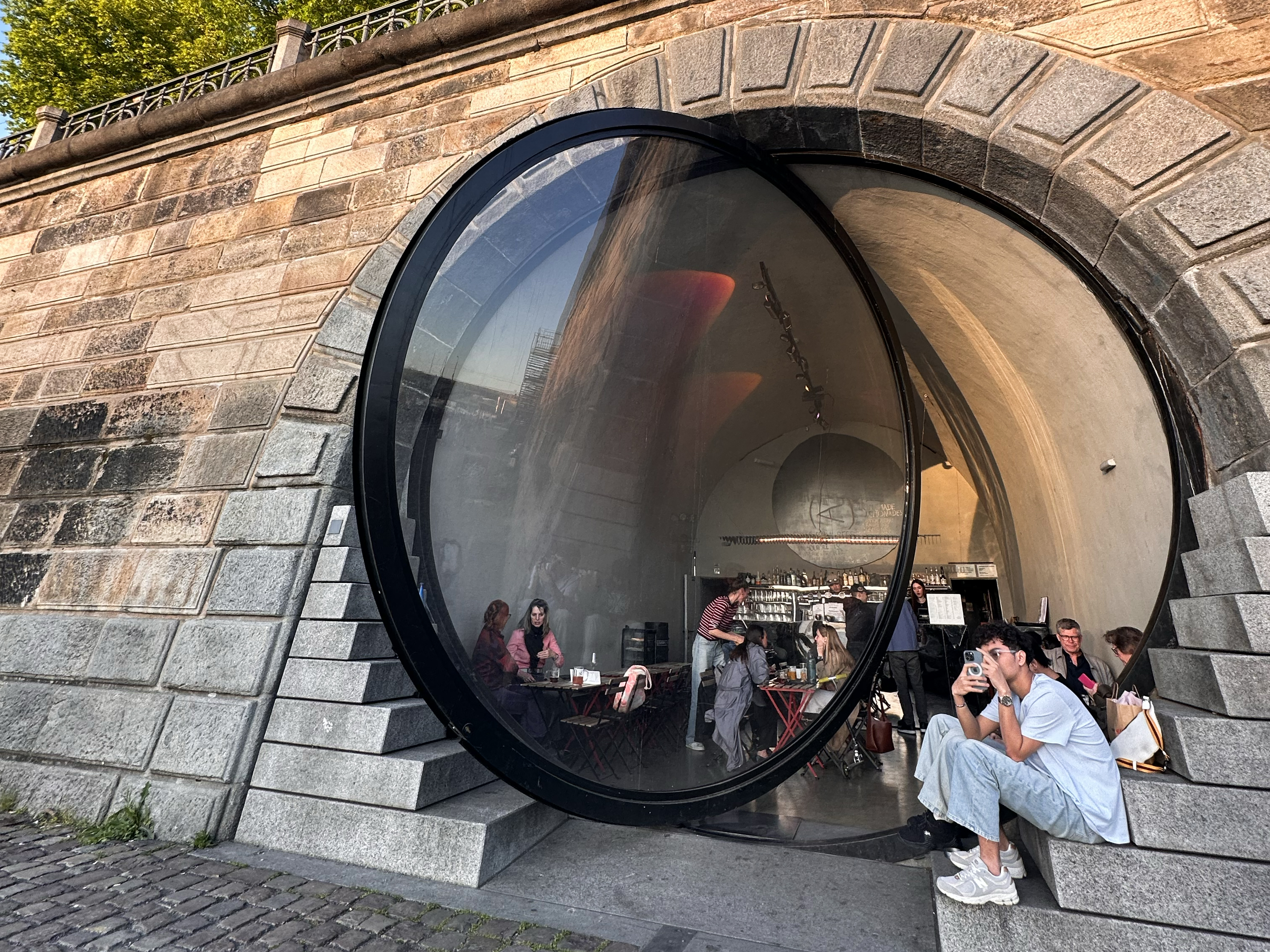
I had done that walk before during a city-wide scavenger hunt with the study abroad program, so I was surprised to see what looked like giant camera lens filters as doors/windows to cafés. A little research revealed that these were indeed new, as of 2019; there are 17 circular units designed with the goal of making the riverbank more accessible in the winter. In the summer, it the lenses/windows/doors/whatevers pivot to create open alcoves to sip coffee and people-watch.
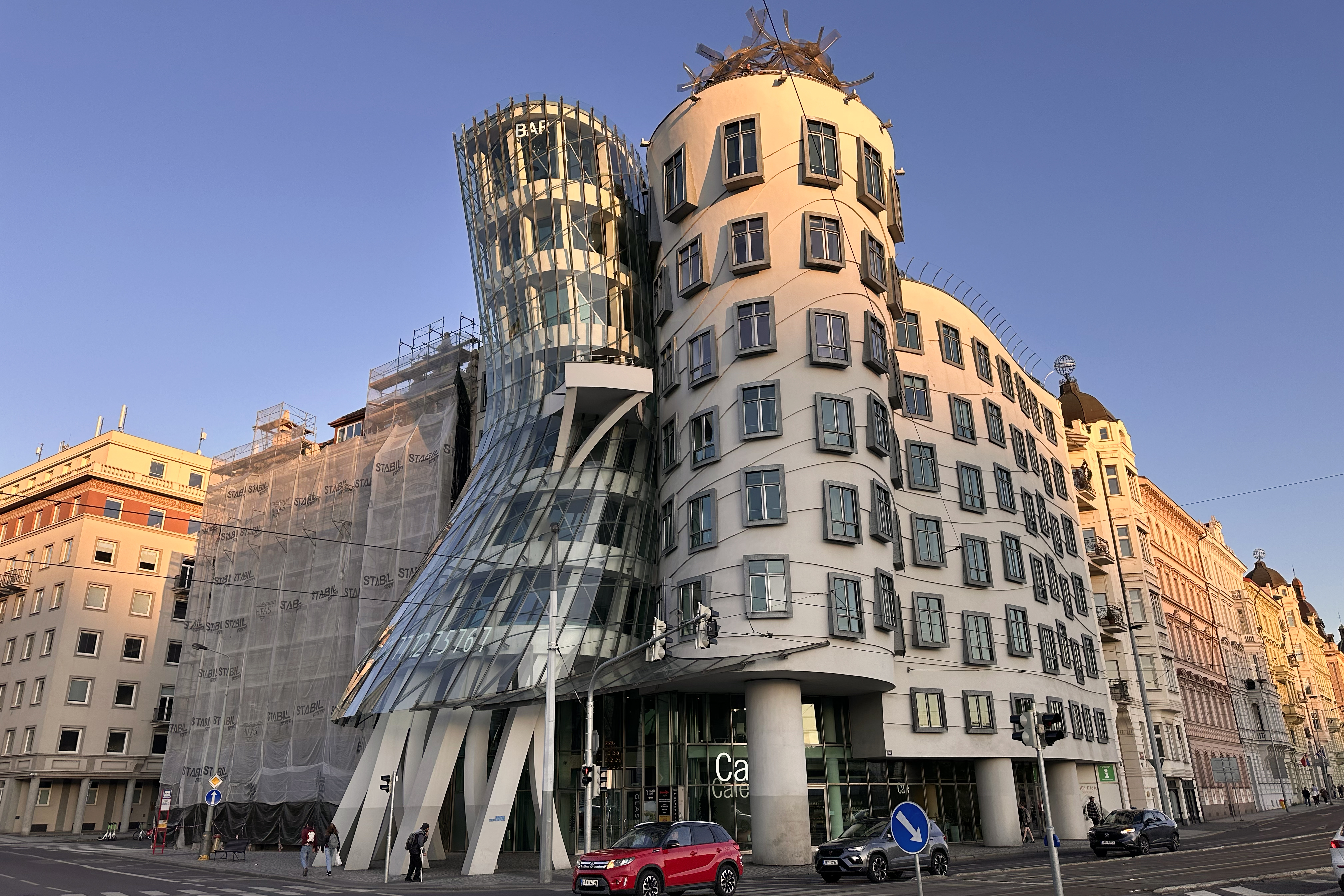
As I approached the Dancing House, my phone was dying, so I called a Bolt (very affordable in this city!) back to the hotel. The plan was to be up at the crack of dawn for a sunrise hike.
The High Point
I realized that reaching the summit by sunrise would mean a midnight departure. It was 2.5 hours to the trailhead and ~2 hours to the summit, with the sun rising at 5:37am. I’d need a bit of buffer to set up camera gear etc., so that would mean a 5am summit. I was back from to the hotel at around 9pm, so that would have meant ~1-2 hours of sleep, all things considered. I bailed on that idea, as the weather looked clear all day, and the gondola wasn’t running yet (so no need to beat the crowds from that). If you’re including this hike in your Czechia plans, it could make sense to stay somewhere a bit closer to the trailhead (in Pec pod Sněžkou) the night before.
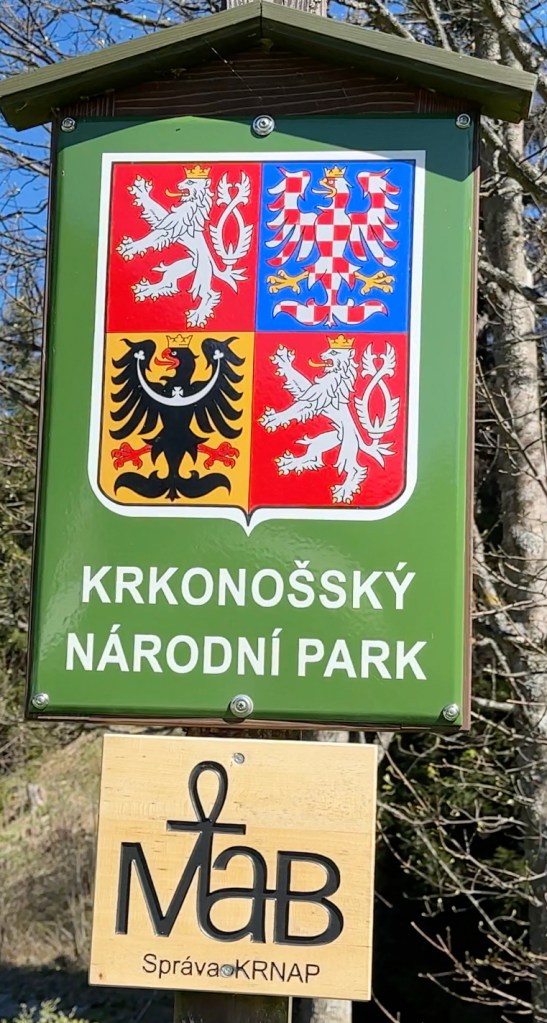
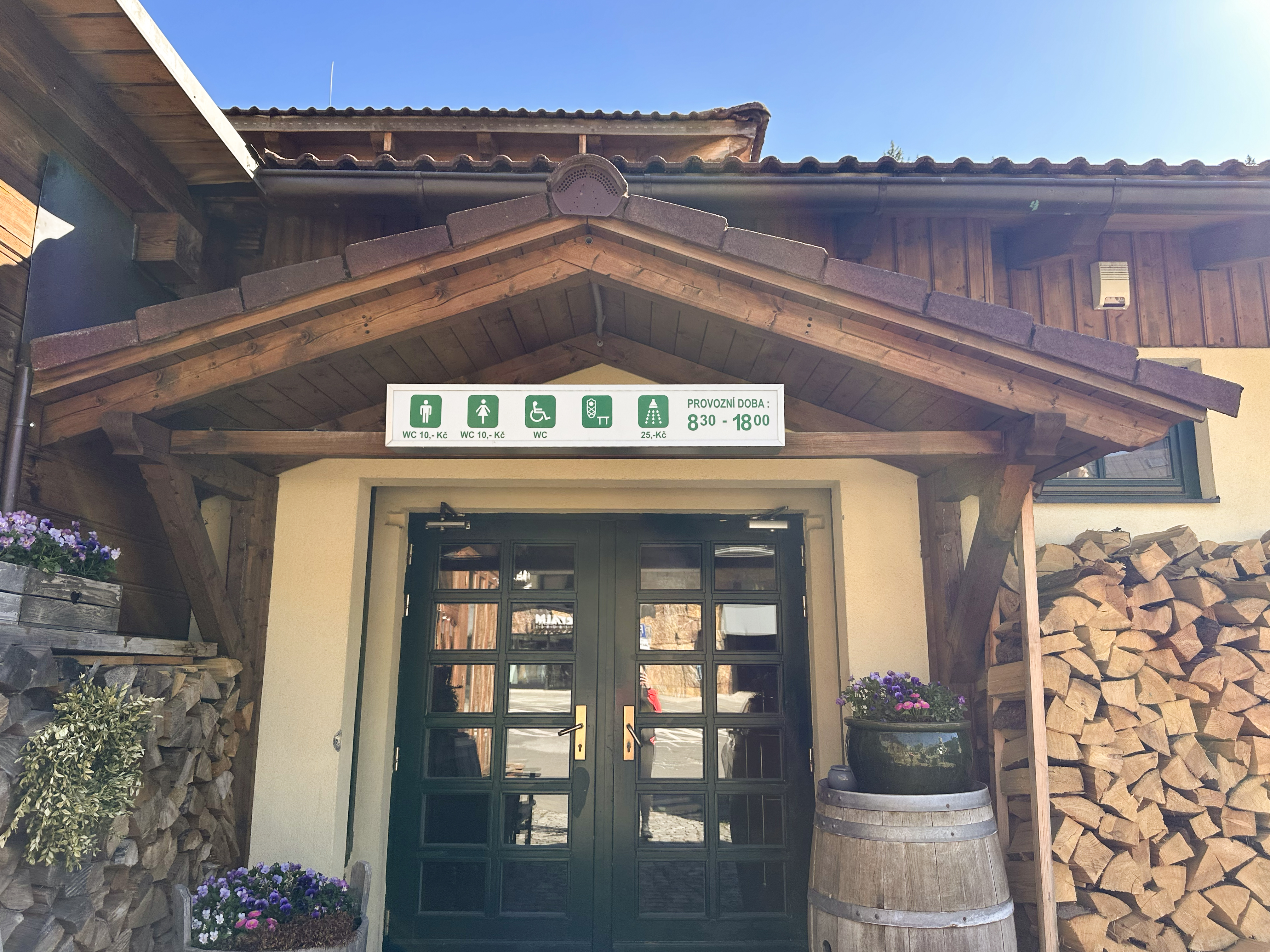
I got up at around 6:30 and was out the door half an hour later. Unfortunately, this wasn’t quite early enough to beat the Monday morning rush hour traffic in Prague, but it wasn’t too bad! Then the drive was more scenic, with many open fields and blankets of yellow flowers. After some time, Sněžka revealed herself in the distance. Unrelated fun fact: Sněžka and Snowdon have something in common – they both mean “snowy” hill/one. The Czech one includes the diminutive -čka, so it’s a bit cuter than Snowdon (with Snowdon’s knife-edge ridges).
There are a few parking areas, and given that it was a Monday in the off-season, finding a spot was quick. I parked in ‘Parkoviště P3′ on Google Maps. There are no restrooms right at the trailhead, but there were some a few minutes’ walk back down the road I came from, labeled in German for whatever reason (Öffentliche Toiletten). Note that they only take 10 kc coins, not even 20 kc, so be prepared with that. This was the case when I was there, at least. This and all relevant locations are included in the map at the end of this post.
The trail begins along a river right from the parking lot. AllTrails is slightly off at the beginning, sending you straight up the road, but it’s nicer to cross the bridge and walk along the dirt path on the other side, parallel to the road. It’s the intended pedestrian path, anyway. I was doing the Růžová Mountain Circular on AllTrails:
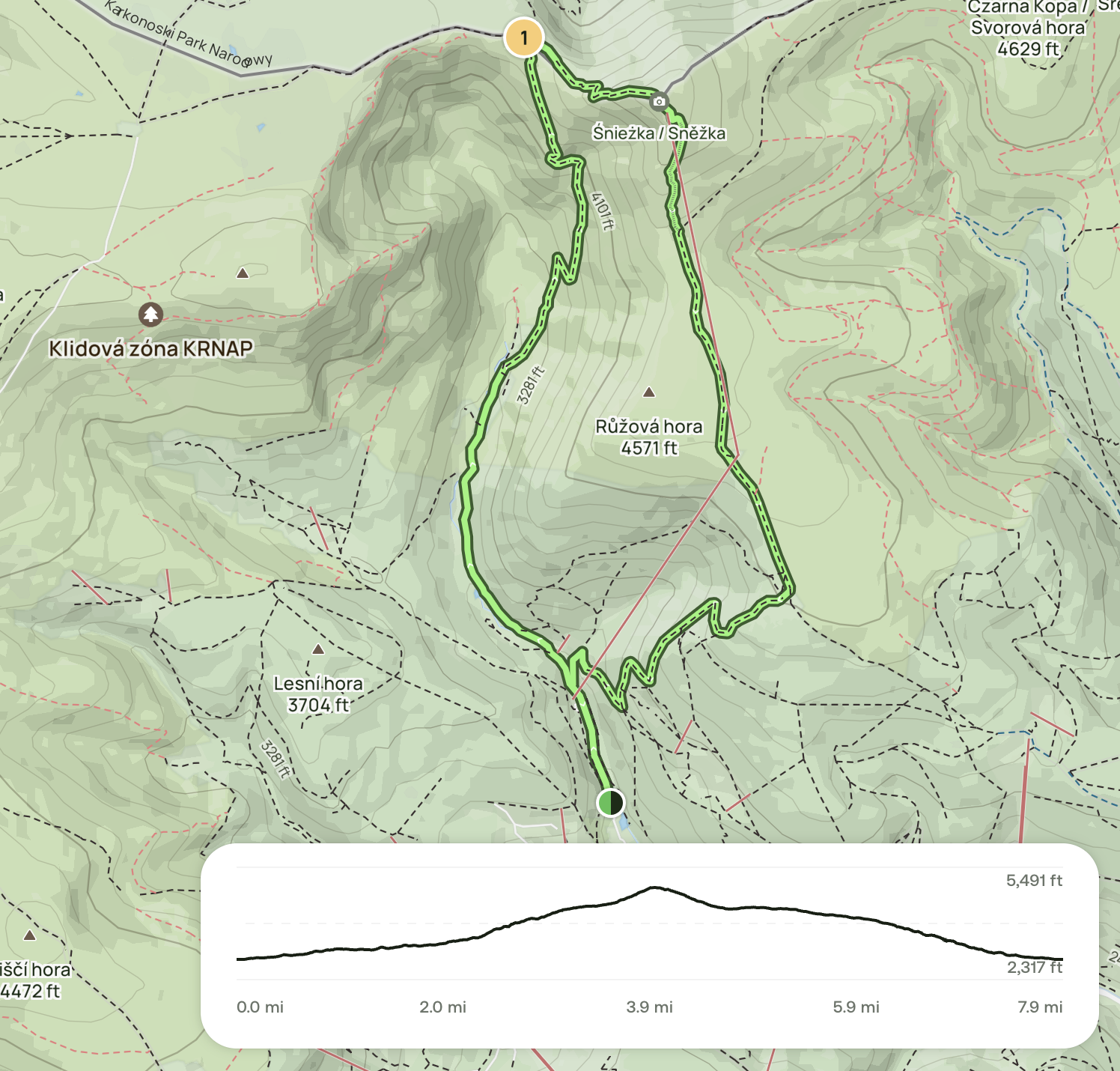
AllTrails suggests going clockwise, and I recommend this. I’ll get into the ‘why’ later in this post. A quick look at the map makes it seem very straightforward, with minimal forks in the trail, so I put my phone away without AllTrail’s wrong-turn alerts switched on. Oops. Maybe 10-15 minutes into the route, I’d started booking it up a continuation of the road I’d been on, completely missing the right turn across a bridge to continue on the proper trail. Extra warm-up, I guess! I realized it after around 5 minutes on the wrong path, so not much time lost there…just a bit of extra uphill. It was scenic, anyway (:
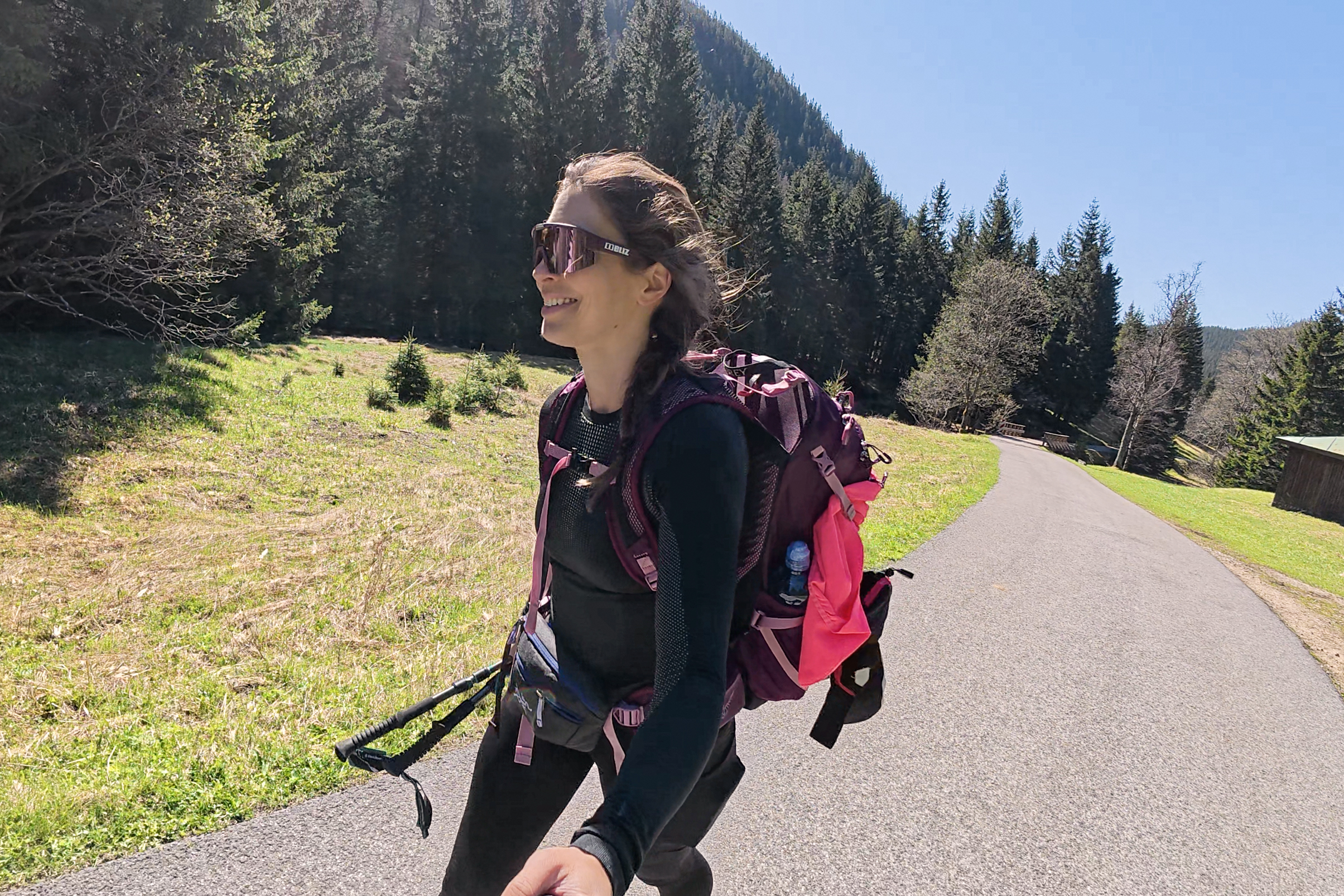
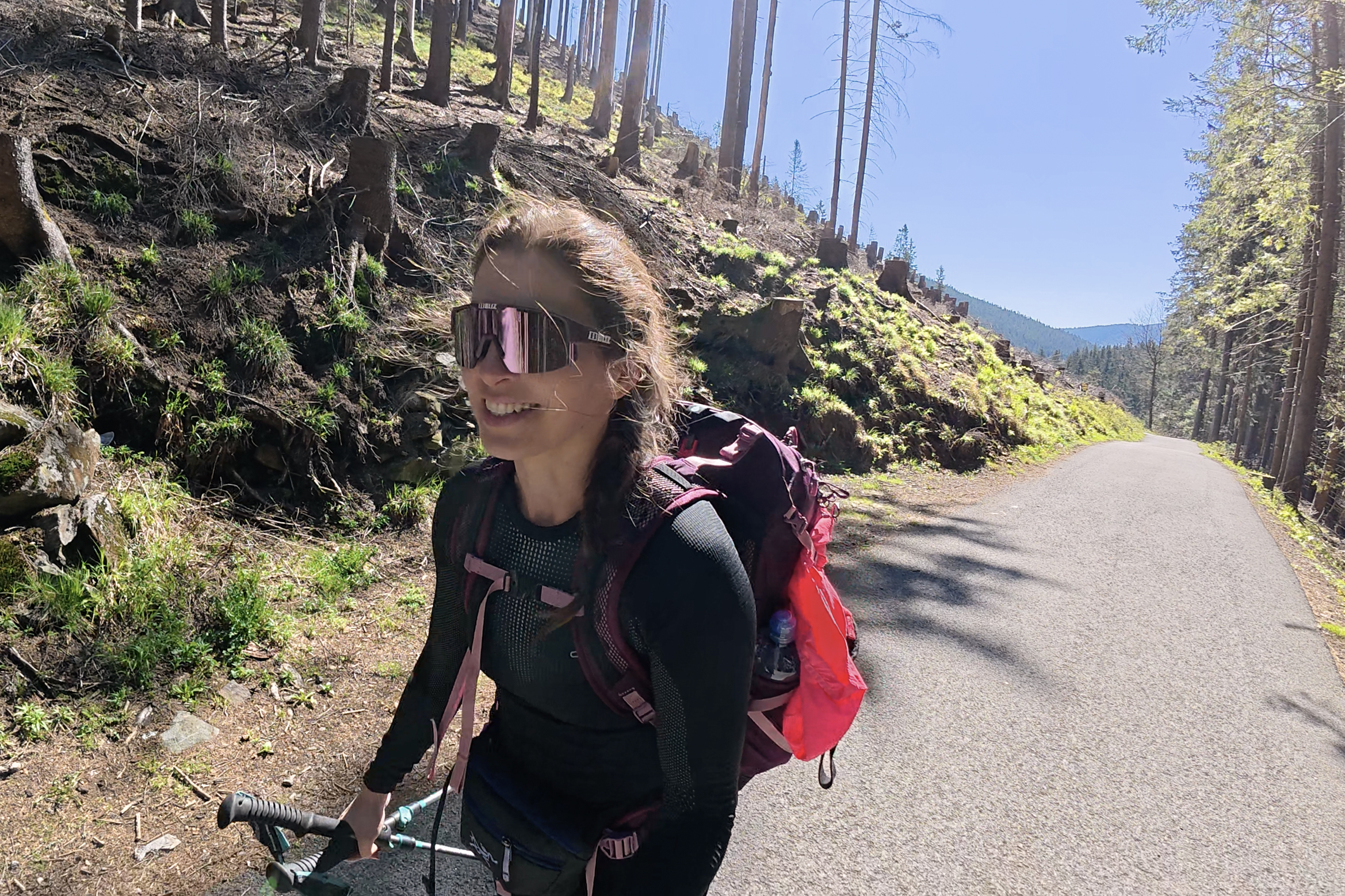
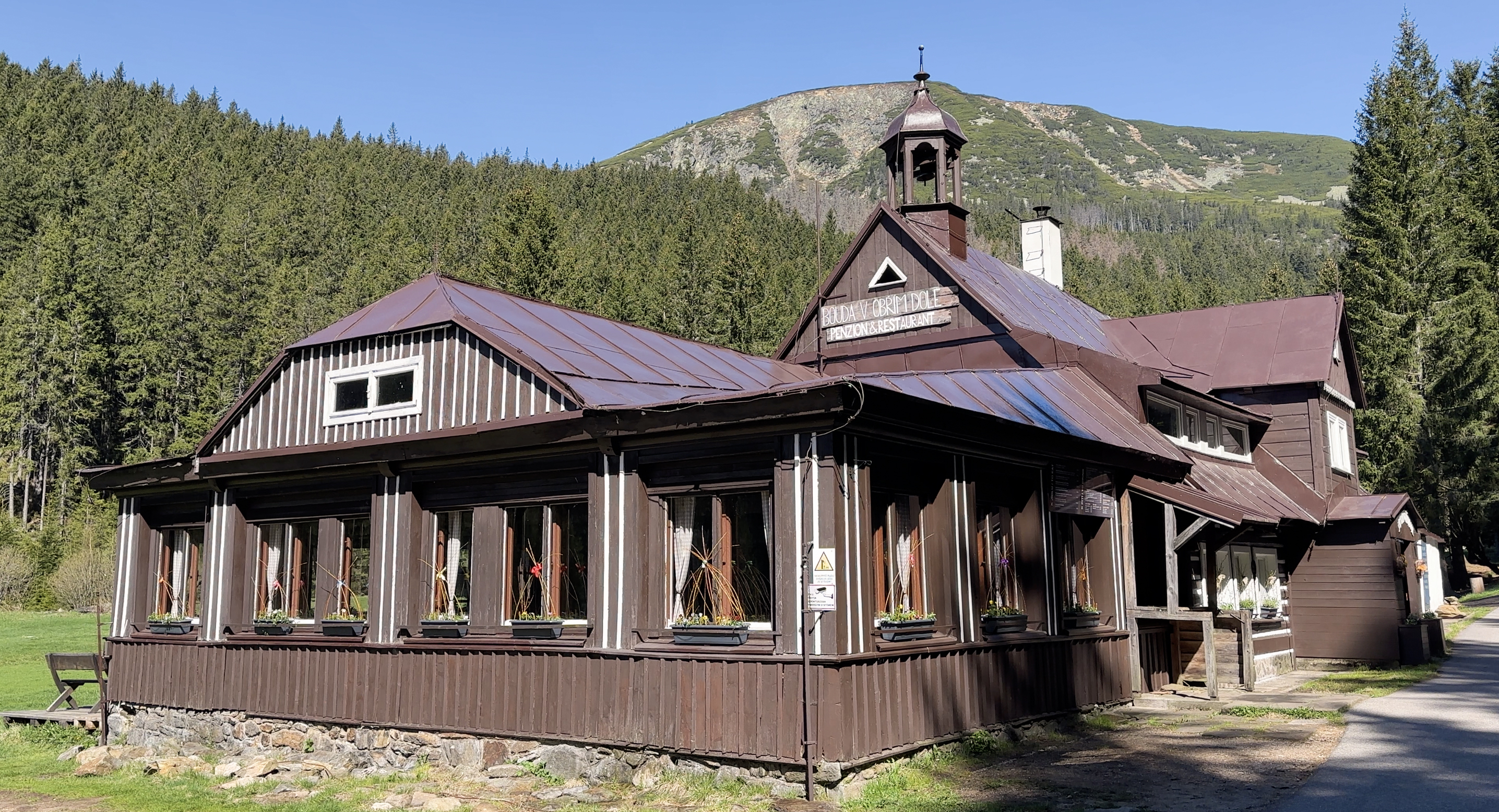
From there, the trail stayed pretty flat along a mostly paved path, passing restaurants and huts/hotels. I’d imagine this area is very lively in the summer months, but not much was open on a Monday in April. I ran into almost no one until the first hut with a large outdoor seating area, which (though closed) had been taken over by what appeared to be a school group. I stopped there for just a couple of minutes, for the cute animals!
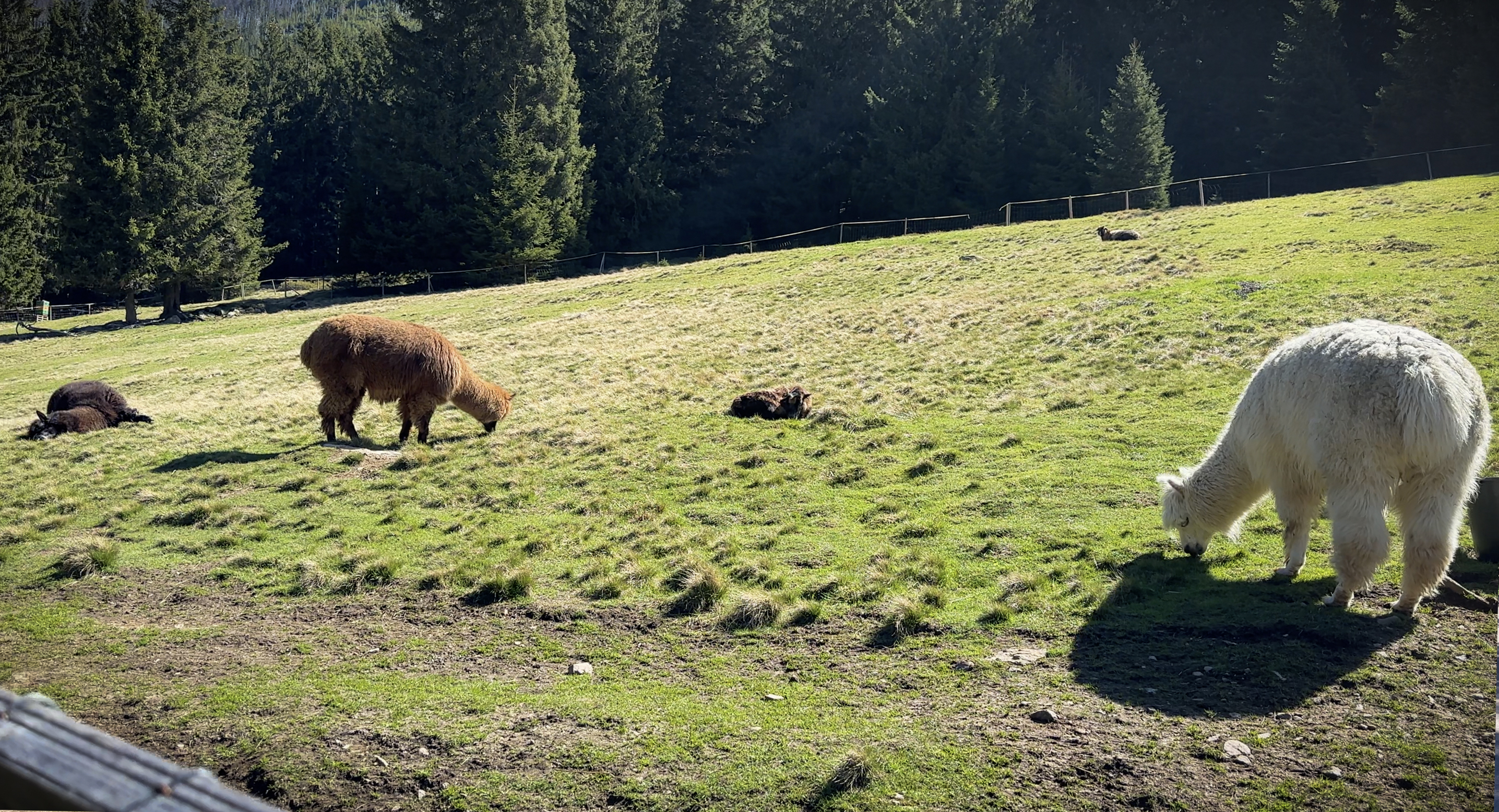
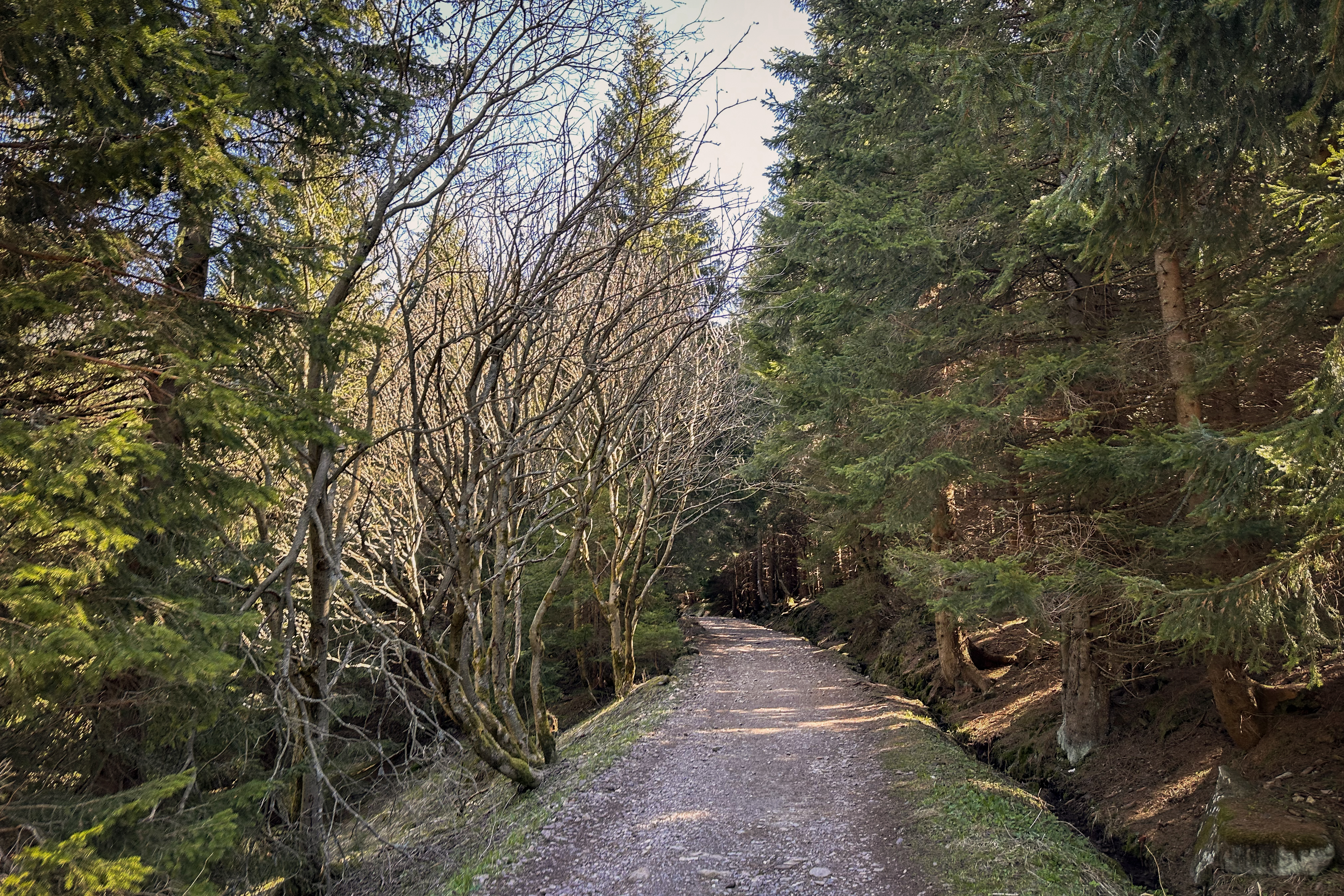
I continued on, hoping to stay ahead of the school group. My photo stops proved problematic though, because the group was booking it up the trail, so I took a snack/water break to let them forge ahead. They seemed to have mixed abilities and effort levels, so after a 10-minute wait, by which point the last of the group still hadn’t gone by, I continued in the middle of their pack. Somehow, those discrepancies got magnified, because I ended up having the trail to myself again (not catching up to anyone or being caught up to). No complaints there, the views only improve the further up you get, and it’s peaceful to have them to yourself!
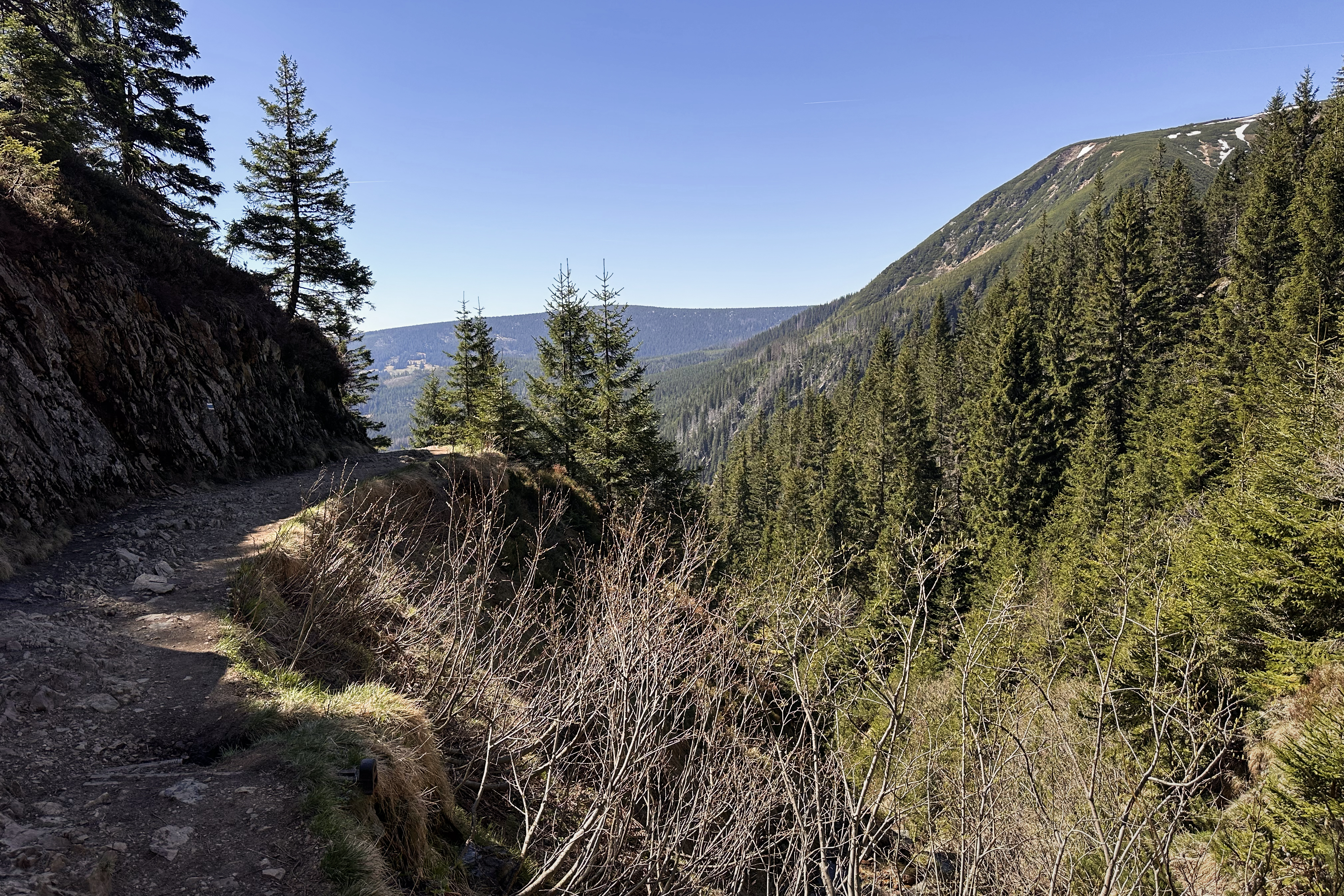
This mountain sits on the border between Czechia and Poland, and both countries have a bit of a hiking obsession. Do not expect solitude if you tackle this mountain on weekends, or even weekdays during peak season. This isn’t the highest mountain in Poland, though, despite the shared summit; Poland has a higher mountain in the Tatras: Rysy. Sněžka (or Śnieżka in Polish) tops out at 1,603 meters, while Rysy’s summit sits at 2,501m.
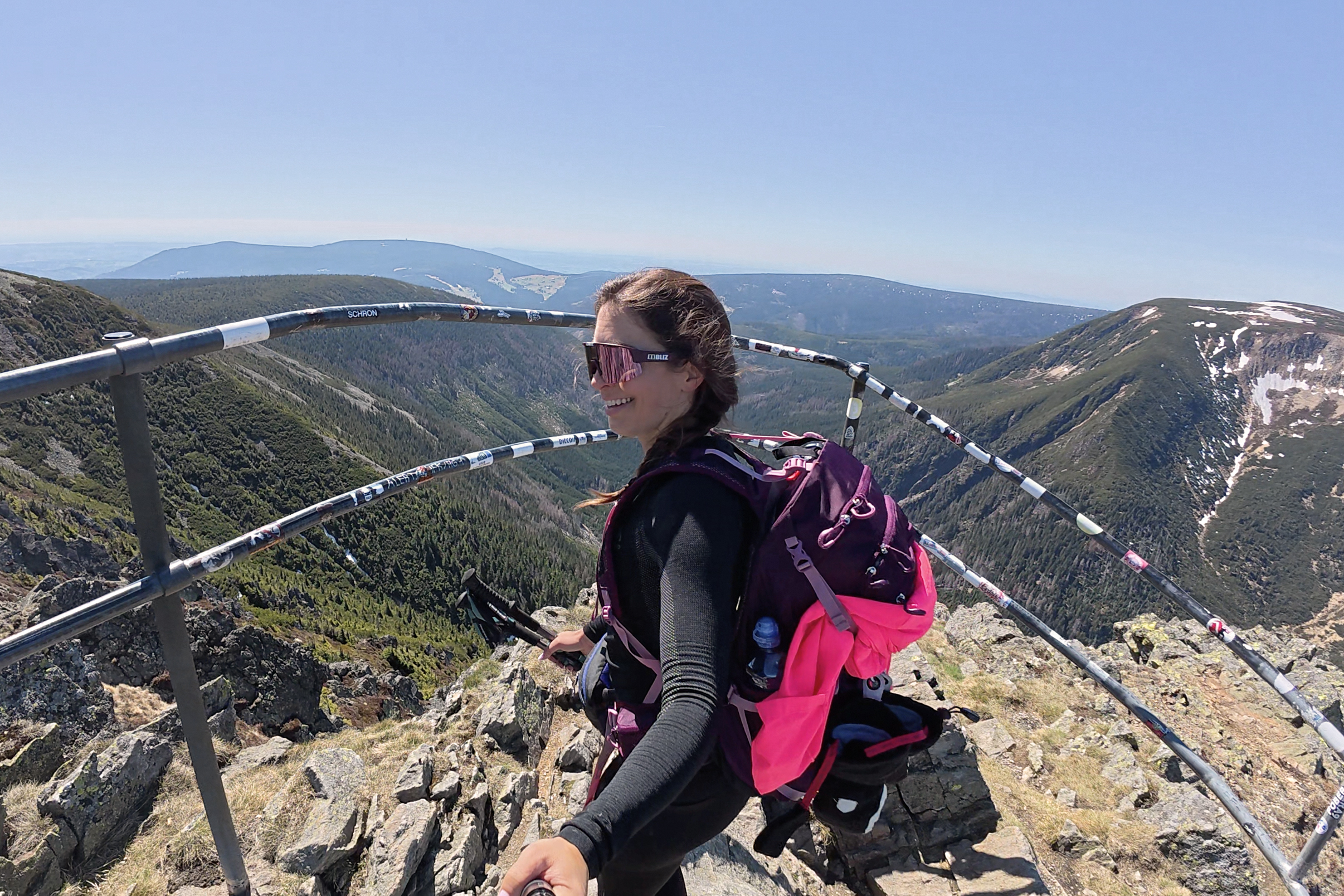
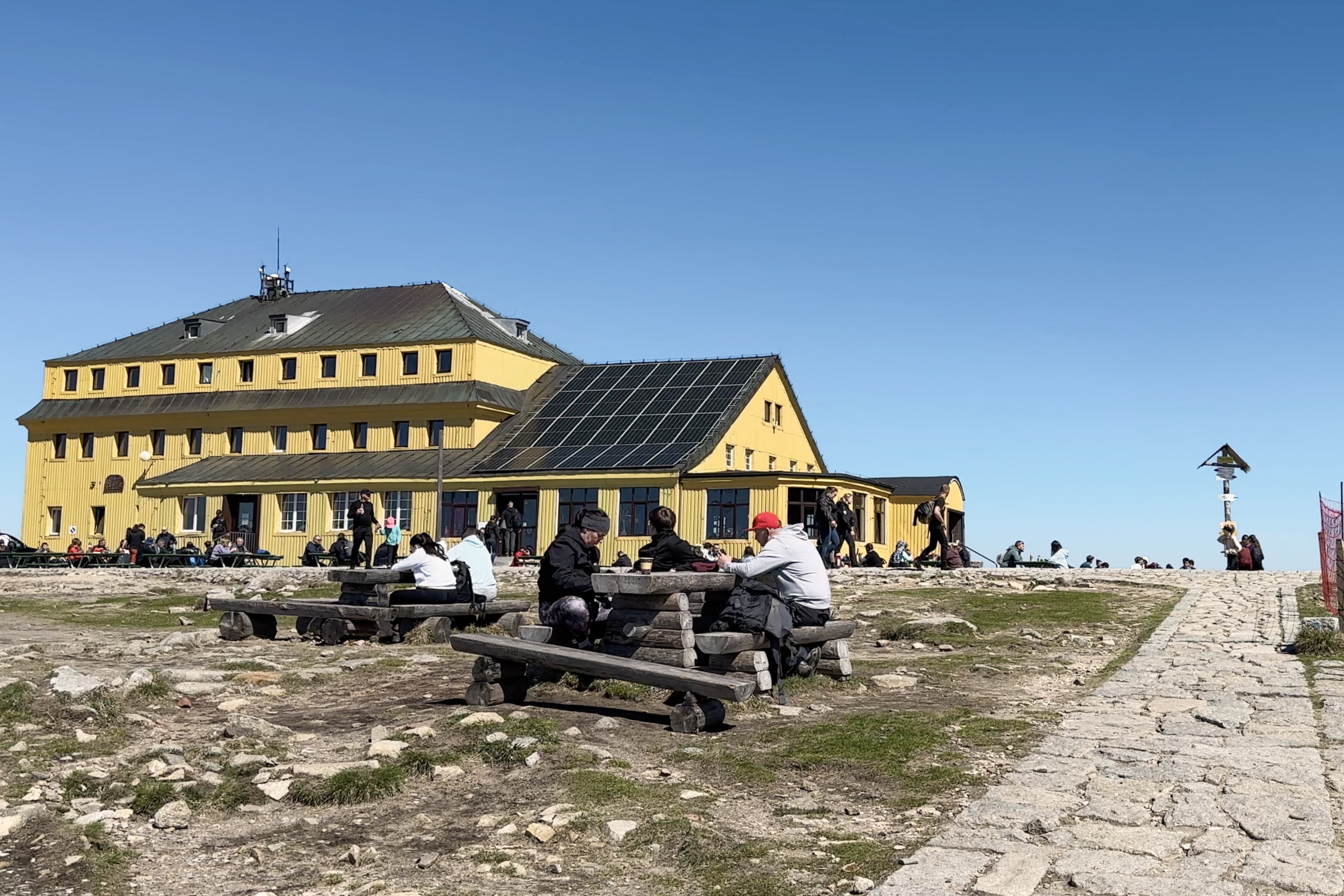
As I came around what seemed to be the last bend before the top, I saw a hut in the distance and internally celebrated for about 5 seconds. That was until I looked right and saw the path continue upward toward the more recognizable summit buildings. I don’t remember reading about any huts on the Czech side on the way to the summit. I realized that this loop was taking me on a brief stroll through Poland! That hut is where the main Polish route and my loop route converge for the final push. There weren’t any signs that I could see at the border crossings along the way. My route essentially led me along the Czech side with the stretch from the Polish hut to the summit on the Polish side. That final push is steep but non-technical, and there are plenty of look-out points to hop off to for a rest.
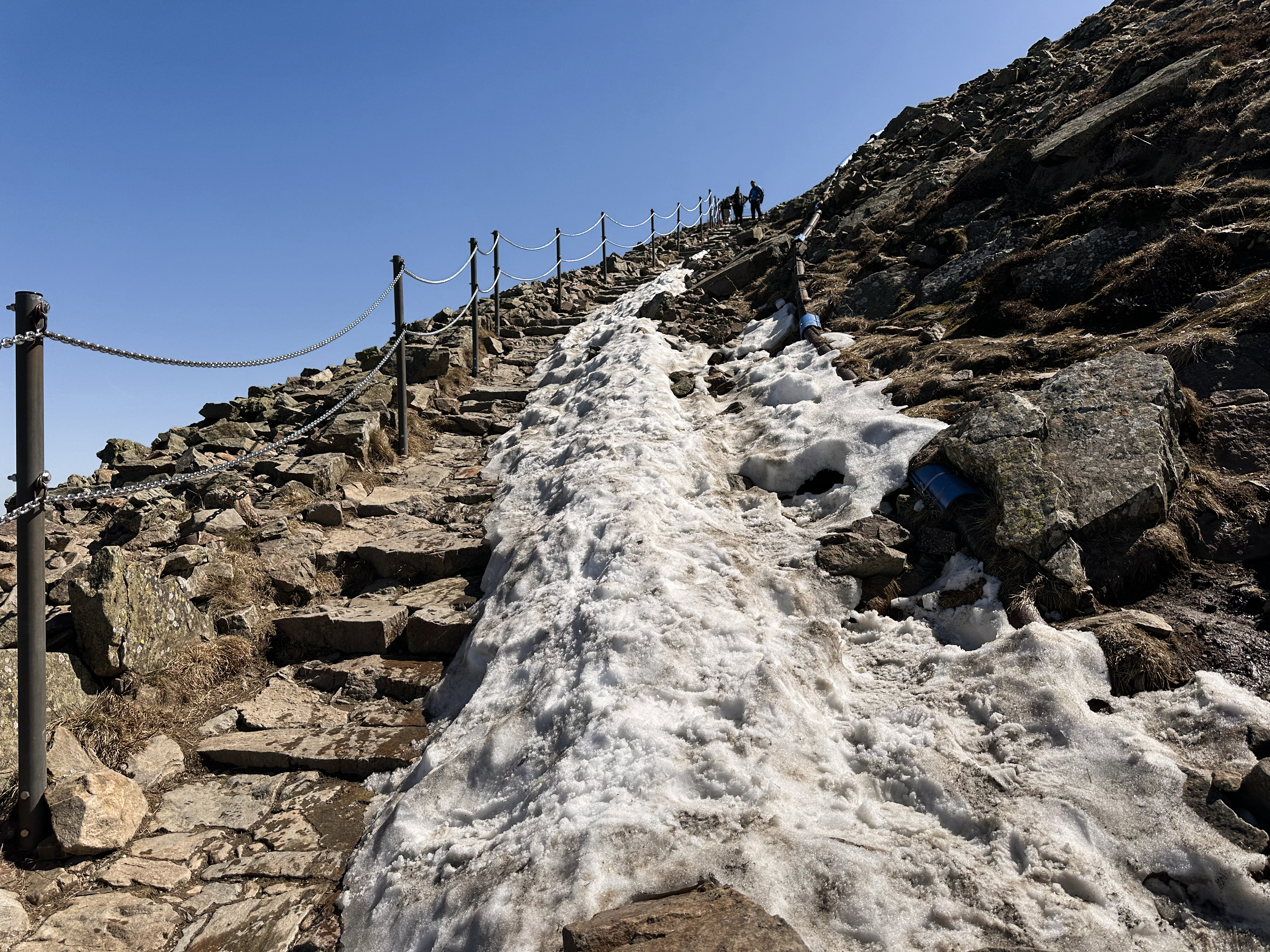
Near the top, there were some patches of snow along the trail, and a bit more at the top, but nothing requiring spikes by any means. 3 weeks later, this place was totally covered in snow again, apparently. This goes back to what I mentioned about the unpredictable spring weather here! Be prepared for anything.
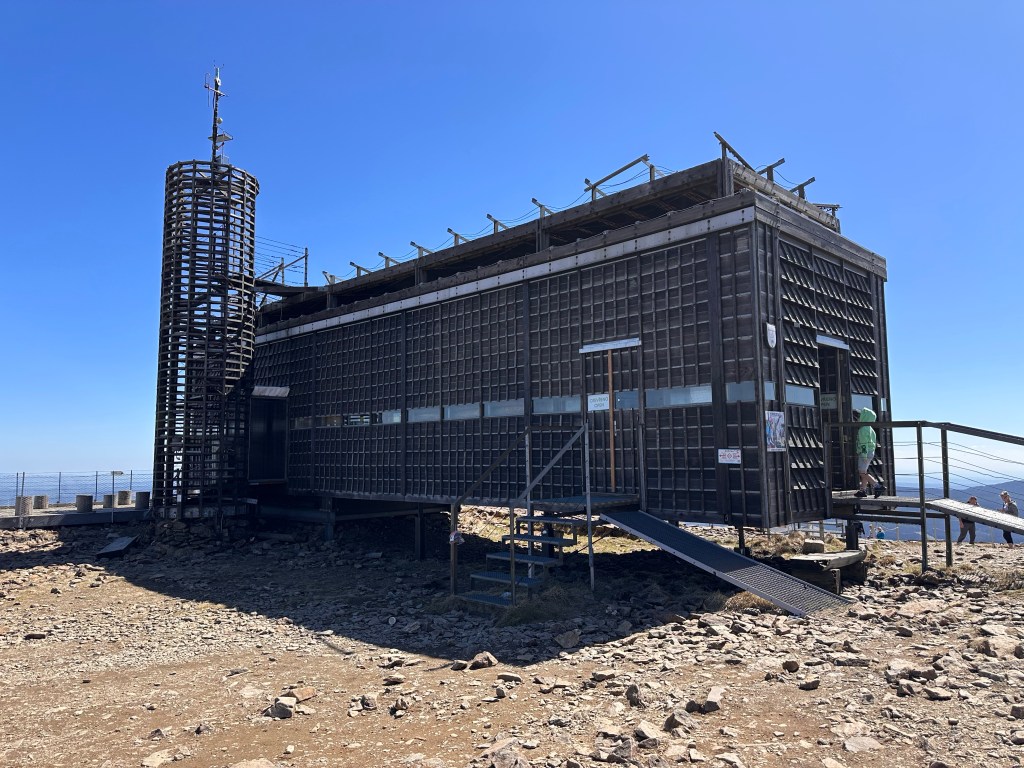
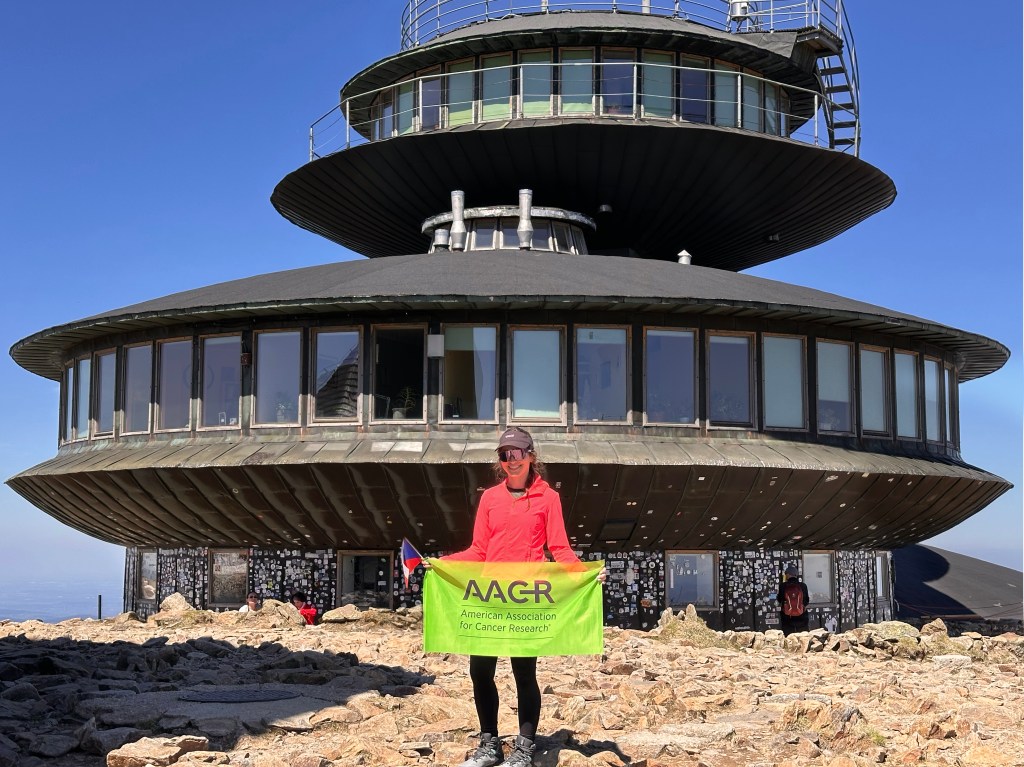
I sat for a bit finishing up the postcard messages (thank you, donors!!!), then headed inside to mail them out. I actually couldn’t tell which building was the post office, at first – I walked into the correct one, and it just appeared to be a snack bar, so I walked out. It turns out you just have to buy stamps at the regular counter, then drop the postcards in the letterbox in the next room (with the tables). It’s small and cute, and it was pretty empty on this early Monday afternoon. I learned later that there’s a viewing platform on the roof, but I didn’t see anyone up there, so maybe it’s seasonal. I bought some old-school, international lick-and-stick postage stamps and headed to the small counter next to the letterbox to use the (also old-school) Sněžka souvenir ink stamp. After finishing up with all the stamping, I dropped them through the letterbox and hoped they’d make it to recipients from London to Vancouver! For anyone concerned about the cost of these, stamps are about £2 to anywhere outside Europe, so it’s quite an affordable souvenir! (:
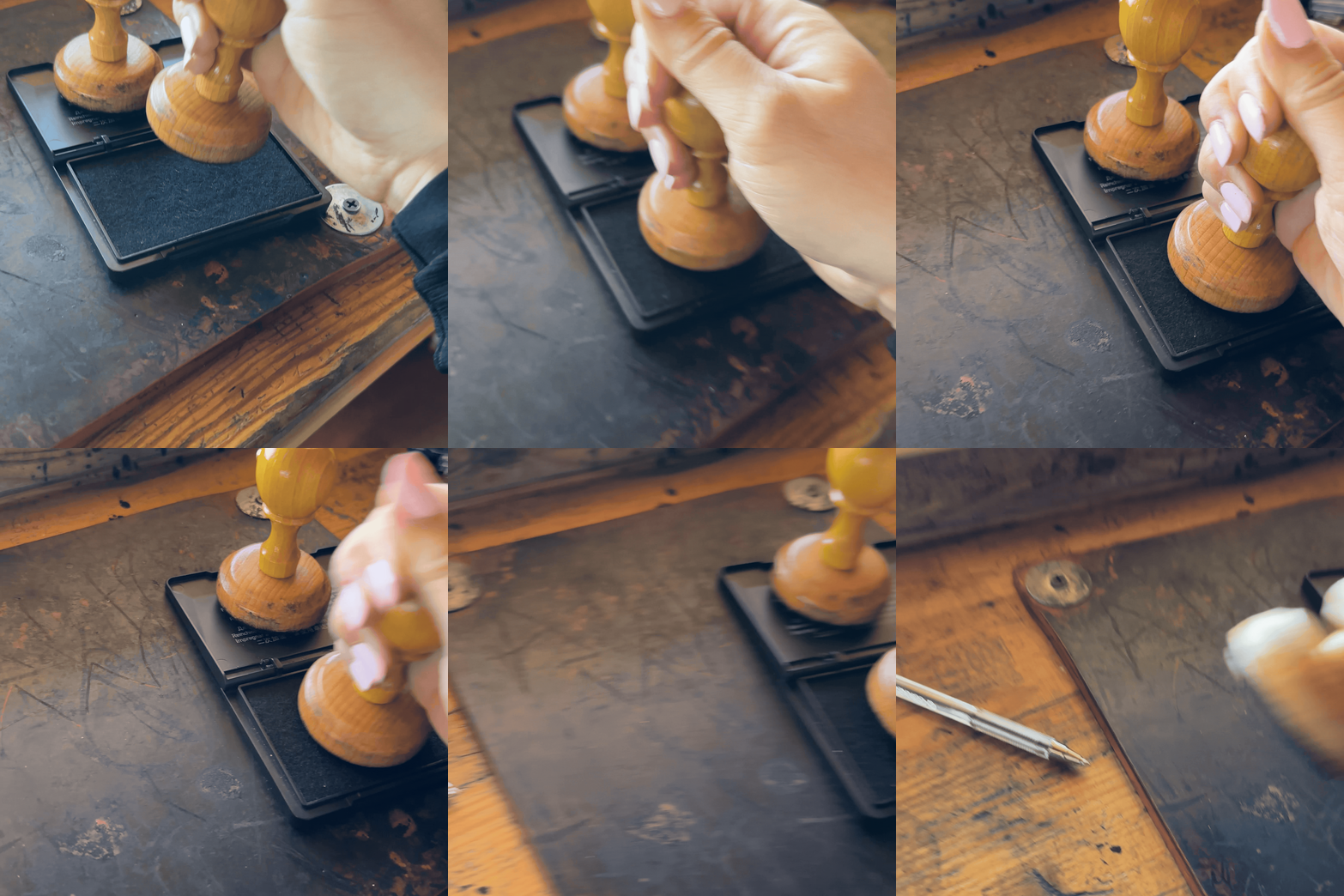
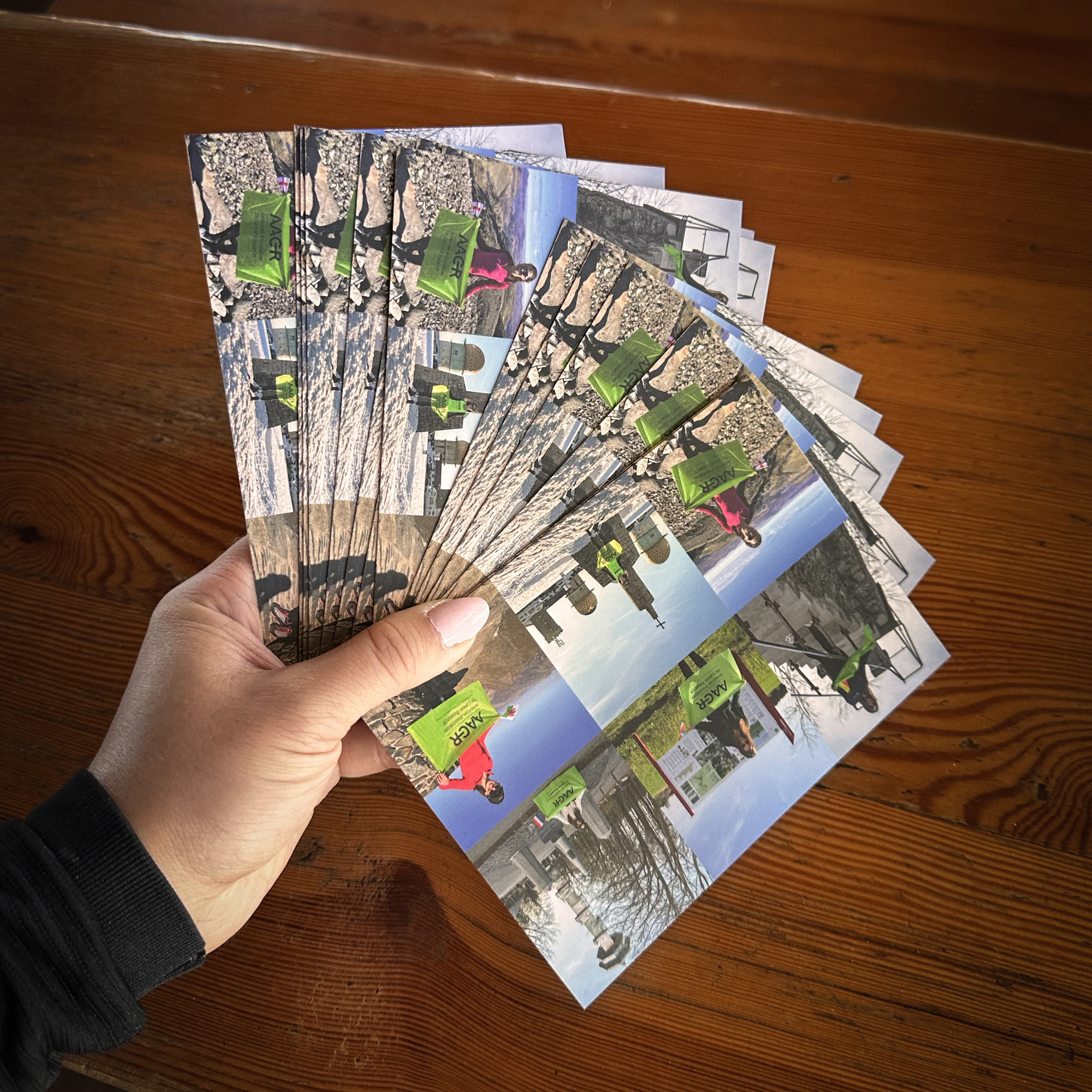
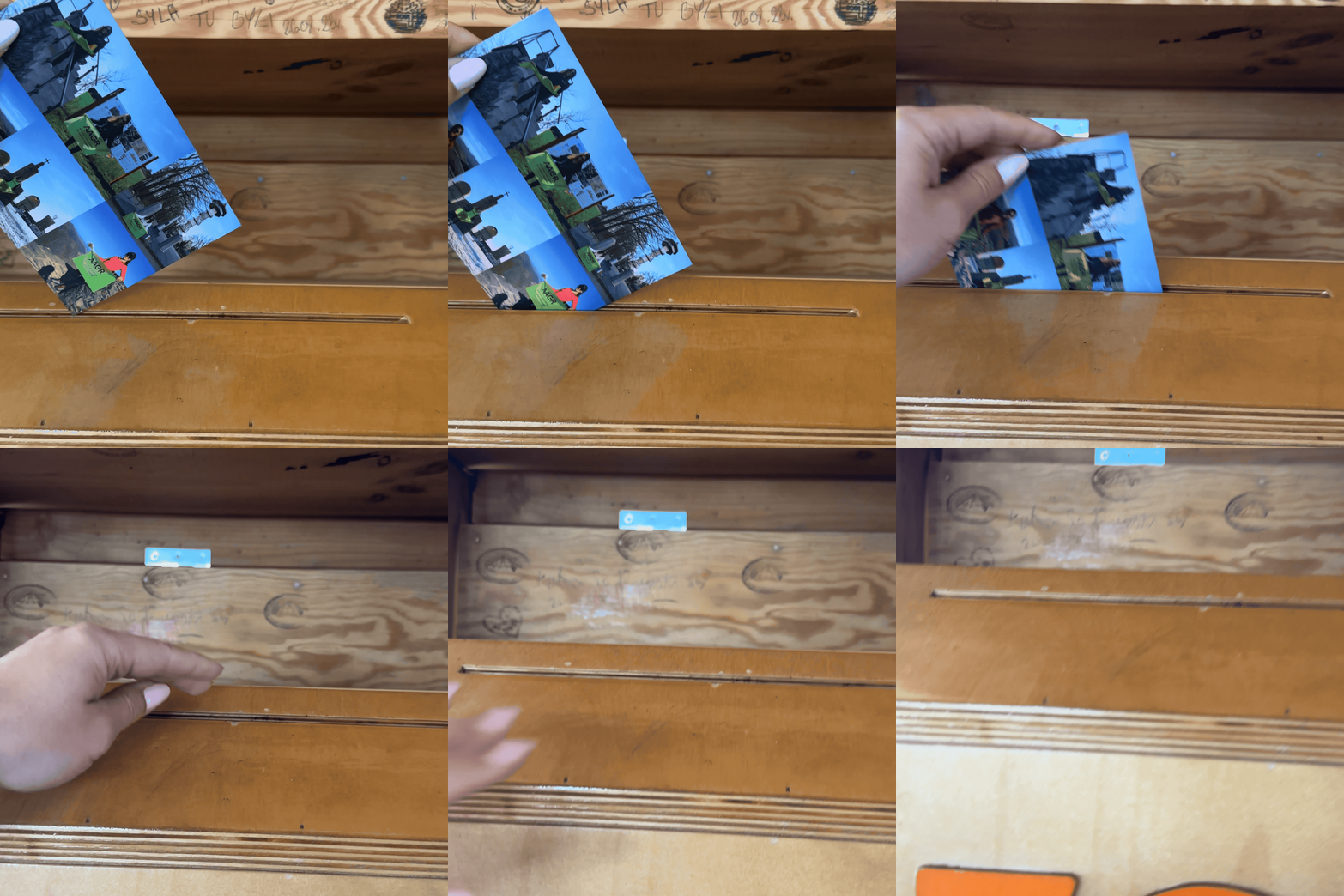
If you have no idea what I’m talking about with these postcards, I’d set up an incentive on the AACR donation page for donors to receive a postcard from the only European high point with an actual post office on the top. I am reinstating this incentive, and the next set of postcards will be sent from the oldest post office in Europe (any guesses where?)! If you missed out on the first set, there is still time, and there will be new photos from new peaks completed since the last set of postcards.
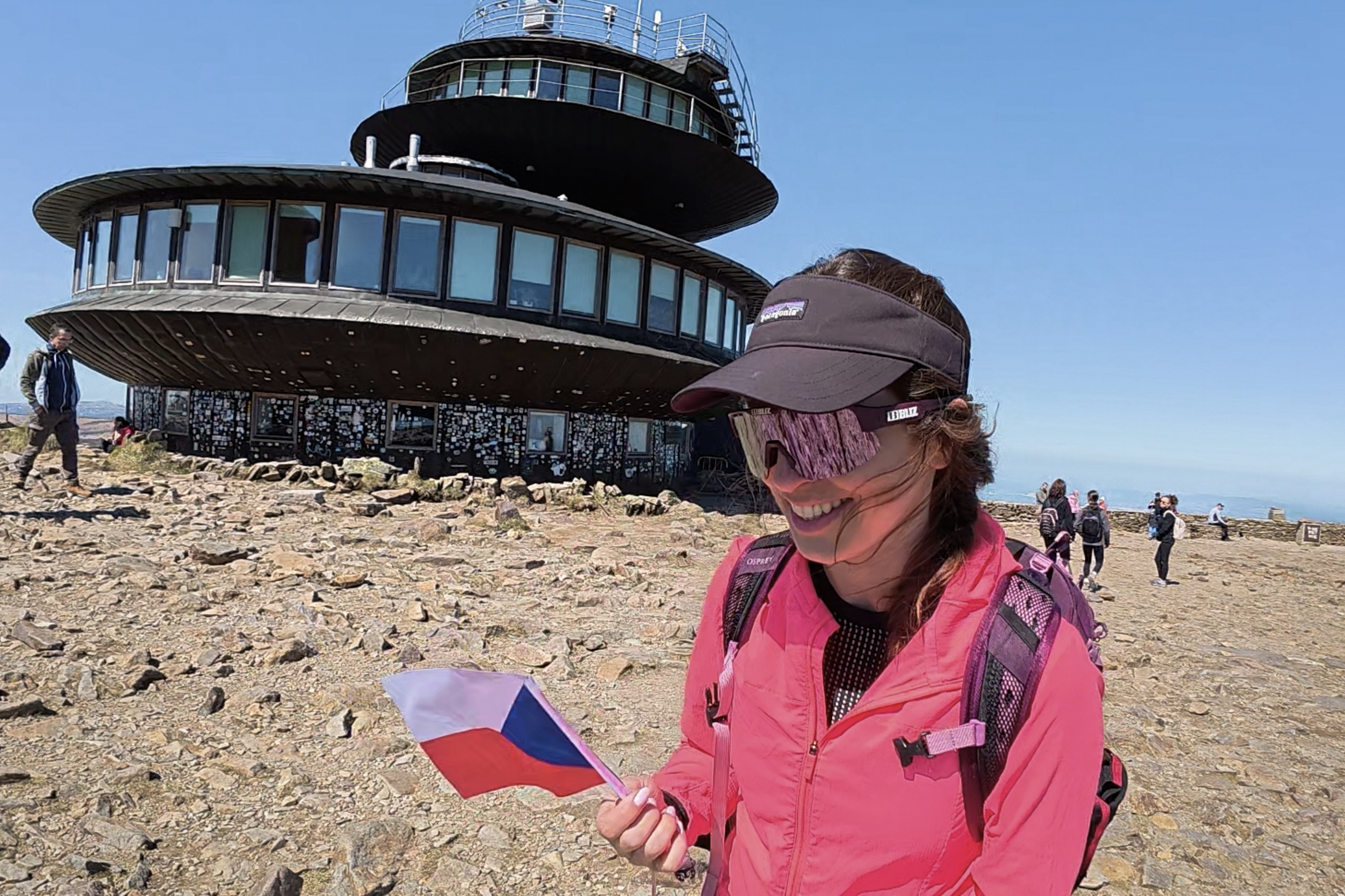
Then, it was time to take the summit photos. In hindsight, neon pink may not have been the best color to go with bright green. I’m a bit of a neon watermelon over there. Anyway, it’s really difficult to capture the beautiful 360 degree views without a drone, but it was a bit too crowded that afternoon for me to feel like being ‘that person’ causing buzzing noises overhead. One day, I hope to go back for a sunrise flight!
After a few rounds of entertaining myself by standing in 2 countries at once at various points along the summit (the 2 countries I studied abroad in, no less!), I started descending via the most popular route from Czechia to complete the loop. This route descends under the gondola for most of the way, but as it wasn’t operating, it was very quiet. For more information on the cable car, including operating hours and seasonal closures, click here!
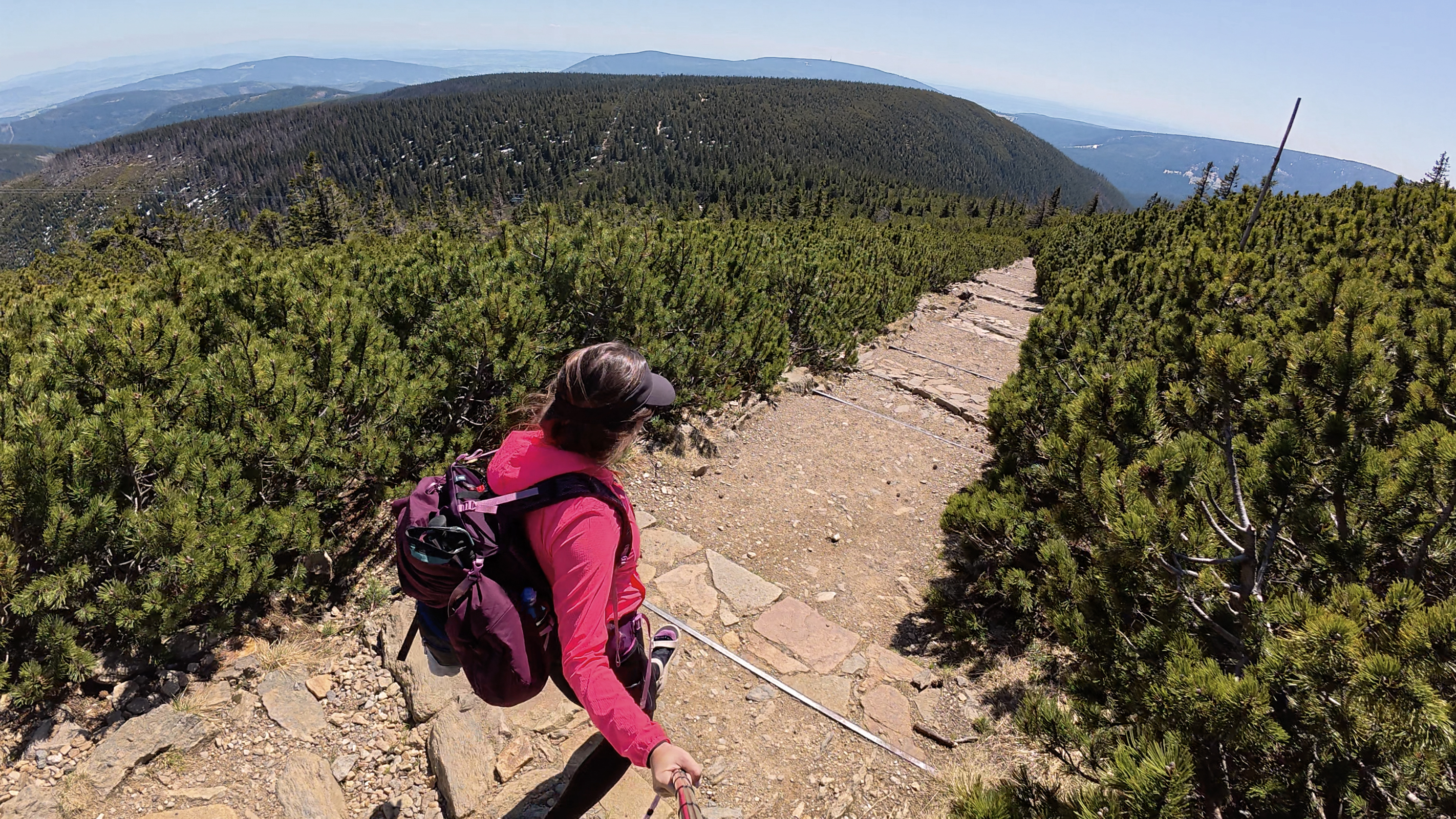
It’s a really nice route, with well-maintained rocky steps and dirt paths through dwarf pines once back to the tree line. I was surprised to see these here, as I’d only really seen them in my home state of New Jersey (the Pine Barrens!). In NJ, they make up nearly 25% of the state’s area. In Czechia, these exist in alpine regions, as they’ve adapted to short growing seasons, high winds, and low temperatures. In NJ, it’s one of the most fire-adapted tree species in North America and grows at sea level. It’s the home of the Jersey Devil and was designated a UNESCO Biosphere Reserve. So…similar, but different. (:
The first part of the trail was so scenic that I wondered if I’d made a mistake in doing the loop- why not just an out-and-back via this way? As it continued, though, while still scenic, it would have been kind of a monotonous uphill through the forest with fairly consistent scenery. For a downhill, it was nice and not too bad on the knees. Having ascended a different way, this was all new and beautiful for the descent, and there’s a really nice set of huts/restaurants with outdoor seating that would be convenient to stop at on the way down (when they are actually open). All-in, I’d recommend the route I did in the direction I did it, which is what’s in the map above. There’s more footage of the rest of the route in the Instagram highlights!
Once back at the car, I headed right back to Prague.
One Last Sunset
I arrived back to the hotel to join my US-based colleagues on some calls. When it was time to step out for some dinner, I realized it was going to be a beautiful sunset, so I threw some of my Lidl leftovers into my bag and headed over to the nearby park again, Riegrovy Sady. I’d heard this was a popular sunsest spot, and I can definitively confirm this. The grassy space I’d been lounging on (with maybe 20 people scattered around) on Saturday afternoon had really filled in. It was a great atmosphere. I found a spot at the back of the field and settled in to watch the sun dip right behind Prague Castle.
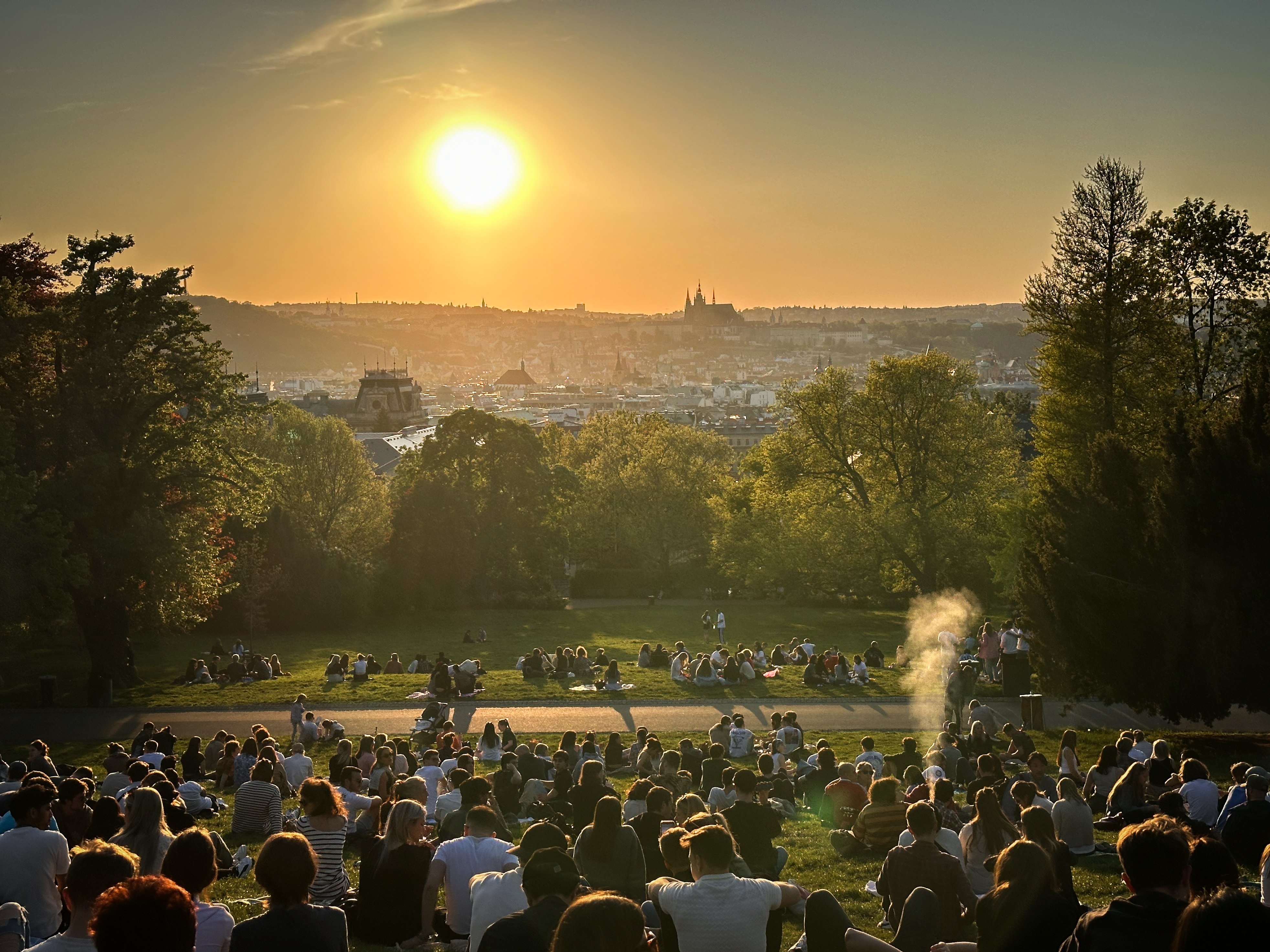
I would imagine that at different points of the year, the sun takes a slightly different trajectory to the horizon. It was really cool to be there when it lined up with the castle so perfectly. In general, I’d really recommend Easter time to visit. You might get rain, of course, but there are Easter Markets, it can be warm enough for outdoor beer gardens with live music and river strolls, and the sunsets from Riegrovy Sady are magical. There are plenty of tourists year-round here, but early spring still isn’t nearly as crazy as the summer months, or even Christmastime.
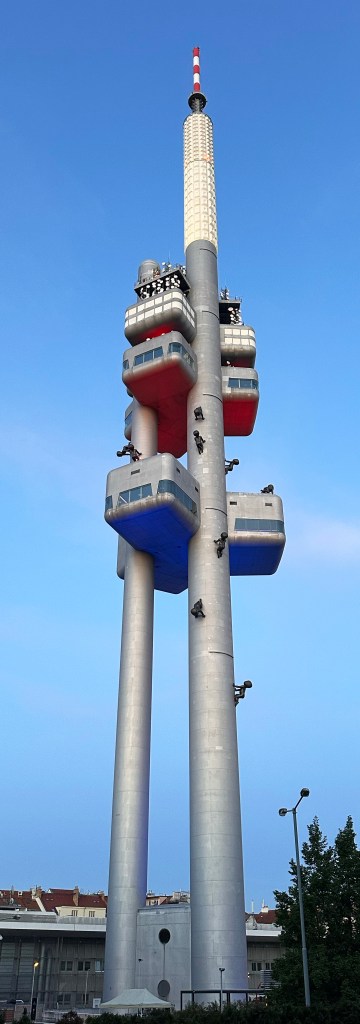
After the sunset, I walked a bit more toward the hotel, mostly to walk off the hike from earlier and have airport-ready legs the next day. I ran into this random futuristic tower with…babies crawling up it..? Apparently this is the Zizkov Television Tower. It’s the tallest structure in Prague, and I hadn’t heard of it. It could be because its original reputation wasn’t great. It was built between 1985 and 1992 with late-Communist engineering and involved the partial destruction of a Jewish cemetary dating back to 1680. Some tombstones were apparently repurposed as cobblestones in Wenceslas Square. Prague seems to have reclaimed it though, with David Černy adding a temporary installation of crawling babies to ring in the new millenium. The original ones were replaced, but now they seem to be there permanently, having redeemed the building that was once ranked the 2nd ugliest in the world. This is, of course, a subjective ranking, but a latest check of that page shows Trump Tower squarely in the “10th ugliest” slot…
That was the end of this brief trip. I headed back to the hotel and packed up for my flight back to London the next morning.
Other Locations in Czechia
Český Krumlov, South Bohemia
My favorite stop in my study abroad program was probably Český Krumlov, I place I returned once more to after, but did not visit on this trip.
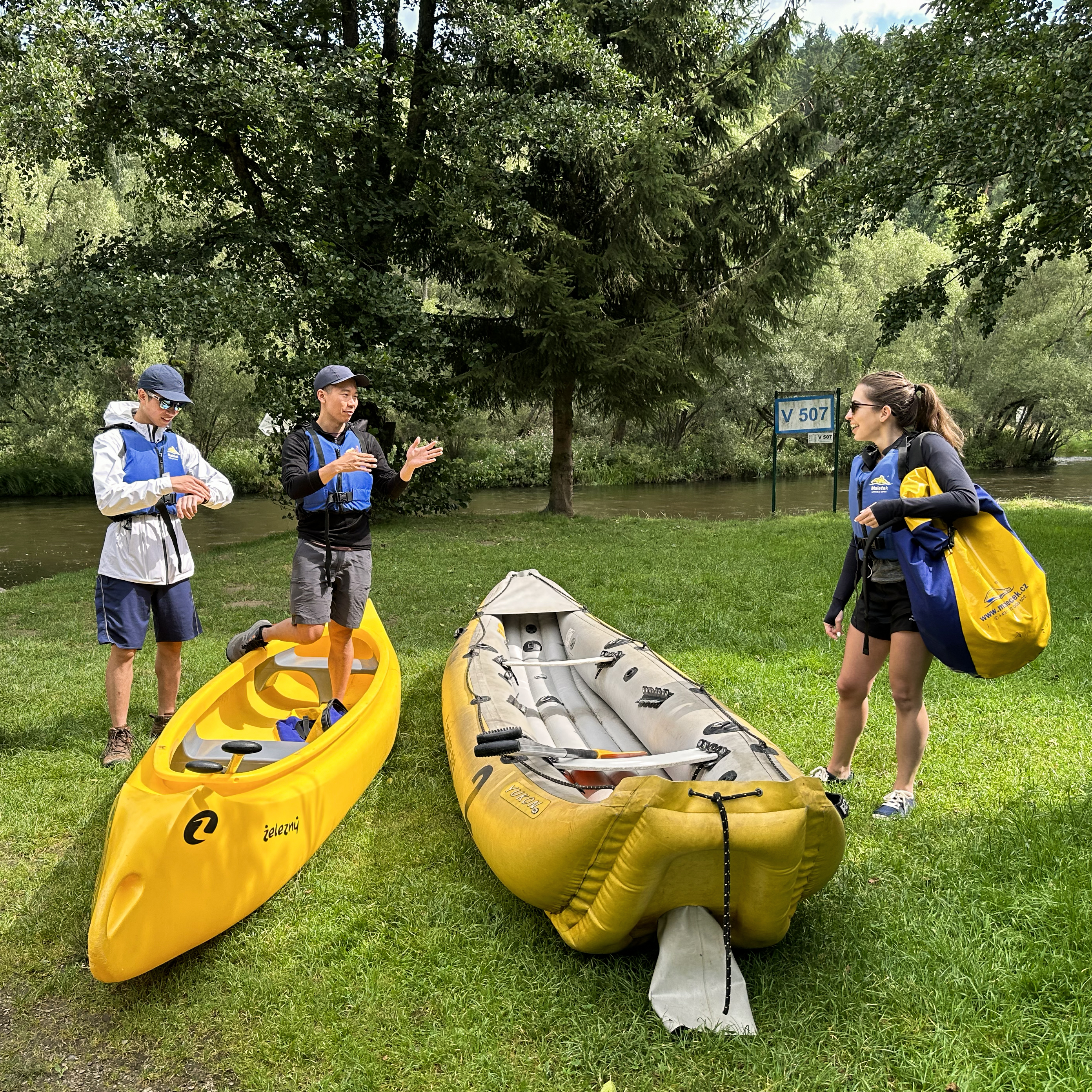
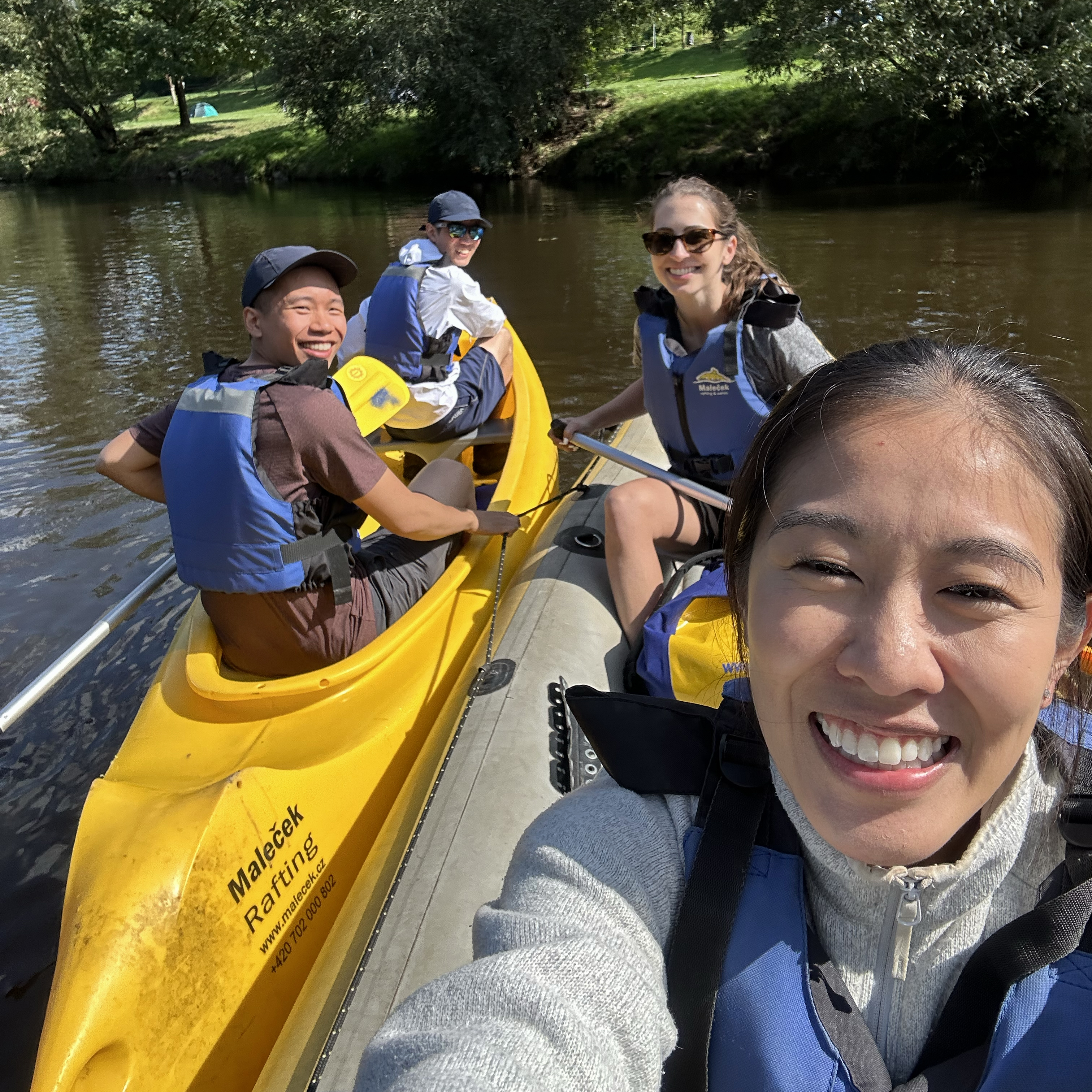
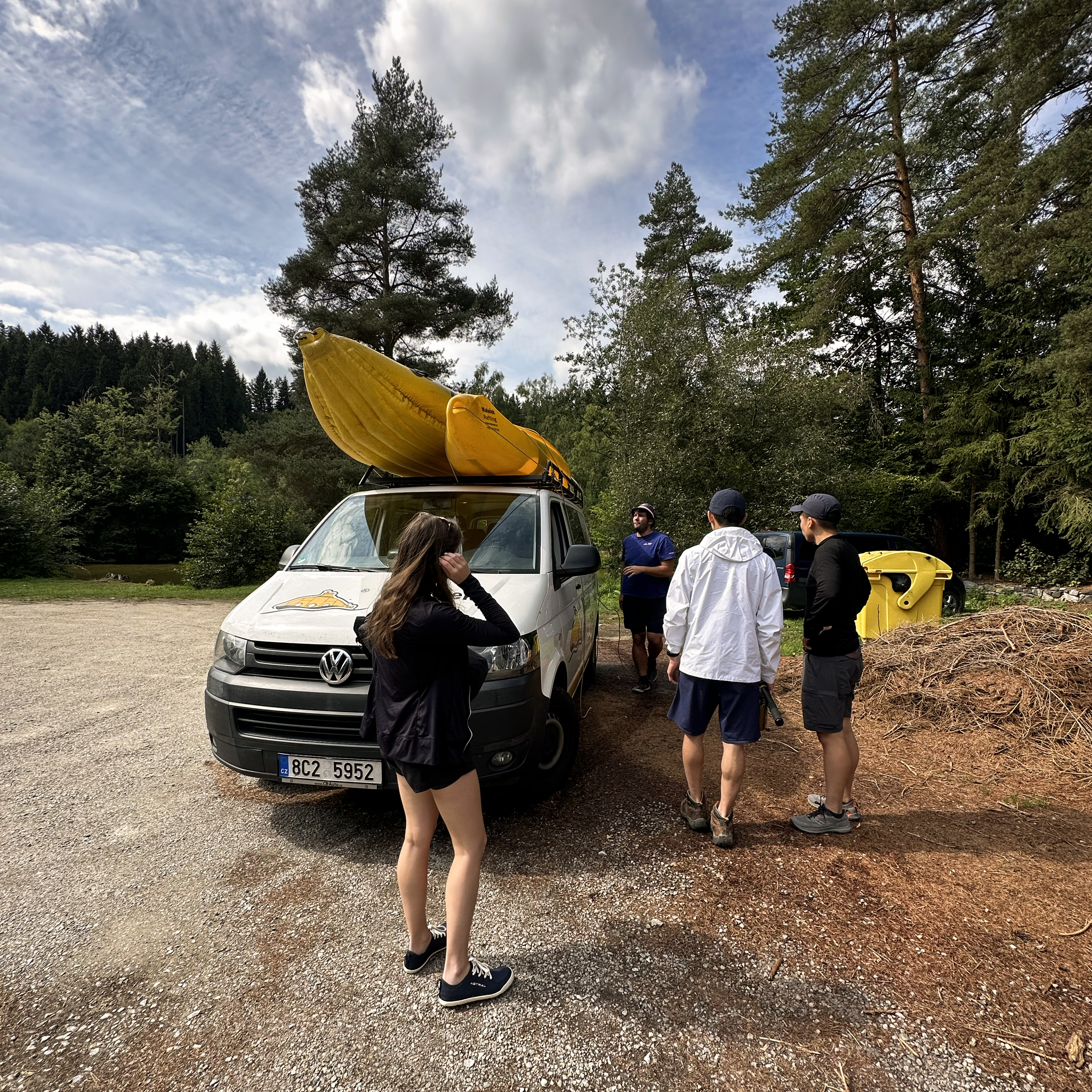
I’d toured the castle on that study abroad trip and do recommend this, but for this particular visit, I’d be with outdoorsy friend Candace & co. Our plan was to do some traditional rafting on the Vltava River (yes, the same one that runs through Prague – it’s 431 km / 267 mi long!). There are so many variations you can do, from a few hours to multi-day routes with camping. We opted to start in Piskárná, renting a raft and a canoe (to try both!). If we had more time, we’d have started in Vyšší Brod or Rožmberk. We rented from Maleček Rafting, and it was really convenient; we met them at their location right in Český Krumlov, where we loaded up the boats and headed in their van up the river. We’d be paddling along a series of weirs (little waterfalls, essentially, that you can paddle through) and ending back at their location in the city.
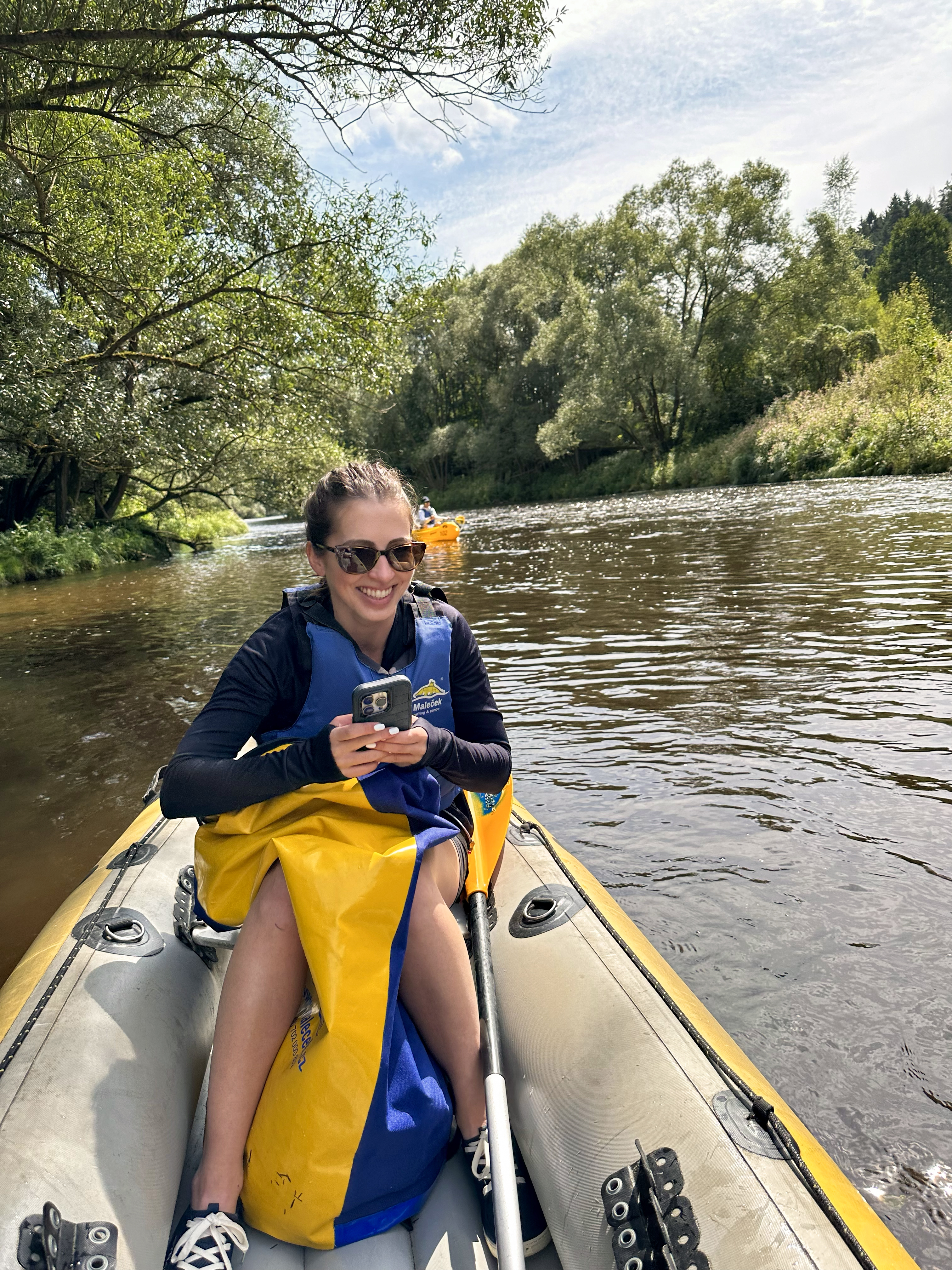
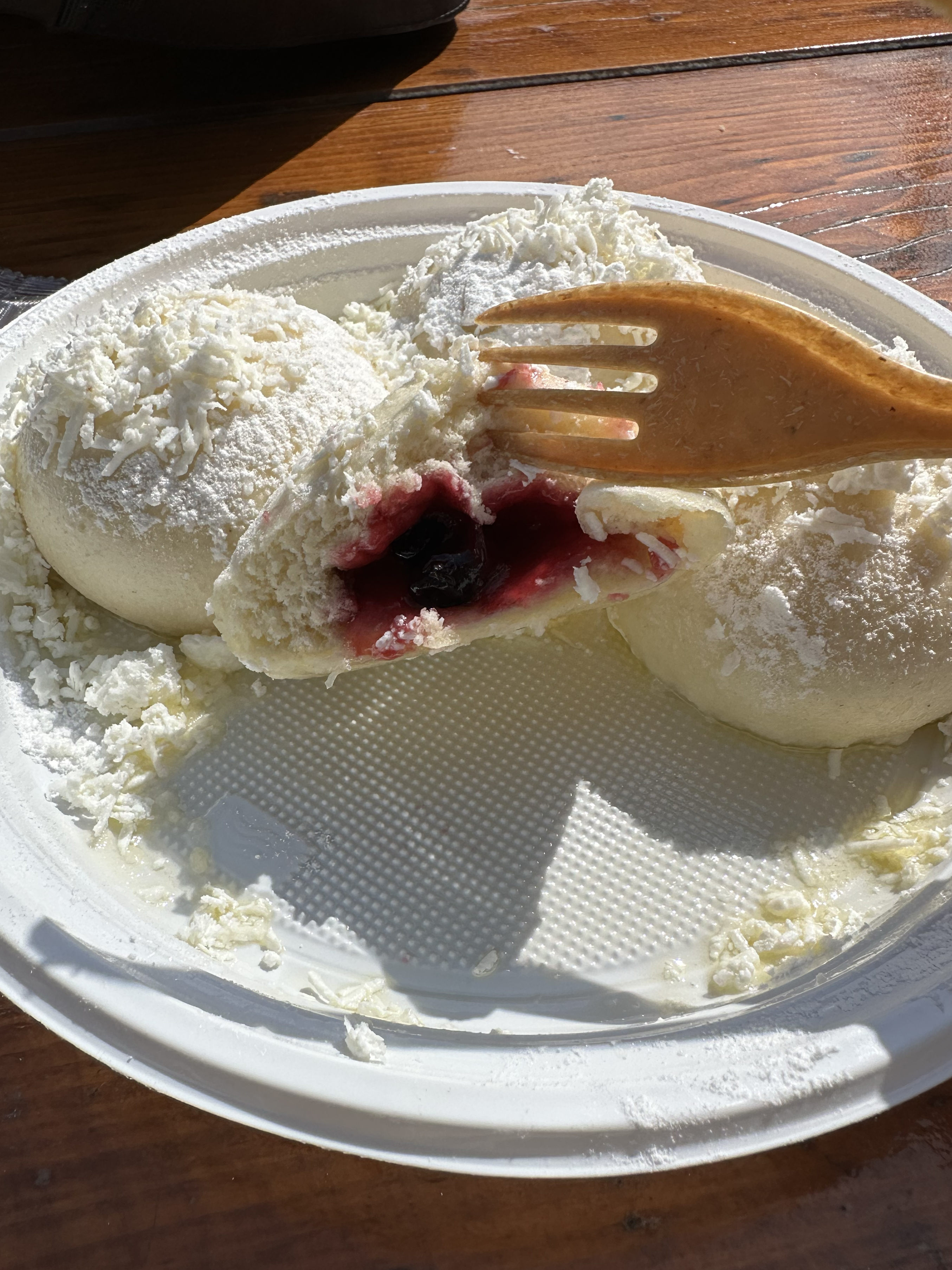
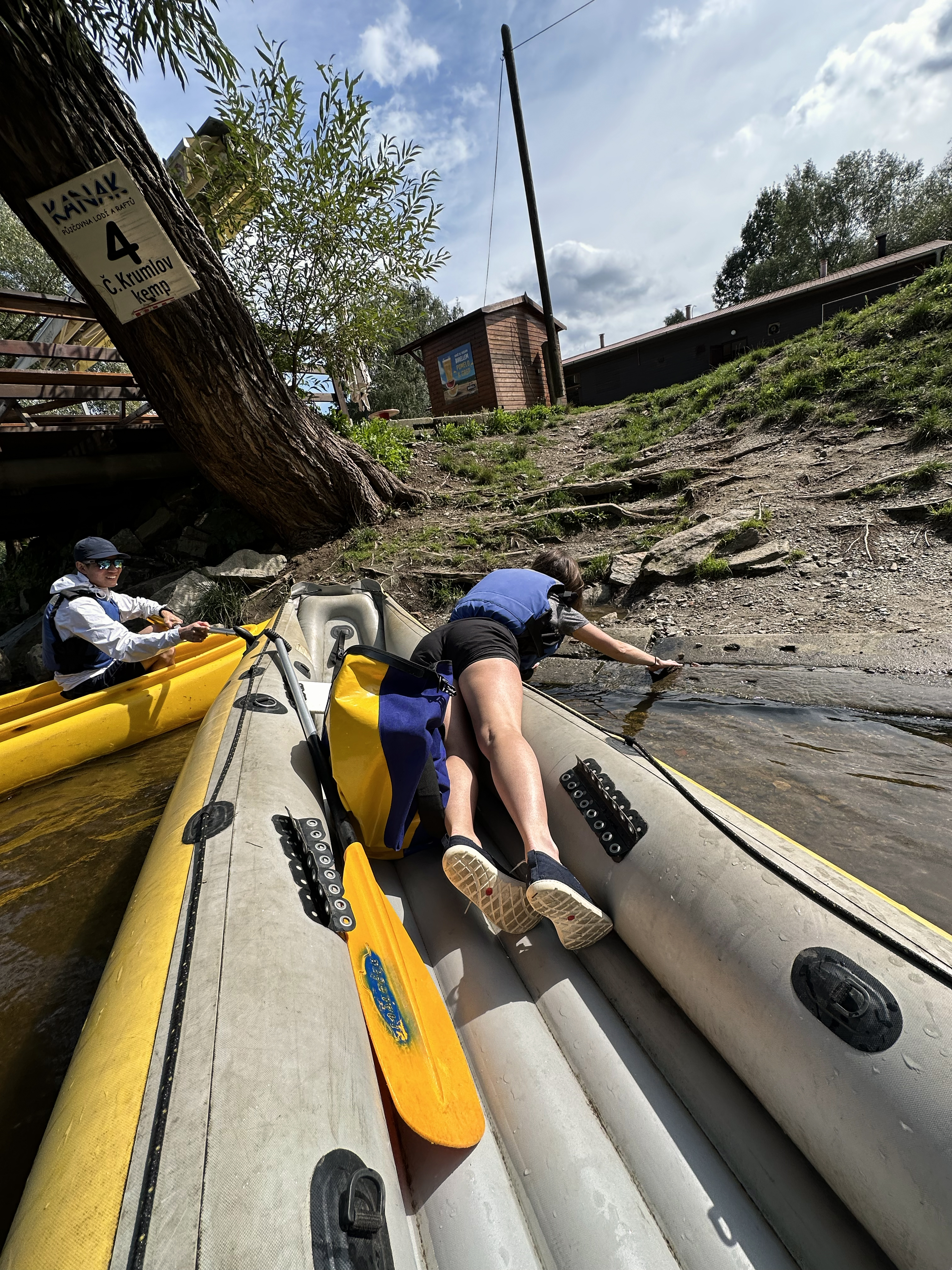
The route started in a quiet, tree-lined portion of the river. You’re following the current, but it’s not too strong, so there’s still a good amount of paddling to do. Along the way, we saw friendly ducks, Czechs yelling “Ahoj!”, and floating bars to dock up to. We opted to pull over at one of the riverside restaurants, where my friends tried some traditional snacks (fruit dumplings!) and I grabbed a Magnum and chips (gluten-free problems).

After this little break, we continued along, enjoying the weirs and scenery. Each boat ran into some trouble: Candace and I got stuck on a rock in the middle of the river and spent more time laughing than un-stuck-ing ourselves. Not long after, Geoff and Timon, in the less stable canoe, went overboard in slow motion. This is one of those things that is funnier after the fact for them, as it was late in the season…it was a liiiittle chilly for swimming!
If you have a group of four like we did and want a slightly more relaxing experience, you can rent a four-person raft. You’d have to try pretty hard to topple over in one of those. This particular weir seemed to cause trouble for many, though. While Candace went to help them empty the water out of their canoe and get back on (after we’d paddled upstream through a tree…hard to describe this…and on attempt #2 managed to pull our raft up along the side), I helped a drunk group of guys who’d managed to get themselves stuck in that tree.
The further along you get, the more scenic the architecture. The last stretch involves beautiful views of the castle and other quaint buildings. Don’t miss the exit ramp while taking in the views, though! The current isn’t fun to paddle against, if you do.
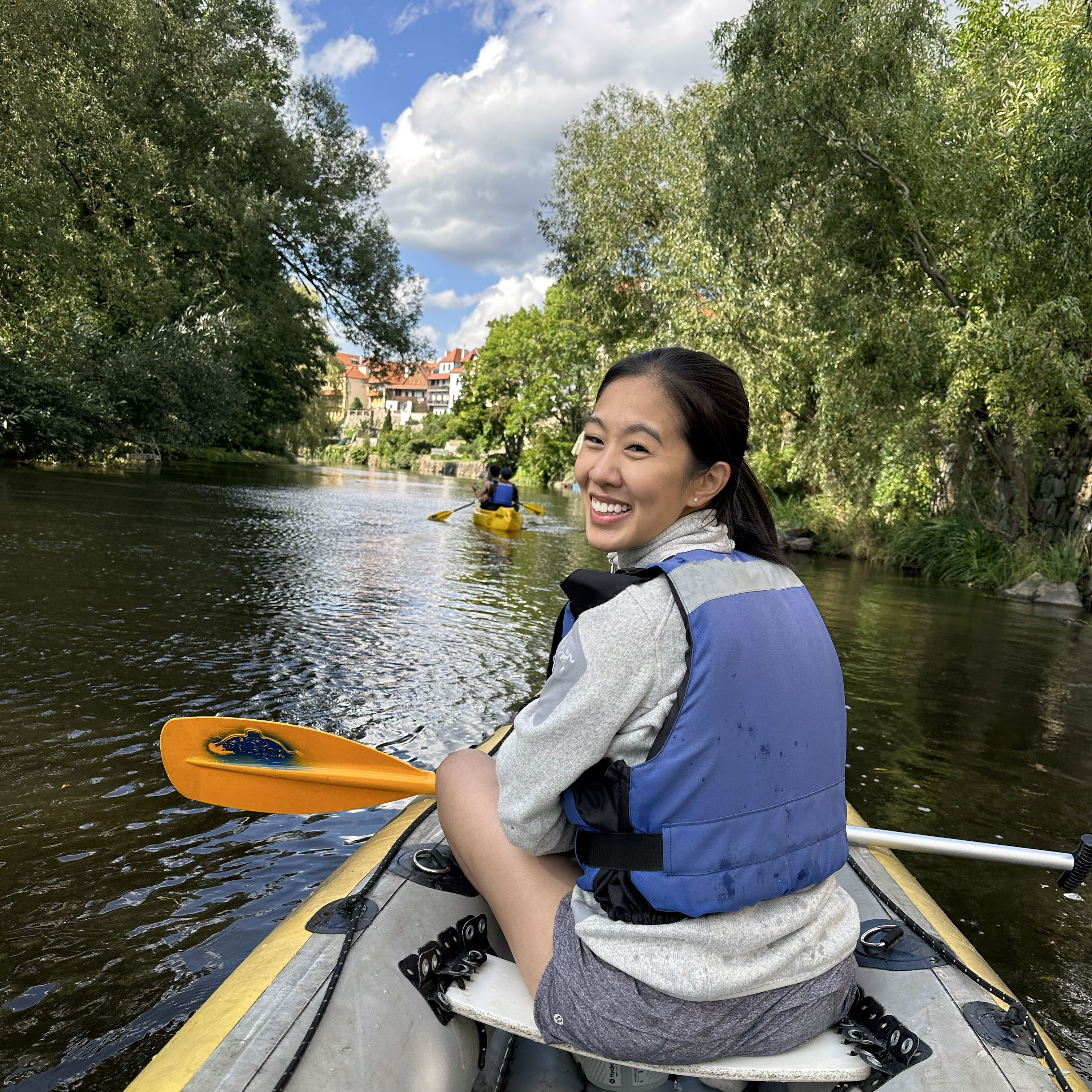
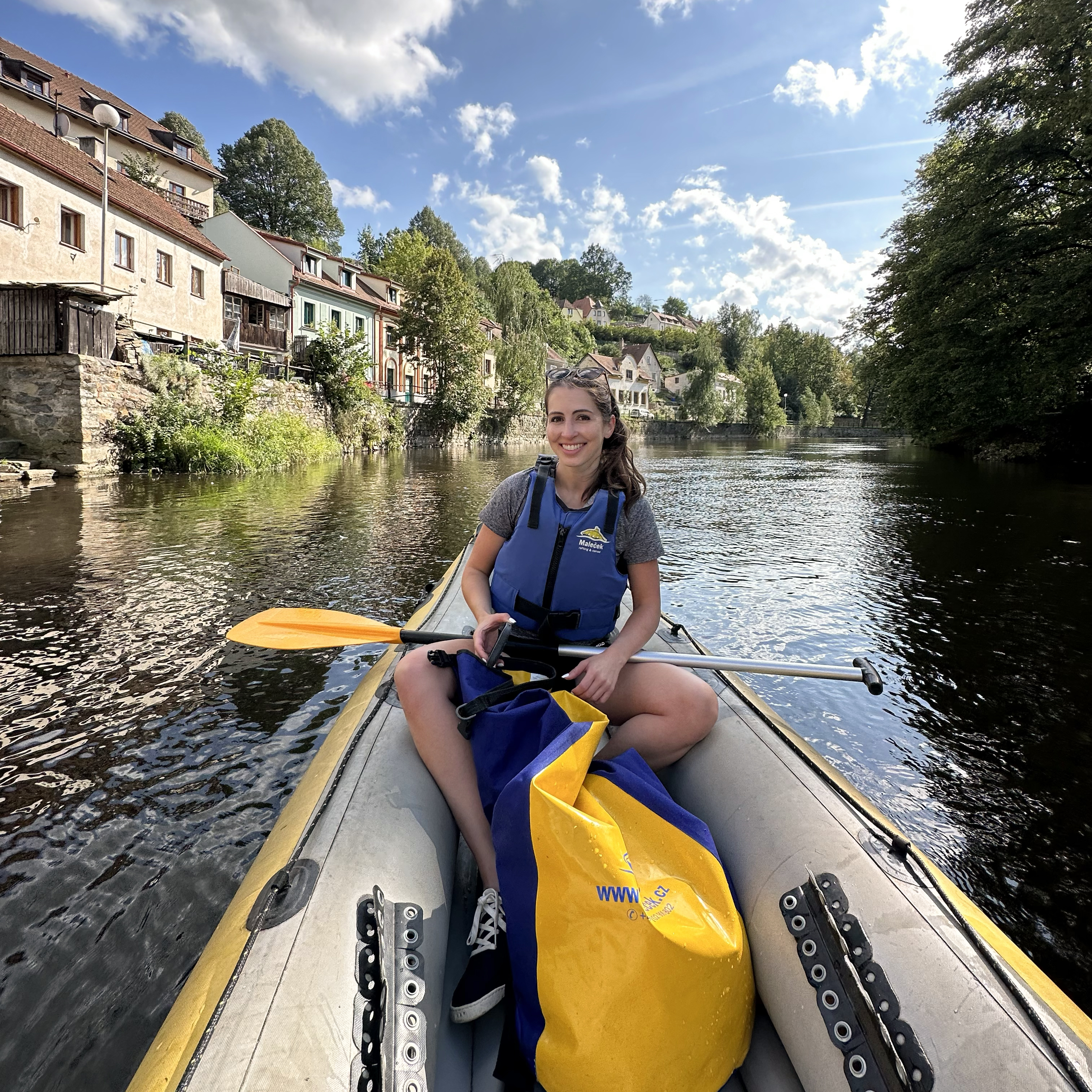
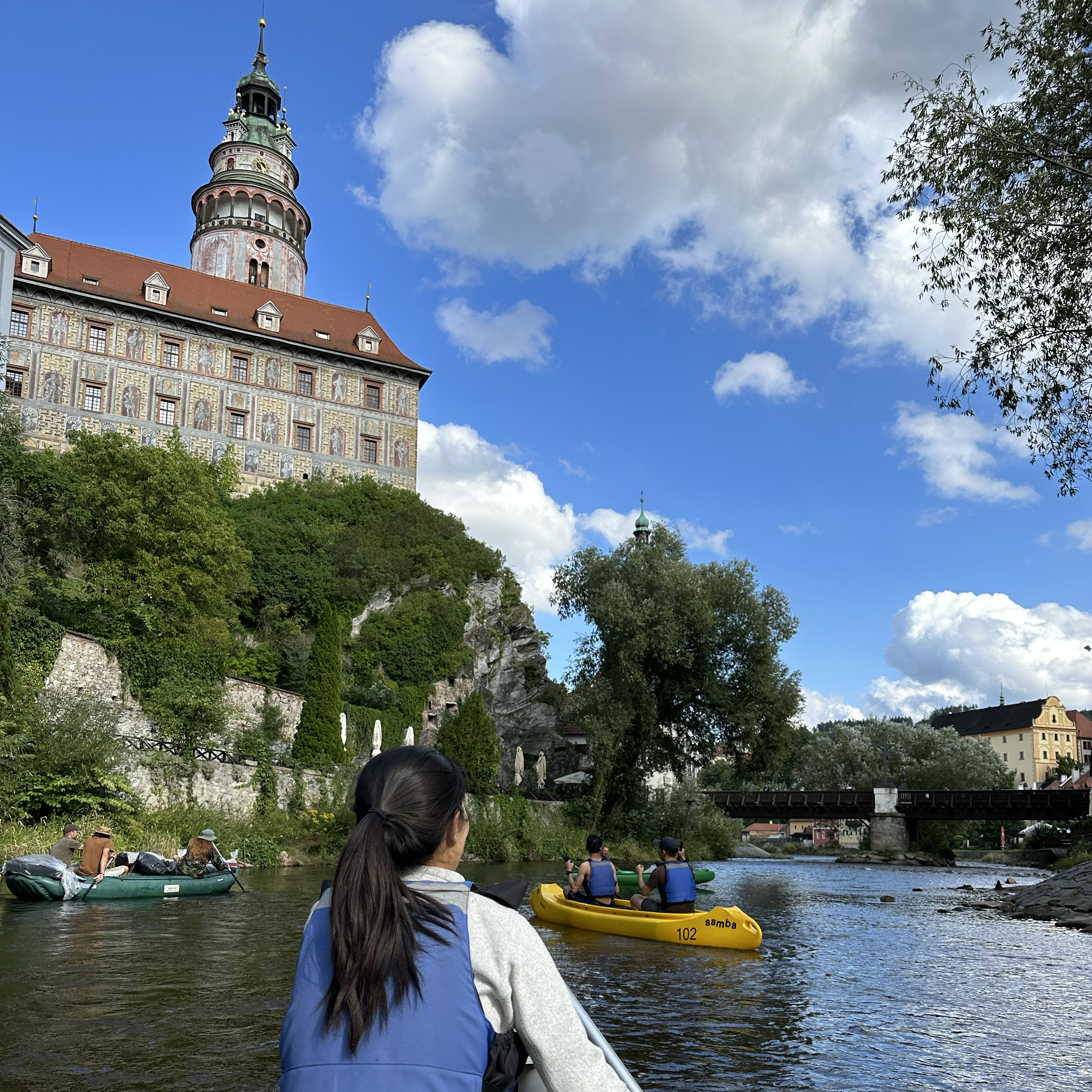
After that adventure, we grabbed some food in the center of town, took in some sunset views, and hit the road.
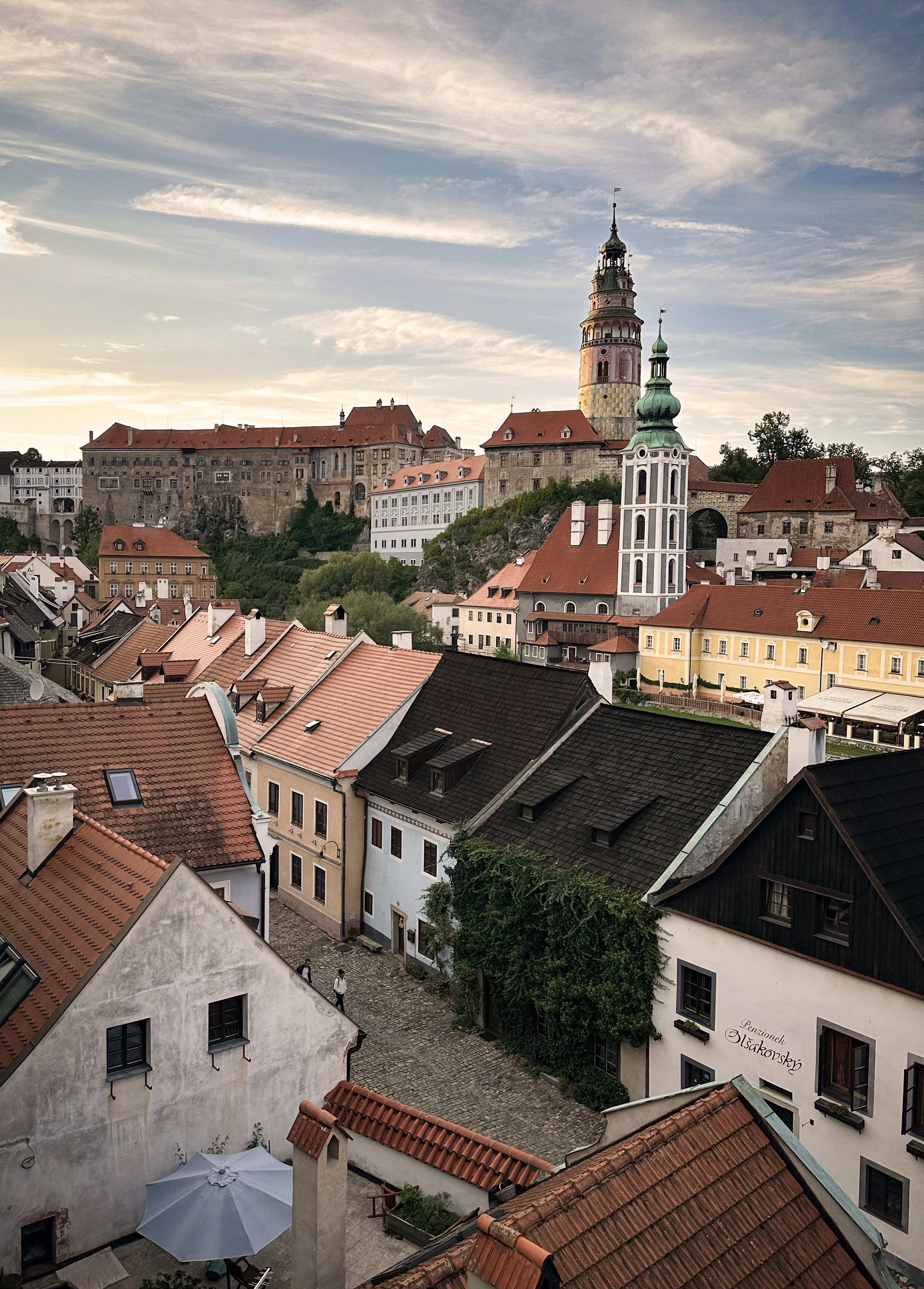
České Budějovice, South Bohemia
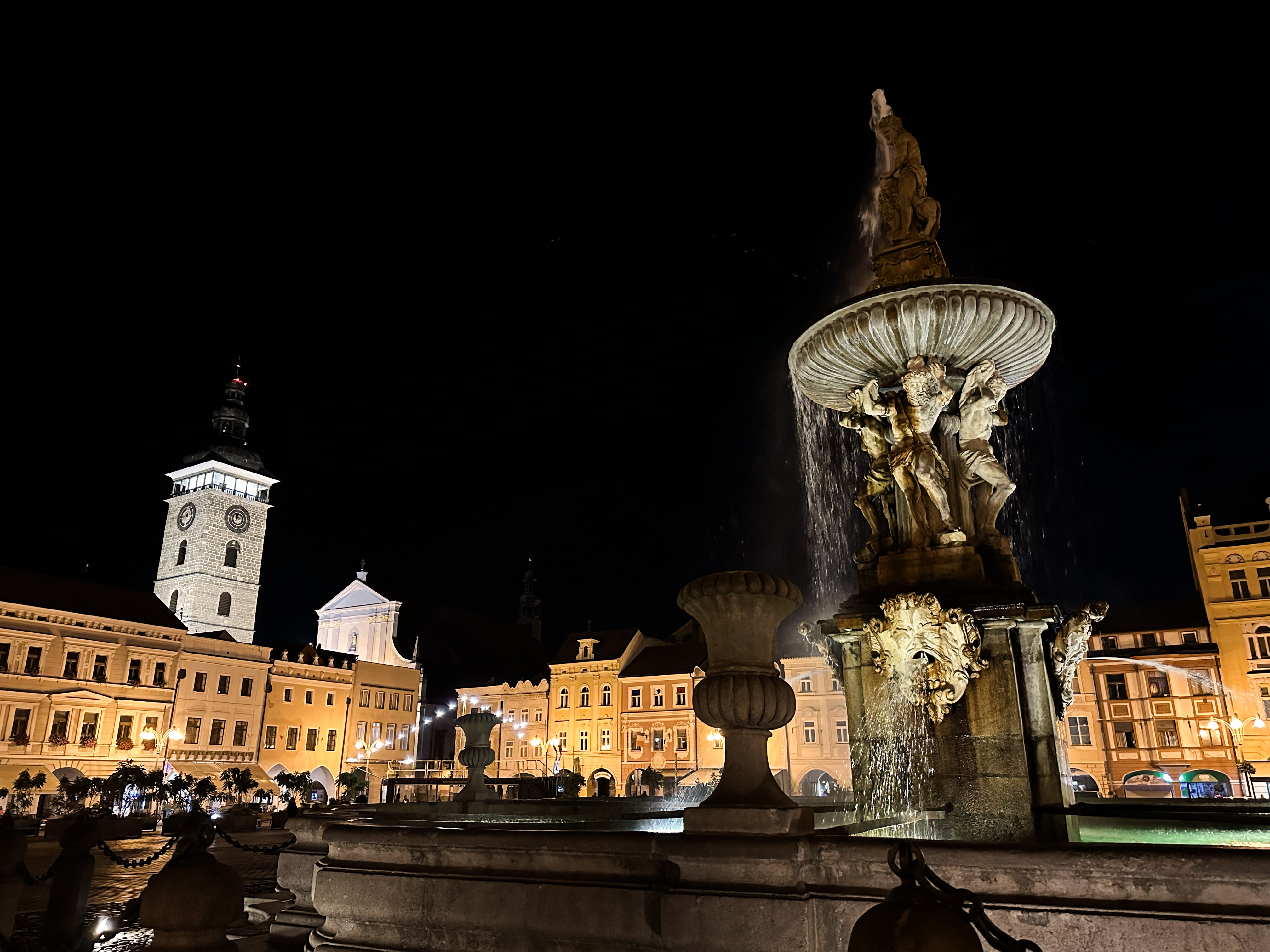
Between Prague and Český Krumlov, but closer to the latter (only a half-hour drive), is the capital of the South Bohemian region, České Budějovice. The first written mention of the city was in 1251, and it’s most known globally for its Český akciový pivovar that was established in 1895, or the “Budweiser Budvar Brewery” today. It has one of the largest town squares in the country, which hosts holiday markets mentioned earlier in this post! We stopped here in search of something I’d been craving since my study abroad days: Czech hot chocolate. Czechia is not famous for this any more than countries like Belgium, Switzerland, etc…but I remember it having my favorite, anyway. The spot we stopped at didn’t disappoint!
Back in Prague, I visited a park I hadn’t seen previously.
Letna Park, Prague
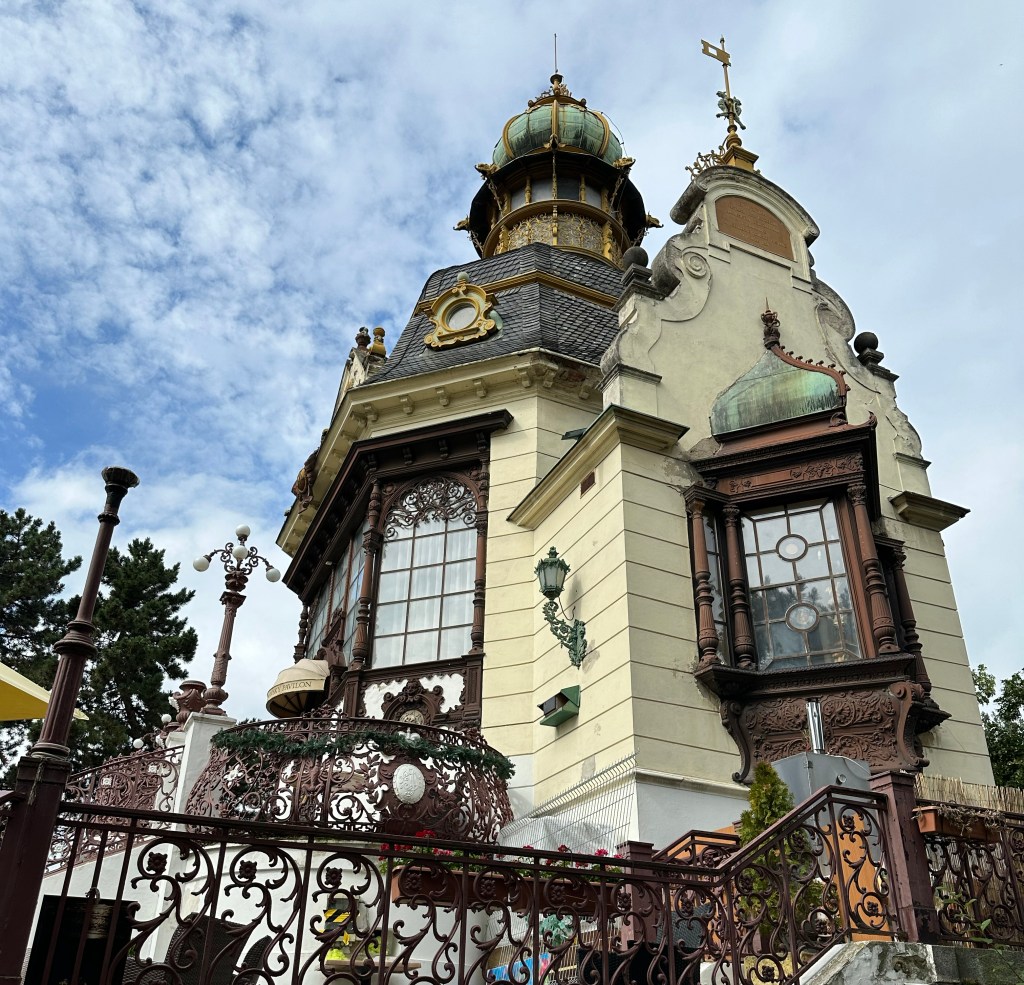
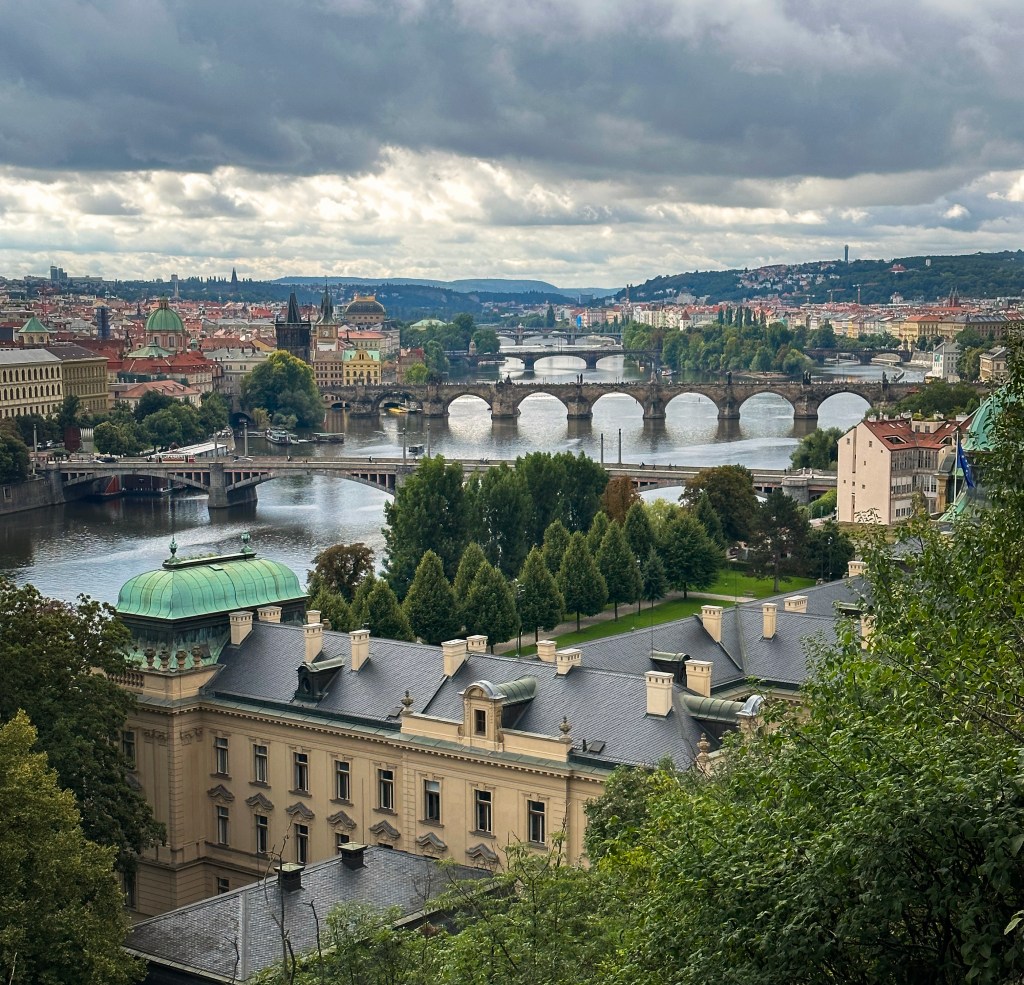
I was in Letná Park on a summer morning, and it was far less crowded than the touristy areas across the bridge. It has beautiful panoramic views from many parts of the park, and it’s home to the Prague metronome! It’s 23m (75 ft) tall and weighs 7 tons. This spot used to house a giant Stalin monument overlooking the city, which was demolished by dynamite in 1962 after his death. In 1991, a metronome was built there to symbolize the new, post-Communism era (for more information, look into the Velvet Revolution in 1989). This might fit the stereotype of Central European straightforwardness…a metronome to symbolize the passage of time.
THANK YOU ❤
Thanks for reading my seventh Crown of Cureope blog post. At the time I stood on the top of Czechia, we had crossed into 4 figures, with $1,100 raised. That included a trailhead donation – just in time to get a postcard (: I really appreciate your contributions- they’re all going directly to the American Association for Cancer Research to fund lifesaving discoveries.
Next up, San Marino! 🙂
Map of Places to Visit in Czechia:
 Crown of Cureope
Leave a comment