
The original plan included visits to three European microstates over a UK bank holiday weekend: San Marino, Vatican City, and Monaco. The highest point of Vatican City is in the gardens, and on Easter Monday (April 21), Pope Francis passed away. This meant all tours of the Vatican Gardens were cancelled until after the conclave, which ended up concluding on May 8th, 5 days after my scheduled tour. I found a low-enough-cost way to reroute from San Marino directly to Monaco. While it would have been nice to be in the Vatican during that special time, I’m not a fan of huge crowds, and I’d need to return anyway for the high point. I’d seen Pope Francis twice before (once at a Papal Audience, and once in Philadelphia…not far from where Pope Leo XIV went to school) – I’ll include that in the Vatican post once that trip happens! Maybe the next visit will allow me to see Pope Leo XIV, the first American pope.
A Bit About San Marino
San Marino is thought to be the oldest constitutional republic in the world, dating back to 301 AD. It’s the largest of the three microstates I’d intended to visit this trip, but it’s smaller than every other country in Europe. It’s the fifth smallest in the world, with Nauru and Tuvalu ranking between it and Monaco. For such a small country by population and land mass, it has quite a lot of history…way too much to type here. So, I’ll just mention a few things I’ve found interesting!
San Marino is one of only a handful of countries in the world with a diarchy. Its two heads of state, the “Captains Regent”, are elected every 6 months (April 1 and October 1). In 1861, they gave Abraham Lincoln honorary citizenship. In 1944, the UK accidentally dropped bombs on San Marino, thinking they were harboring German forces, and there is an unproven rumor that they declared war on the UK in retaliation. Throughout the country’s history, it’s generally stayed neutral through major conflicts like the World Wars. Its approach has sometimes been called “active” neutrality, though, as it tends to be pretty involved in dispute resolution. It’s not an EU member, but the Euro is the official currency and Italian the official language. There is another language spoken there: a Sammarinese dialect of Romagnol. “Sammarinese” refers to the people of San Marino, as well.
Today, it’s the only country in the world with more registered vehicles than human residents. This has to do with San Marino’s position as a landlocked country within Italy and its favorable tax treatment. I did not notice an excessive number of vehicles while there. (: One of the most interesting times to visit is during Medieval Days, which are happening from July 25-27 this year! There are historical reenactments, medieval games, and the traditional Challenge of the Tricorniolo. Despite its status as one of the richest countries in the world, it can be a decently affordable holiday, with a train station (good connections with major Italian cities) and an airport (with cheap flights, at least from London) in the nearby Italian city of Rimini. The border control is essentially nonexistent, but you can get a souvenir stamp anyway! (…probably not in your actual passport though, as it could invalidate it)
The High Point
I flew into Rimini Airport on May 1st, and the plan was to take the bus into San Marino, then back again the following late morning before an afternoon train to Rome. With the change in plans, I’d condensed the San Marino visit a bit, and I’d need to see Monte Titano (the highest point) on May 1st, as opening hours were only from 9 to 5. That meant needing a car, as the bus wouldn’t allow for enough time before the towers closed. I knew there were three days to avoid Monte Titano (when at least La Cesta, the tallest tower, is closed): January 1, November 2, and December 25. However, on other Italian public holidays…most car rental companies are closed for pickups. I only found one in the whole Rimini area that was open: U-Save. They have a shuttle to pick you up from the airport, with very nice people working there! It worked out perfectly, and I headed up to this parking area to begin the walk to the three towers: Guaita (first), Cesta (second), and Montale (third). I would recommend bringing euro coins, as I was having some trouble with the credit card and contactless payment options in the parking lot (tried US and UK cards).
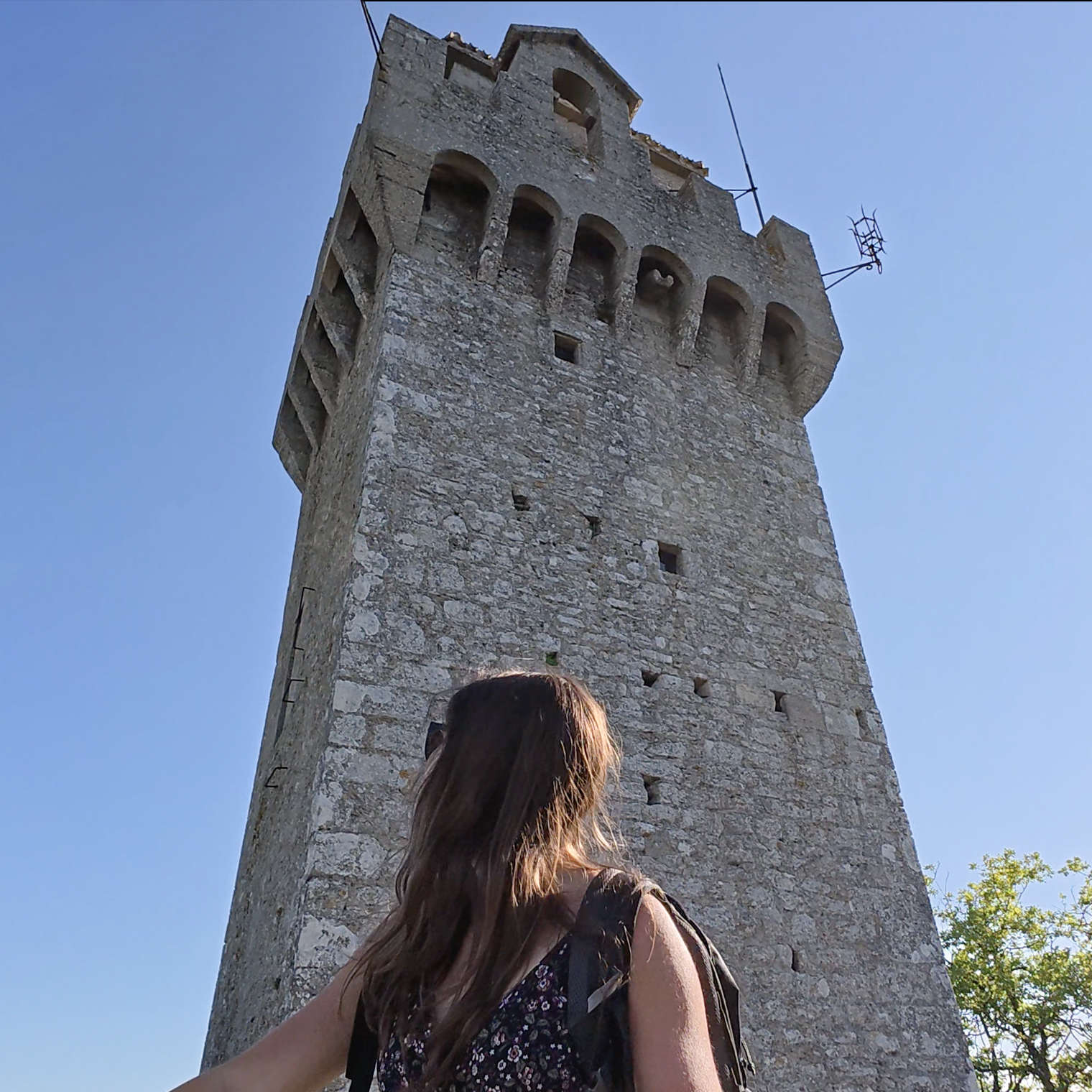
From where I parked, it takes under 10 minutes to reach Montale, the third tower. I was going in reverse order (they’re numbered based on when they were built, with Guaita being the earliest), but there are plenty of lots to choose from to start your journey at any point along the ridge. This is the only tower of the three that you can’t go inside, and it’s pretty small. I had a look around the perimeter for a few minutes before proceeding to La Cesta, as I wanted to make it inside before closing time! I’d be passing Montale again on the way back to my car, anyway. La Cesta is the highest tower and is also known as Torre della Fratta. I couldn’t find a clear translation for that other name, “Fratta”, but it seems to be something like ‘scrub-covered rock’. Pretty on the nose for the terrain.
Monte Titano translates to Titan Mountain. Why? It’s a reference to the Titans from Greek mythology…but these were the “giants”, and San Marino isn’t exactly giant, nor is this mountain, relative to the nearby Alps. Apparently, these pre-Olympian giants were attempting to reach Zeus by piling boulders up to Mt. Olympus in the heavens. They were trying to overthrow the Olympians, but Zeus found out, and he toppled the boulders, forming the mountain that would be named Monte Titano.
The alternative, scientific explanation is that San Marino was once underwater. Massive earthquakes caused large rock piles to slide from around 50 miles away toward the Adriatic Sea. The area is generally flat, but some ‘rock piles’ like this emerged from that era. You can even see some in the distance from various lookout points along Monte Titano! I still find the mythological explanation more interesting. Anyway, back to 2025.
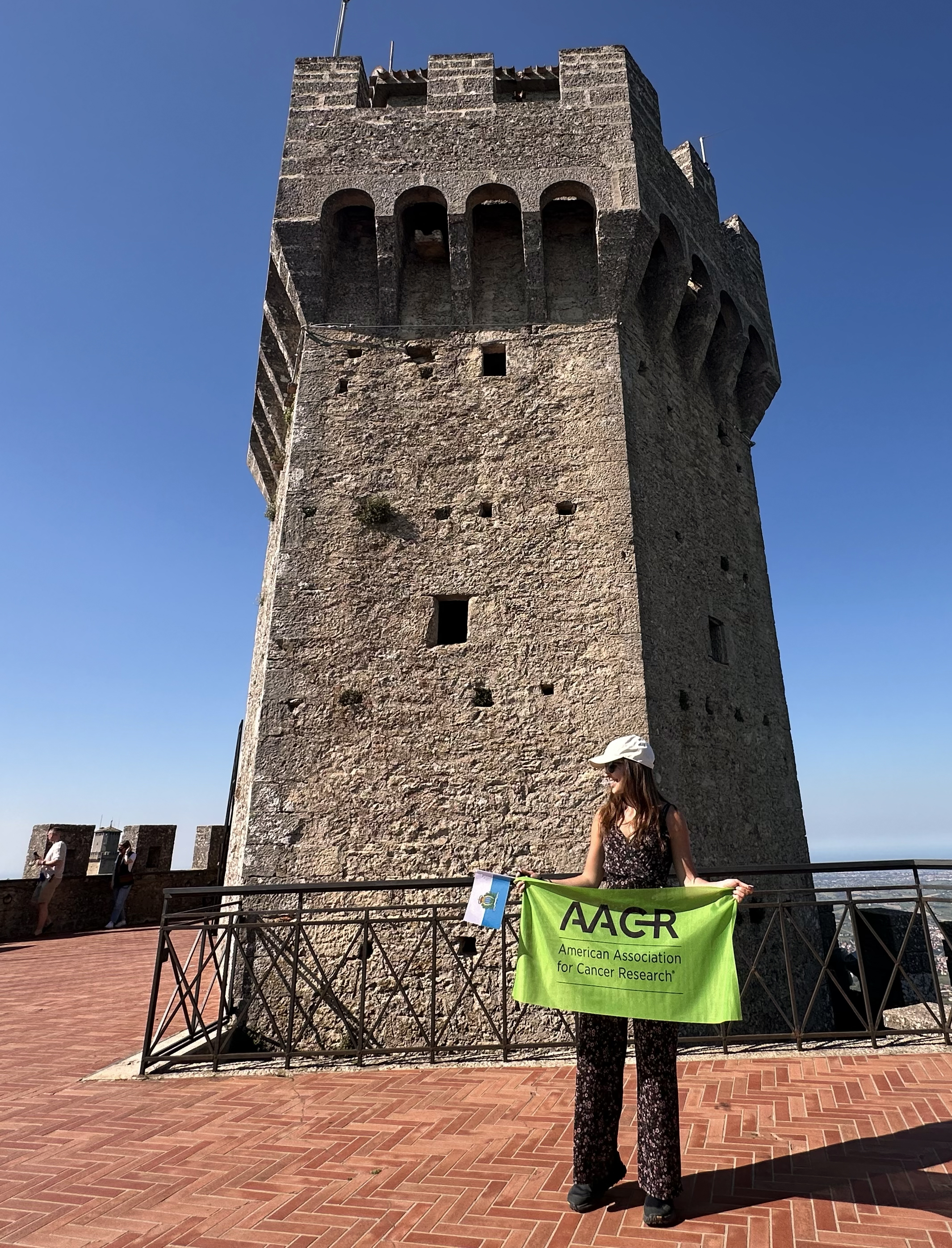
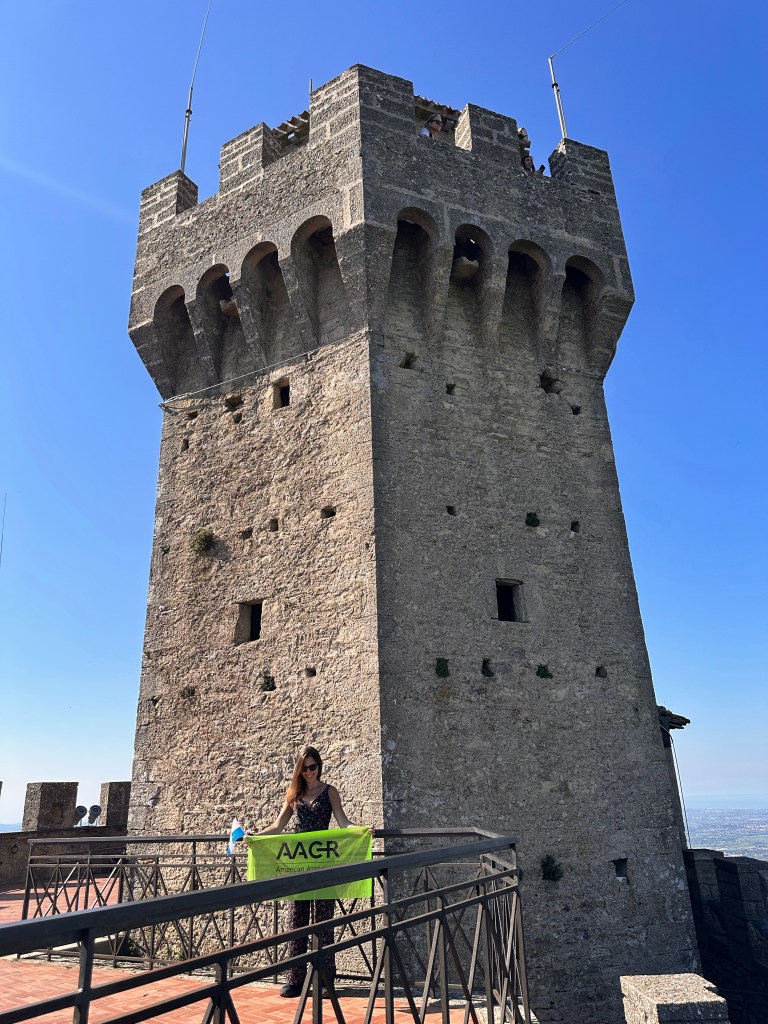
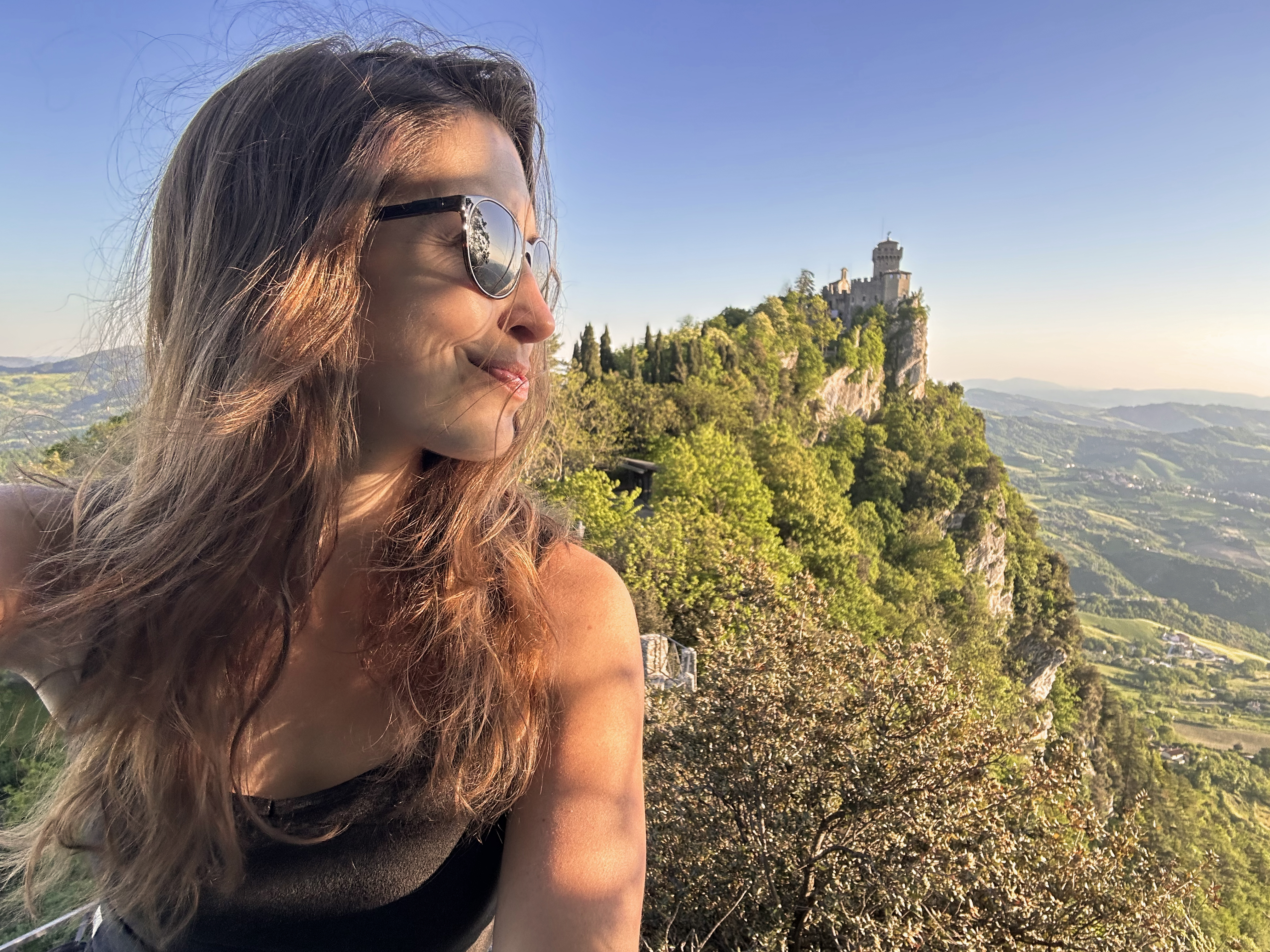
I’d been trying to find information about where to find the highest natural point on Monte Titano, but everything seemed to just reference the manmade Cesta tower. I asked the helpful employee (who also saved me a few euros by having me wait five minutes to buy my ticket…the last hour is steeply discounted!) where the highest natural point was. She said that the tower sits on it, so it counts for both! Like Belgium with the manmade stairs, it’s hard to know where to stand for the “natural” highest point, so I settled on standing on the larger platform below the final tower portion. Some research indicates that the highest lookout point (behind me in the summit photo) sits at 755-756m, so this platform below the “keep” is fairly close to the natural high point at 739m. A drone shot the next morning confirmed it that it’s not far under my feet! (:
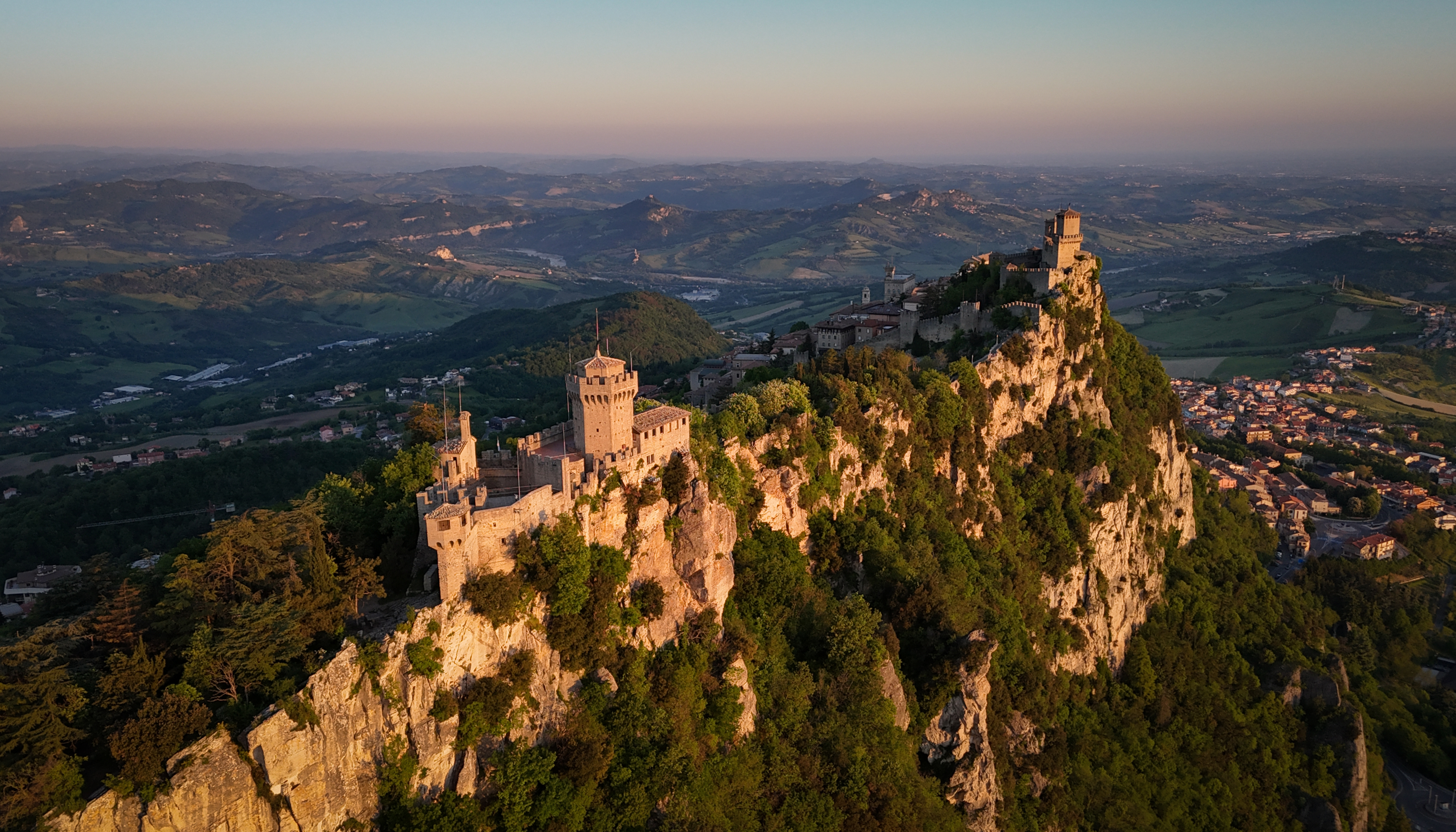
If you have more time and are interested in history, the towers are essentially museums with plenty of artifacts on display. La Cesta houses the Ancient Weapons Museum, which you walk through on the way to the top. There’s more information on the exhibits and things to see on the national museums website.
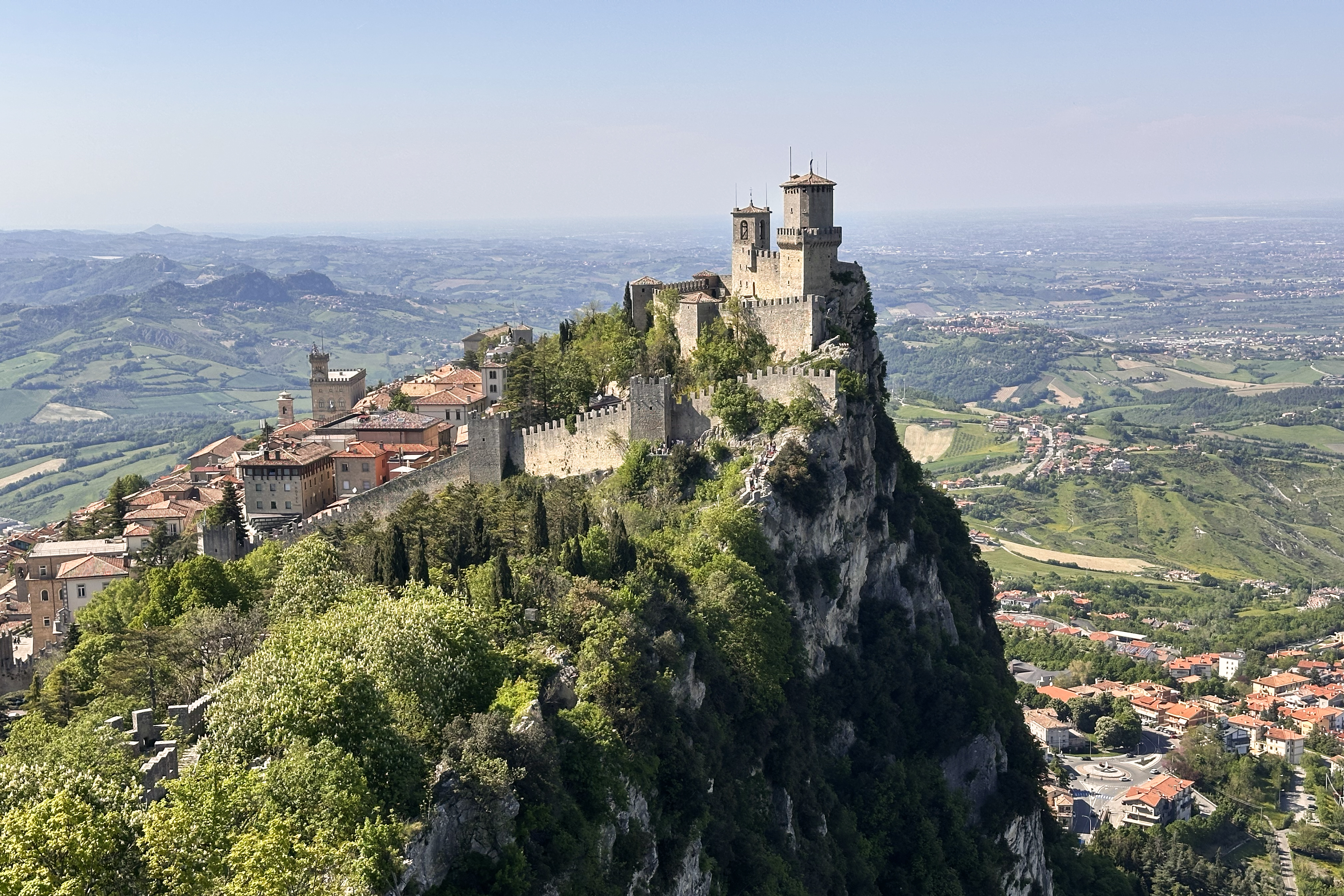
The ticket I purchased for Cesta also grants access to Guaita. I didn’t expect to get in, as I made it over there a few minutes after 5pm…but the ticket scanned in, and plenty of people were still about.
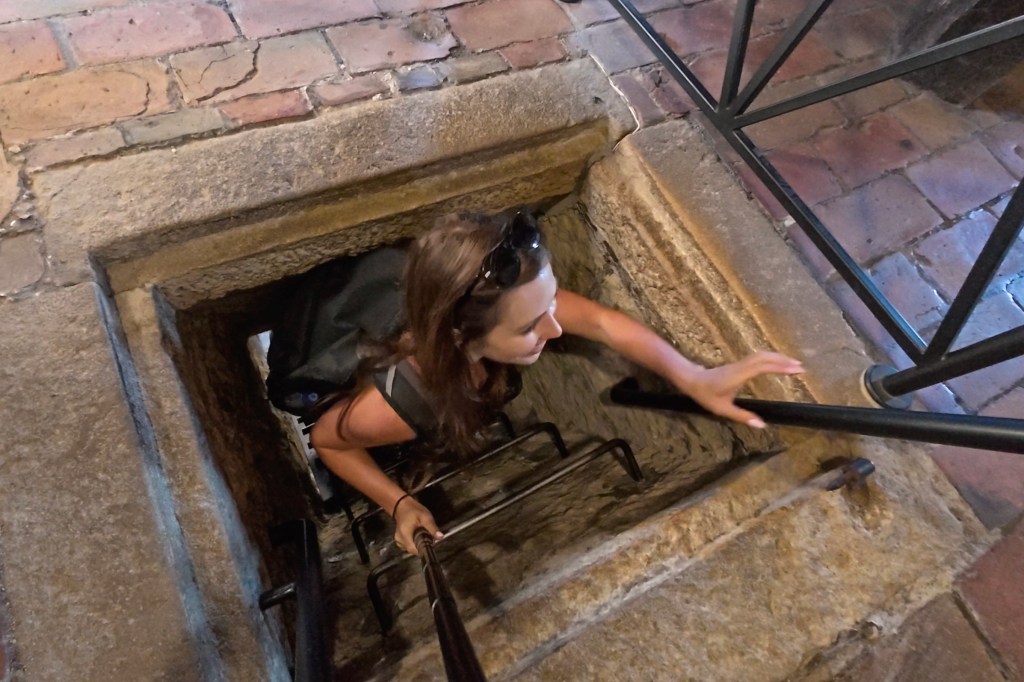
The lighting at this time of day was beautiful, approaching golden hour. Crowds were thinning out, which is helpful for probably the biggest bottleneck on Monte Titano: the ladder to the top of the Guaita tower!
I would like to warn everyone to AVOID WEARING DRESSES/SKIRTS HERE. I cannot stress this enough. The ladder is quite vertical, and there is no hiding your backside from the queues behind you. Larger backpacks might also send you tumbling back down if they catch on the narrow gap you emerge from at the top.
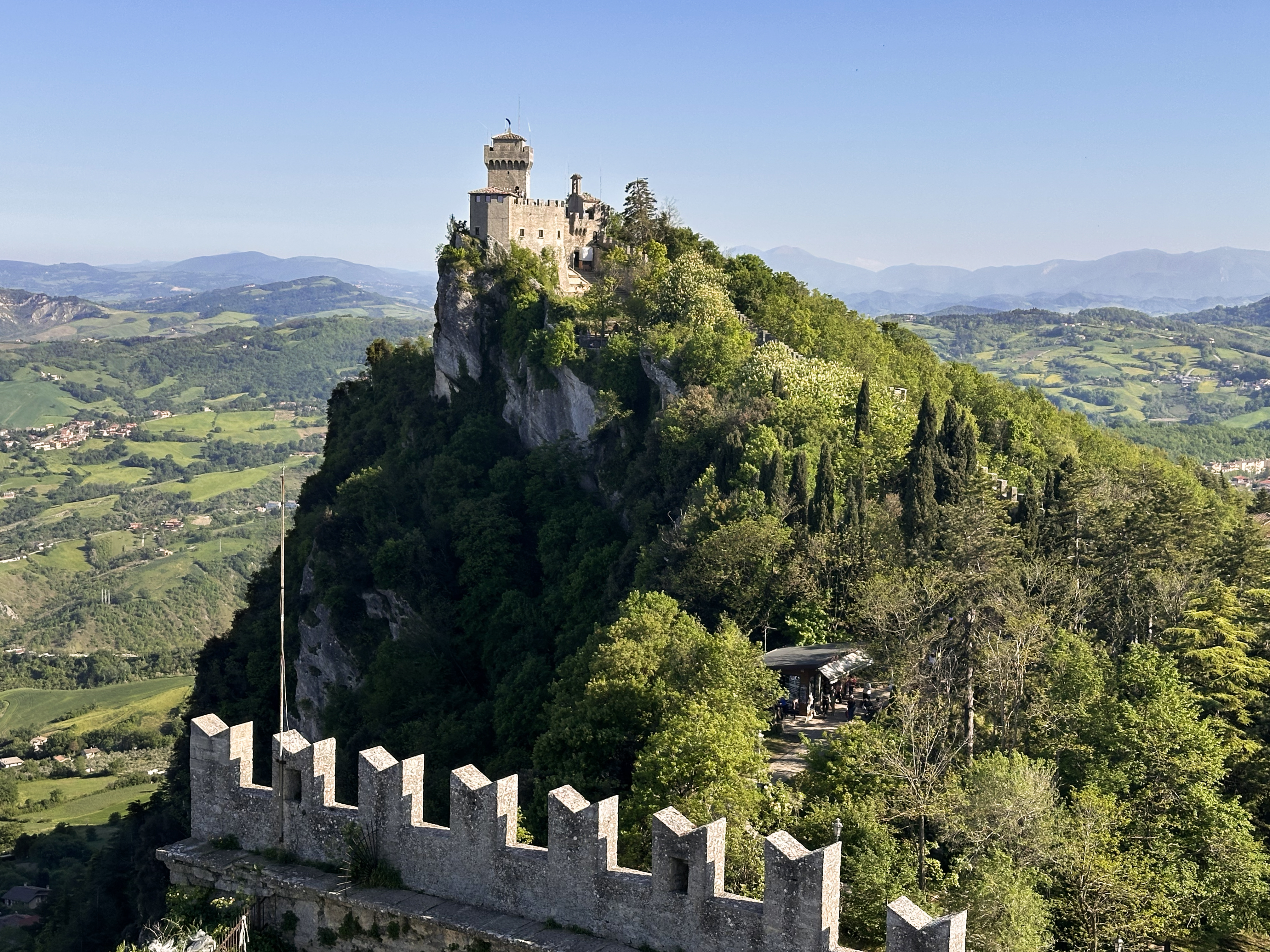
I walked around the rest of the grounds that were open to the public, enjoying views of La Cesta! I don’t think there’s a bad view from anywhere in these two towers, and the views you get of one from the other are equally incredible.
I retraced my steps along the path, past the second and third towers, back to the parking area. I took many more videos than photos, so feel free to check out the Instagram highlights, as usual, for a video tour (:
I’d found a hotel with points that was ‘pre-opening’, The Regent Boutique Hotel & Spa San Marino (not that there was time for the spa…plus, they charge extra for that), so it was a great deal for a quick stay and wasn’t crowded. There was parking included and a restaurant inside, and it was only a 10-minute drive from Monte Titano. You could even walk it in under an hour, which wouldn’t be too bad going downhill, but the reverse trip would be a bit of a hike. With the change in plans for the weekend, the cheapest transportation/lodging options didn’t allow time for that, but it could be a nice way to turn this high point into more of a “hike”. Alternatively, the cable car is just a 20-minute walk away, and I’d recommend this option if you’re heading up within its opening hours. However, they generally don’t include sunrise.
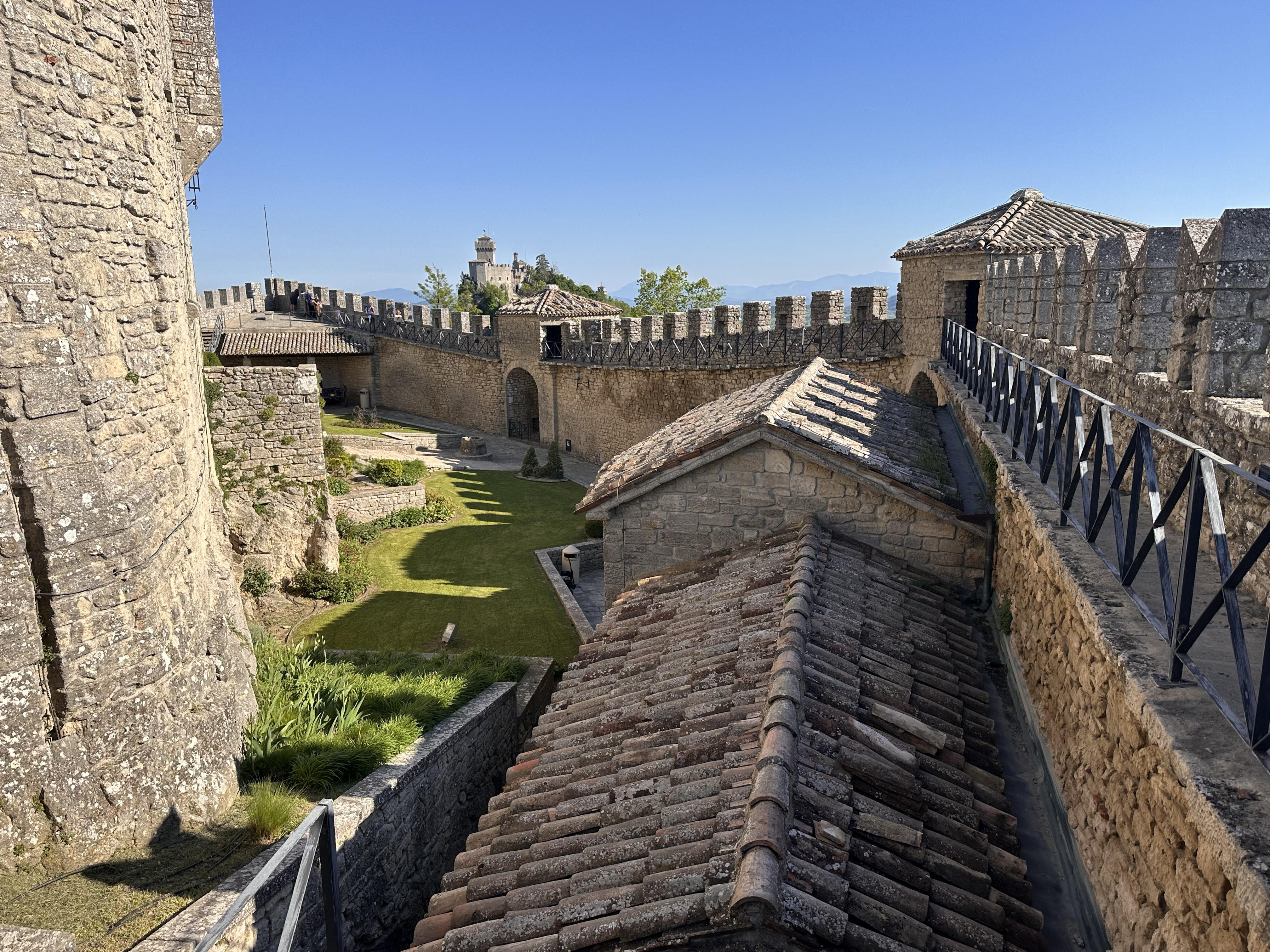
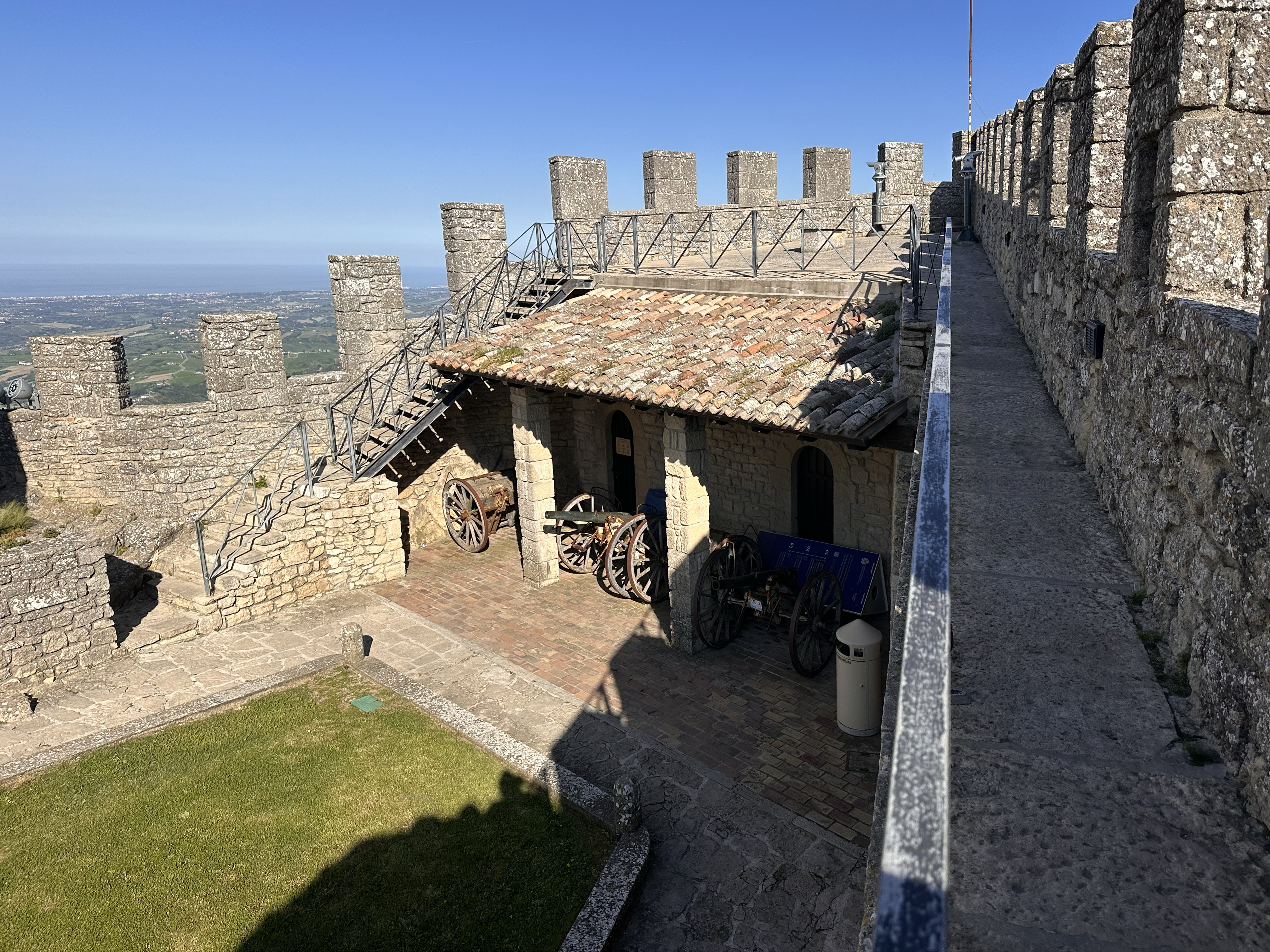
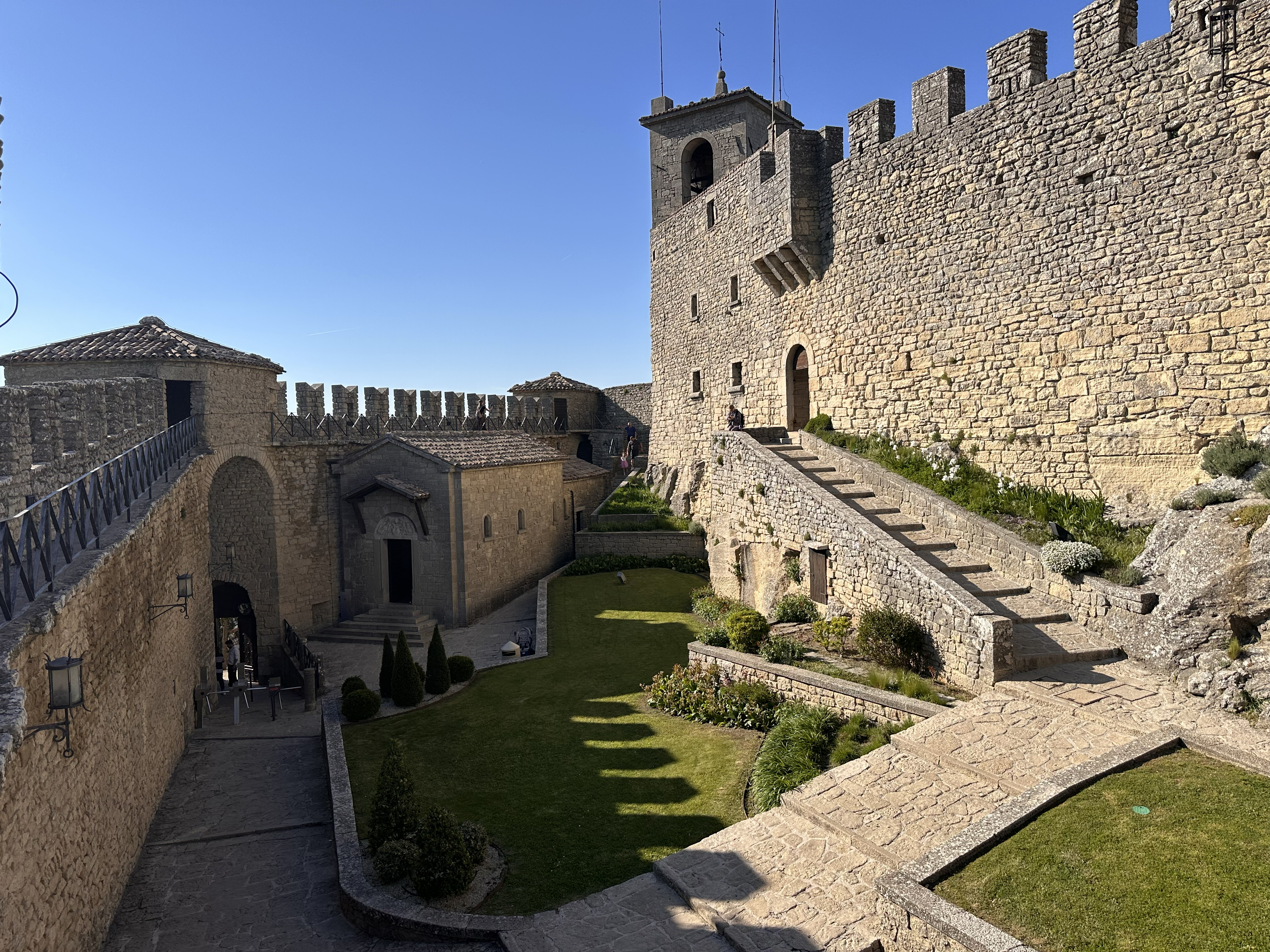
A Sunrise to Remember
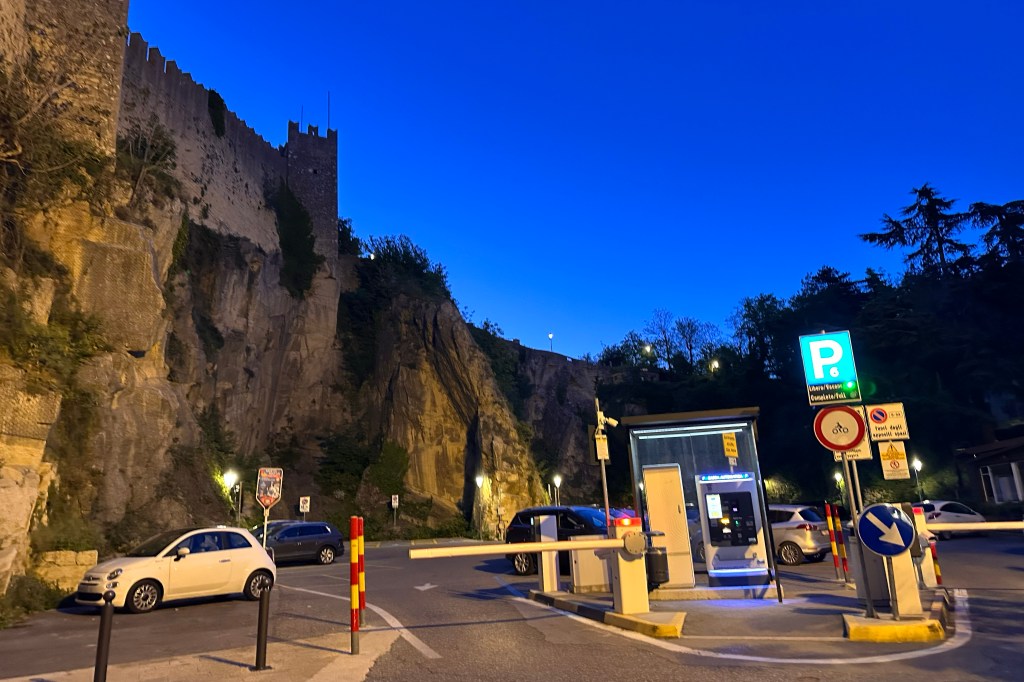
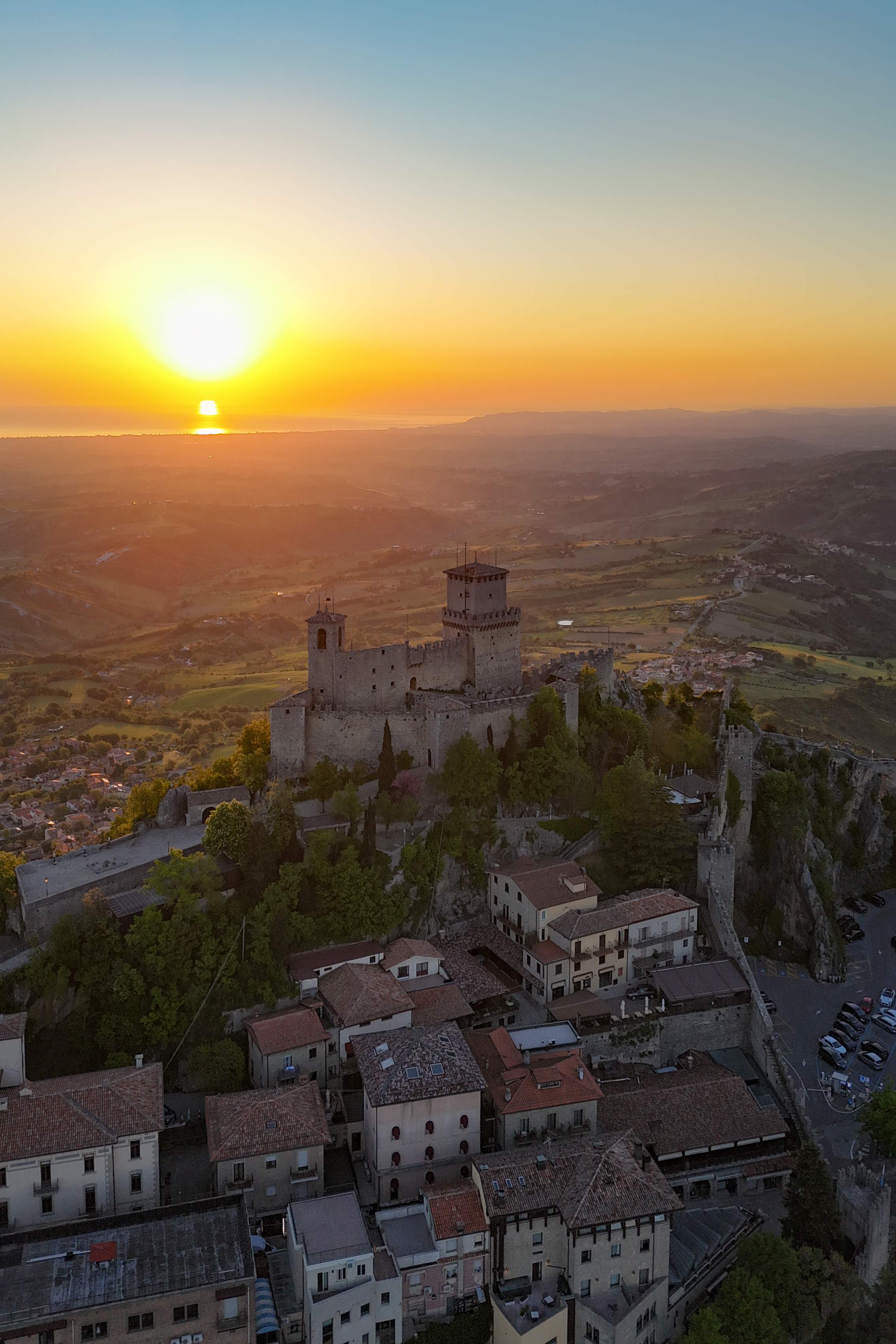
I was up a bit late for some work calls that evening, so when my alarm went off at 5am the next morning, I almost turned it off. Thankfully, my window was facing east, and I saw the most beautiful, pink-tinged horizon through the blinds. I jumped out of bed, got ready (barely) in 10 minutes, and high-tailed it back up to Monte Titano. I opted for a parking lot close to what seemed like a good launch point for my drone. It ended up being free, possibly because I exited before 8am? Normally there’s a charge!
At the moment, San Marino does not appear to have specific drone laws on their aviation authority websites. Instead, I found some guidance on another independent site, so I’m not sure how accurate it is. It just lists the common sense rules of flying in daylight, staying away from airports, maintaining a visual line of sight (VLOS), and steering clear of large crowds. A permit isn’t necessary for recreational use. Monte Titano has been a UNESCO World Heritage Site since 2008, though, so even more common sense is necessary to avoid damaging a historic structure. Flying into a tower would demonstrate a lack of sense, so avoid flying on windy days (I was lucky with a very peaceful morning).
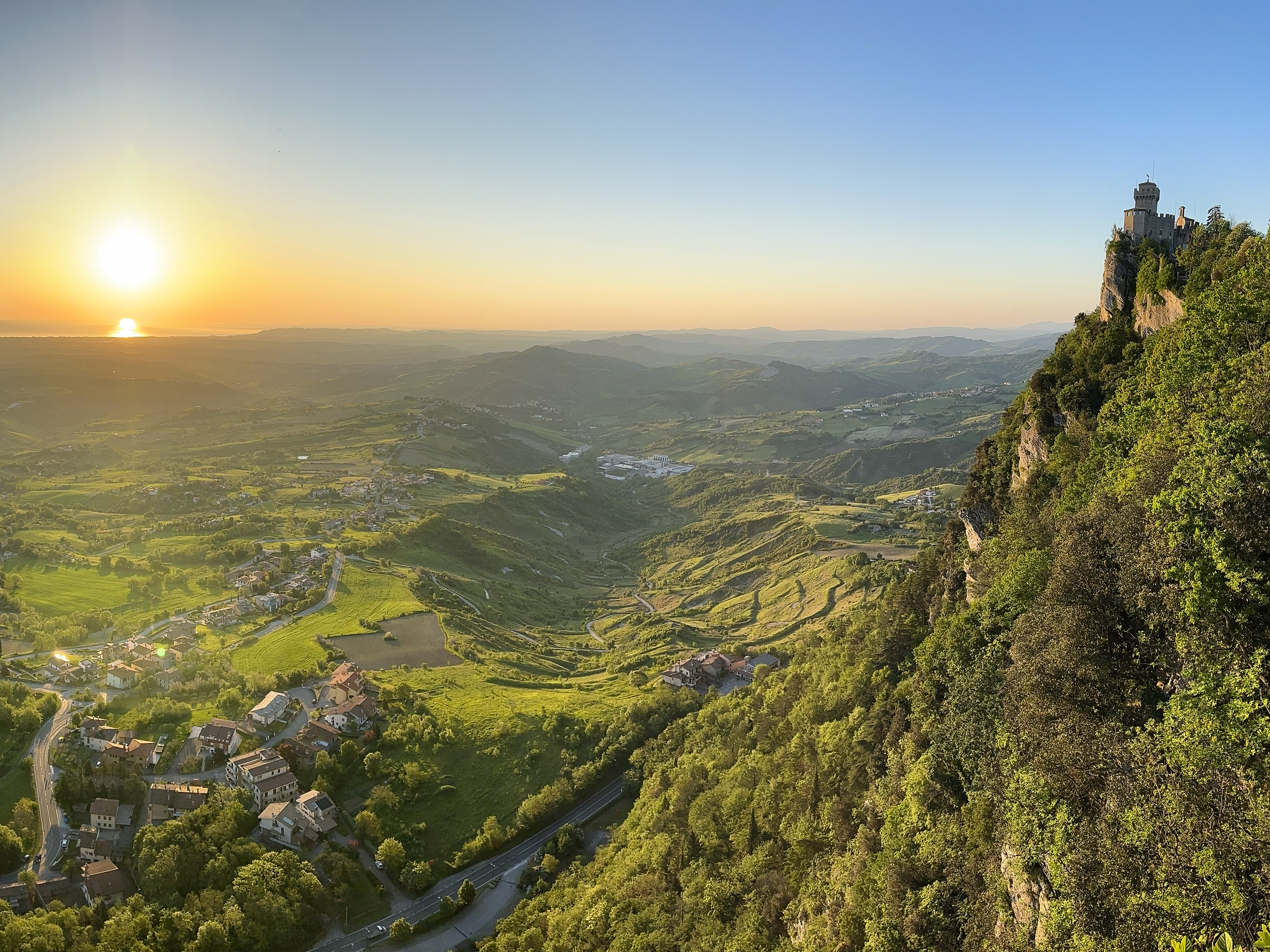
The sky was looking wilder with each passing minute. I quickly sent the drone up, but just off the ground, it already had a low-light warning, and it got confused about max altitude. I brought it back down, took off the ND filter I’d forgotten was still on there, and tried again. Success, mostly, with the camera facing the sun for the first few minutes before it was bright enough to pan around a bit more.
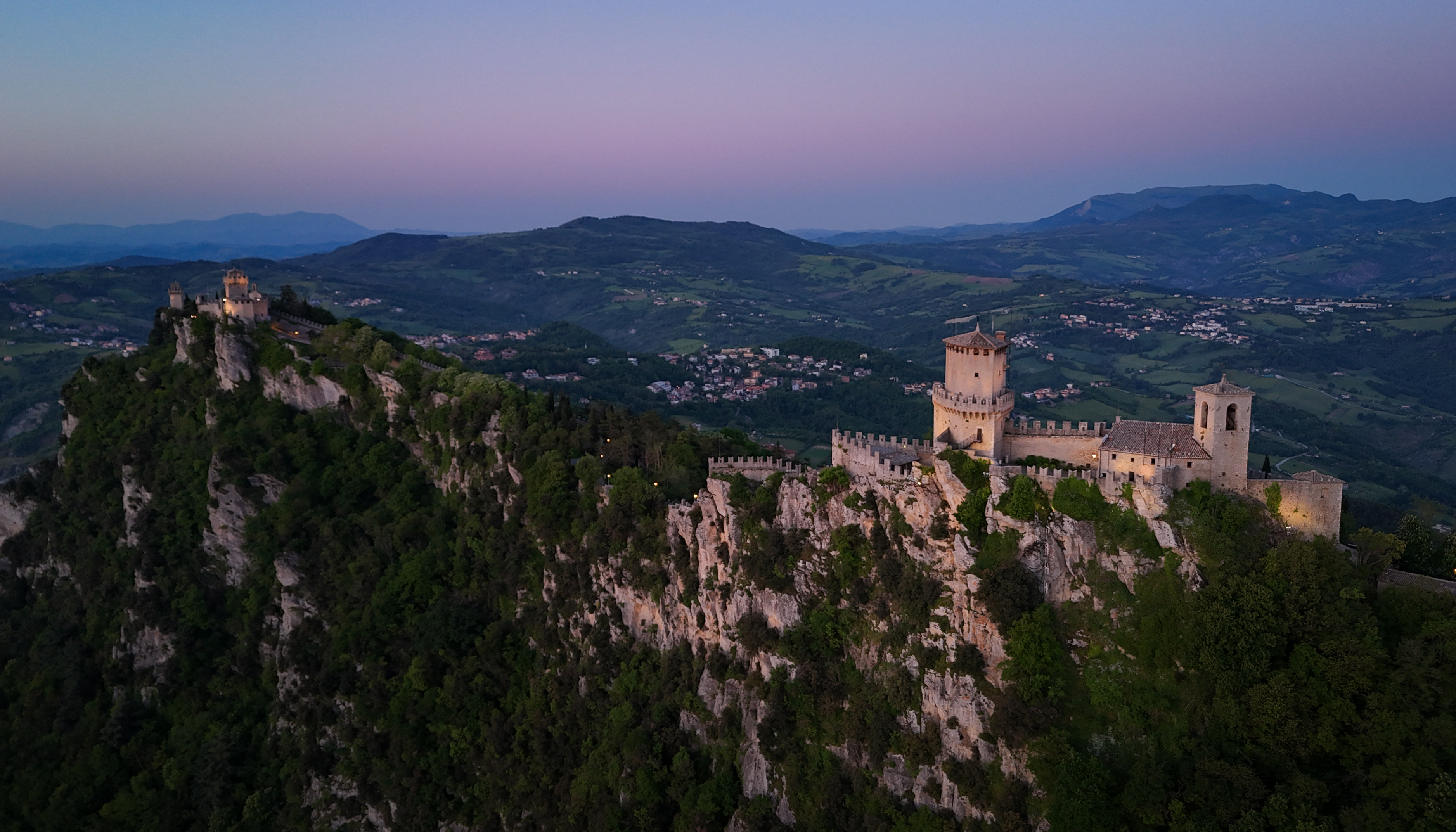
There are times when the drone makes things look way more epic than it does from the ground. This wasn’t one of those times. Both were unbelievable! There are some videos from both in the Instagram highlights, but here are a few phone shots:
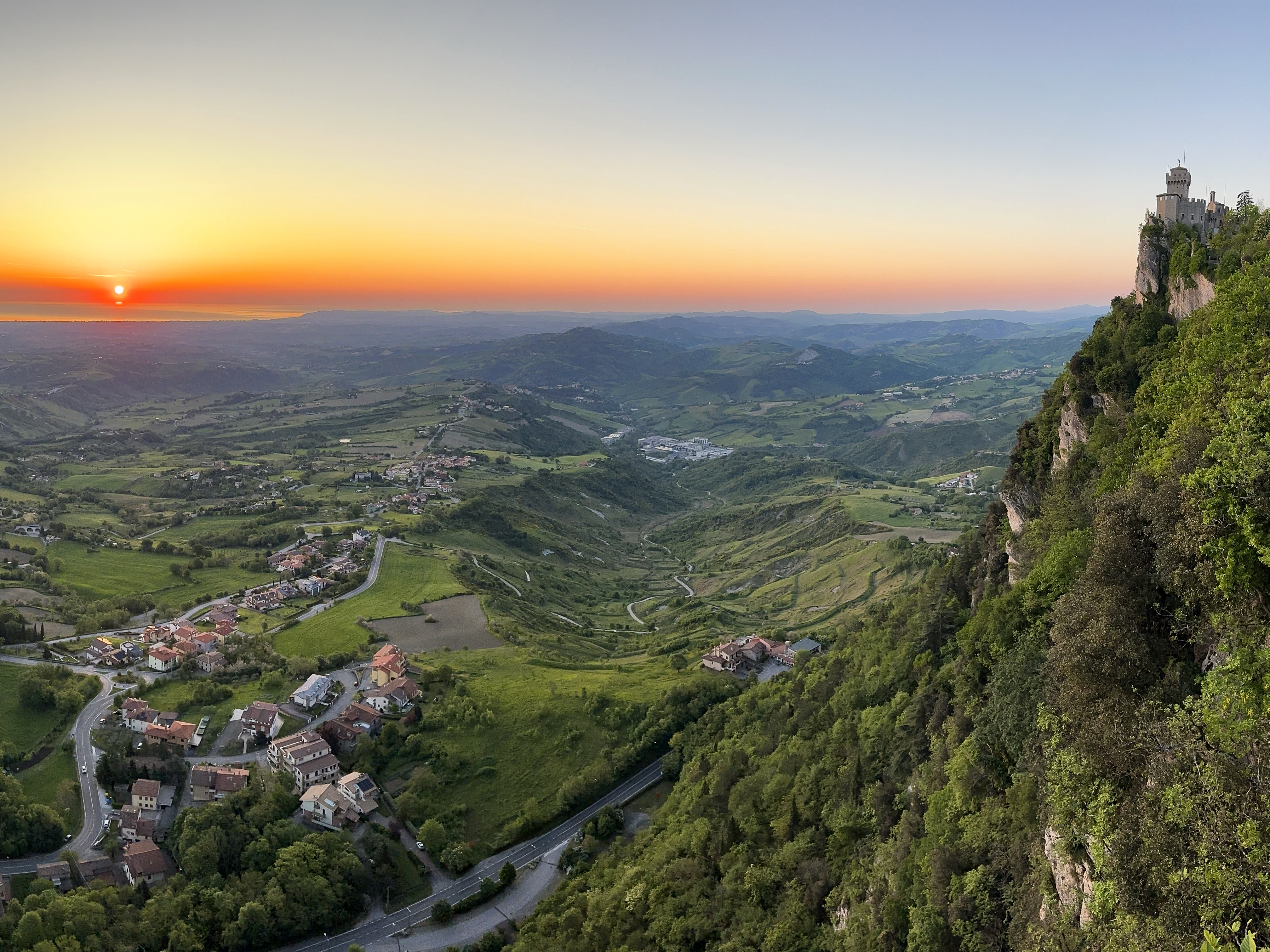
And here, one more drone shot, as I’ve already included a few in this post (& videos on the Instagram highlights):
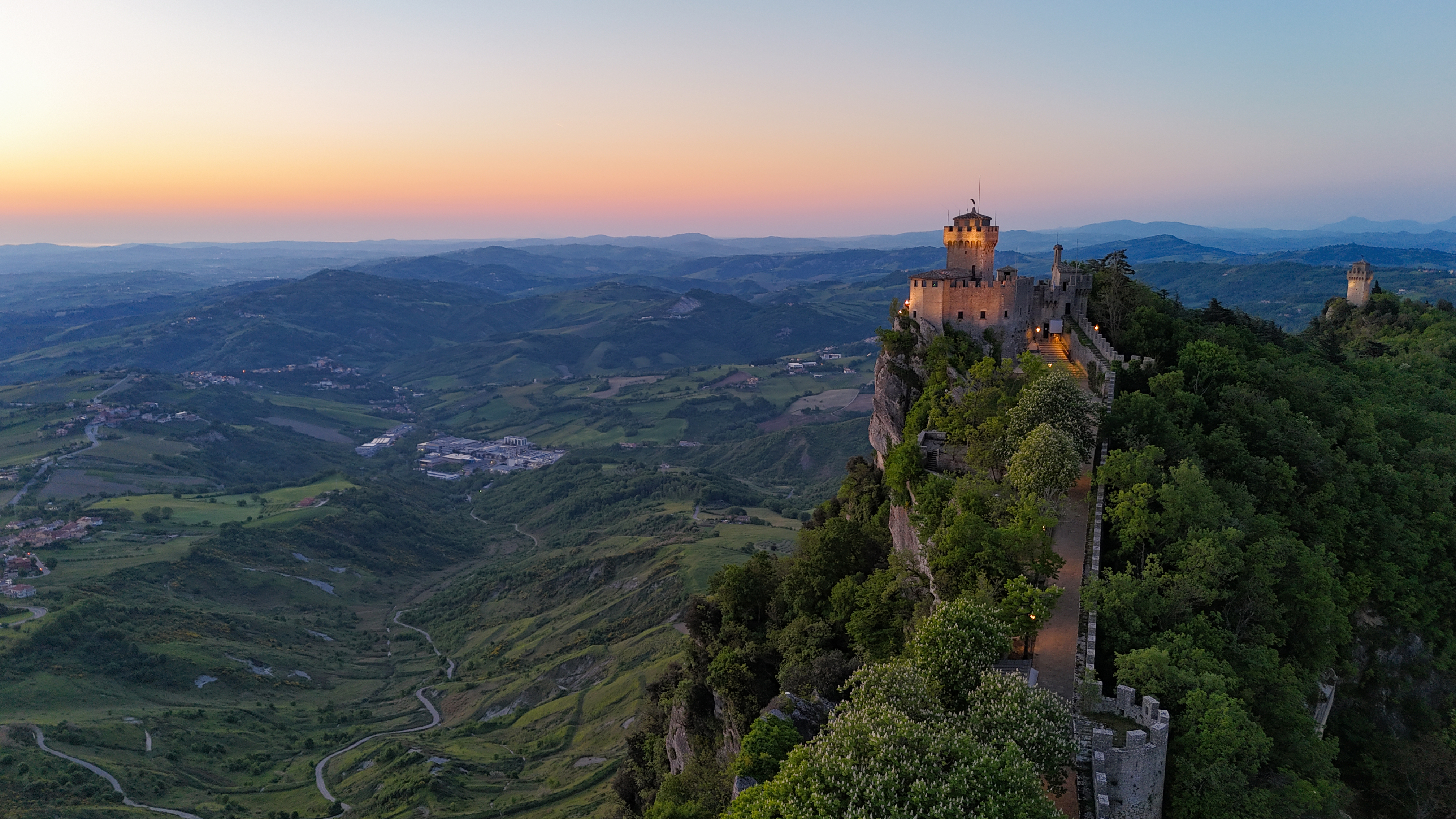
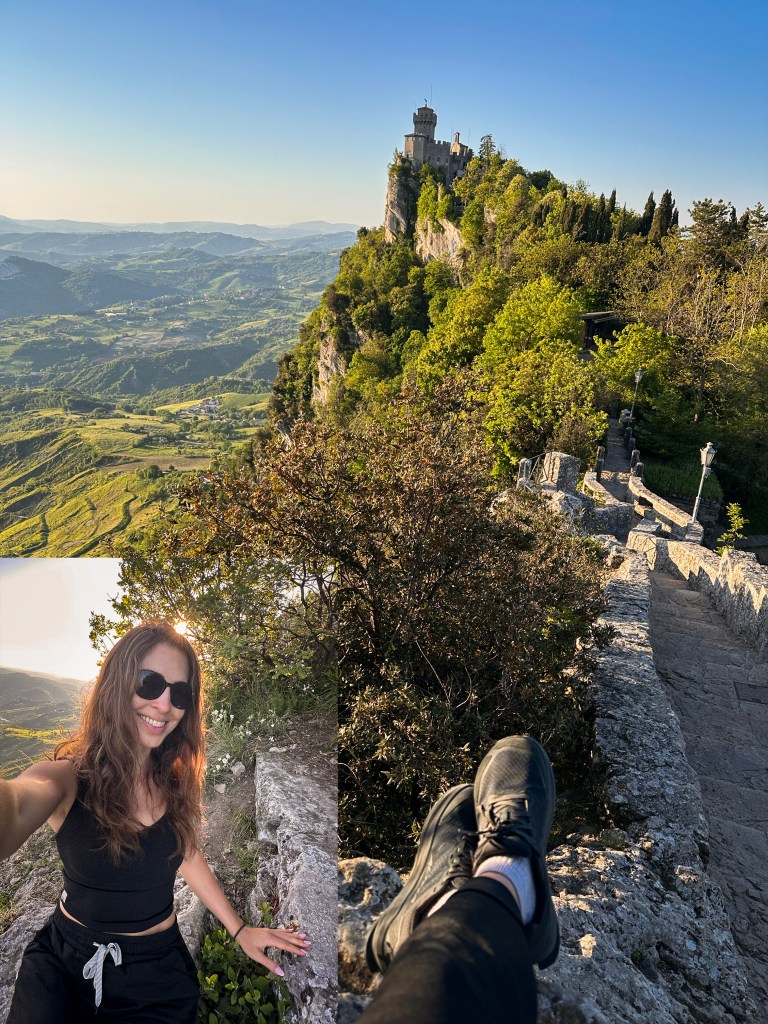
After a couple of drone flights, I walked a bit along the paths, before returning to a nice spot to relax for a bit longer. It was a Friday, the day after a bank holiday, and I ran into no one until maybe 6:30, then 2 other people 30 minutes later, and finally two cyclists powering through as I was heading out. That was it: 5 people in 2 hours. I never expected to get such a scenic, historic, and pretty accessible place to myself. The timeline that morning (that you didn’t ask for) was: 5:35am parking, 5:41am drone launch, 5:43am drone relaunch, 6am sunrise, 7:30am departure back to the hotel for breakfast. Sunrise here is really worth it; I don’t think there’s a more magical time to be here. Still, plan to stay until the towers open to see the inside – it’s worth it! I had to run to catch the first of 5 planned trains that day, so I headed back to the hotel for a quick breakfast, then returned the rental car.
Little Countries, Big Day of Transportation (9 Legs!)
At this point, I was back in Italy, as San Marino is landlocked within it. This blog post could end here, but I’ll share a bit more about the brief Italy exploring I tacked on!
Google Maps wasn’t the most accurate for traffic…so I was running behind schedule for the rental car return in Riccione (transportation leg 1). The helpful U-Save employee dropped me off at Riccioni Station (transportation leg 2), but the trains there are very infrequent, and I realized I’d be missing my next train to Bologna if I waited there! I hadn’t paid for the Riccioni > Rimini train yet, and there was a cab out front, so I hopped in (transportation leg 3) and made my next train with 2 minutes to spare. It was more than I wanted to pay for a 10-minute ride, but the rest of the plans would have unraveled if not for that cab.
The train from Rimini to Bologna took under 2 hours (transportation leg 4), and I had 40 minutes before the train from Bologna to Milan would depart. On the ride to Bologna, I was researching if it would be possible to see some of the main sites during that short window. It would be tight…if I took buses, they’d need to be timed just right and would take the full 40 minutes, without actually hopping out and seeing things. That would be pretty pointless. Walking would take too long. Instead, I found a bikeshare app RideMovi (transportation leg 5) with some bikes parked right outside the station. I wasted almost 10 minutes trying to find a toilet (incorrect signs are great), then decided to just look for one by the tourist sites.
Between Microstates, Some Microadventures
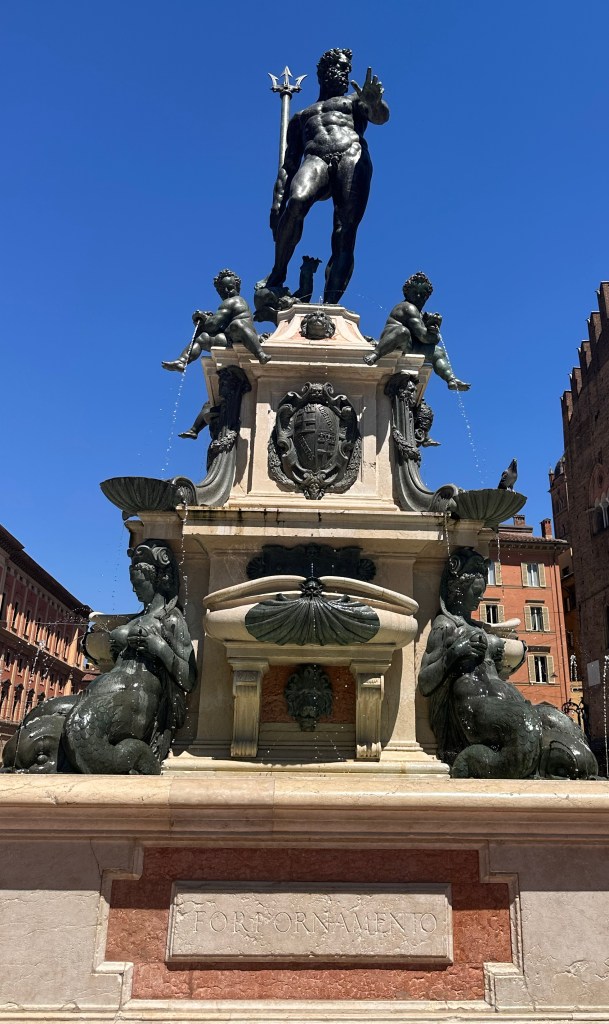
I set off on the “6-minute” ride to the Piazza Maggiore. With construction and other chaos, it was more like 10. Plus, it took a few minutes to find the bike, unlock it, and adjust it.
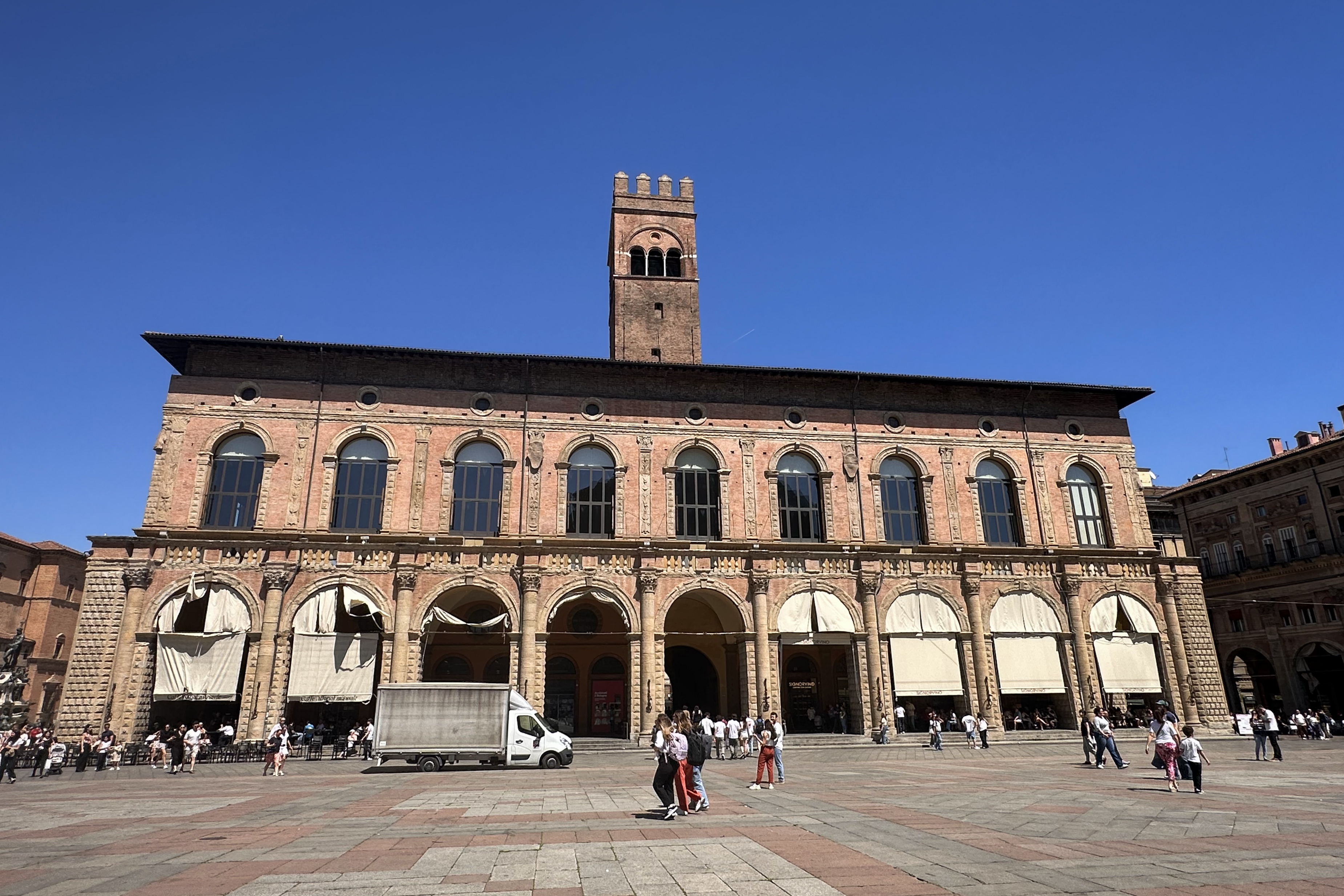
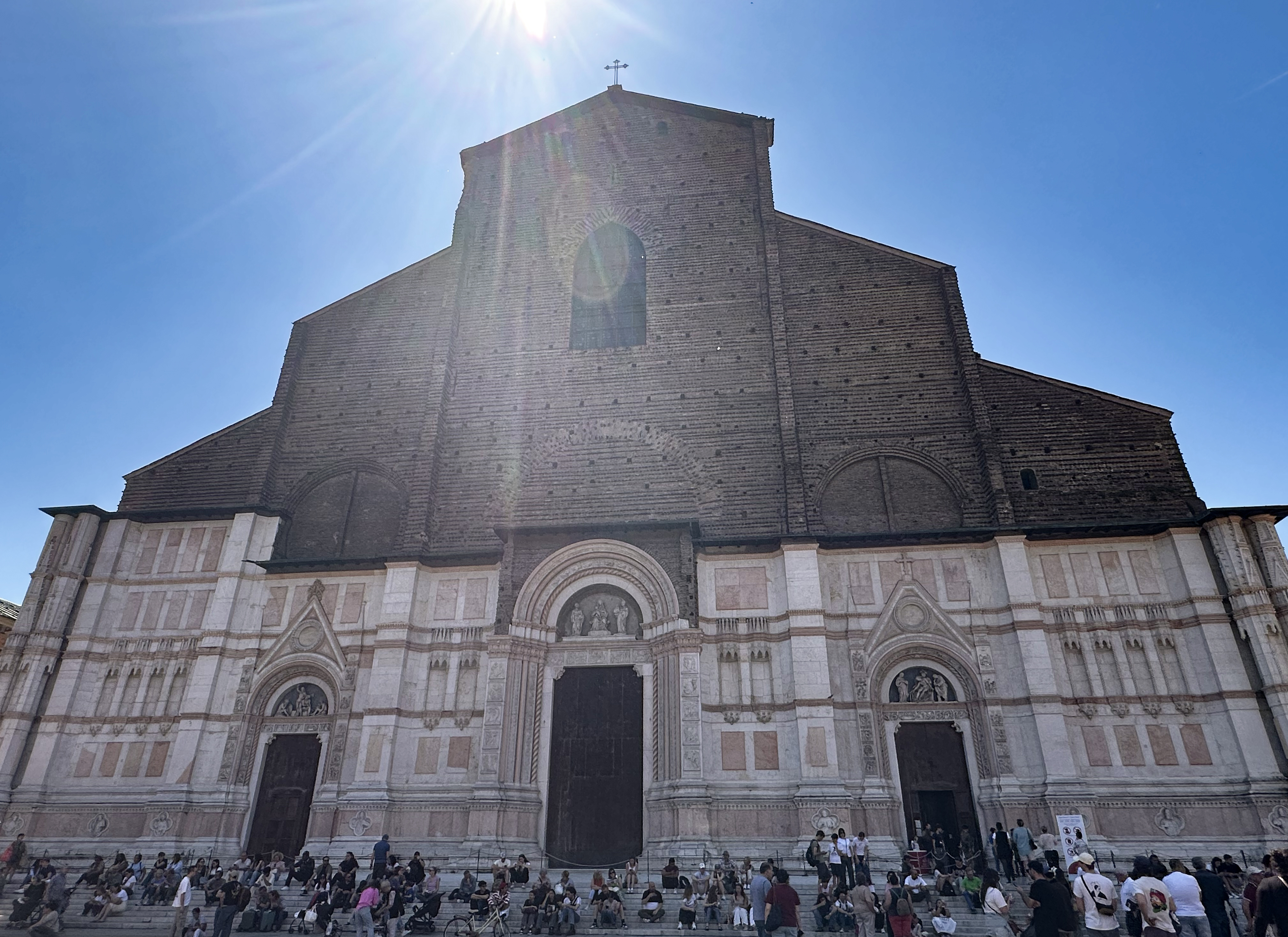
Once there, I parked the bike and booked it past the Torre dell’Orologio (Clock Tower) and Palazzo dei Notai (Palace of the Notaries) to the Neptune fountain. I could keep listing off other notable locations in that square, but, as you might expect, <5 minutes is not enough time to properly explore or learn about a city. It turns out that it also wasn’t enough time to find a restroom.
I only found out some interesting facts later, like the location of a secret bunker right under the Neptune fountain, haunted clock towers, and the fact that Bologna was founded in 1000 BCE (as an Etruscan city called Felsina), well before Rome, Florence, and Milan. It only became a Roman city well after Rome, though. Matera in the south is even older, with evidence of human settlement going back over 10,000 years! Less professional fun facts involve some immature jokes and observations around Neptune’s thumb from a certain angle, as well as the Sirens in the context of water egress. I intentionally kept the image small, so zoom in at your own risk.
It was soon time to grab the bike again to head back. In hindsight, I should have just ridden it all the way into the square (as far as it allowed, at least, as it’s pedestrian-only) to avoid wasting precious minutes walking back and forth from the bike rack (and having to rebook the bike on a new ride). Bigger problem, though…the app wasn’t allowing me park the bike outside the train station where I’d picked it up. However, I saw plenty of other bikes there, and they weren’t in anyone’s way. The boundary for the acceptable-return-spot was in the middle of the road in front of the station. The haunted clock tower back in the square was ticking. Figuring it was better to return it on a wide sidewalk than the middle of a busy road, I snapped a photo and then jogged (without the bike) into the middle of the road (light was red). The app finally processed my “acceptable” location and accepted the photo upload, and I headed back into the station with only 4 minutes until my train. Of course, it was way the heck across the station, and I made it with under a minute to spare. I would not say I’d recommend this itinerary for a 40-minute transfer at Bologna Centrale. Thankfully, the train had a toilet.
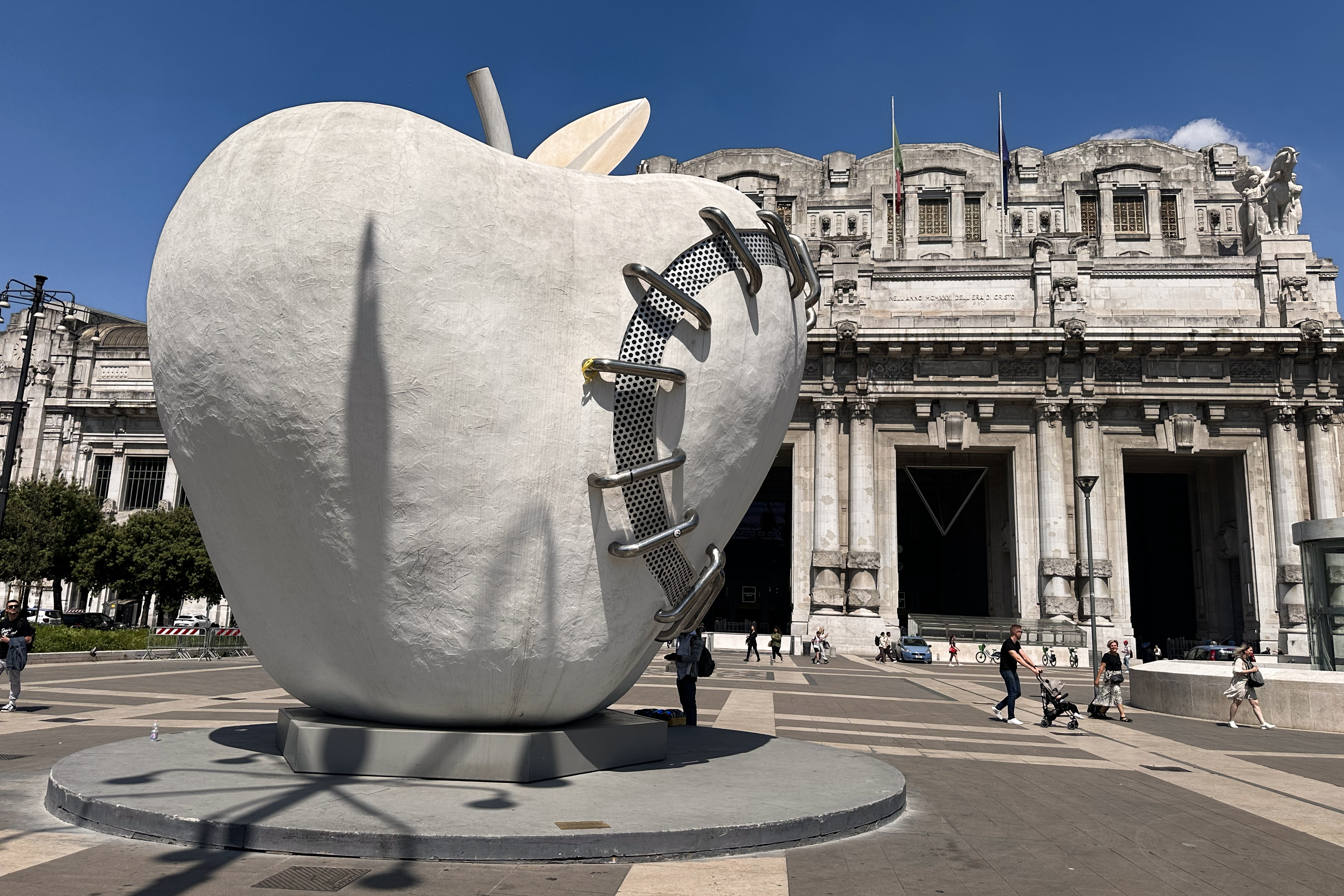
The train from Bologna to Milan (transportation leg 6) was the same duration as the transfer time I’d have in Milan: 70 minutes. The week prior, a Couchsurfer from Milan had requested to stay, but I’d been away. Instead, we met up at Milano Centrale for a quick coffee/smoothie, and I grabbed some dinner for the train. I didn’t feel the need to try to squeeze in a Bologna-esque sightseeing tour, as I’d been in Milan 10 years prior. This was a nicer way to spend the time.
There is no direct train from Milan to Monaco, so this one only went as far as Ventimiglia in Italy (transportation leg 7). From there, there was a 30-minute train to Monte Carlo in Monaco (transportation leg 8). This was the easiest transfer so far, as when we arrived, the train was just across the track. All of these trains had been fairly quiet, comfortable, and clean. Just don’t rely on the WiFi, as the train along the coast to Ventimiglia goes through many tunnels with no signal.
On the way to Monte Carlo, we were stopped for passport checks. I found this odd, as the highest point of Monaco sits on the border with France, and I’d notice the next morning that there wasn’t so much as a sign. My maps weren’t working, so I only realized later that this was likely the Italian/French border we were stopped at, not the French/Monegasque one. The train ride is mostly split between Italy and France, with only the final stretch taking you into the tiny country of Monaco. Transportation leg 9 is detailed in the Monaco blog post…or does it count as 9 and 10, since I was using 2 legs to walk? (:
The last tidbit I’ll say about these trains is to consider which views you want when selecting your seat. Some trains have assigned seats, while some are first-come, first-served. I found the best views to be over the water, so a left-side seat is best when heading from Milan to Monaco. The same is true for the train I’d be taking from Monte Carlo to Nice for my flight out the next day. Head over to the Monaco blog post for the rest of this trip recap!
THANK YOU ❤
Thanks for reading my eighth Crown of Cureope blog post. We actually (and coincidentally) received a donation right when I was taking the photos at the top of San Marino, bringing us to $1,275 raised at the time of this summit. (: I really appreciate your contributions- they’re all going directly to the American Association for Cancer Research to fund lifesaving discoveries.
Next up, Monaco! 🙂

 Crown of Cureope
Leave a comment