
(continued from BiH blog post)
Treća Sreća (Third Time’s a Charm)
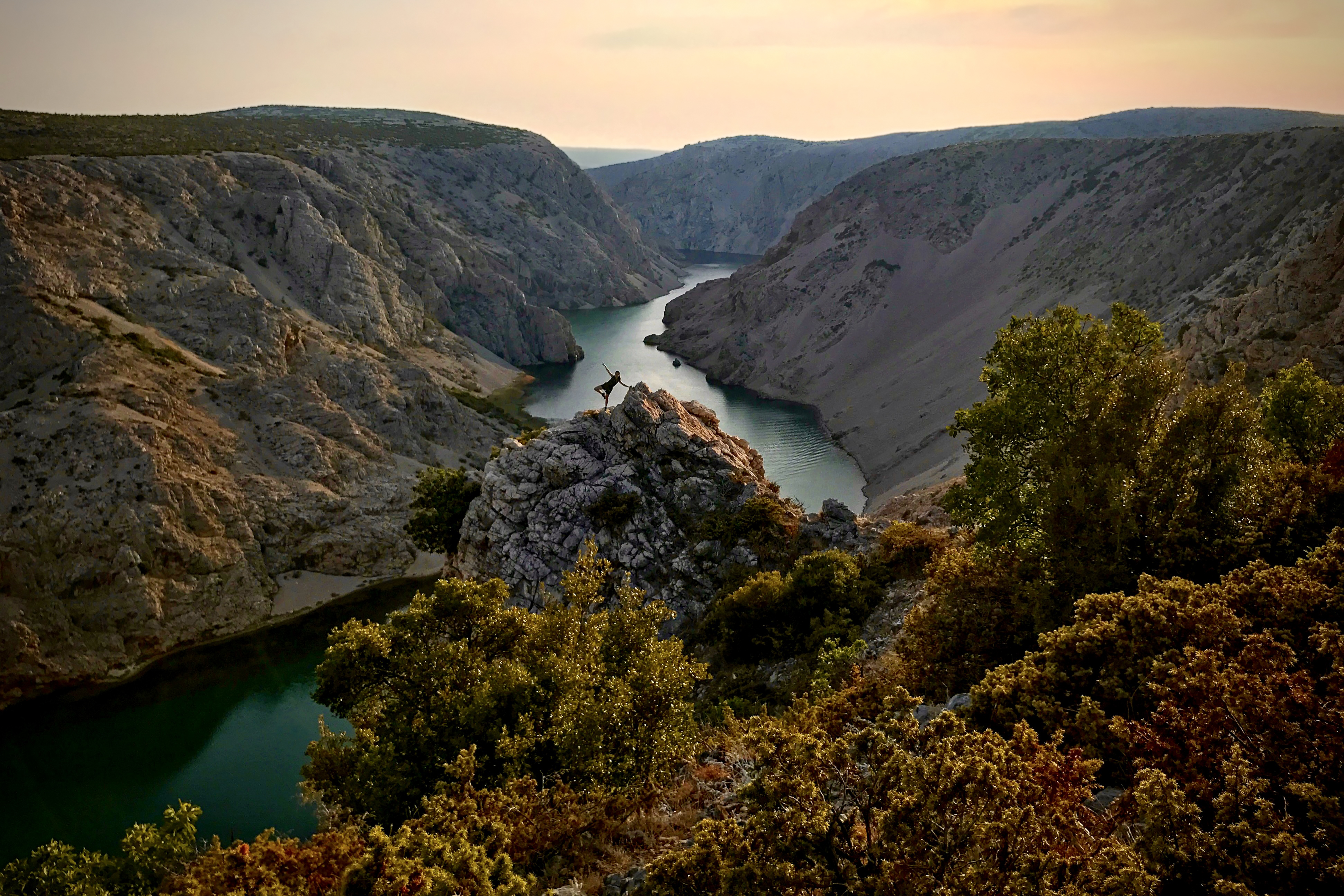
Unlike with Bosnia & Herzegovina, this wouldn’t be my first real time exploring Croatia. My first trip there was back in 2017, during which I went up the coast from Dubrovnik to Pula, visiting Split (and neighboring islands like Hvar), Zadar, Zrmanja Canyon, Krka National Park, Plitvice Lakes, and Rijeka.
I loved it so much that I returned 8 months later, for a shorter trip from Dubrovnik to Split (and the island of Brač). This time, I’d not only be aiming for the top of the country, but also seeing its capital city for the first time! Anyway, picking up where the last post left off in BiH…
From Mostar, the group continued to Corona B&B in Sinj, Croatia, just an hour’s drive from the trailhead to Dinara. This was a nice, convenient place to rest up after a long day 1. After having some breakfast and storing our bags with the hotel, we drove to the trail, with Dinara visible in the distance for much of the drive.
The Hike
It was a sunny, clear day – perfect conditions!
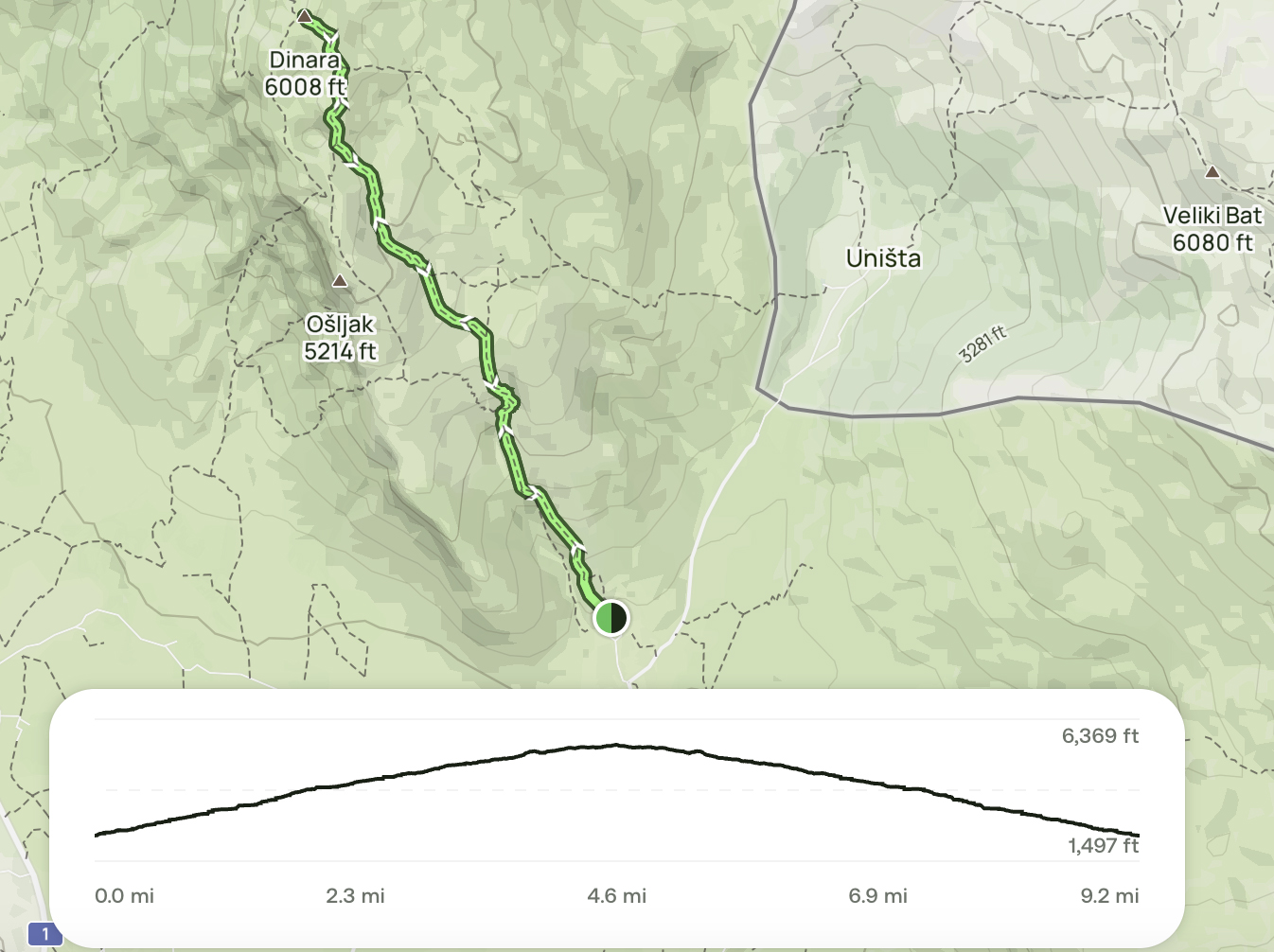
There are several ways to approach this summit, and the most popular is an out-and-back from Glavaš. It ascends 1,280 meters (4,200 feet) over 8 kilometers (5 miles), one-way. The map is below:
Dinara is part of a massif 20 kilometers long and 10 kilometers wide, and it’s the mountain that gave its name to the Dinaric Alps. These mountains run along inland from the Adriatic Sea (Dalmation Coast) for 645 km (just over 400 miles), and oddly, Dinara isn’t the highest point in them. That’s Maja e Jezercës in Albania. It’s not even the highest point of the massif it sits on: that’s Troglav in BiH (not to be confused with Triglav, the highest point of Slovenia and my 14th mountain of the challenge!). The range spans 8 countries: Albania, Bosnia and Herzegovina, Croatia, Italy, Kosovo, Montenegro, Serbia, and Slovenia.
This range is made up limestone (calcium carbonate) and dolomite (calcium magnesium carbonate) rocks. In theory, this was once all pure limestone. That limestone came (millions of years ago) from coral reefs that, over time, compacted and “lithified” (solidified – as when sand compacts into sandstone, and tangy limes into limestone…I joke). So, most mountain ranges in Europe came from the seafloor of the prehistoric Tethys Ocean, and their ultimate appearance was driven by how much magnesium-rich seawater flowed through to replace some calcium in the limestone with magnesium (dolomitization) and whether it was an area of more coral vs. sediment (mud, clay, sand). This magnesium-rich rock is called “dolomite” rock, and this is where this scenic region of Italy got its name. There is extensive information about the geology of the Alps and other mountain ranges on the continent (and therefore in this challenge!), but this is where the geology info-dumping will stop for now. Another geologically interesting high point is in the Wales post, for more light reading. (:
Back to the hike itself: after parking in a small dirt lot, the hike follows a nice path to a castle, named for the village from which the hike begins (Utvrda Glavaš, or Glavaš Castle):
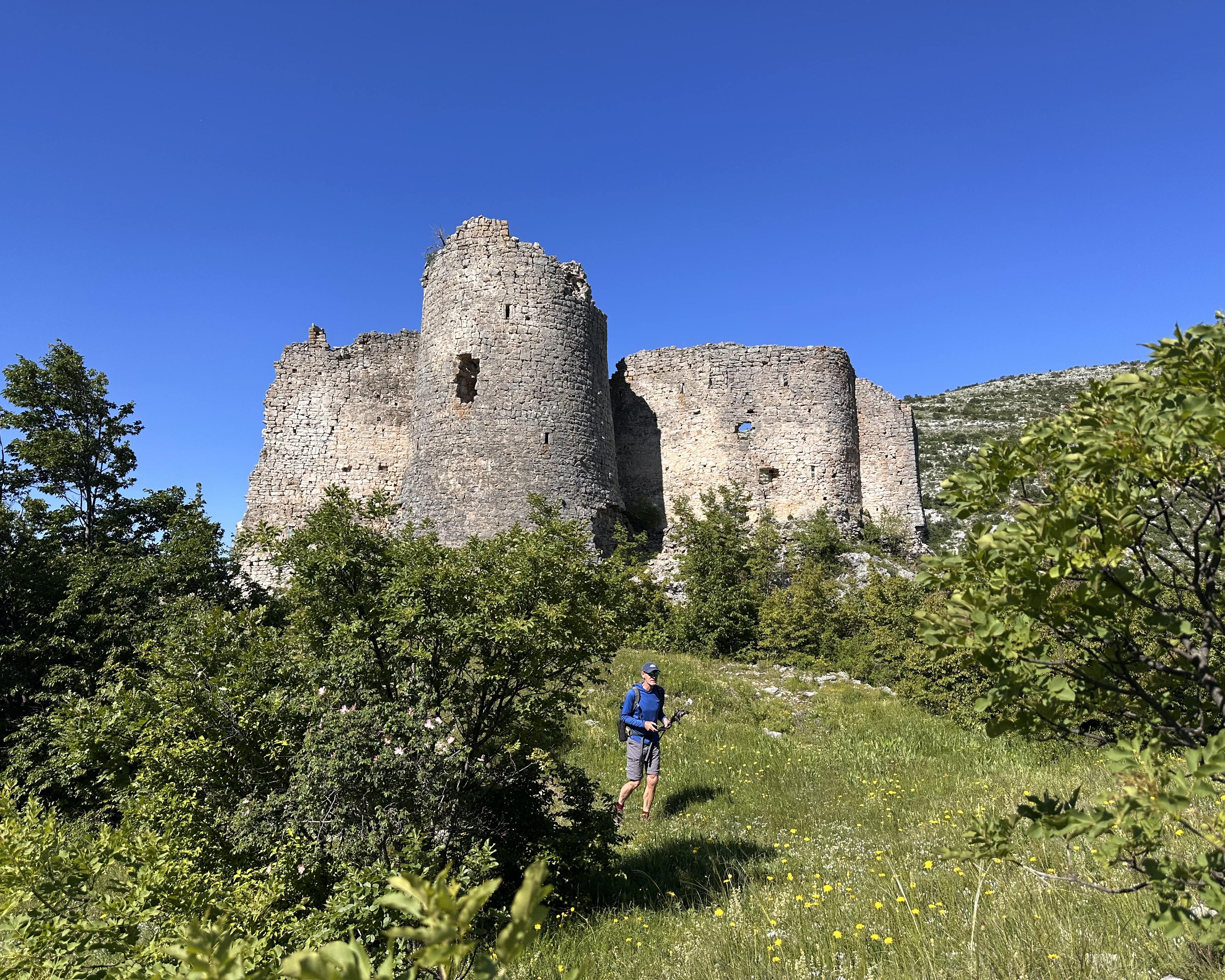
The castle/fortress, initially referred to as Dinarić, was built strategically near a spring over 100 meters deep. It was intended to help defend against the Ottomans in the 14th century, both via its proximity to drinking water and its strategic position, allowing the route to Bosnia to be monitored. After the Ottoman threat dissipated in the early 18th century, it was abandoned. More information here!
Past the castle, there is a spring, after which the trail begins ascending more steeply. Views start to open up over the valley:
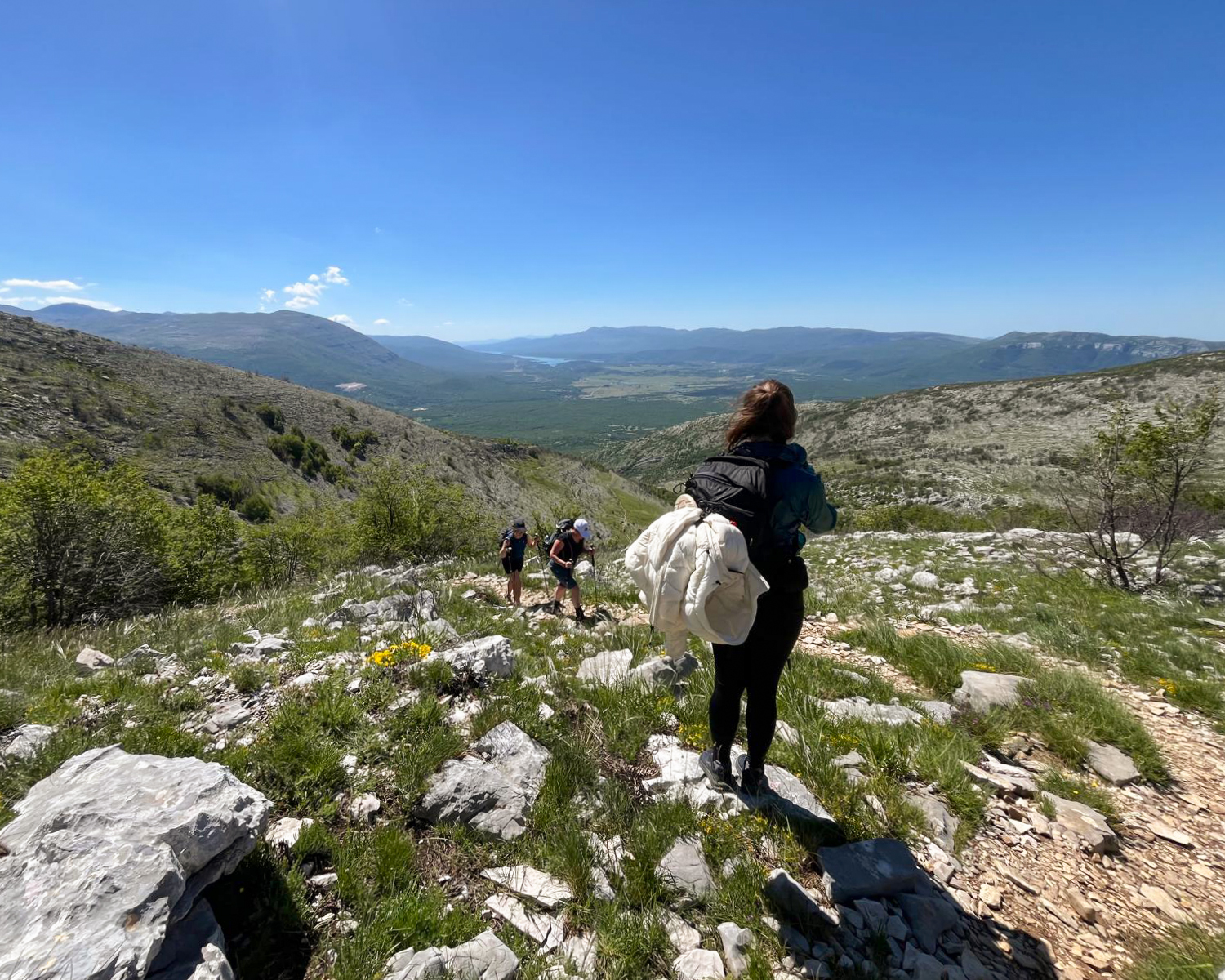
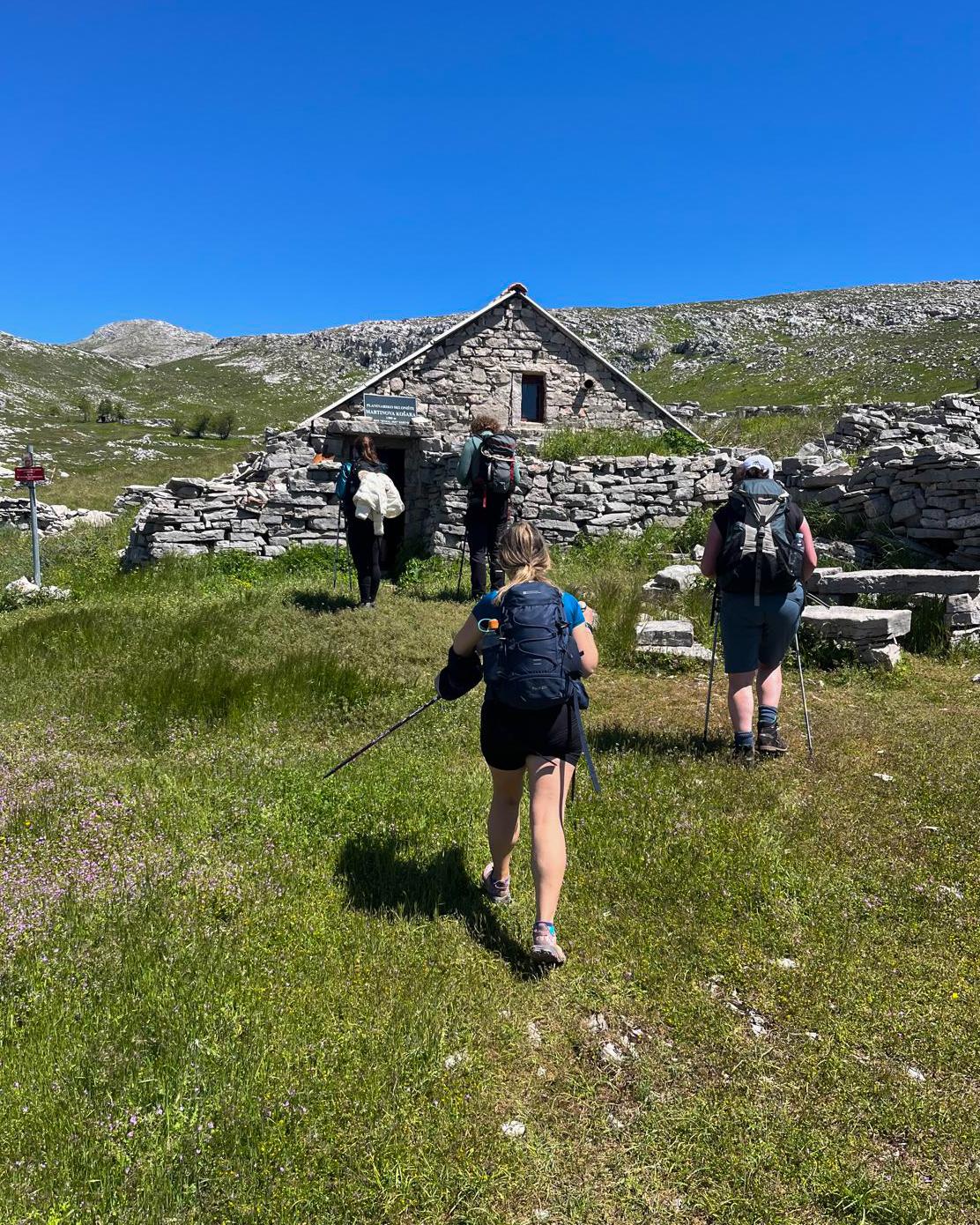

It is a fairly steady ascent to the summit, with few flat stretches. One of those flatter portions approaches the Martinova Košara mountain shelter at 1,287 meters. It used to be a shepherd’s hut, and it now is an all-season self-service shelter (bring your own supplies, and maybe some air freshener).
I would definitely only recommend using it in an emergency, given the current state of it…
Still, it’s a nice spot for a break, about halfway to the summit (distance- and ascent-wise).
If you are following AllTrails, this hut is a very slight detour from the main out-and-back path. It doesn’t add much, though, and it quickly rejoins the original trail through a well-marked path. This was the first time we saw anyone else on the trail that day. For a sunny Sunday in late May, this was a bit surprising! The crowds around Split / coastal towns would be a different story entirely.
Late May is generally a great time to hike Dinara, as winter snow usually melts by late spring. At any time of the year, however, there can be high winds. This day wasn’t too bad with that! (:
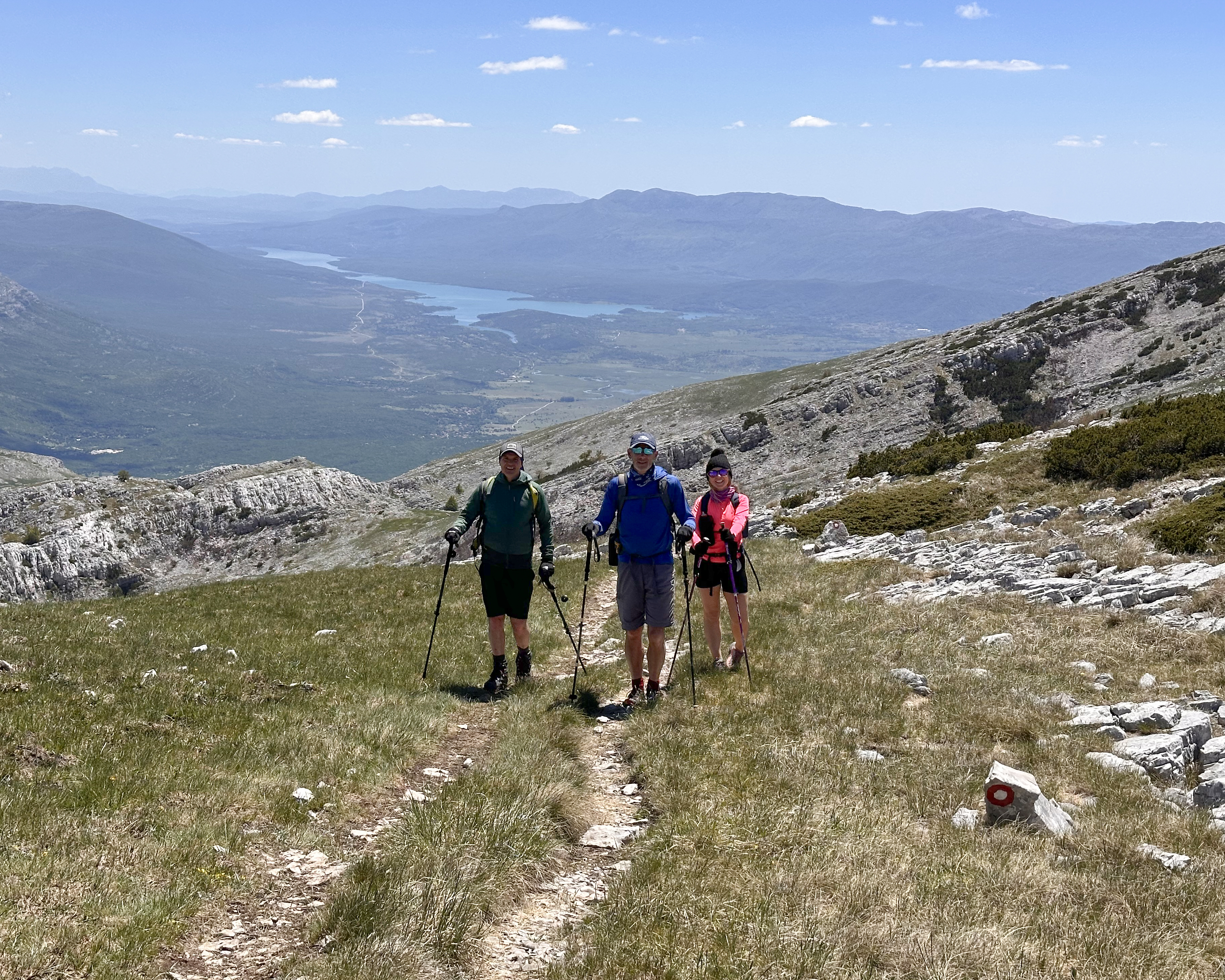
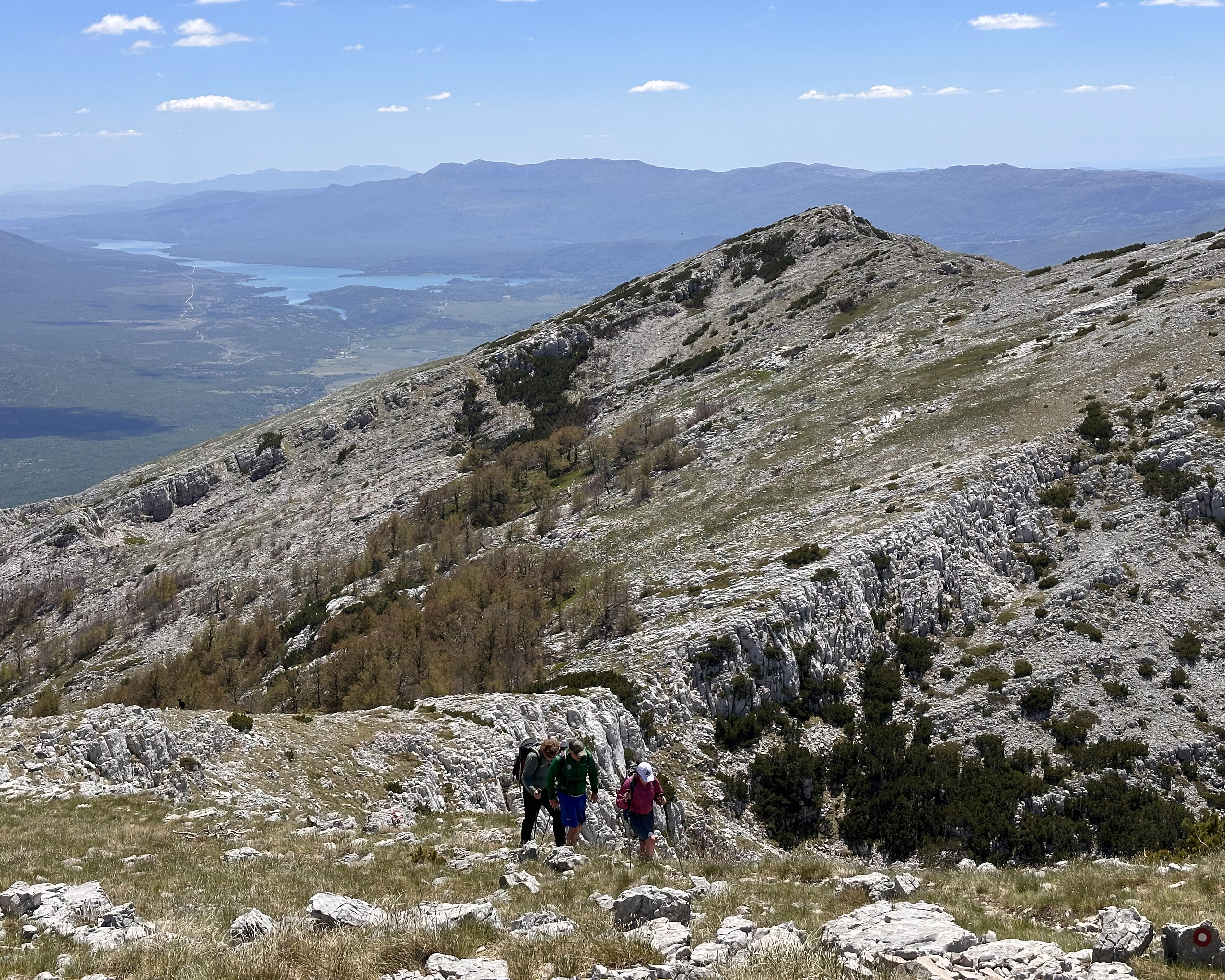
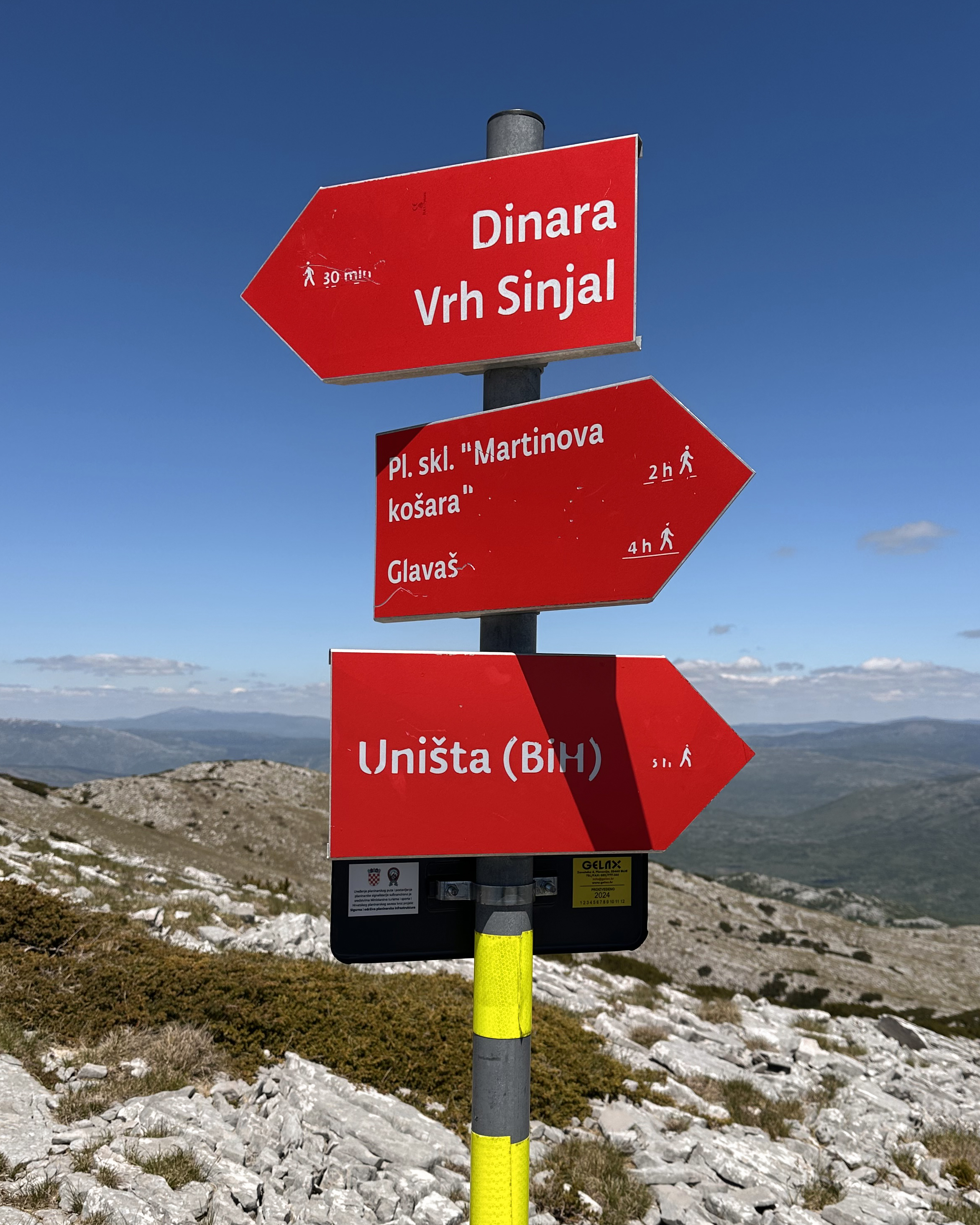
The signage throughout this hike is pretty clear. Before long, we saw an estimate for 30 minutes to the summit. At a pretty relaxed pace, we came across that sign just around 4 hours into the hike.
This peak has been referred to as Dinara and (Vrh) Sinjal. While Dinara is the officially recognized name, it is locally known by Sinjal, meaning “signal”, for its geodetic summit marker. Some sources also mention that the official name used to be Sinjal. Some say that Dinara is the range, while Sinjal is the summit. In many articles, they’re used interchangeably. All this to say, I don’t really know what to call it, so I’ve also included both.
And, naming aside, it’s really an incredible view!
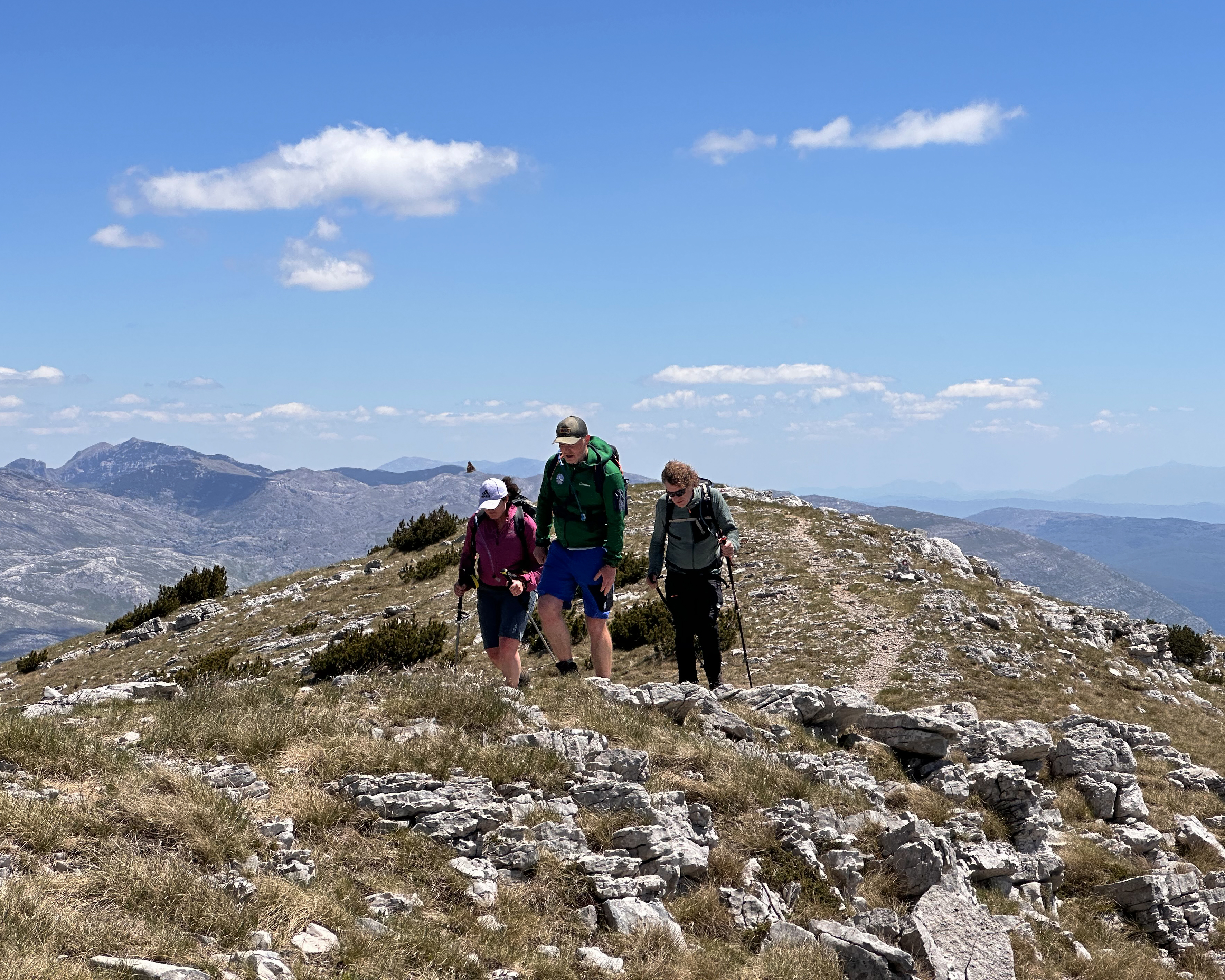
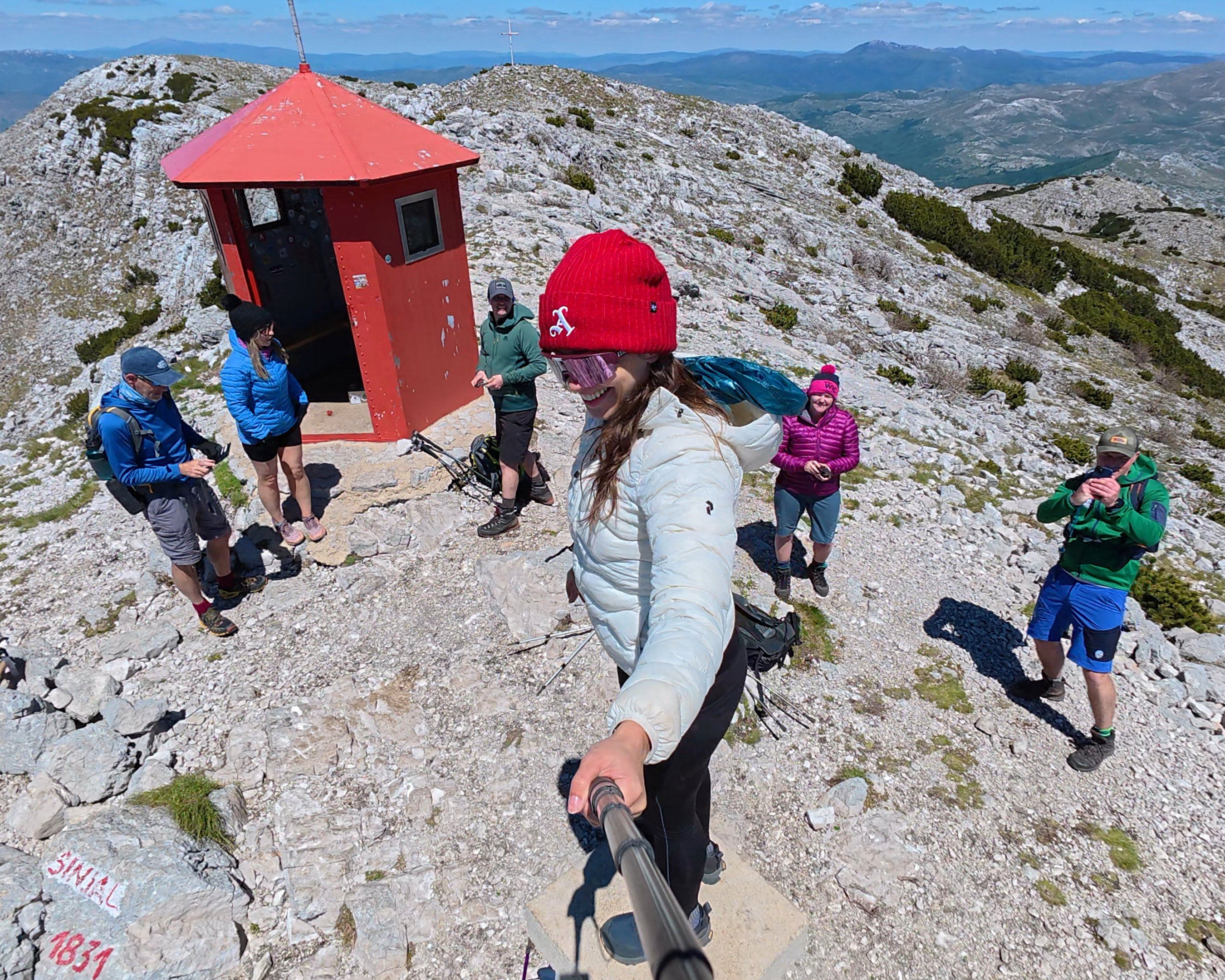
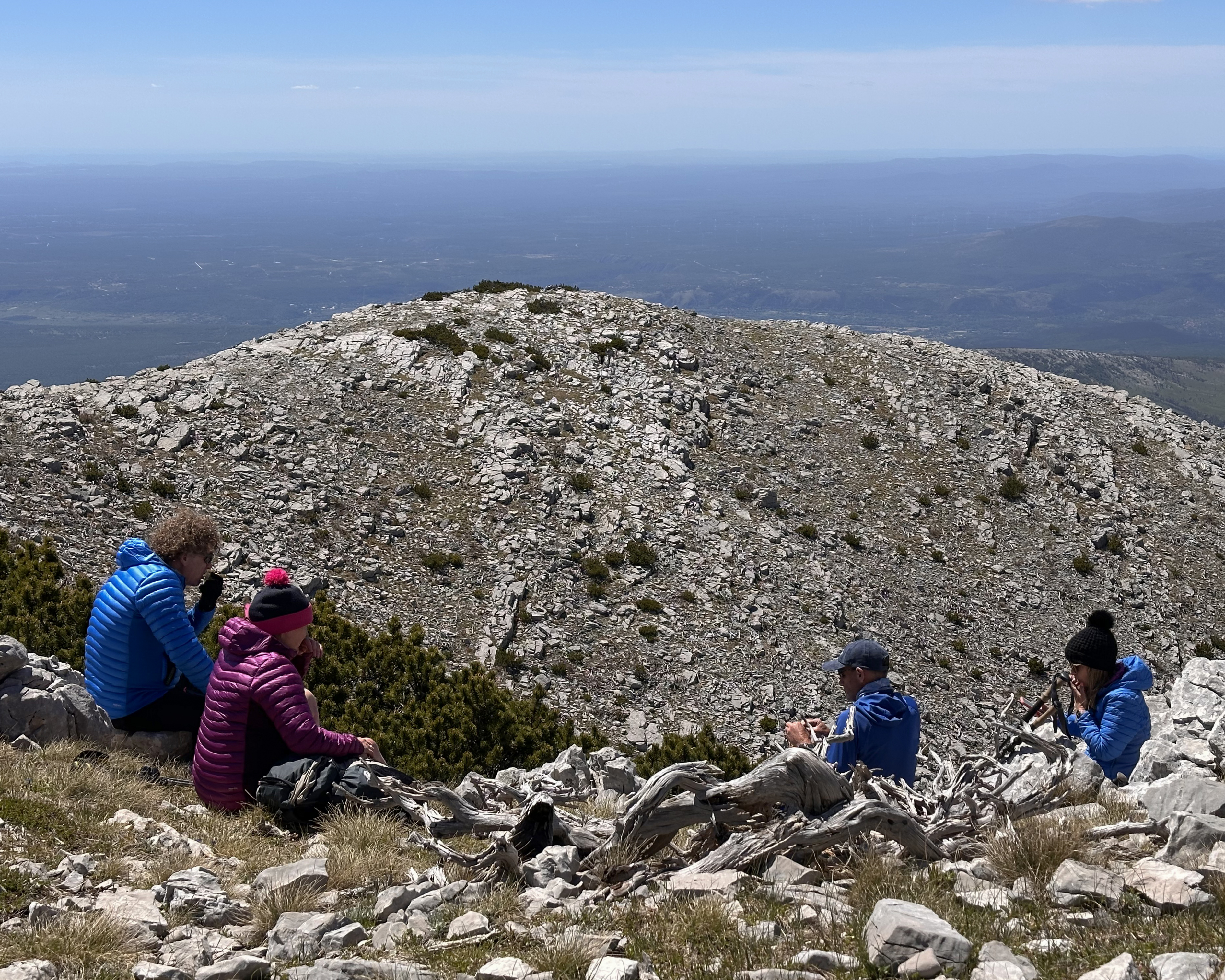
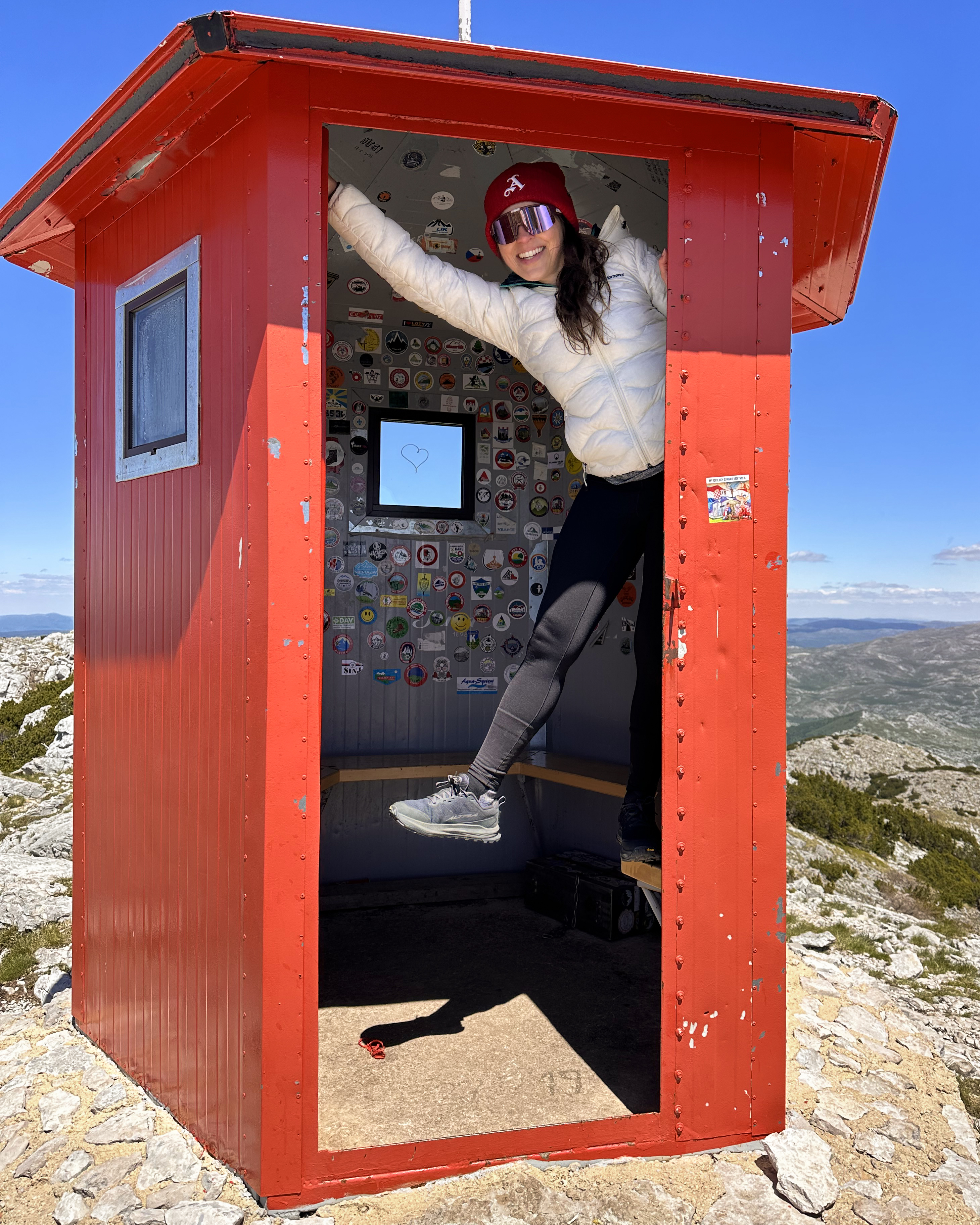
The main summit with the summit marker is known for this hexagonal metal shelter and distinctive red color, topped with a Croatian flag.
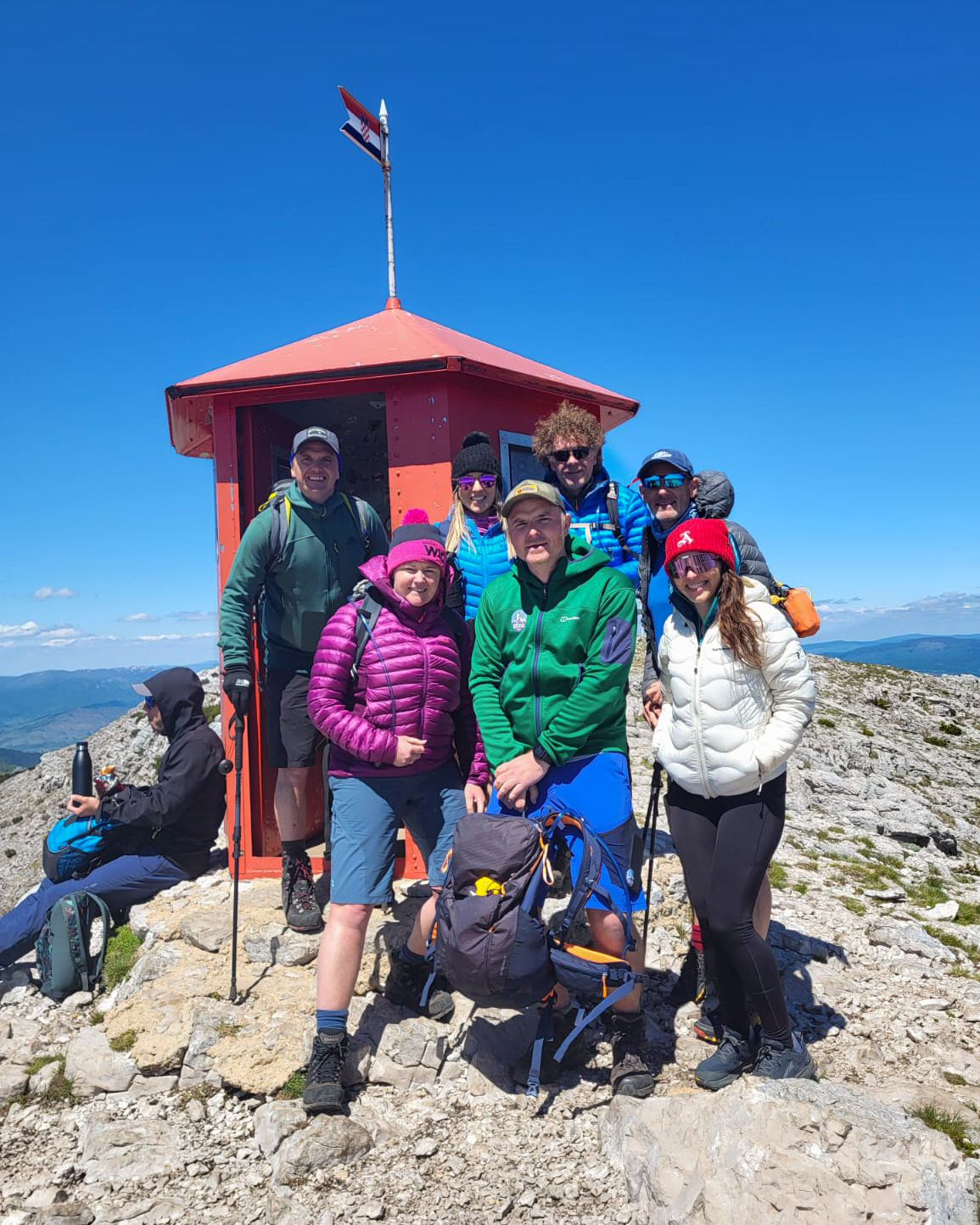
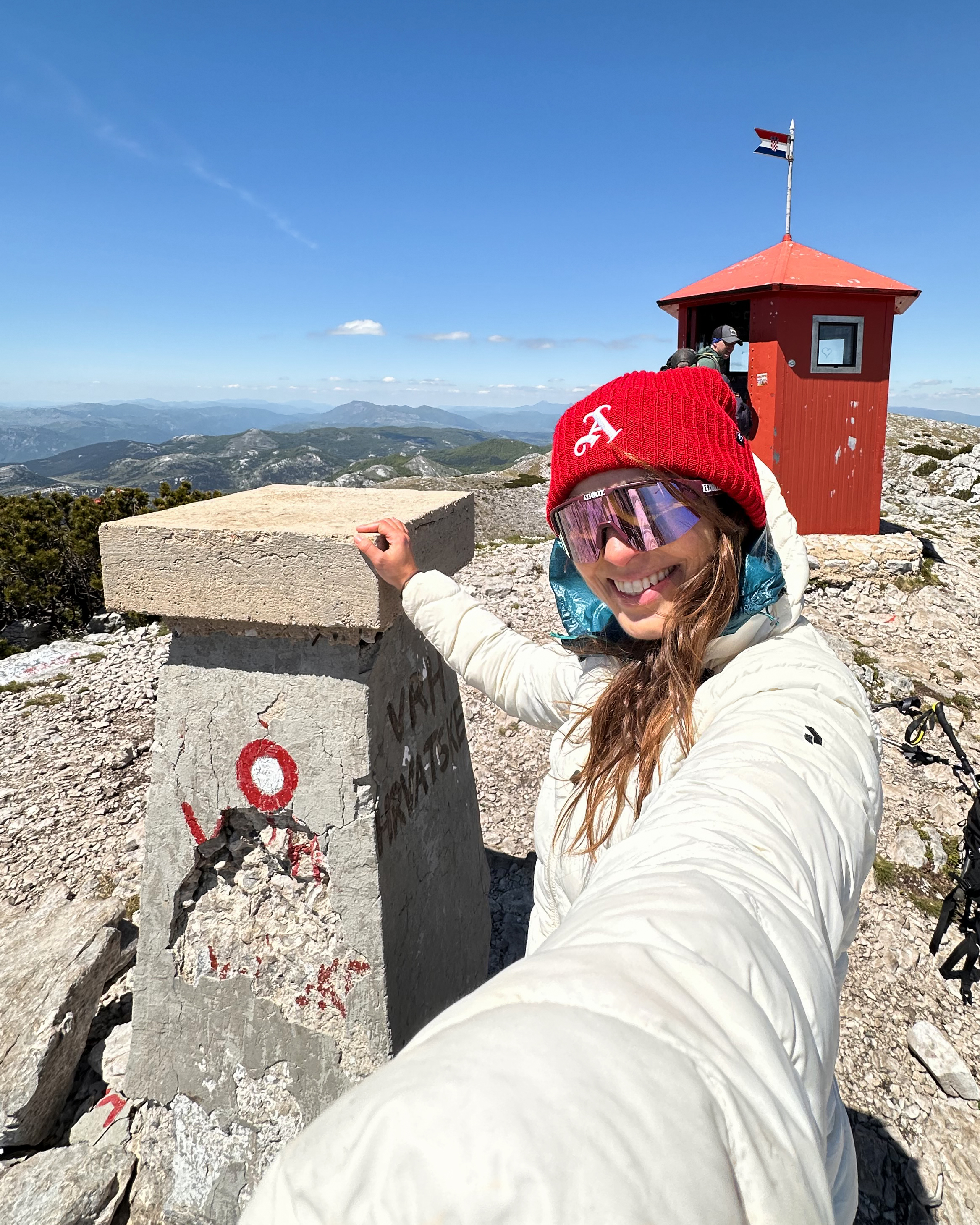
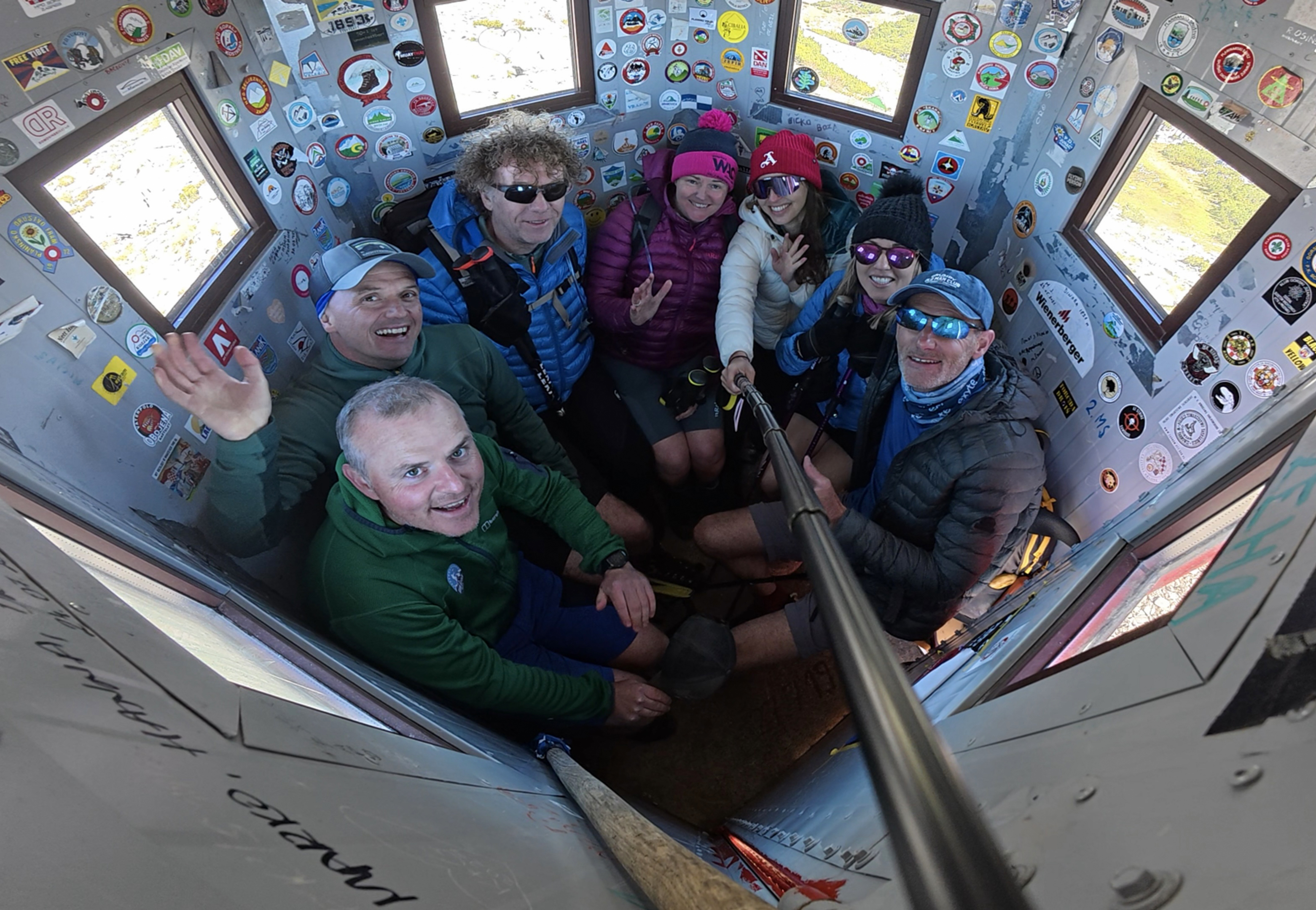
We managed to all squeeze inside…
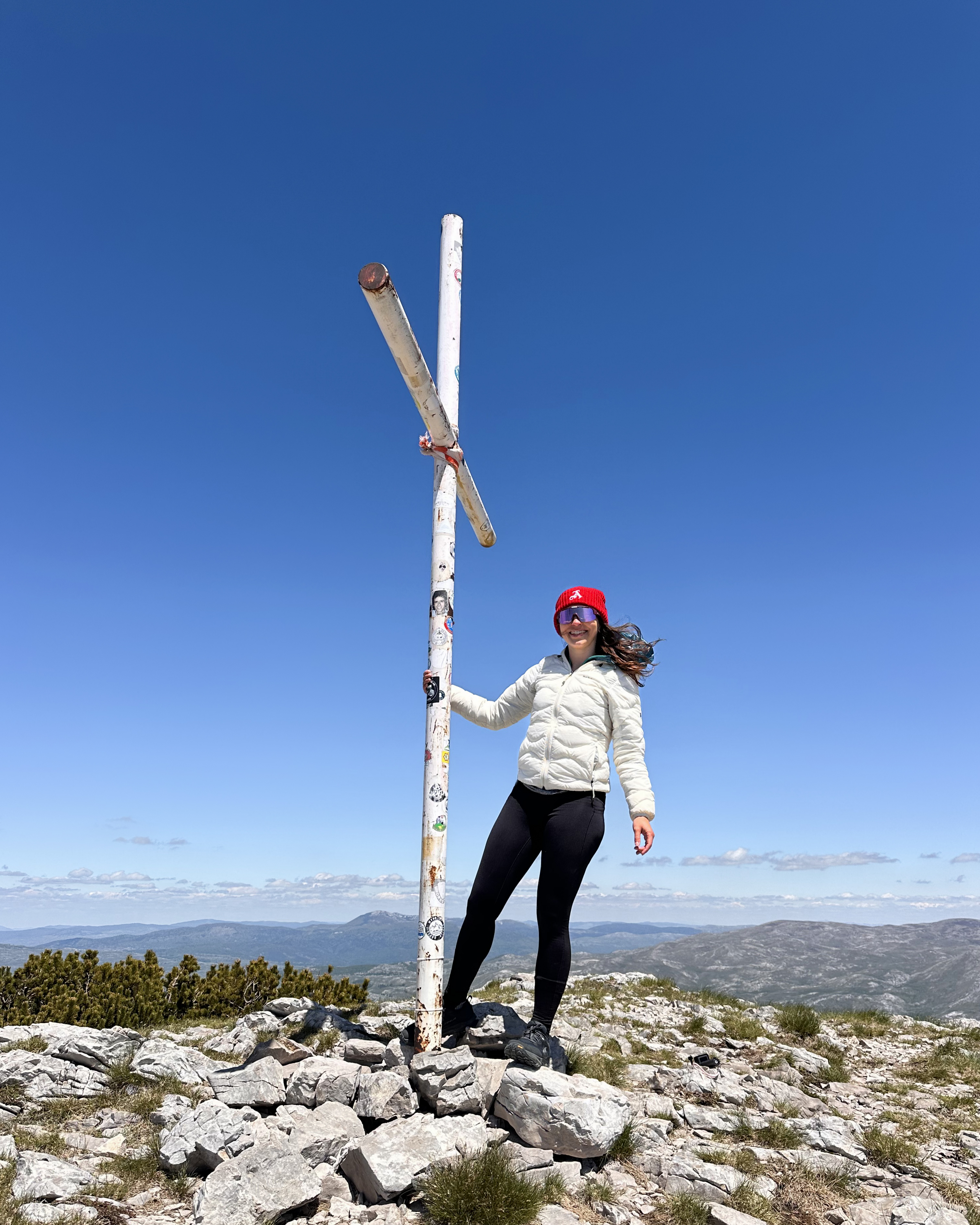
Not far along a ridge is another summit, marked by a cross (shown in a photo above). Unfortunately, as with Maglić in BiH, these summit photos would be missing the AACR flag. At the time, it was on its way back to me in London via my lost checked baggage.
After a snack and photo break, we were ready to head back down for the rest of the day’s planned adventures.
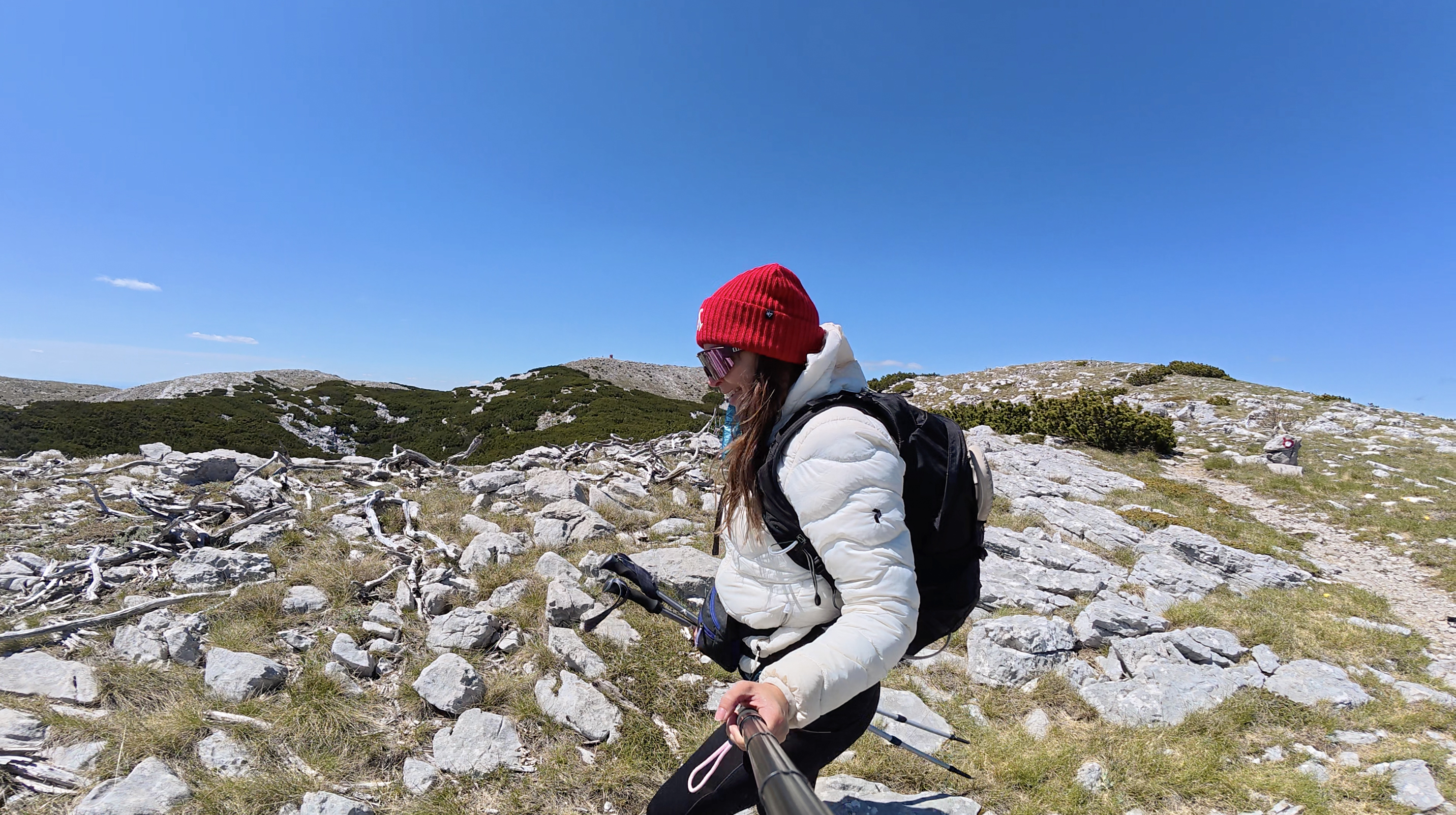
Soon, we arrived back at the van. Both summit goals completed!!
Rapids, Rapid Eating, and Rapid Goodbyes
This Sunday’s adventures didn’t stop with the summit!
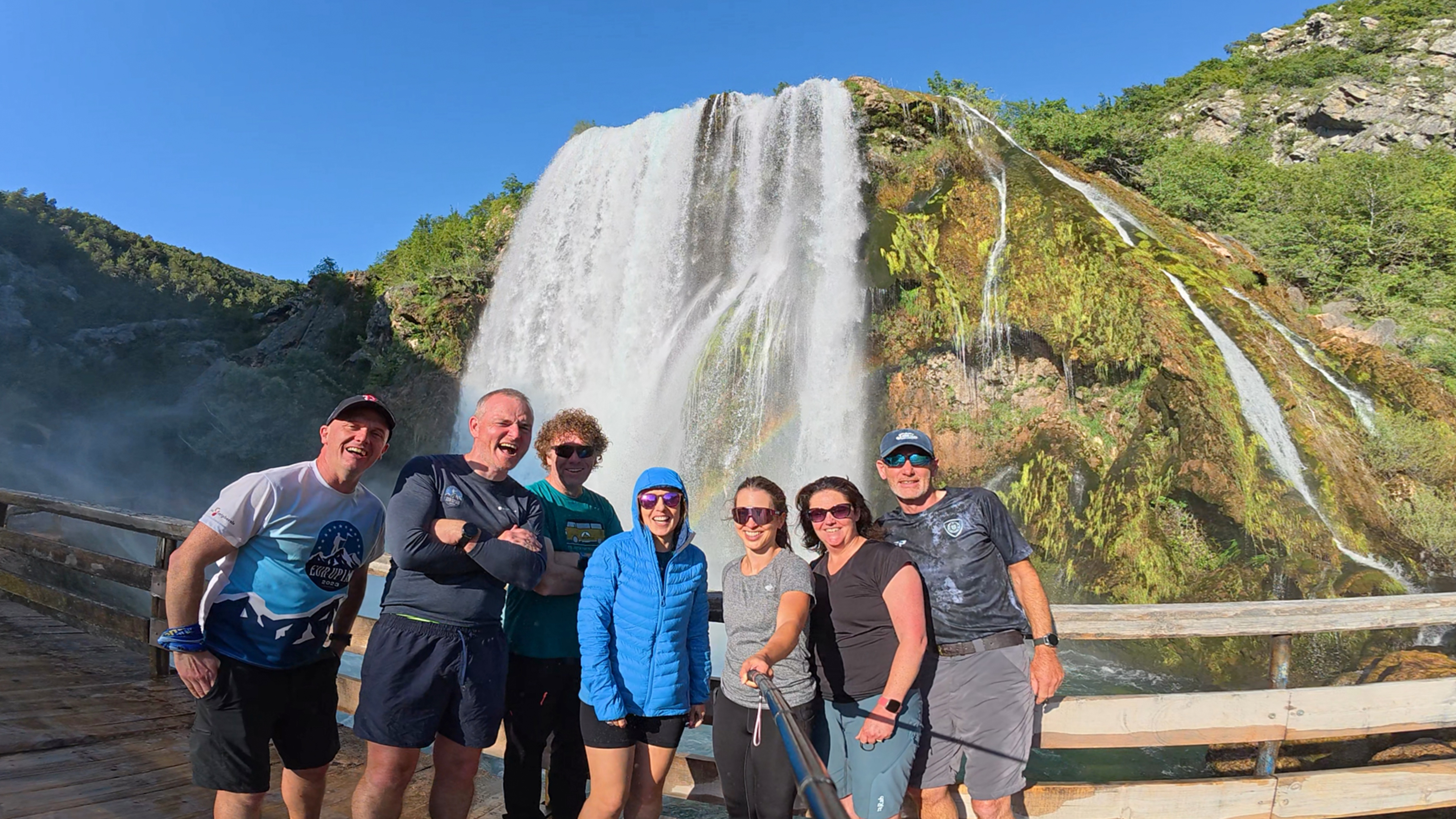
After the hike, we drove to a waterfall Ian had visited during his previous trip to the area: Krčić. We would be cooling off and relaxing for a bit before dinner. It turned out that his previous trip was a bit later in the season, and the winter had brought a fair bit of snow…so, the pool under the waterfall was a bit more like rapids!
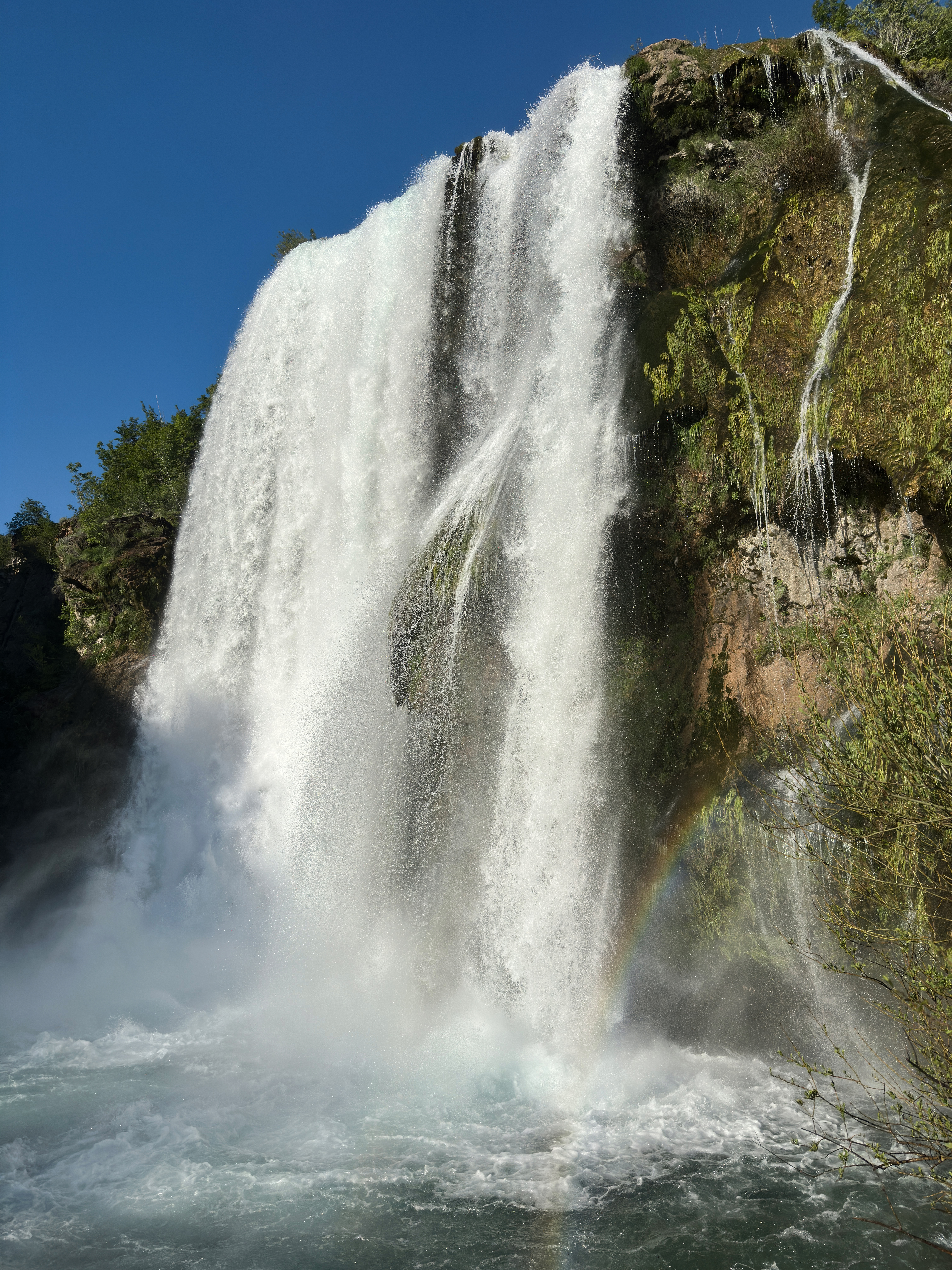
Krčić is the source of the Krka river, which may sound familiar due to the popularity of nearby Krka National Park (these falls are outside the boundaries of the park). The park was established in 1985, while these falls have had protected status since 1964. I’ve included more about this park and other previously visited locations at the end of this post, as well as in my Croatia map.
Another scenic river source is located near Dinara: Izvor Cetine (“Cetina Source”, also called “Eye of the Earth” or “Blue Eye”). The Cetina River is the longest in Dalmatia, flowing from this eye to the Adriatic Sea in just over a hundred kilometers. Unfortunately, there wasn’t time to visit this time around, but the best information I found was in this post. It seems that swimming used to be allowed but no longer is, to protect the increasingly popular site.
From the waterfalls, we continued to Restoran i Pizzeria La Rossa Knin, another repeat visit for Ian from his initial Eurupian adventure.
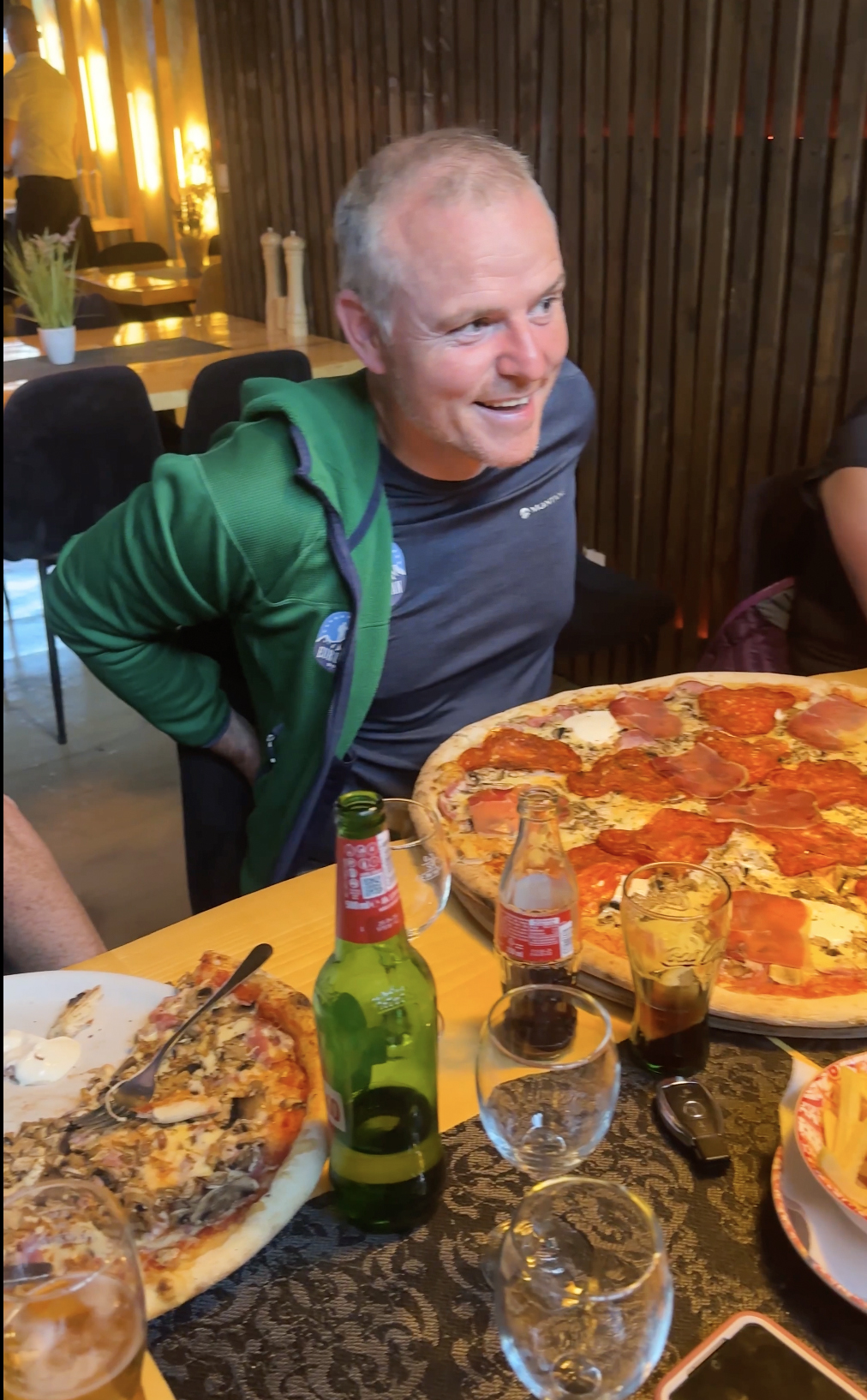
Pizzas at this restaurant come in regular and jumbo. This latter size was the post-hike reward Ian was determined to get (and complete). He came surprisingly close, with just a bit of help! They really do not mess around when they say “jumbo” though…
From dinner, we hightailed it back to the hotel to retrieve our stored bags, before continuing to the airport for the five people flying out that evening. These next moments were some of the funniest of the trip. We pulled up to the airport, threw everyone’s belongings out into a grassy area in front of the airport with four people, then three of us went to refill the fuel, dropped Ian off with the frantic packers, said some hasty goodbyes, then went to return the van.
From there, it was a short cab ride to Split, where I’d be staying at the same B&B as 8 years prior!
Split-ing Off from the Group
Unfortunately, still without my checked bag, I’d run out of clothing for the remaining 2 days of my trip. Thankfully, a short walk away were some shops where I grabbed a few essentials (and thankfully, everything I had to purchase this trip was later reimbursed via a combination of the airline and my travel insurance!). By 10am, it was already time to check out, so I quickly changed and stored my remaining belongings with the hotel in various bags (I still had no replacement suitcase).
As this was my third time in Split, I took a quick walk through the touristy areas before opting to walk until there were fewer crowds. Diocletian’s Palace was particularly overrun, so I’d recommend going early in the morning.
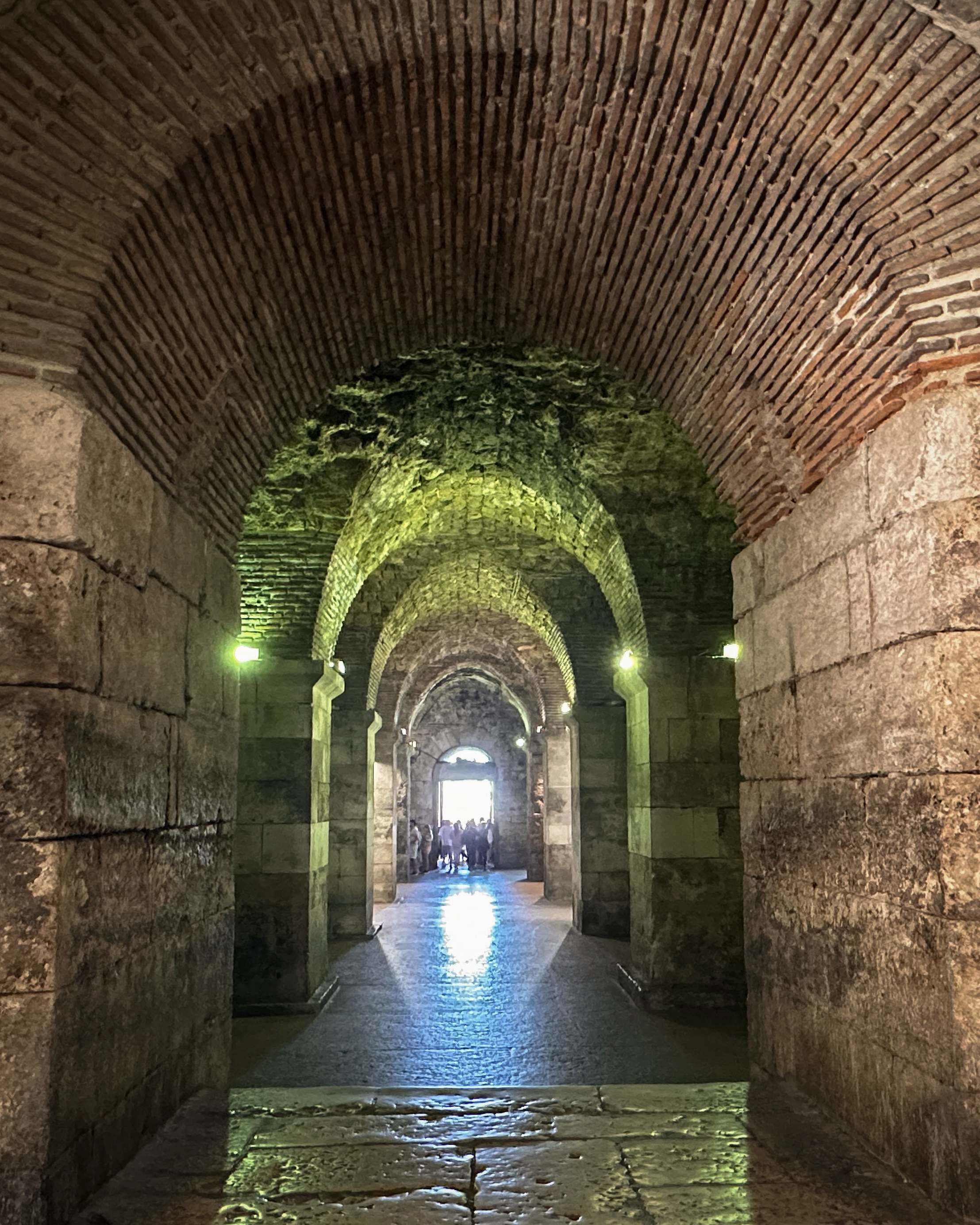
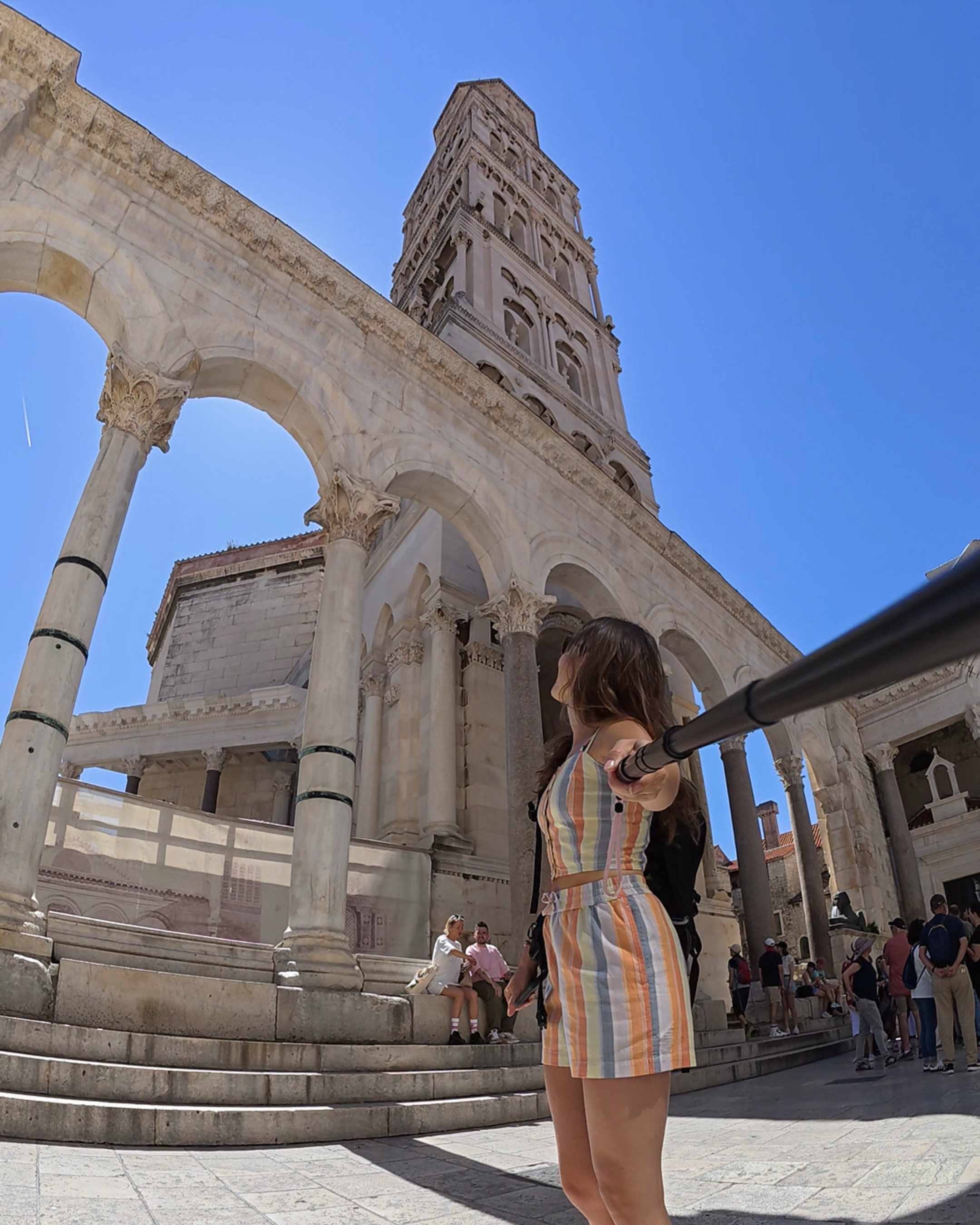
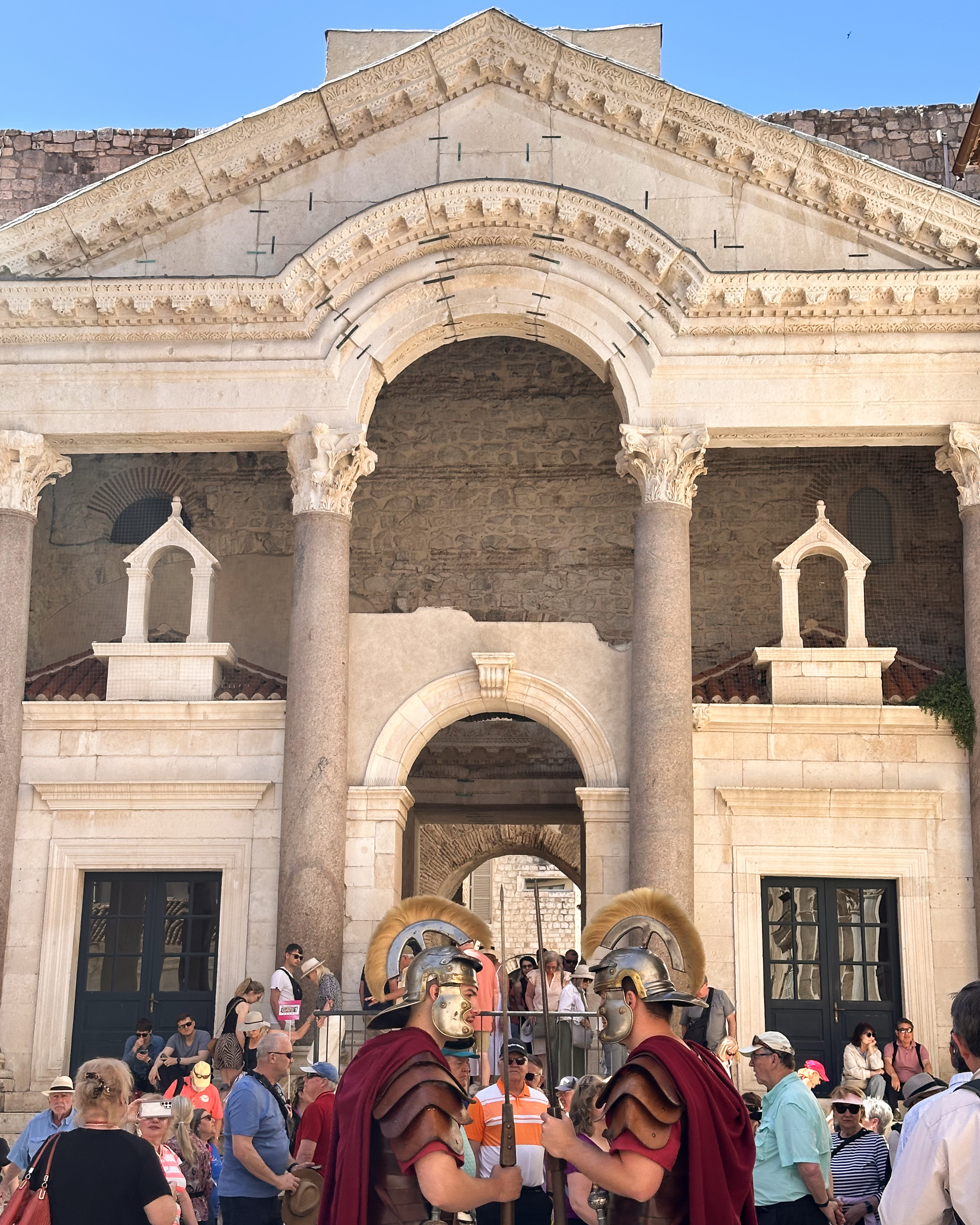
Given that it was built between 295 and 305 AD, it’s impressively preserved. It’s one of the largest and best-preserved Roman palace complexes in the world. It makes up a large portion of the old city, and you can walk everywhere from the basement areas, to the main square in this photo, to the bell tower of St. Domnius Cathedral (formerly his mausoleum) with 360-degree views. For more information, this site has a nice walk-through with photos and historical context.
From there, I walked toward Marjan Hill and Sustipan Park. Both have great views over the sea and town. Sustipan Park has only been a protected park since 1964; before that, it was Split’s first municipal cemetery (from the early 1800s) until its demolition (remains were then moved to a new cemetery). Marjan Hill has beautiful views all around from its high vantage point above Split, but the most fascinating elements are the churches and temples built right into the cliff face.
Around this area, there’s a lot of climbing and deep water soloing – back in 2017, I’d done a full climbing day covering both! Some climbing routes even go alongside these built-in churches:
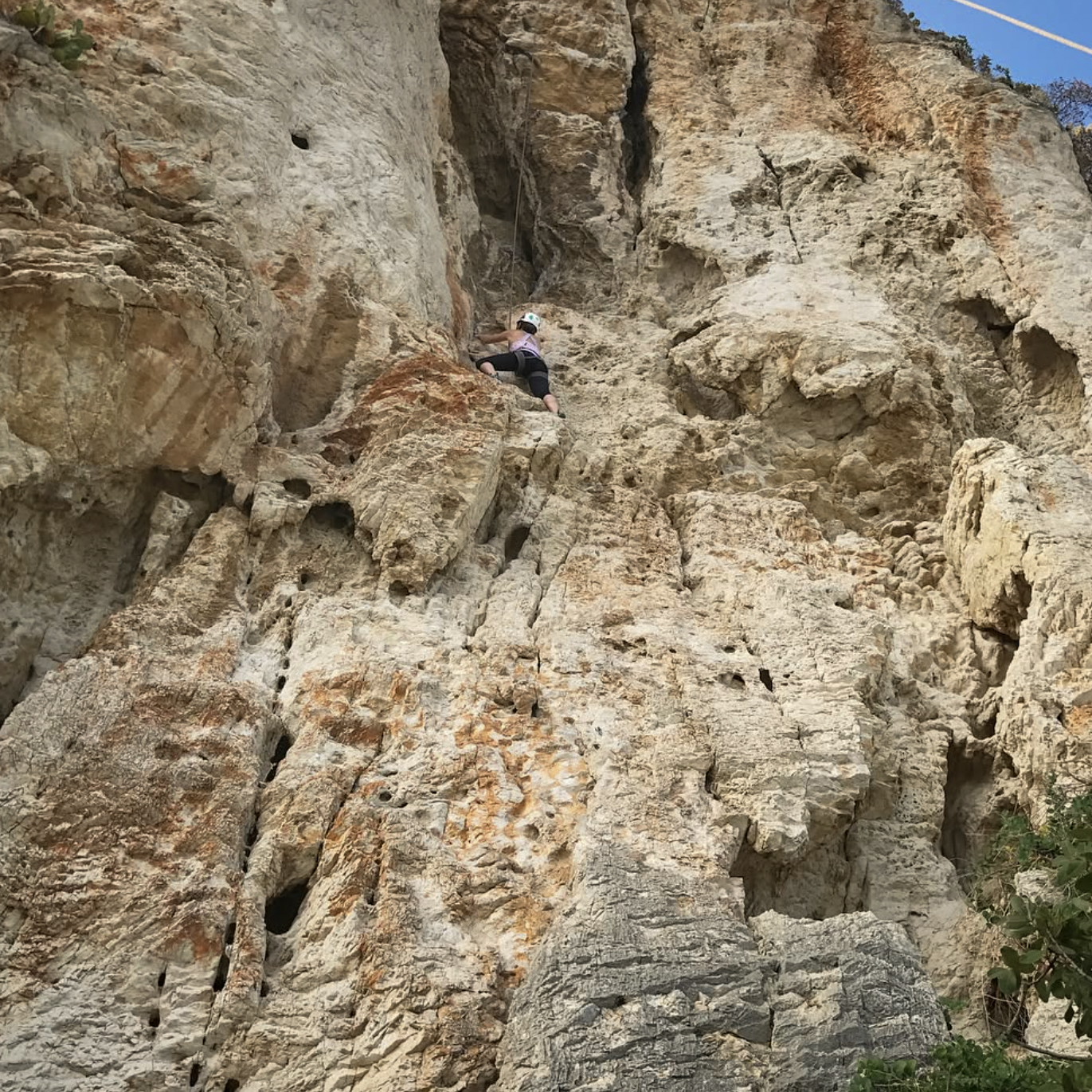
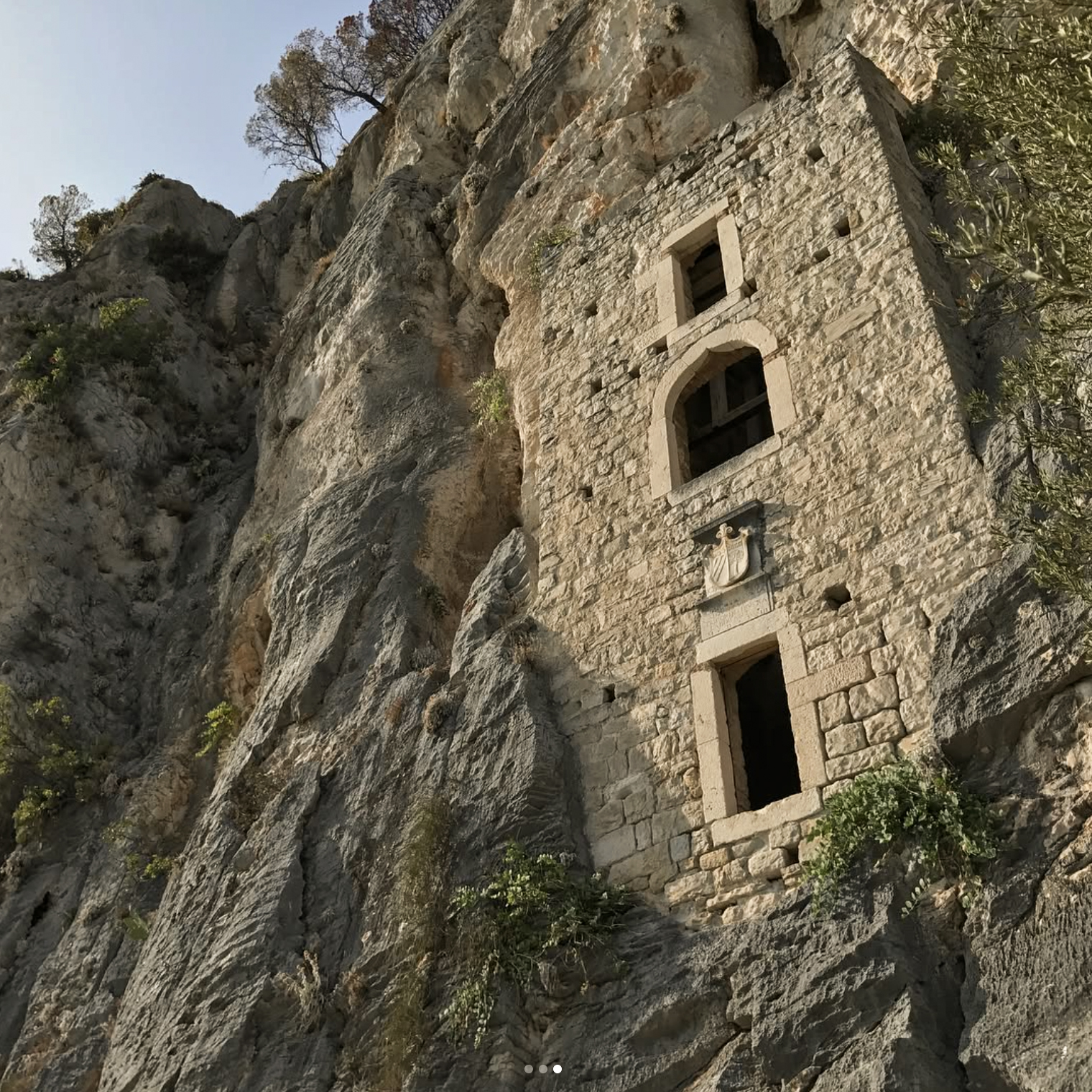
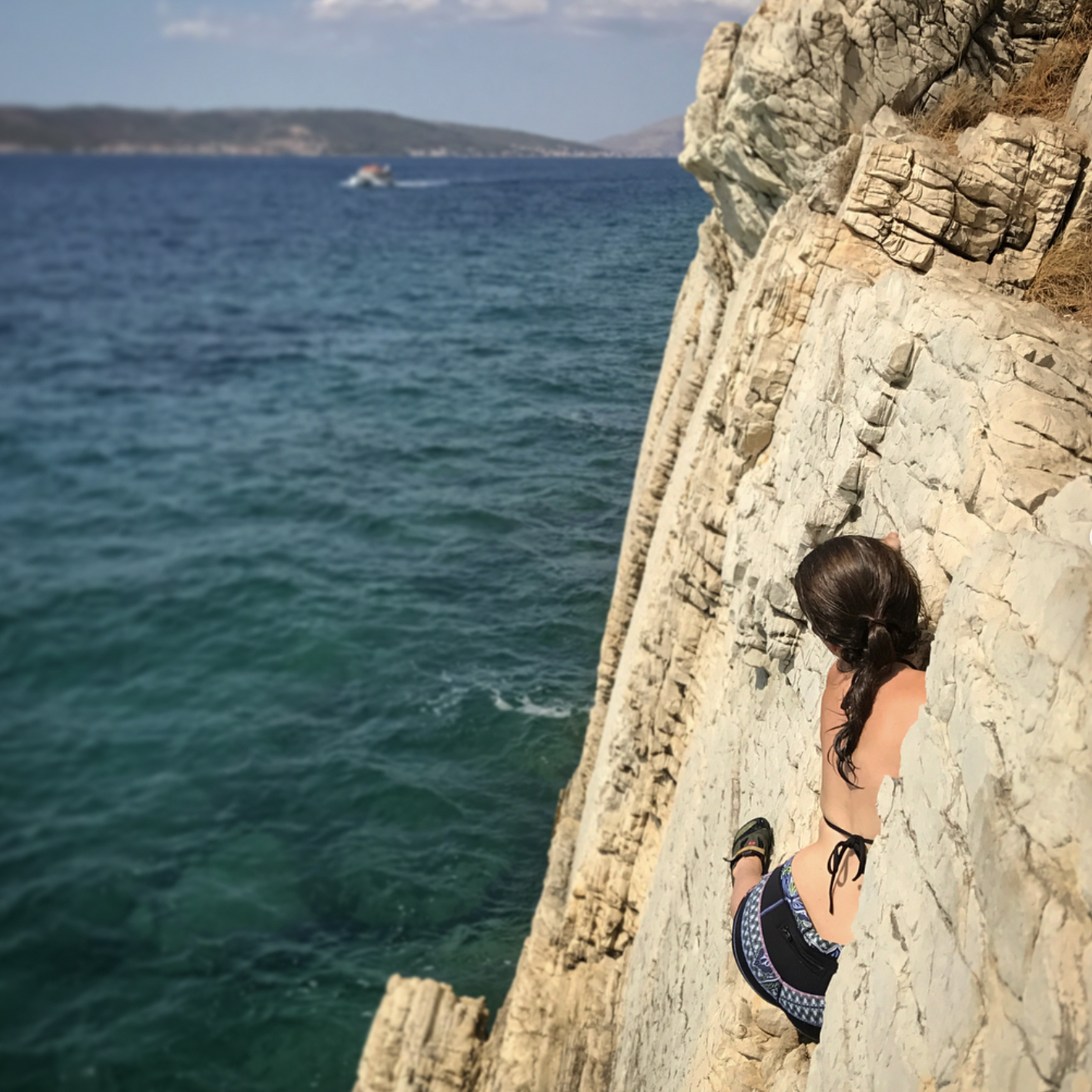
I unfortunately don’t remember the exact location of these climbing routes, so either sign up with a guide, or have some fun exploring and trying to find these spots! If you’re not climbing, there are still plenty of nice viewpoints to enjoy on a walk. Each of these above photos were taken from a point accessible by just walking. They were also pulled from an old Instagram post, as I can’t find the originals, so please forgive the bad “tilt-shift” filtering from a decade ago.

If you keep walking up along the coast, from Sustipan, you’ll end up at some cliff jumping rocks near Jadran Beach Bar, then you’ll be on a path around a small marina. Whenever I’ve been there, it’s been pretty empty, and it’s always quickly clear why. It’s a bit of a wave minefield with any amount of chop. Do not approach the other beaches via this path if you have any intention of staying dry. Otherwise, enjoy! (:
Around the next bend are some nice rocks to lay out on and enjoy the weather.
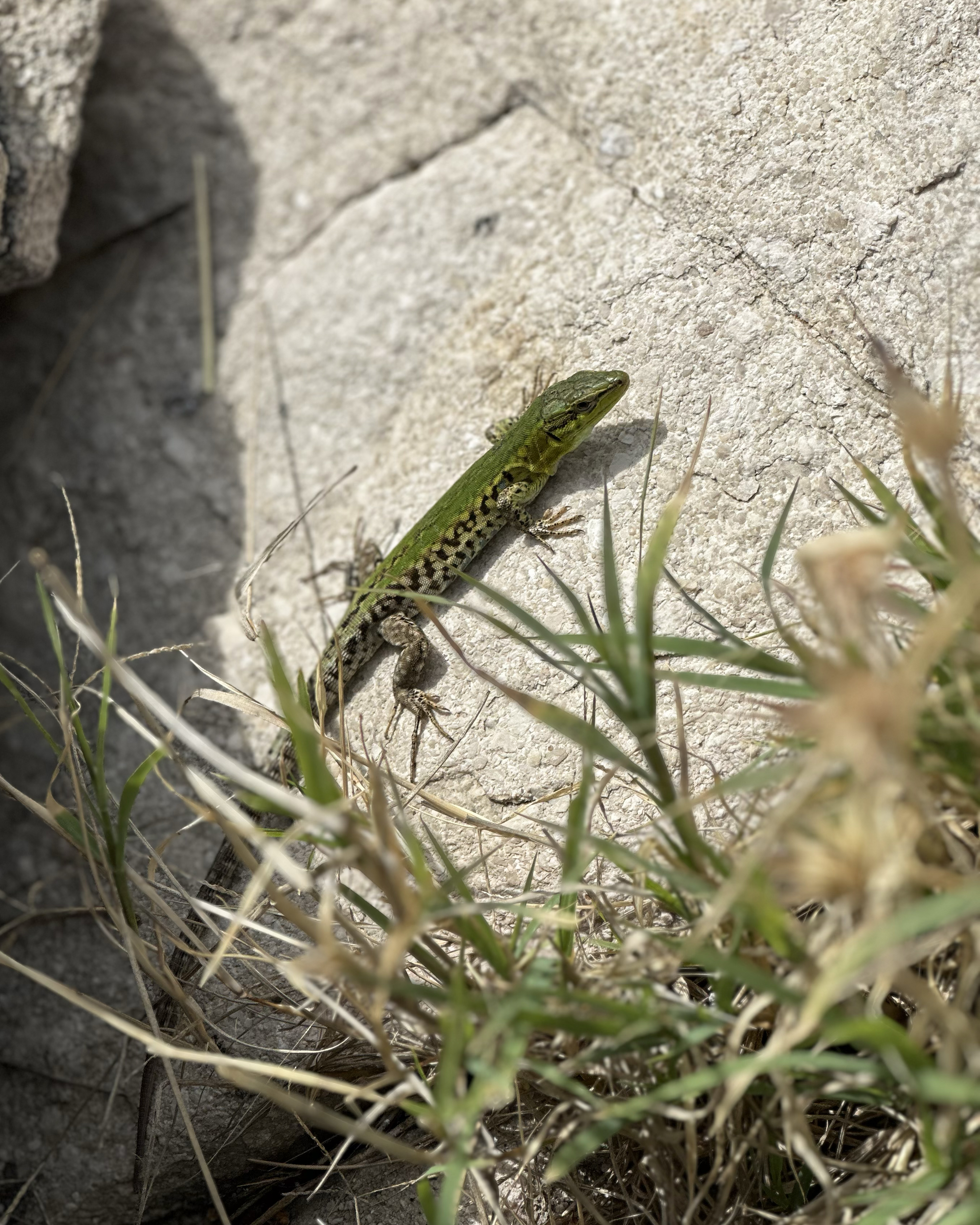
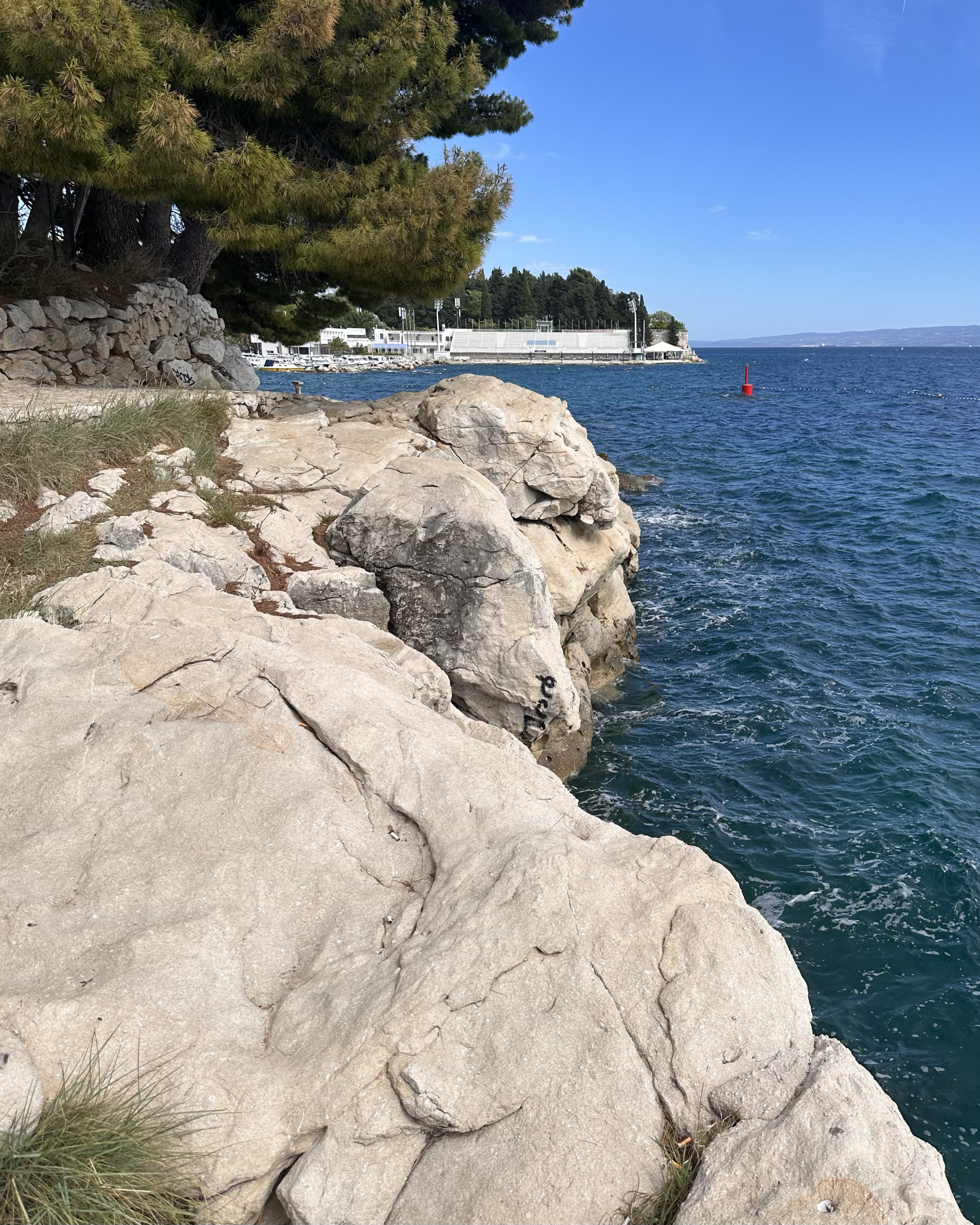
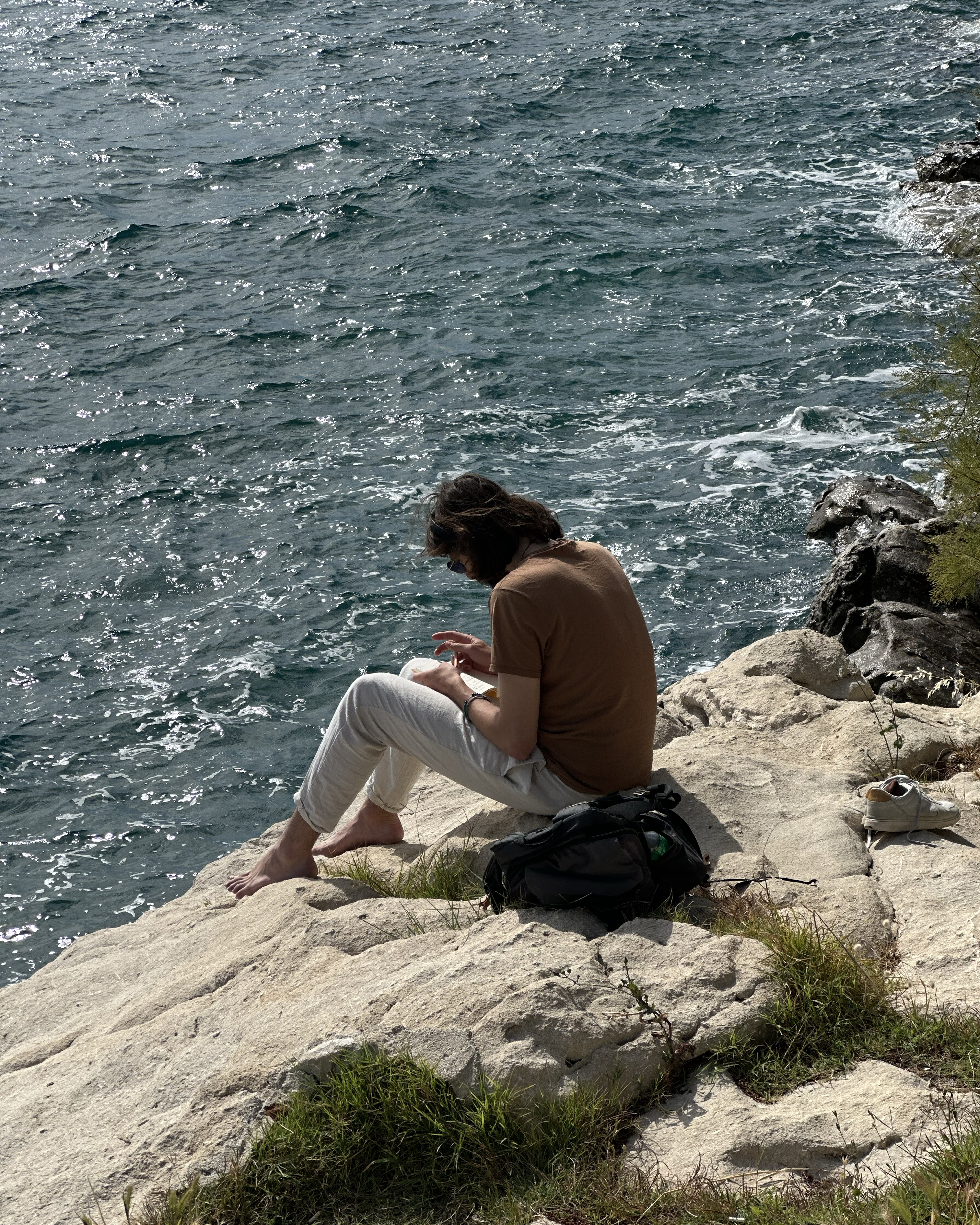
I have no clue who the man is in the last photo there, but he found a great spot to journal!
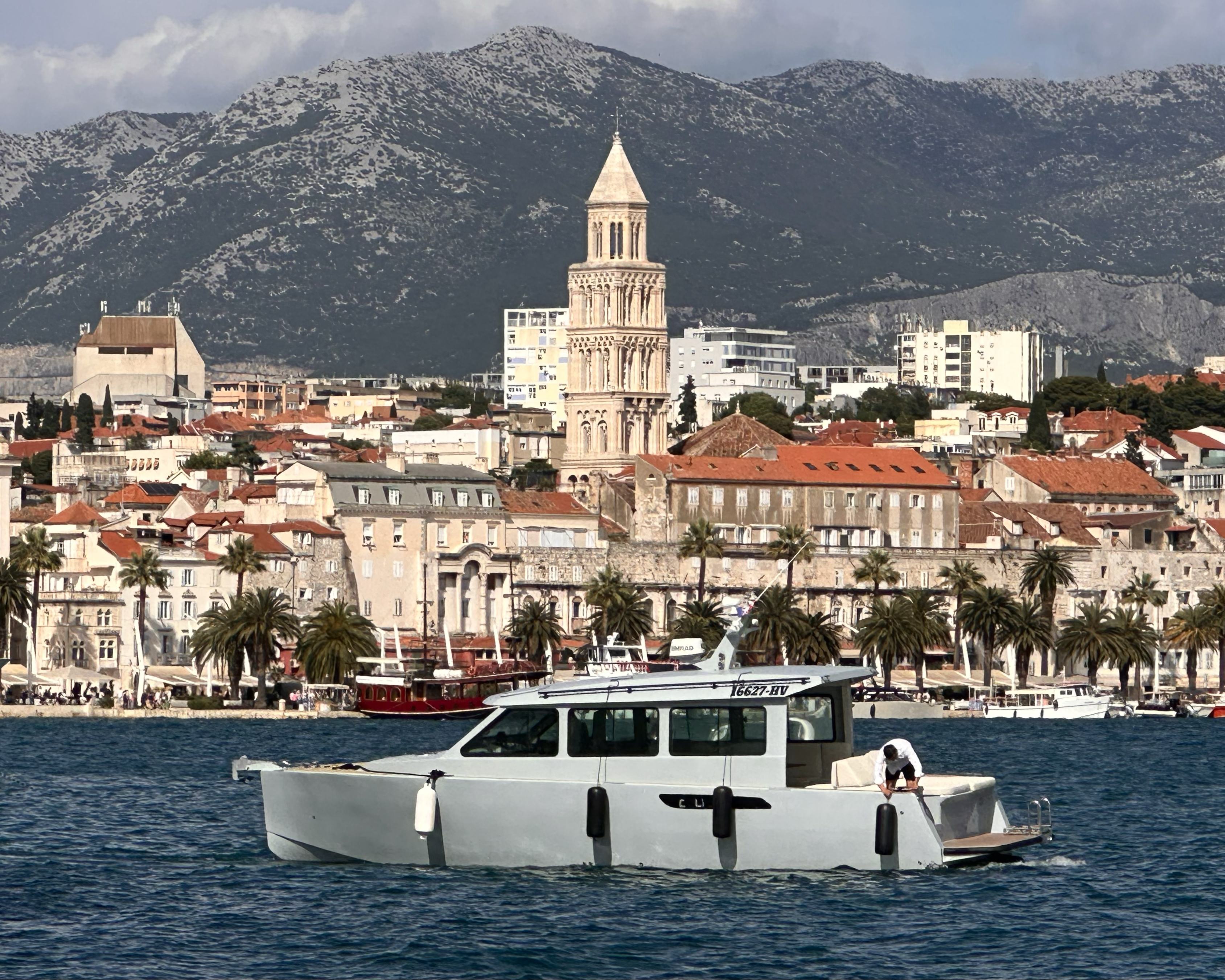
It was then time to catch my Flixbus to Zagreb. I made the last scenic walk back along the coast and through town, grabbing my belongings from the B&B on the way. Bye for now, Split! (:
To the Capital
The Flixbus left split at 5:30pm, so passengers were treated to nice views over the mountains and hills on the way to Zagreb, arriving in just under 5 hours. The bus was around 20 euros and pretty comfortable! We made one stop for the restroom and there was no toilet on the bus, so keep that in mind if you’re taking this route (many buses advertise having them, but it wasn’t the case here). Otherwise, no complaints!
I stayed at Hostel Bureau, which had more stairs than I wanted after back-to-back hikes, but was still good value. It’s centrally located and has 24/7 reception. I got in pretty late so went right to sleep, then headed out the next morning to explore the city before my 8pm flight that evening.
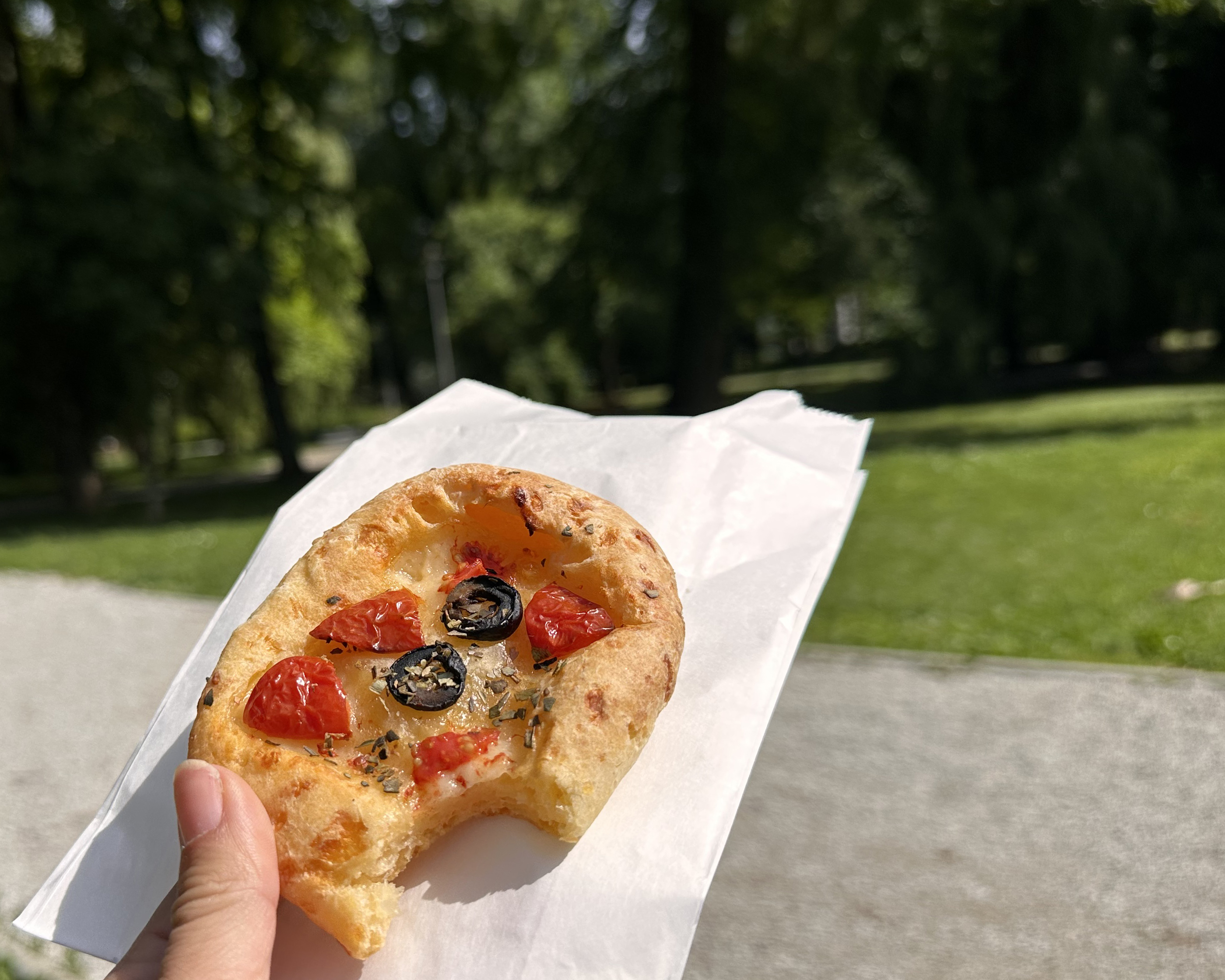
My first stop was a gluten-free shop, Kata brunch bar, with an amazing selection of sweet and savory pastries. I admittedly went back later to grab a few more for the flight.
I walked for a few minutes to the quiet Park Ribnjak to sit for a bit – it was already a really nice day! Flowers were still in bloom, a photoshoot was happening in one area, and I had my first glimpse of some of the beautiful street art I’d come across in many parks around the capital.
Here’s one snippet of the art wall in this park:
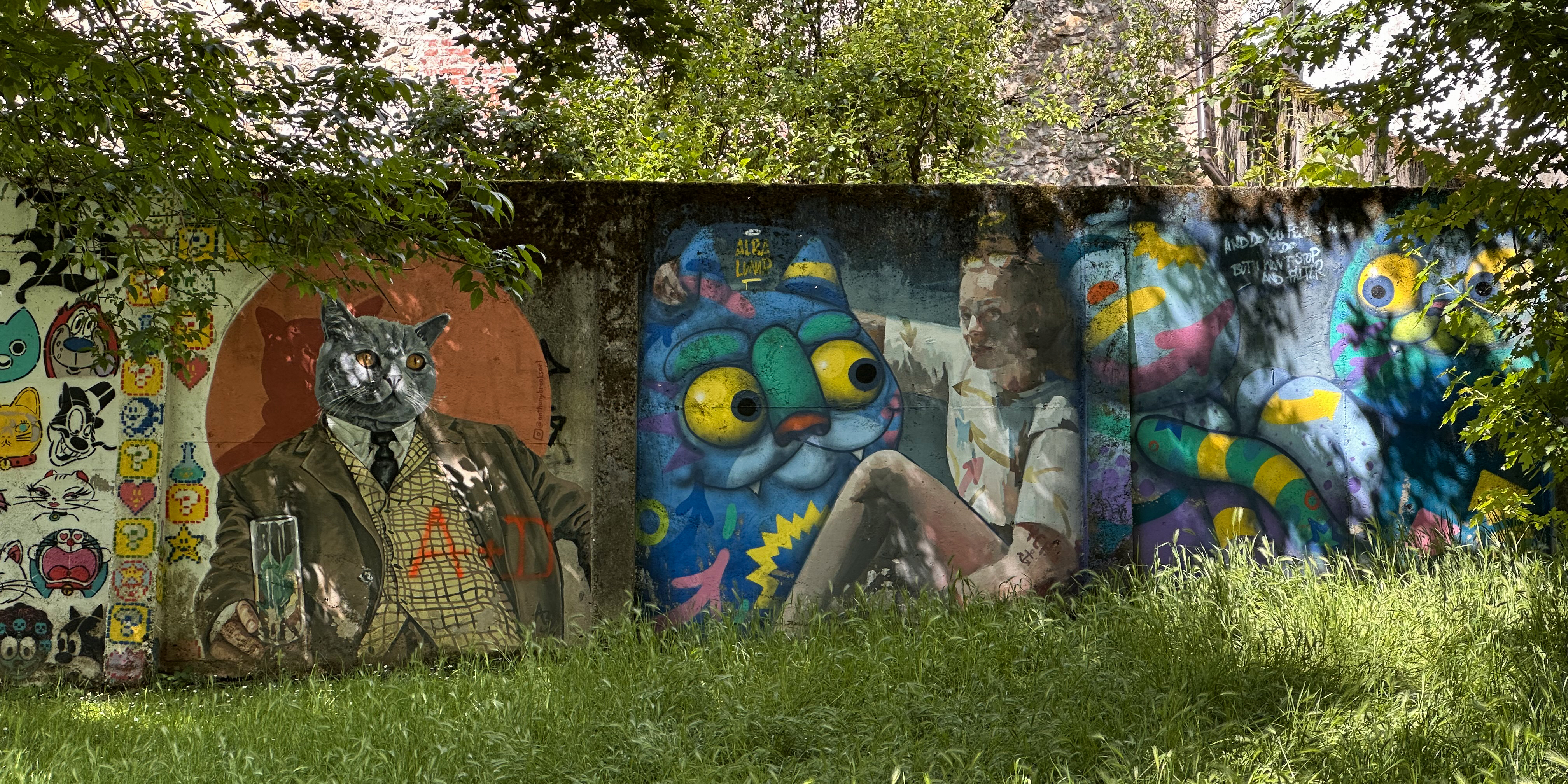
This park is also home to the largest tree species on earth: a giant sequoia. It’s huge, pretty random, and I could find no real information about it. It might be the first tree of this type I’ve seen:
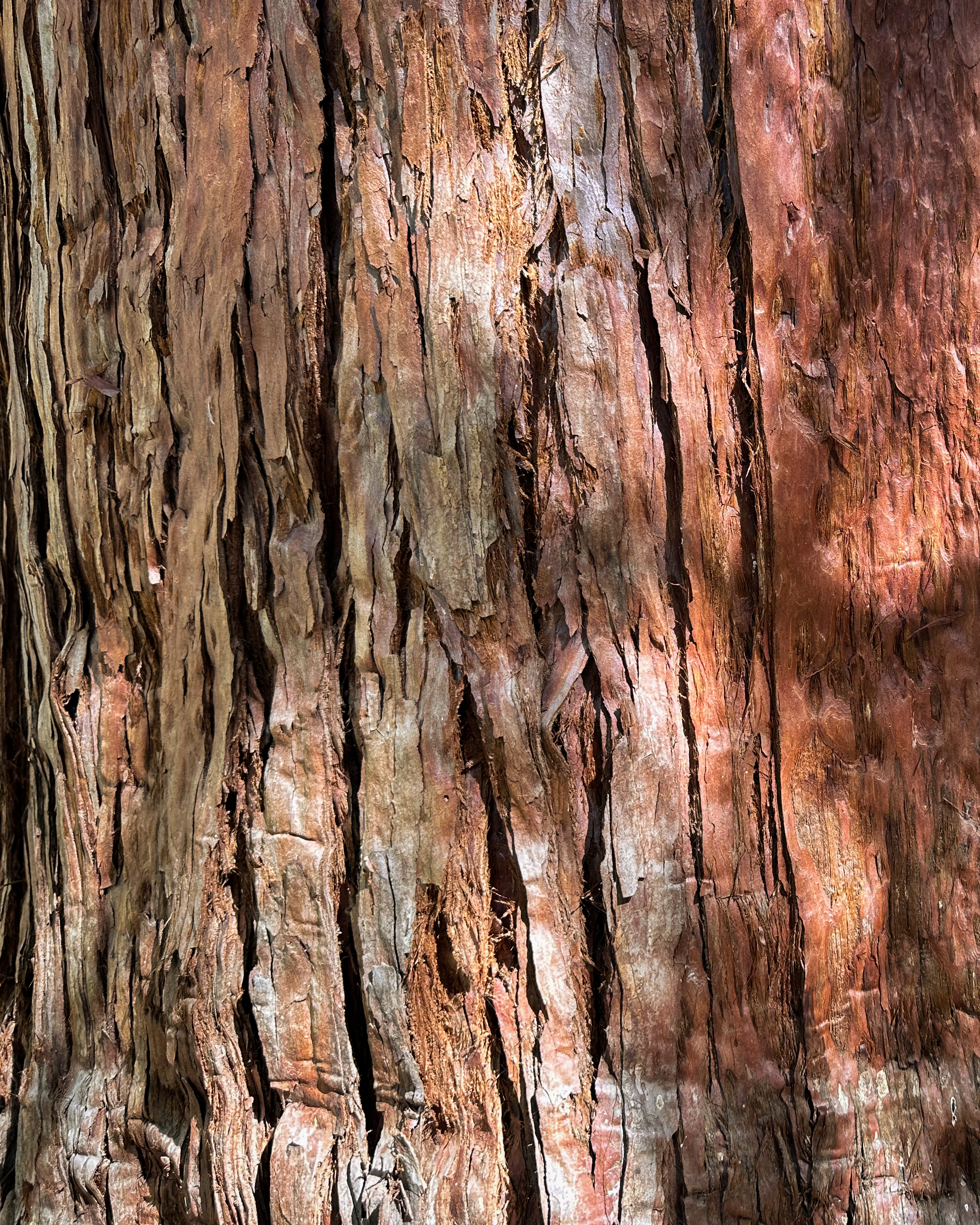
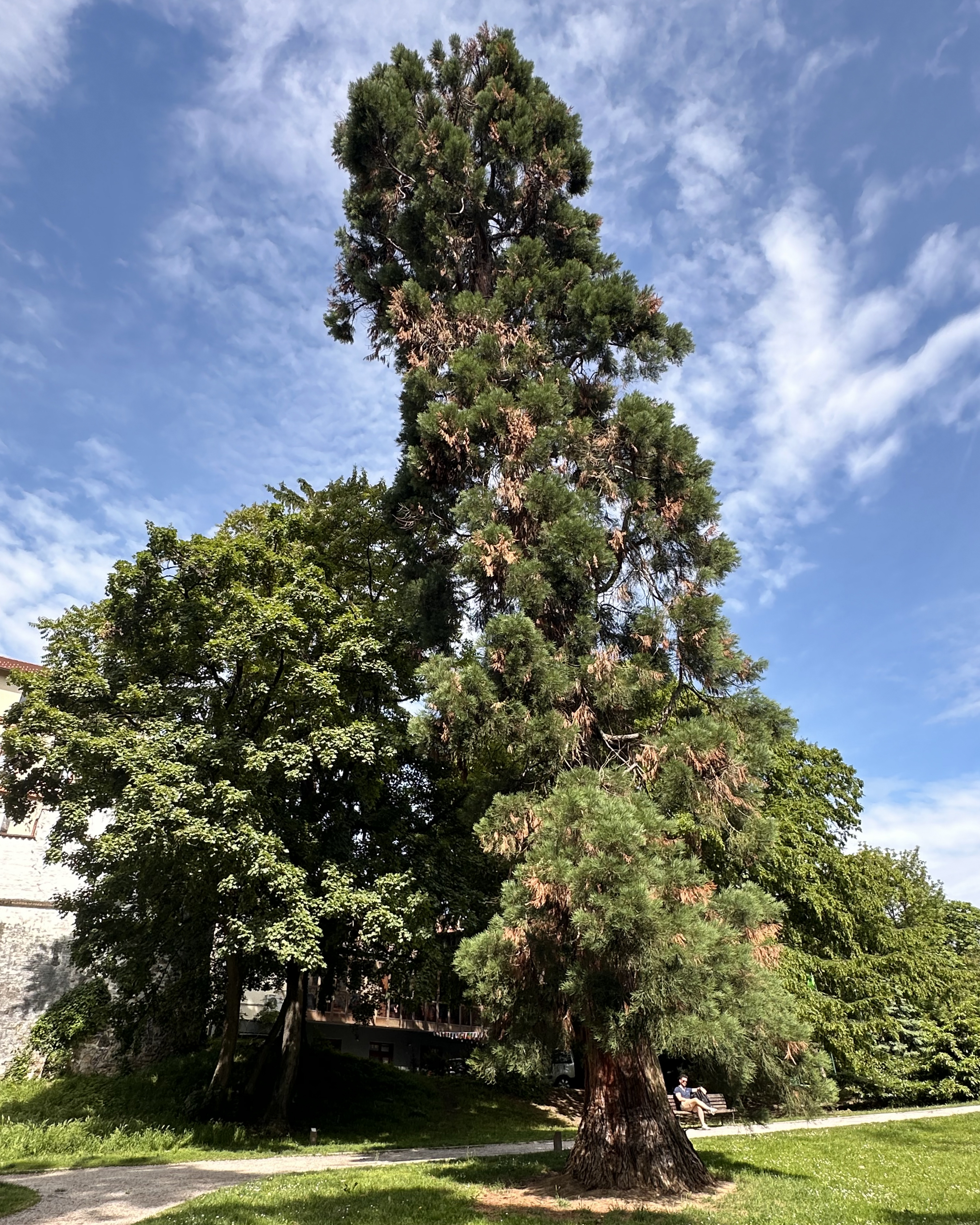
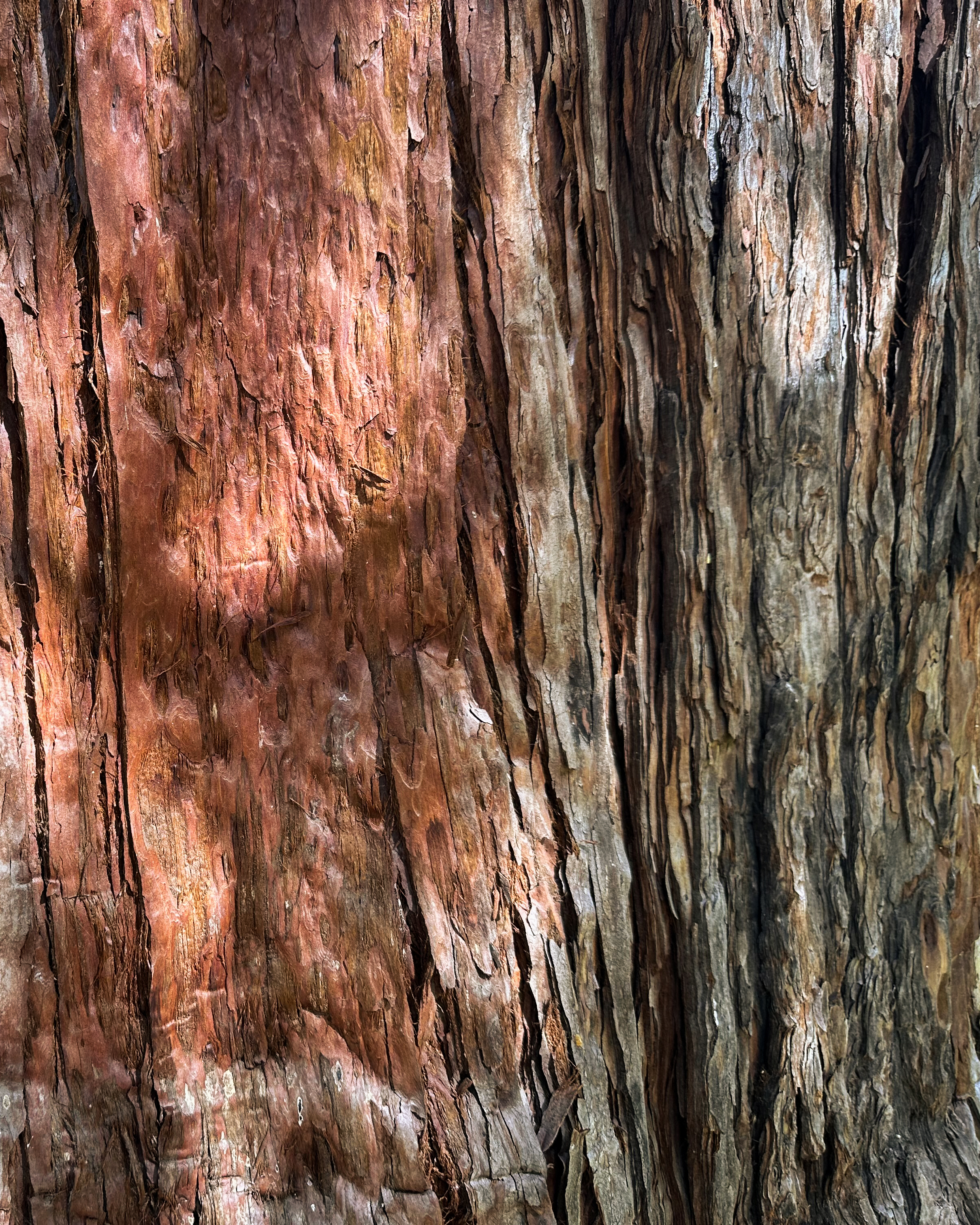
Zagreb isn’t too large a city, so my plan was to just walk around and stop at anything that looked interesting. The only must-see I had in mind was the Cathedral of Zagreb, which was unfortunately undergoing multi-million euro renovations after significant damage from the 2020 earthquake.
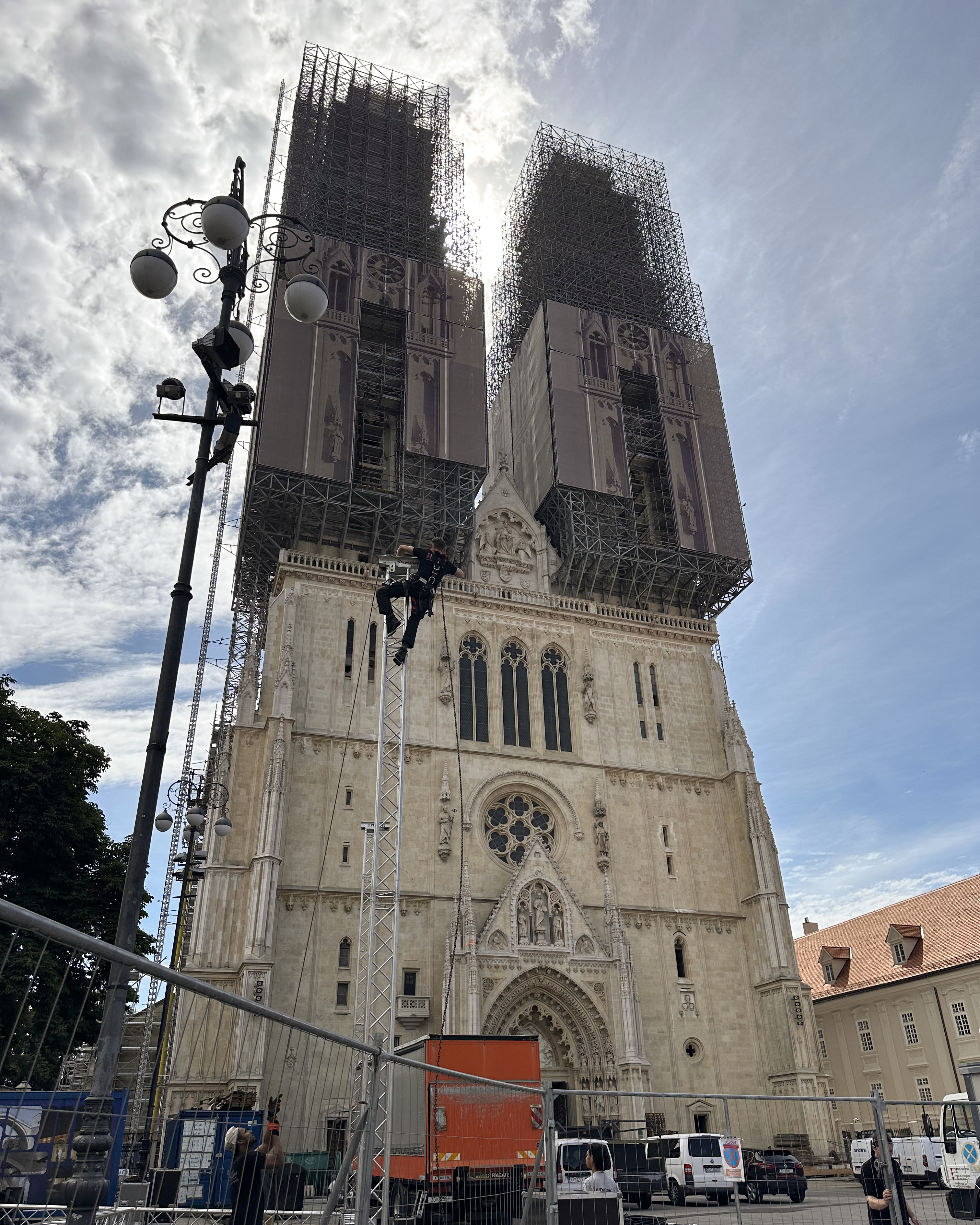
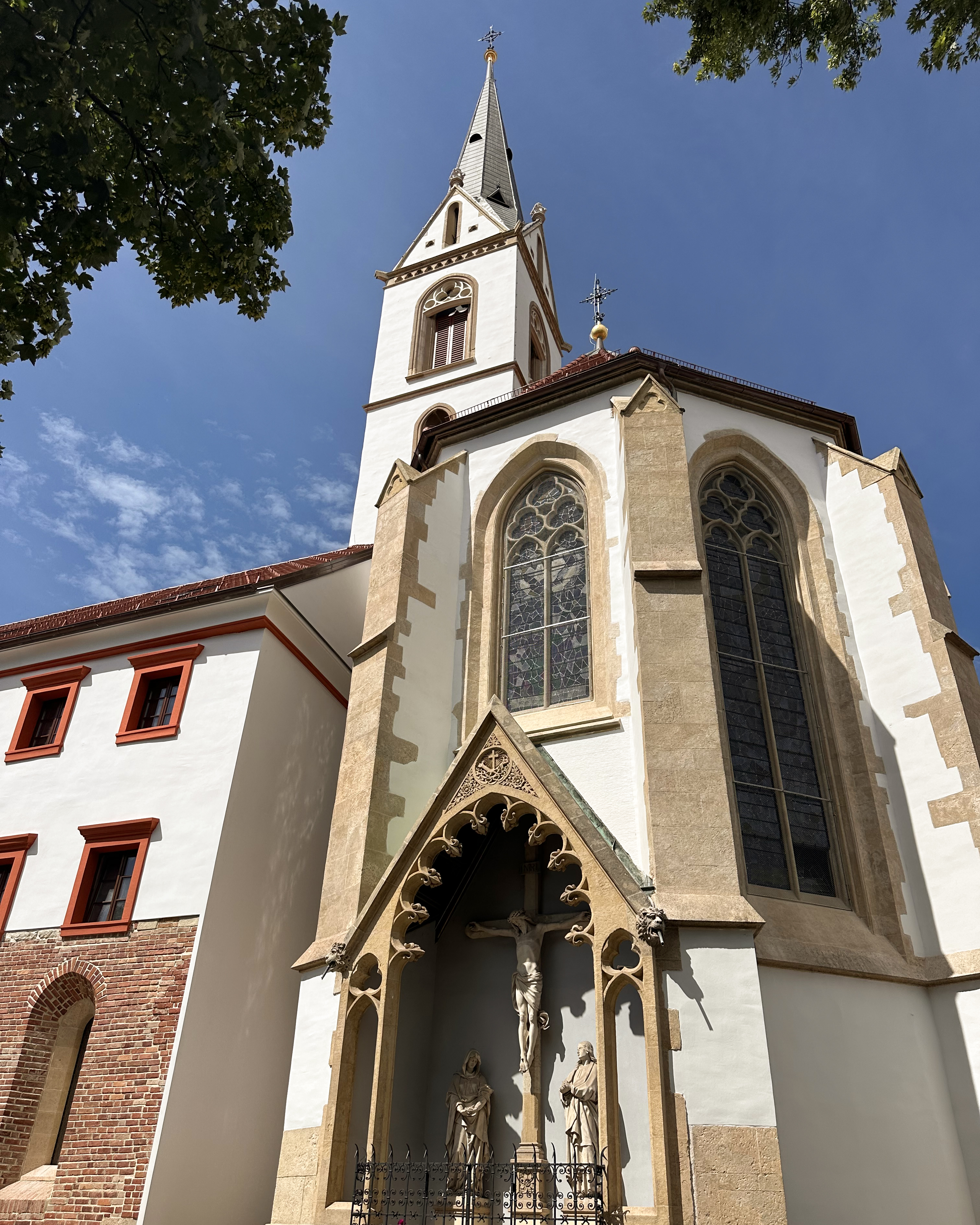
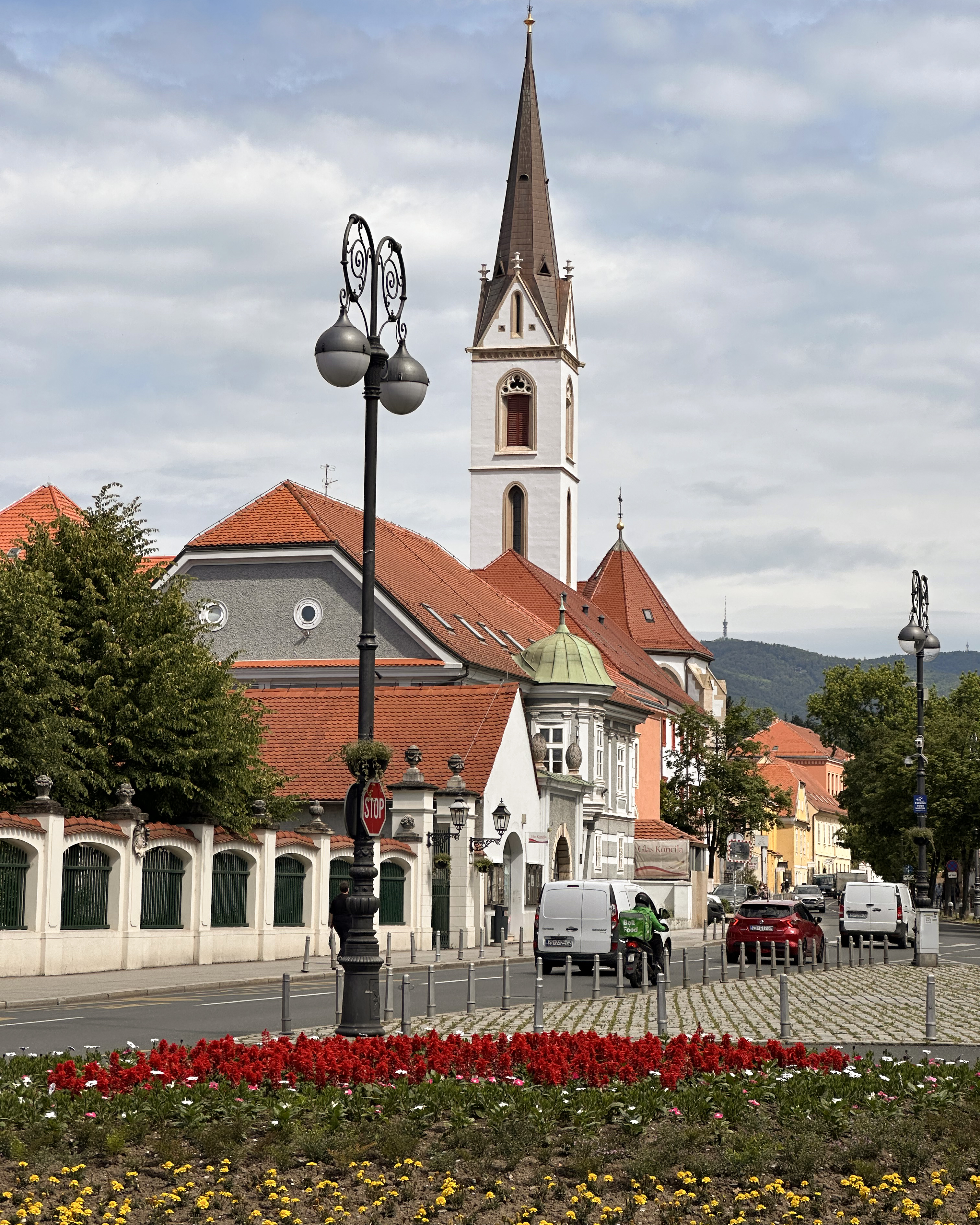
Still, there’s plenty of other beautiful architecture to check out in the area. After walking north through Park Ribnjak, I walked back south along Kaptol, a scenic road ending at the cathedral.
From there, I continued my walk up to Park Opatovina, even smaller than Park Ribnjak but home to even more street art, including a Beastie Boys wall.
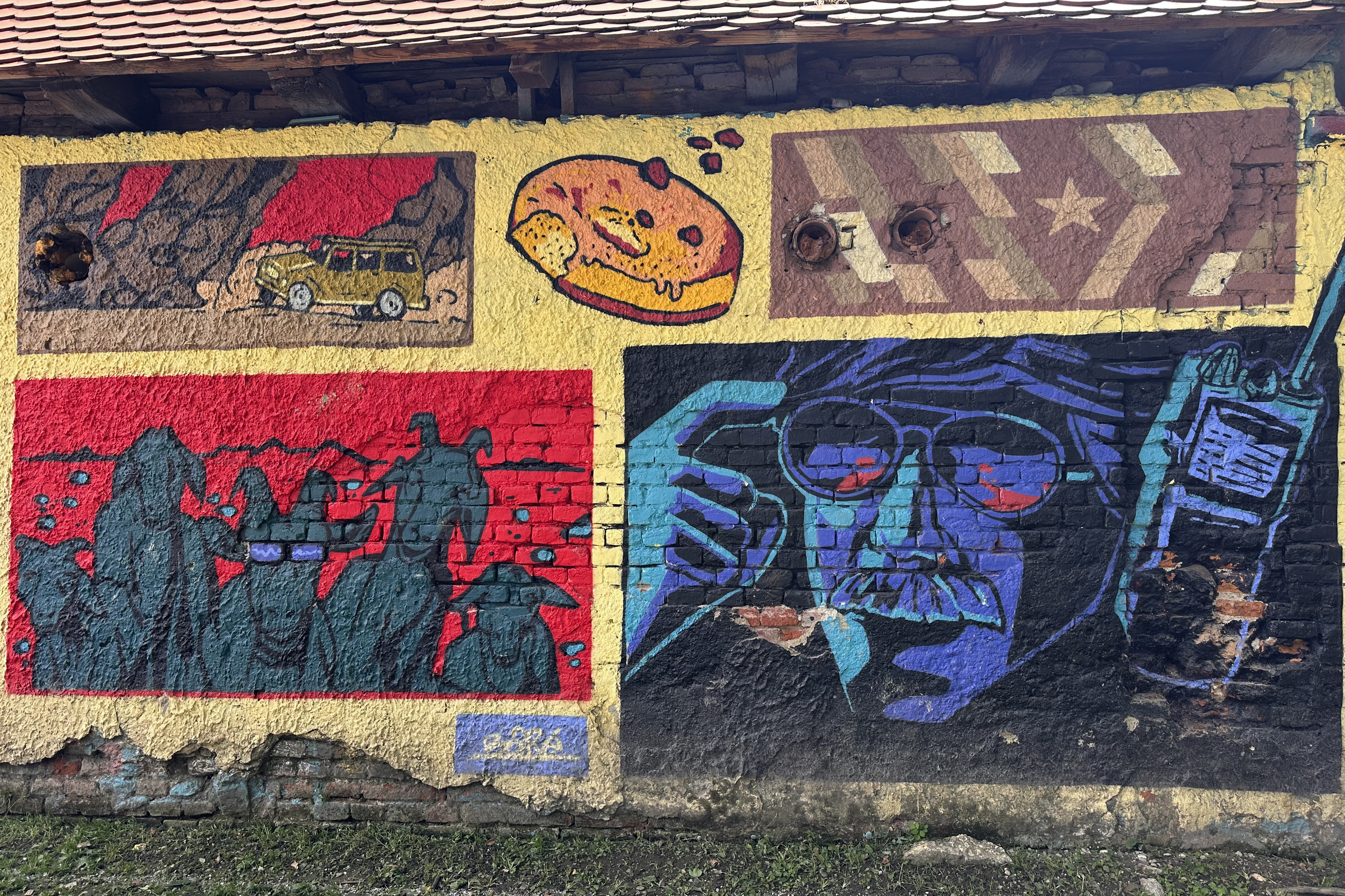
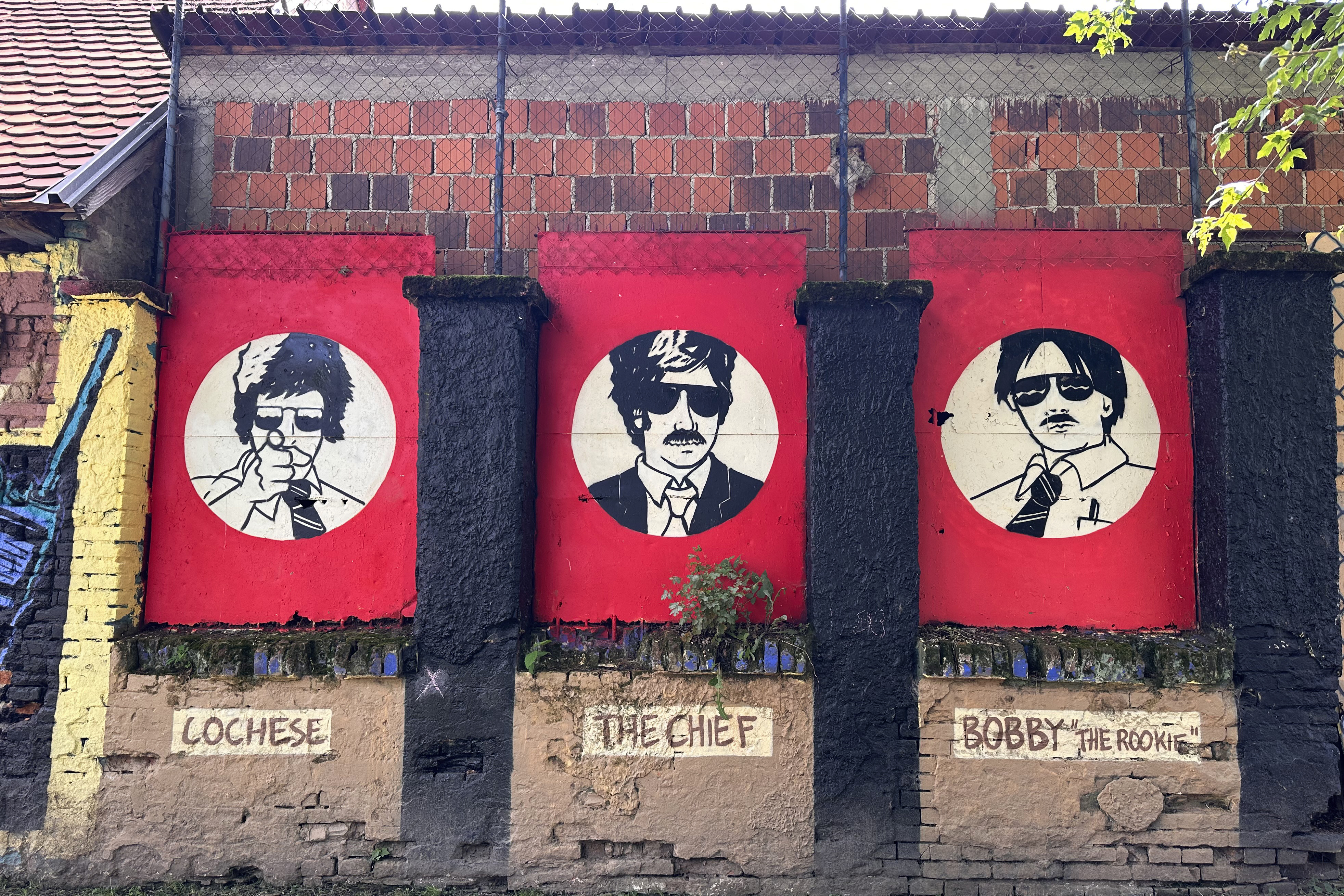

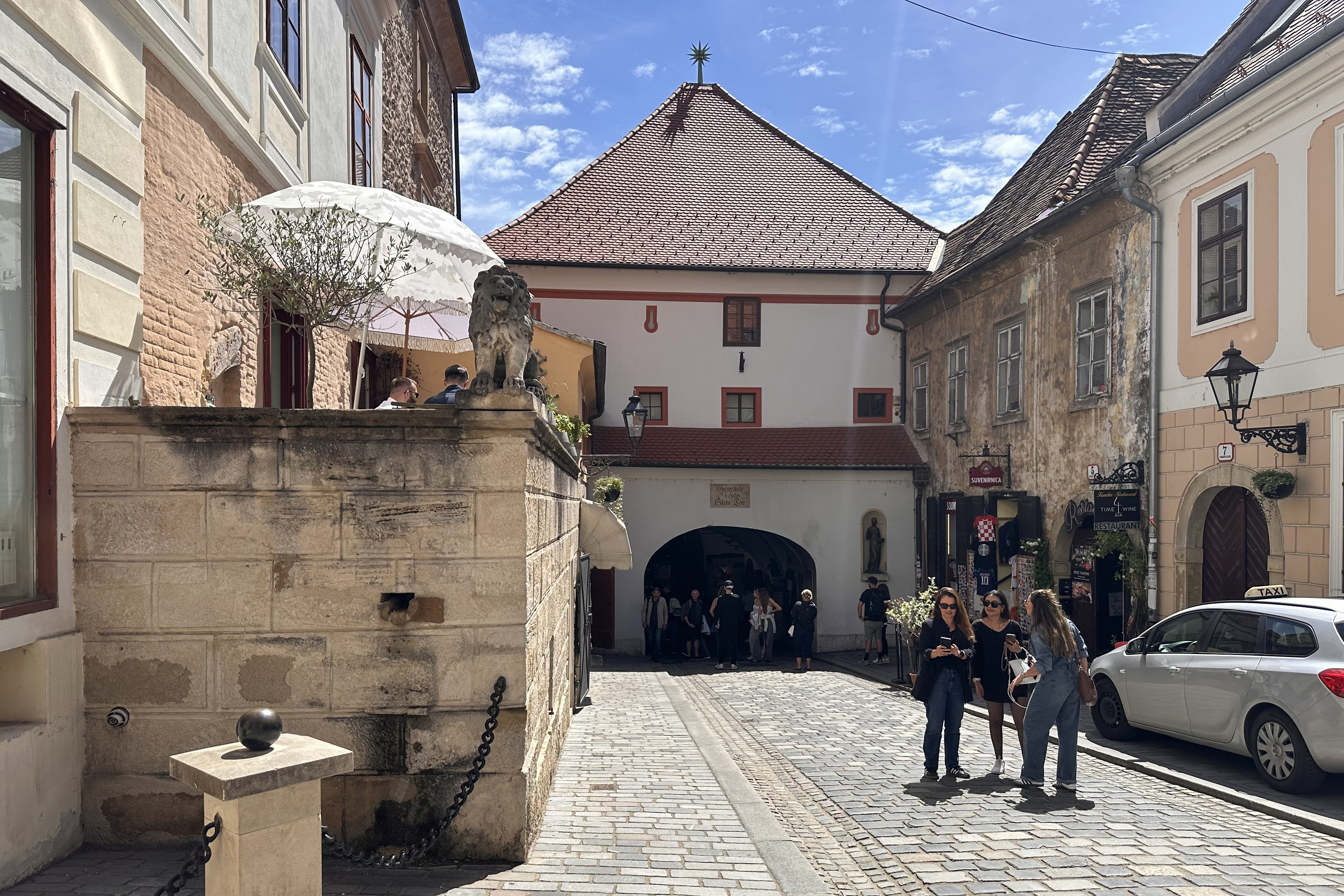
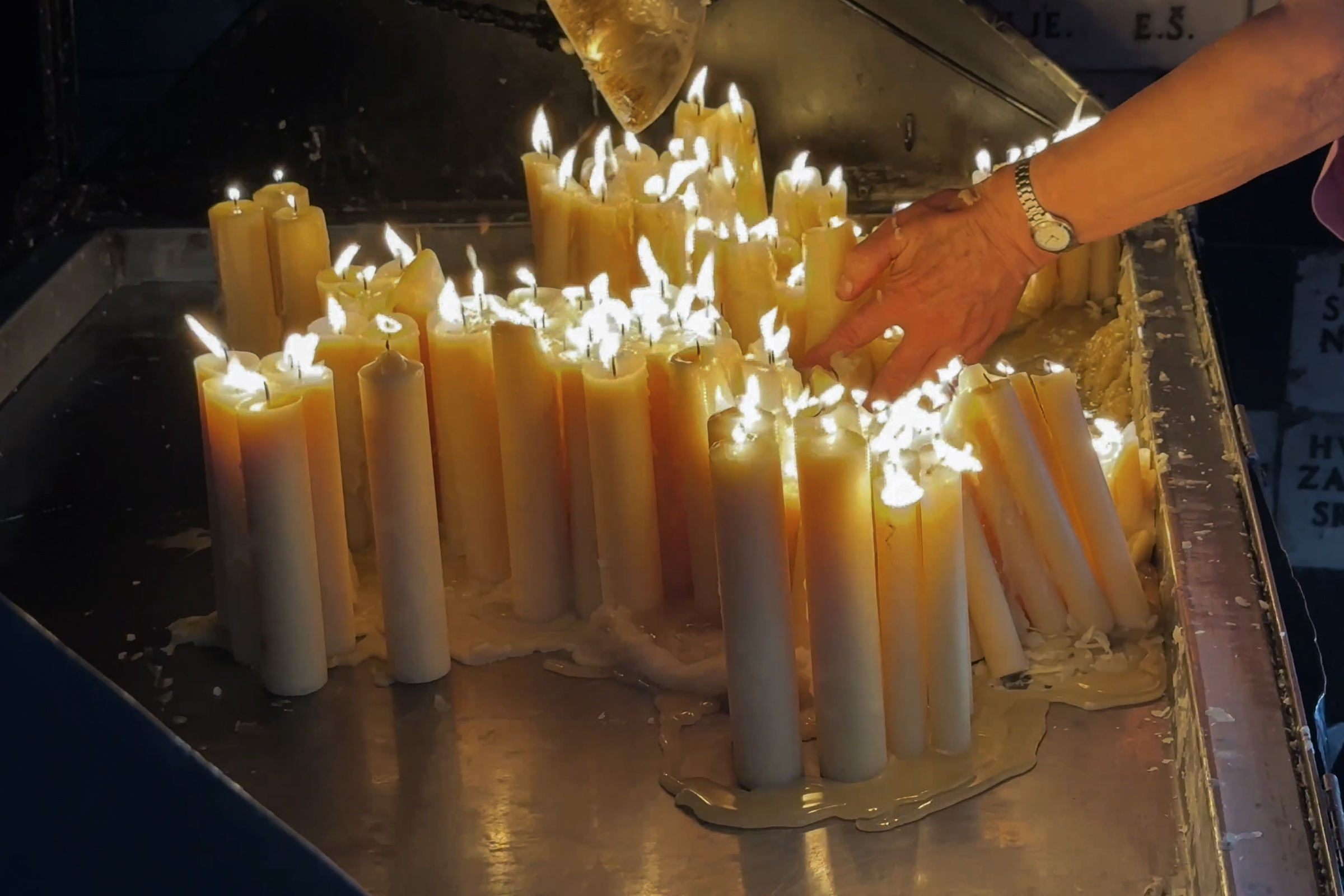
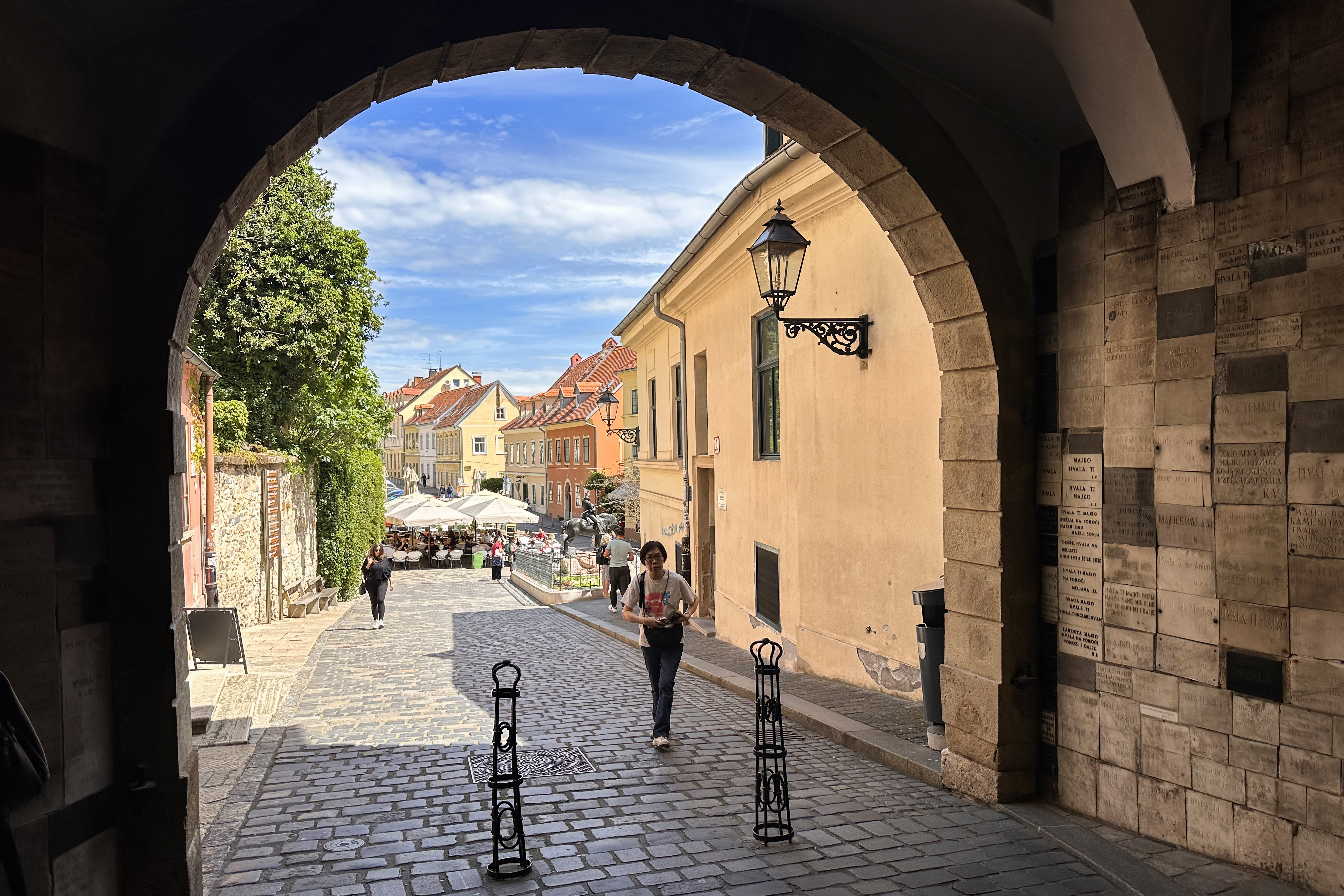
Not far from this park is a set of stairs to head up toward the Zagreb City Museum. I opted to skip this one for now, continuing to the Kamenita vrata (stone gate). It was originally built in the mid-13th century, but it was almost entirely destroyed by the Great Fire of Zagreb in 1731. Apparently, only a painting of the Virgin Mary survived the flames, with the rest needing to be rebuilt. It has since become a shrine, where fire continues to burn inside as visitors light candles in prayer.
Not far past the other end of this gate is the first of a few quirky museums I’d come across that day: the Museum of Selfies and Memories. Had I known just how many great museums existed in this city, I might have skipped this one. Still, given that I was still carrying my action camera that I’d brought for the hikes, I decided to pop in and see what this museum was about. It set the bar (of gold – see first photo) kind of low. (:
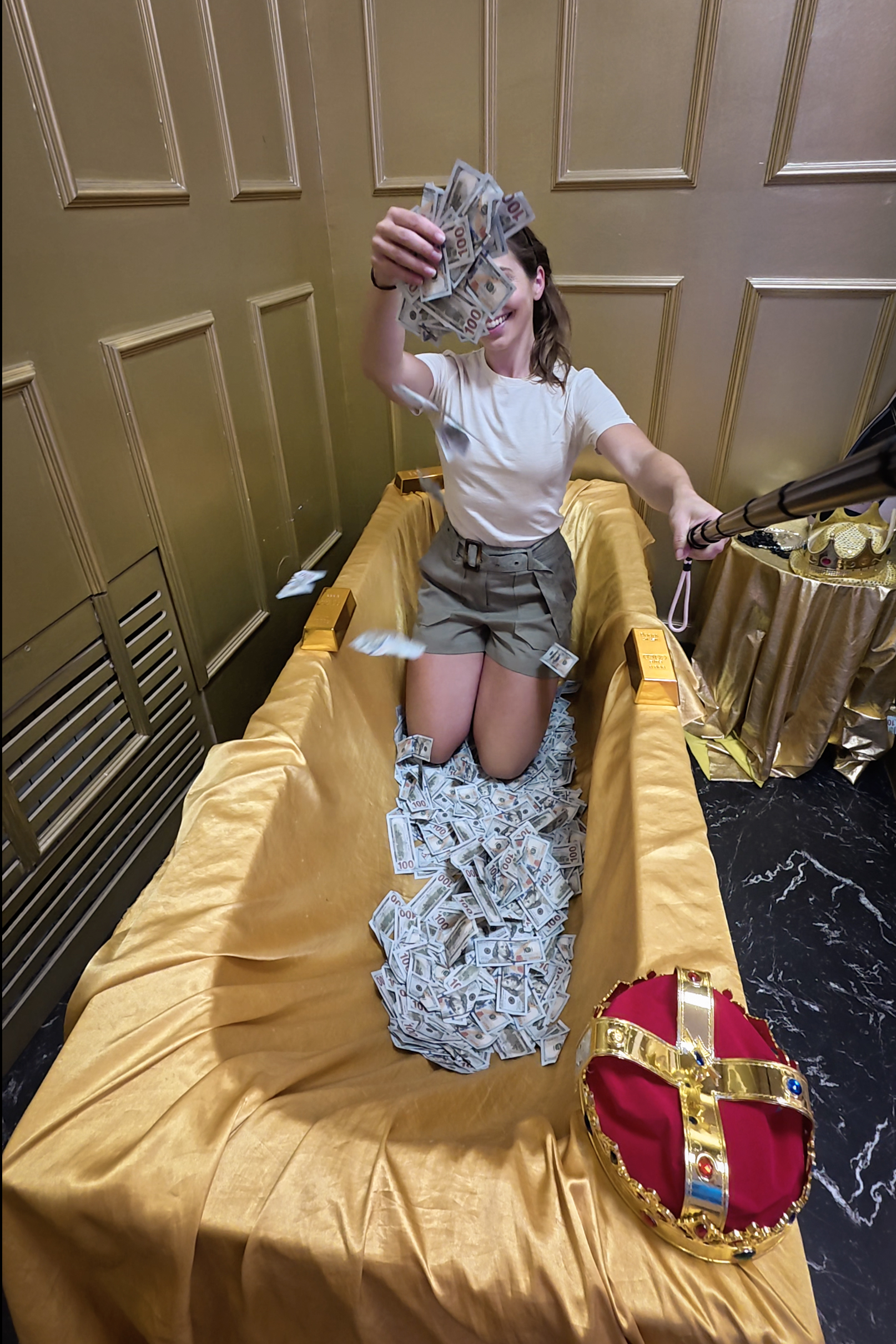
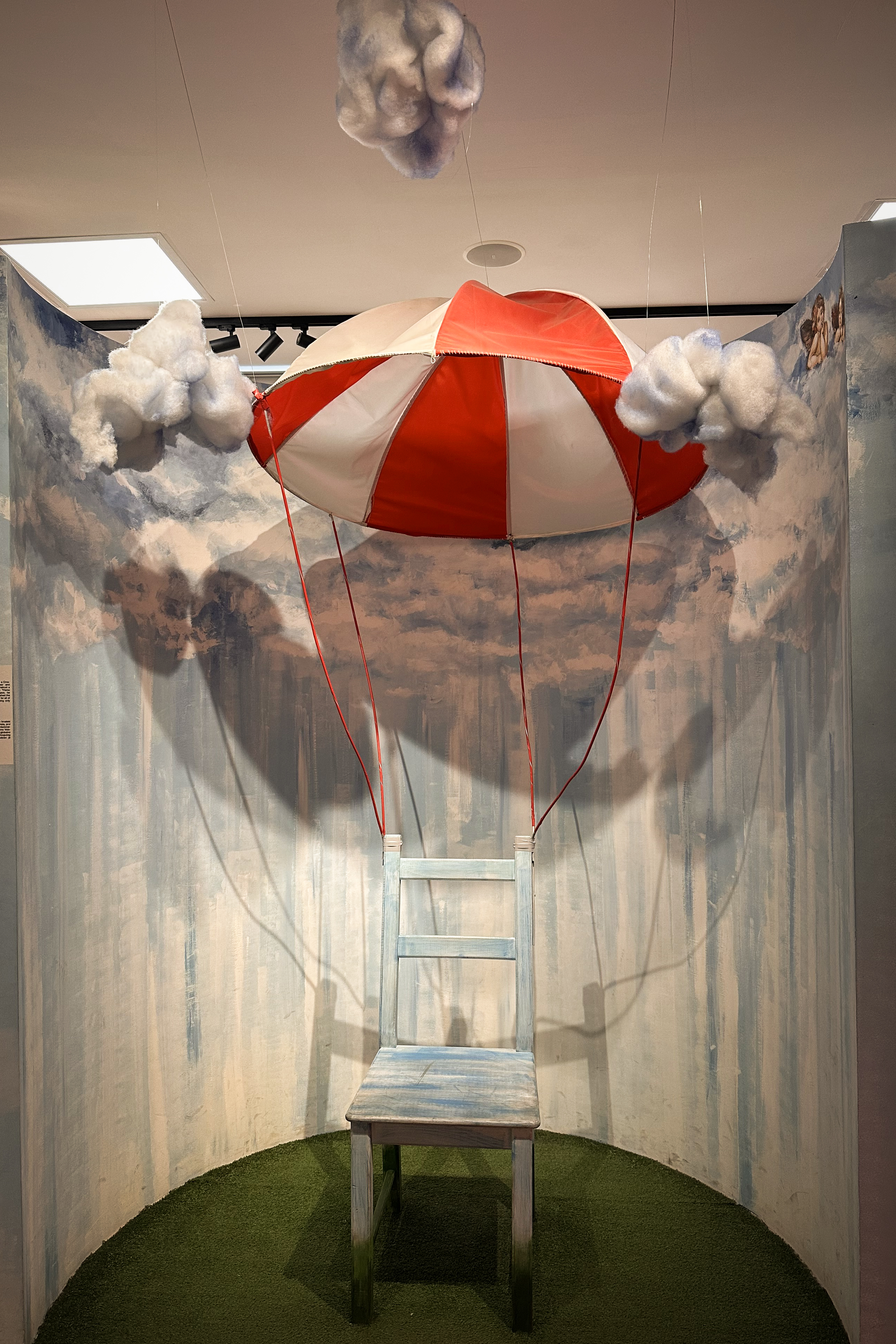

It was about as gimmicky as you might expect, complete with Taylor Swift and Harry Styles cutouts, funhouse mirrors, and other installations of pop culture references. This was a Tuesday morning, and there wasn’t a single soul in the museum aside from the receptionist.
I decided to head up a few more flights of stairs toward St. Mark’s Square, home to St. Mark’s Church. On the way, there was a musical duo with a violin and guitar. They were improvising and were so nice to listen to – check out my Croatia Instagram highlights for a clip of them!
Originally built in the 13th century, St. Mark’s Church has a long history of multiple reconstructions, which will take up too much of this already-long blog post to write about here. Some of these were also earthquake-driven, including a 6.3-magnitude one in 1880. This church was also damaged by the 2020 earthquake and reopened at the end of 2023.
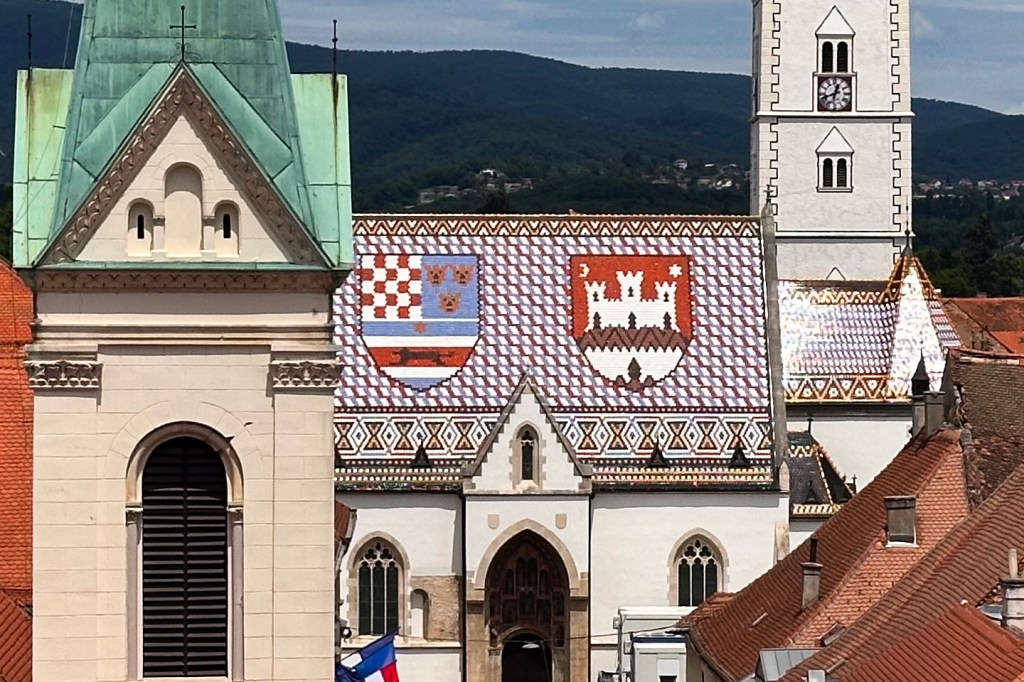
Possibly its most notable feature is the tiled roof, built during the post-1880-earthquake reconstruction. On the left is the coat of arms of the Kingdom of Croatia, Dalmatia, and Slavonia, and on the right is the Zagreb coat of arms.
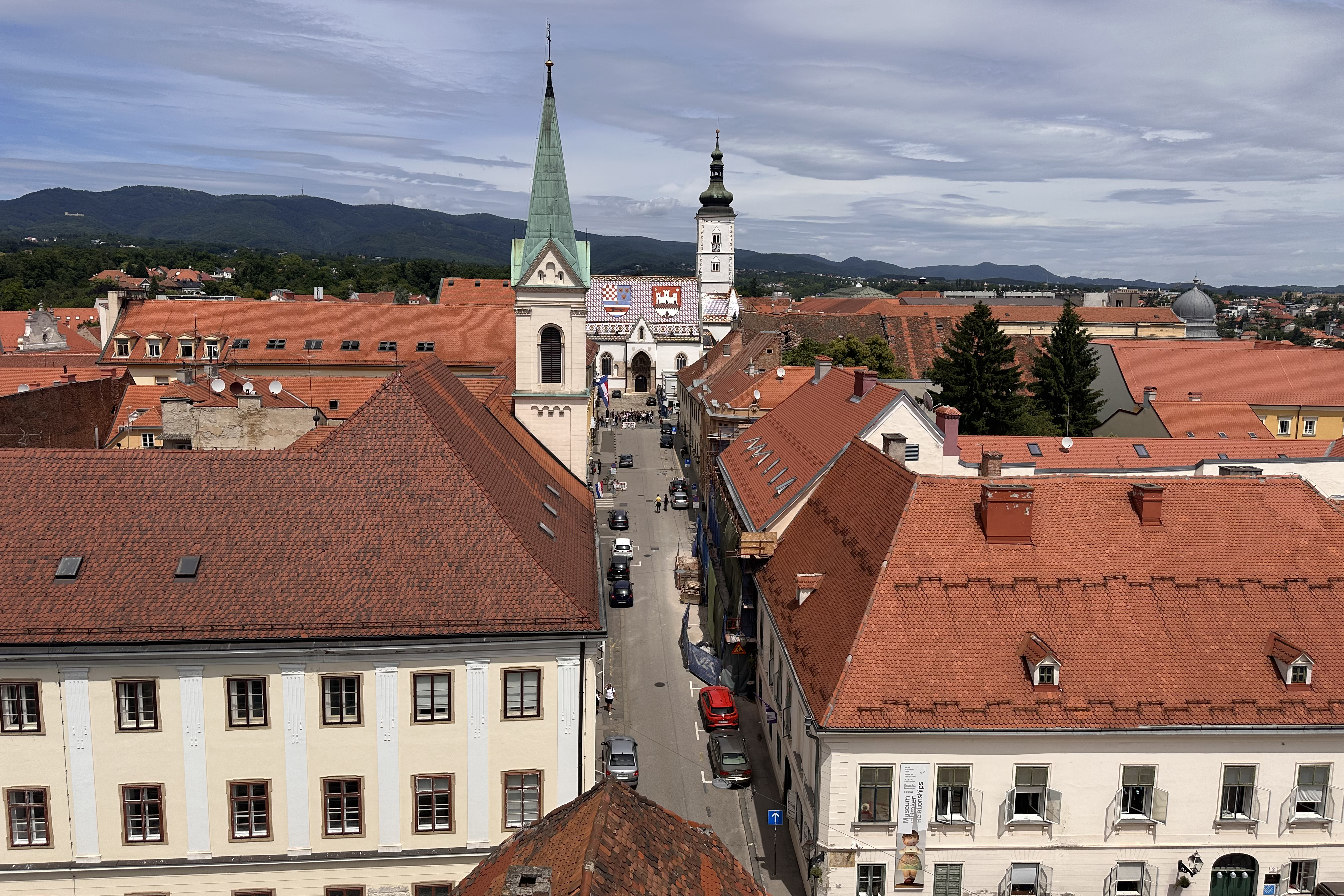
For a better view of this church and the surrounding area (including the Cathedral of Zagreb), you can pay 3 euros to climb Kula Lotrščak (Lotrščak tower). The total height of this tower is 30 meters, so it doesn’t bring you too high above the city. However, given that it sits on a higher part of the city already, I thought it was a worthwhile quick climb.
A cannon apparently fires from it daily at noon, which I only found out later, and I was only 30 minutes too late. This seems to be a trend, as I’d also very narrowly missed the firing of the canon from Valletta in Malta.
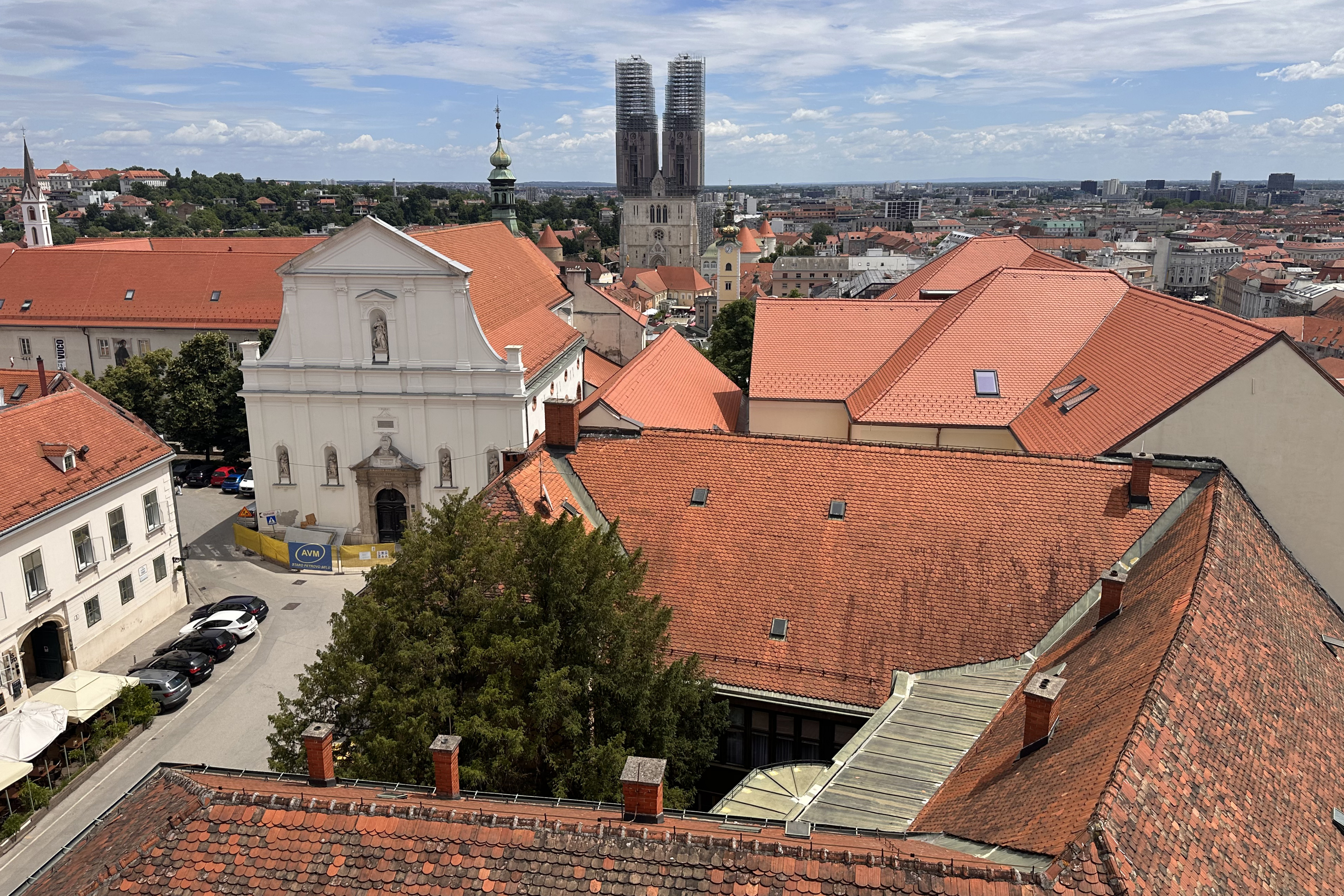

Right around the corner is a museum I was told to visit, as it’s not what you might expect. It’s very small, and it’s full of items random people have sent in with their associated stories. This is the Museum of Broken Relationships. Stories come from all over the world, with everything from a slice of cake (preserved in a museum mini freezer) to a flag of the European Union (signifying the breakup of the UK with the rest of Europe through Brexit). Stories rotate in and out, so different visits could mean different exhibits. The tone is everything from hilarious to depressing. I took photos of some of my favorites, but I won’t post any here, as it kind of ruins the experience to just read them online! (:
The only one I’ll drop in is the Wi-Fi password, as this museum really loves to weave jokes into everything.
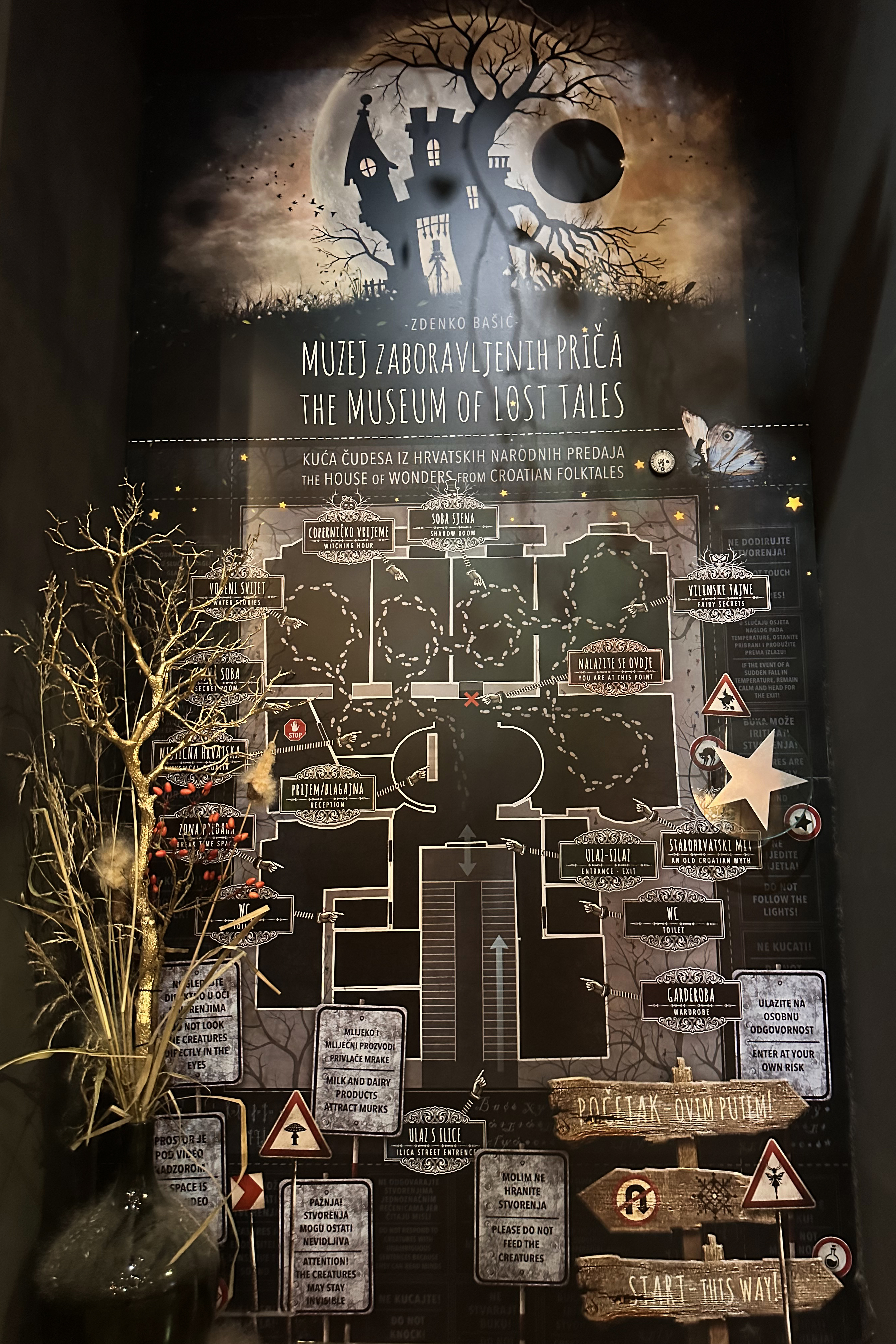
After a quick lunch, I headed to another museum I’d come across on Google Maps. At this point, I’d decided to just make it a museum day. This one was called the Museum of Lost Tales.

It’s a small museum with just six rooms, but it’s impressively full of paintings and installations all by the same artist, Zdenko Bašić. As of 2025, it’s 12 euros to enter…a bit steeper than other small museums in the area. However, it was one of my favorites! It’s full of Croatian folklore and stories, which I really didn’t have enough time to appreciate properly during my short visit.
I won’t include too many photos of this museum either, as it’s best appreciated in-person. Just one of my favorite paintings on the right, which conveys the artist’s style pretty well. The installations themselves were pretty elaborate, with the stories captured possibly even more so. There was even a room with a large map of Croatia showing more specifically from which regions certain stories originated.
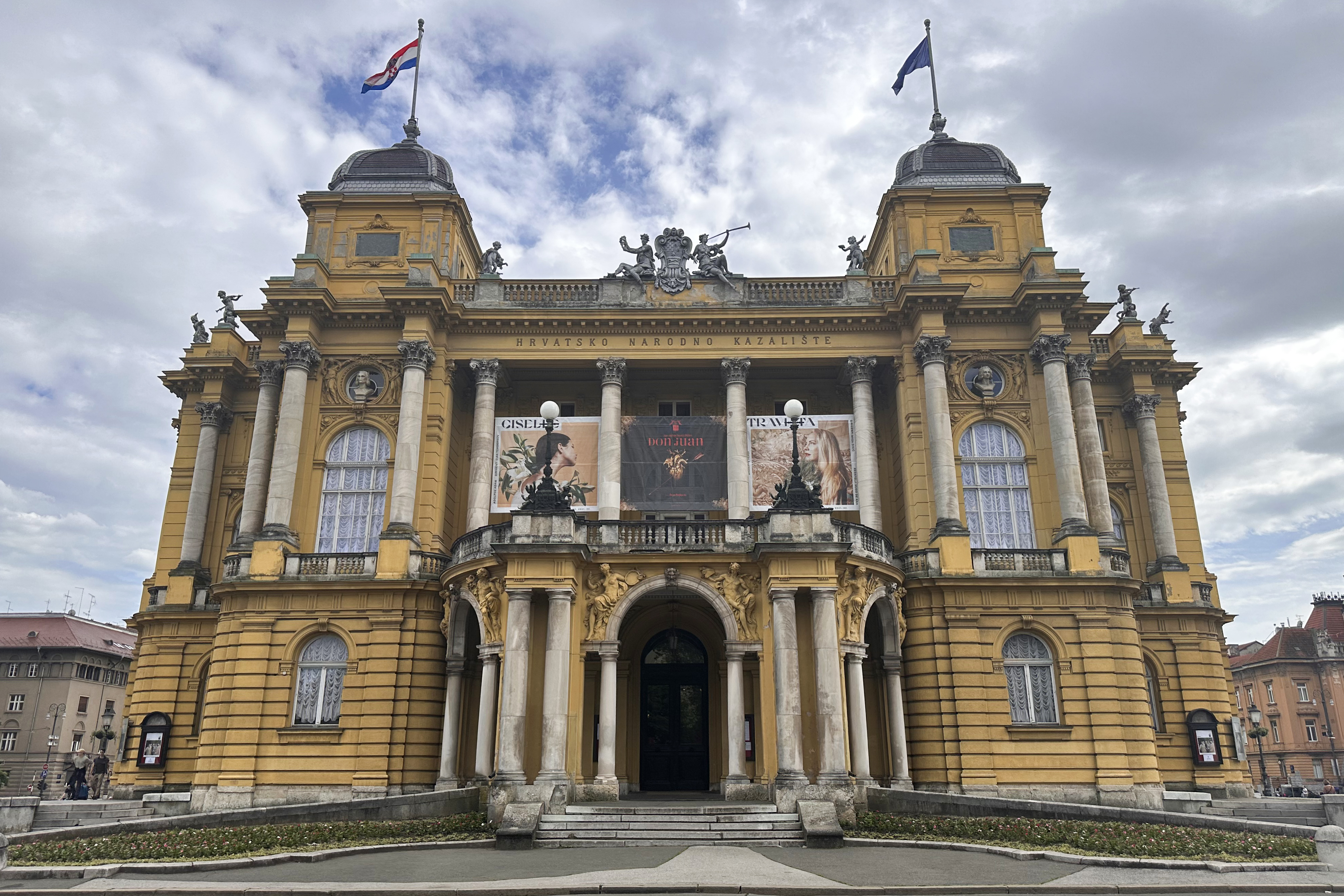
I decided that there was time for one more stop that day, to an area with a historical landmark and a delicious museum. First, the landmark: the Croatian National Theatre.
Then, the museum: the Chocolate Museum Zagreb.
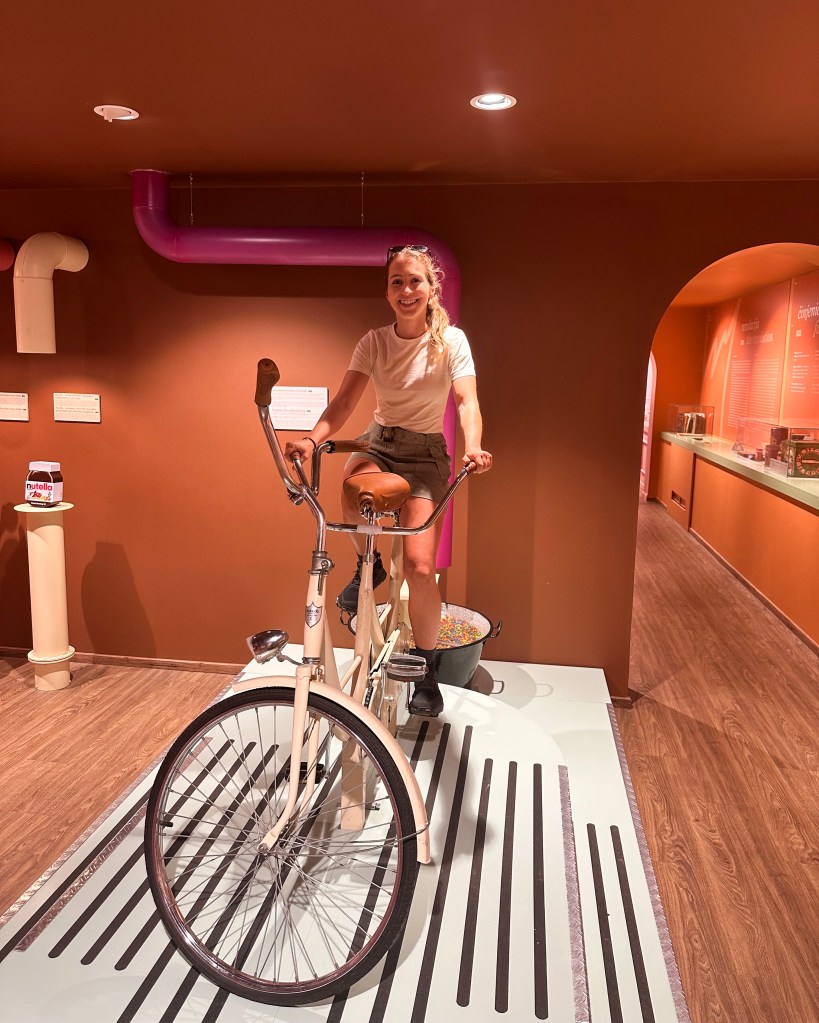
Upon entry, you’re given a narrow box of 6 chocolates and a wooden spoon (to try an additional three types of melted chocolate). The rooms are ordered chronologically and paired with the tasting chocolate box. The first room begins with a roasted cocoa bean, the least processed of the samples, and the final rooms include ruby chocolate and the melted chocolate varieties. While it includes some Croatia-specific chocolate history, the focus is more on the evolution of chocolate around the world. There are hundreds of mini exhibits of chocolates through the ages, a smelling station, and even a bicycle!
My last stop was at a shopping mall to purchase a suitcase for the flight back. That thankfully didn’t take long.
To finally end the lost luggage saga, my AirTag indicated that it was back in Heathrow Terminal 2. Unfortunately, I landed in Heathrow Terminal 3, and I would miss their closing time by about 30 minutes if I tried to make it to T2 for my bag. Instead, I headed home, but it was delivered to me just the next day! Future note to self: do not book a layover flight with a checked bag if you won’t be hanging around the destination airport for at least a couple of days. Lesson learned, and mission still accomplished!
THANK YOU ❤
Thanks for reading my twelfth Crown of Cureope blog post. At the time I stood on the top of Croatia, we had raised $1,295 for the American Association for Cancer Research to fund lifesaving discoveries. As of publishing this post, we are at $1,685 raised of our $2,500 2025 target. There’s still a bit further to go to hit this year’s goal – any donations are appreciated!!
Map of Places to Visit in Croatia:


 Crown of Cureope
Leave a reply to #13: Andorra (Coma Pedrosa) – Crown of Cureope Cancel reply