
Back to the Tatras
11 months earlier, I arrived in the Tatras for the first time with two missions: Rysy and Gerlach. The plan involved flying into Kraków, driving to the Slovak side of the Tatras, climbing Gerlach, leaving the car to take a train and two buses to the Polish side, then hiking one-way from Poland to Slovakia via Rysy with Sara. Unfortunately, persistent rain and thunderstorms got in the way of a Gerlach attempt, so we just did Rysy. We did see it, though…so close, but yet so far!
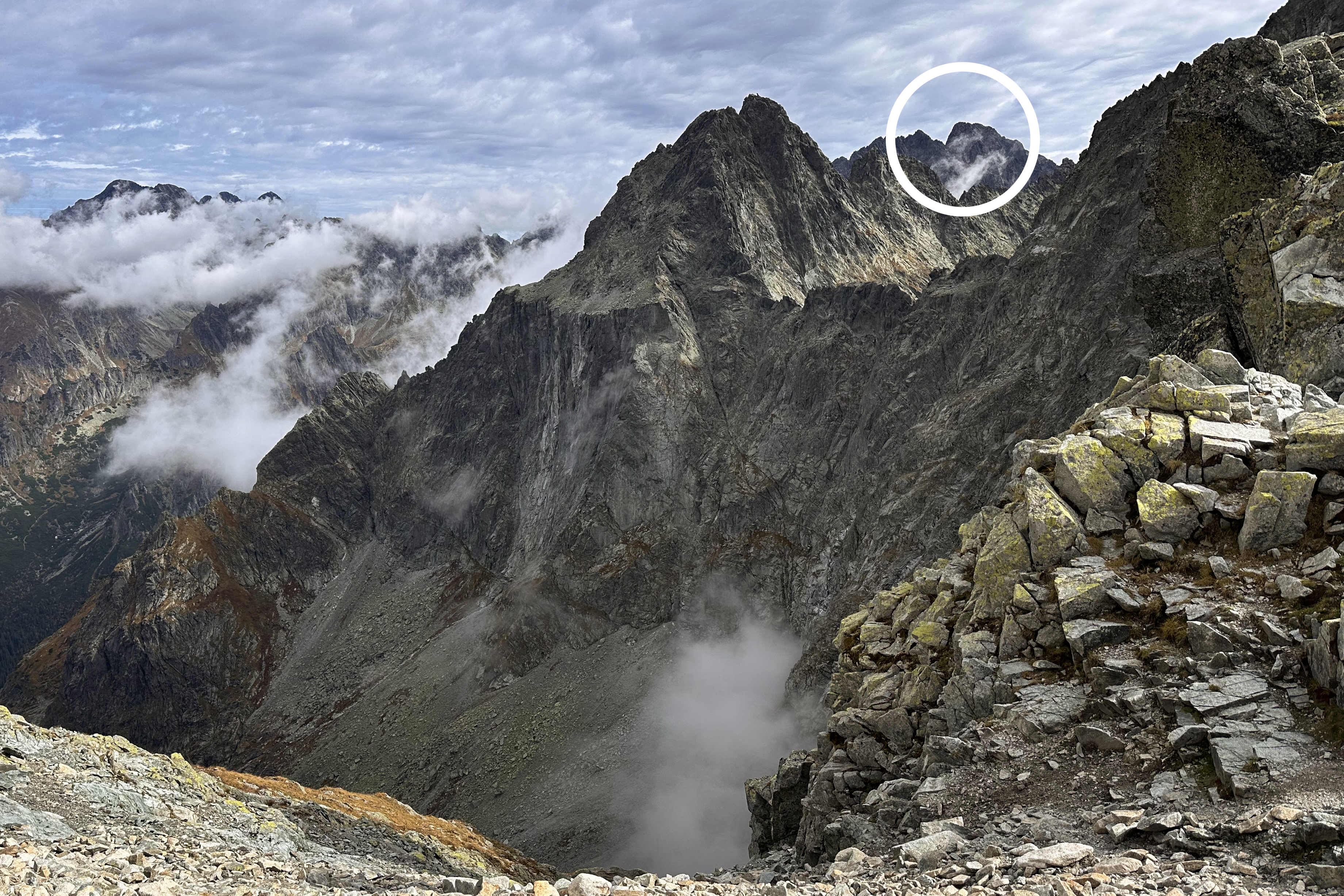
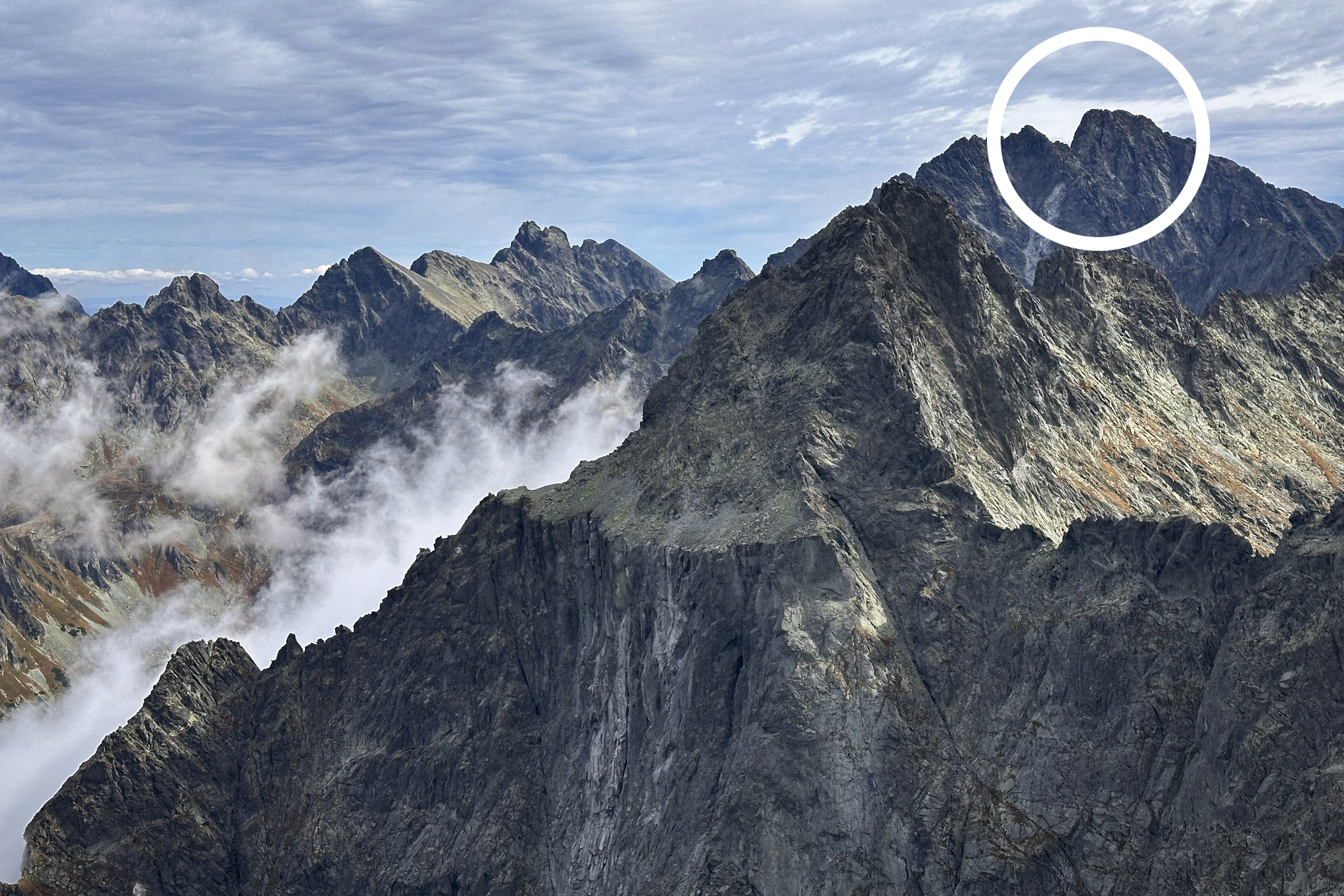
Gerlach is the only peak in this challenge that legally requires a guide, with some exceptions for qualified mountaineers. The specific rules and penalties are a bit hazy, but aside from the fine itself (which can be up to €300 on the spot), mountain insurance might deny claims if you’re found to have broken park rules. I’m a member of a qualifying alpine club (AAC UK) but have no formal qualifications, as anyone can become a member simply by paying an annual fee. Fines and insurance denials would be expensive…but so is hiring a guide privately.
The per-person guiding cost is lower for groups, but no guide I contacted was willing to add me to a group of strangers. The group had to be pre-assembled. Unfortunately, most people I know through this challenge had already climbed it. Thankfully, George (@geo.a.graphy) sent a timely message about joining him and his friend Val, and plans came together quickly. So quickly, in fact, that the guiding company booked us in when George had only sent an inquiry about our desired date (😂). It would be under 200 euros per person including the shuttle to and from the trailhead, but there were still other logistics to sort out.
Flights into Kraków and Poprad-Tatry were both fairly expensive and had limited options that would work with my schedule. I realized that if I flew into Budapest, just an hour further away than Kraków, Kékes (Hungary’s high point) would be on the way. There were affordable car rental options (note there’s a toll road sticker you need to purchase for Slovakia, though it’s not much and can be done online), and I’d get to explore a new capital city!
So, on a Friday evening in August, I pulled into a small hotel in Nová Lesná, just 10 minutes down the road from our 5am meeting point in Tatranská Polianka. I had opted to save Kékes for the drive back, as I wanted to avoid Friday night’s forecasted storms and 110 kmh winds. I came away from the first day of the trip with two superlatives to award: worst highway driving to Hungary and best gluten-free snacks to Slovakia.
The Hike
On Saturday morning, we pulled up to our meeting point in Tatranská Polianka to wait for the guide. After a few minutes, our guide rounded the corner on a motorcycle. His name is Igor, he’s nearly 60, and he looked cooler than we ever will at 5am. We knew we were in for a great day!
A shuttle took us up to the base of the hike, Sliezsky Dom. It’s a 4-star hotel on a picturesque lake, but we’d only be stopping there briefly for Igor to retrieve his gear and for me to stash some things I’d overpacked (in a panic, I threw maybe 4 pairs of heated and unheated gloves and mittens into my bag, along with maybe one too many layers). The wind was still questionable in the forecast, but the morning seemed calm so far. By 5:45am, we were off!
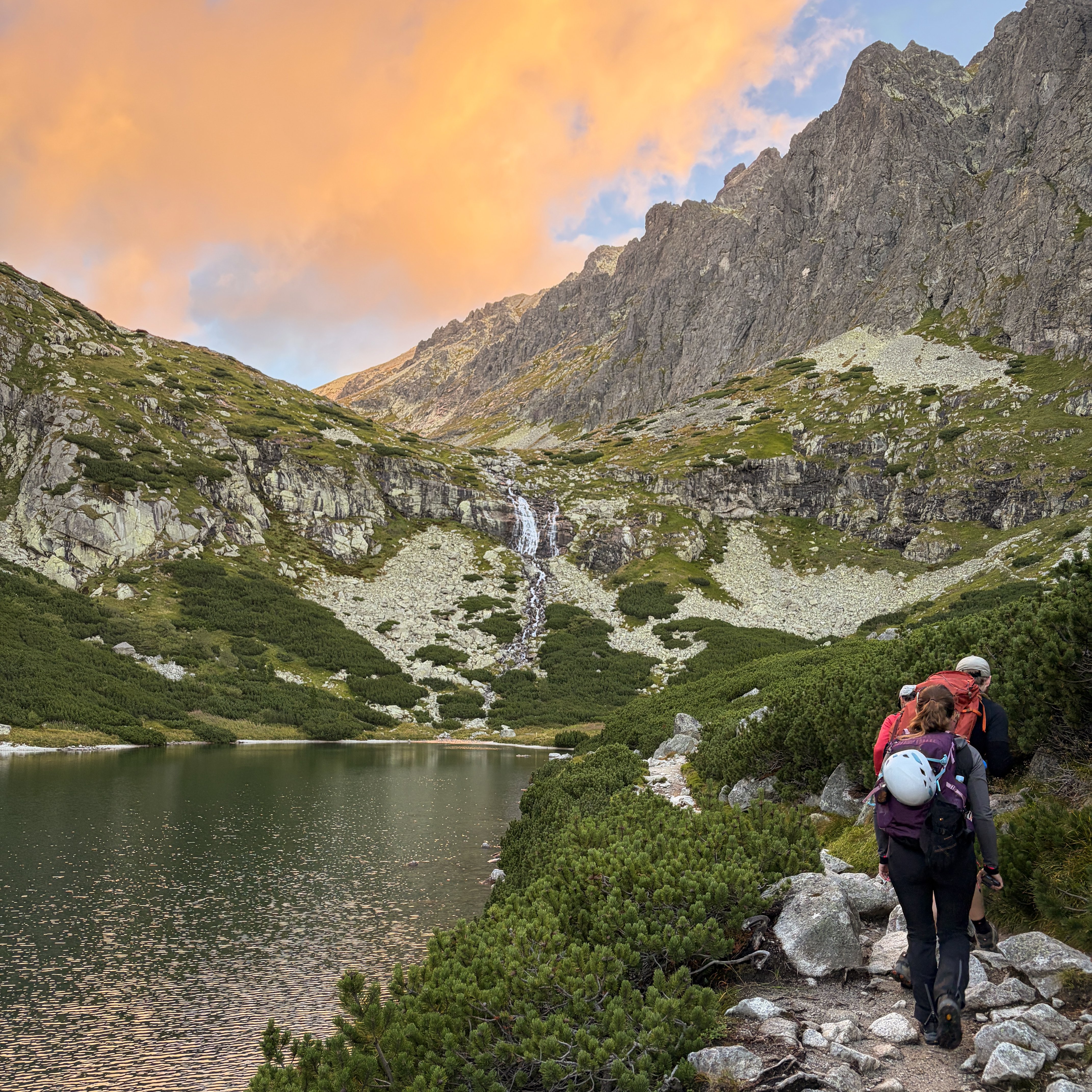
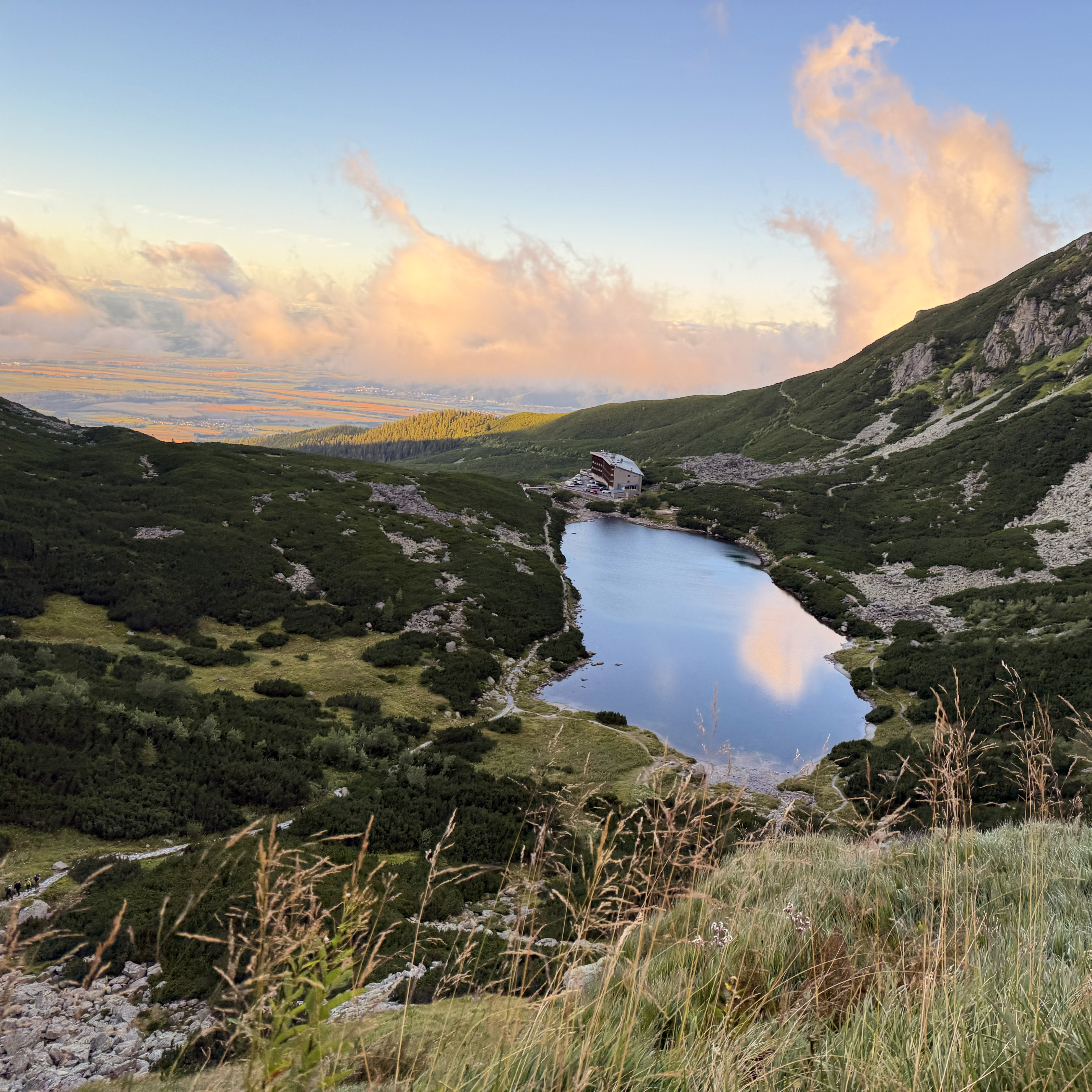
The first hour or so is a standard hike up to the start of the climb. The sun was coming up, giving us some nice lighting to take in the views over the lake (now below) and the valley. We roped up and started the fairly steep initial scramble. Ladies – this is your last chance for an easy bio break!
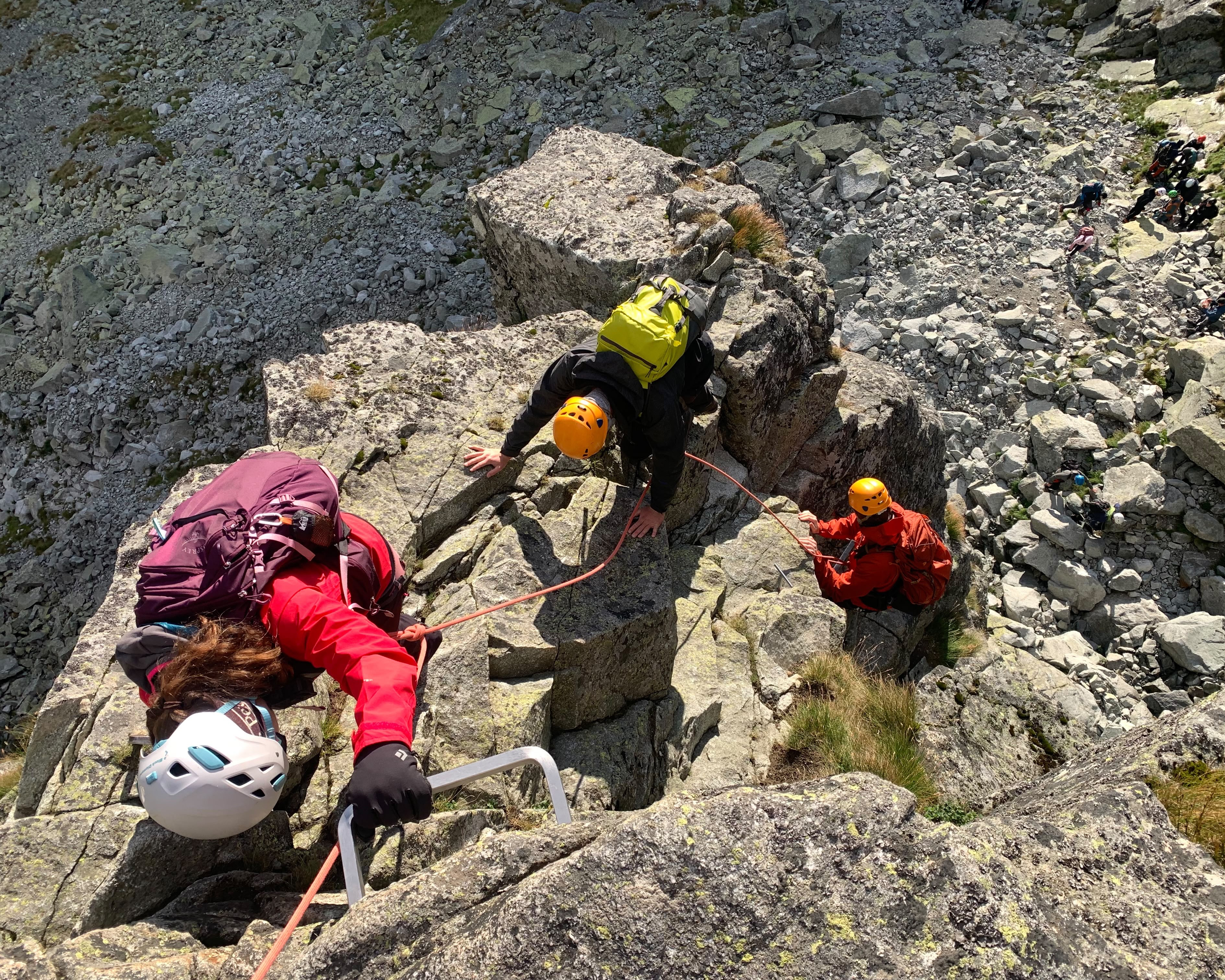
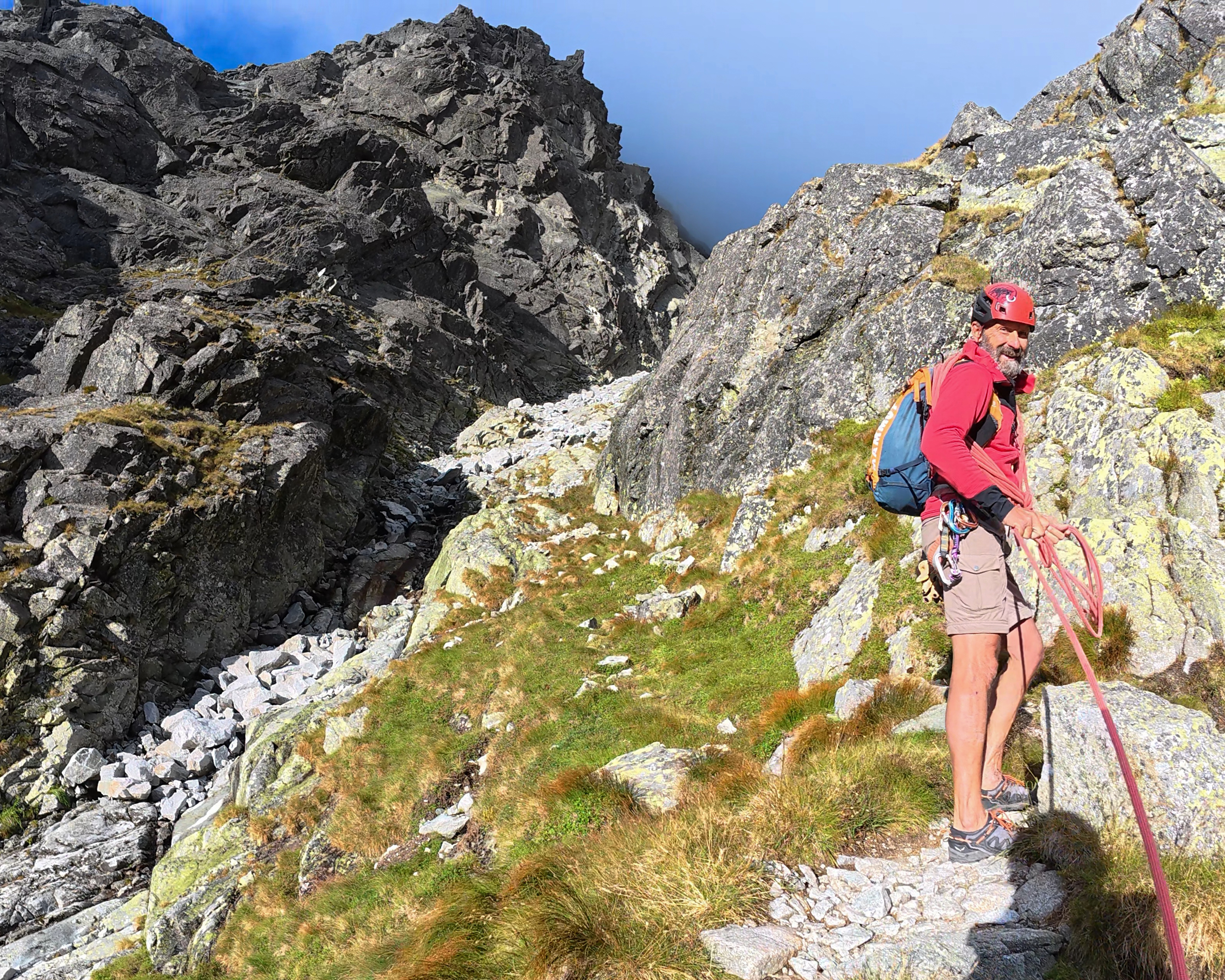
There were a couple of other teams on the route that morning, but it didn’t feel crowded at all.
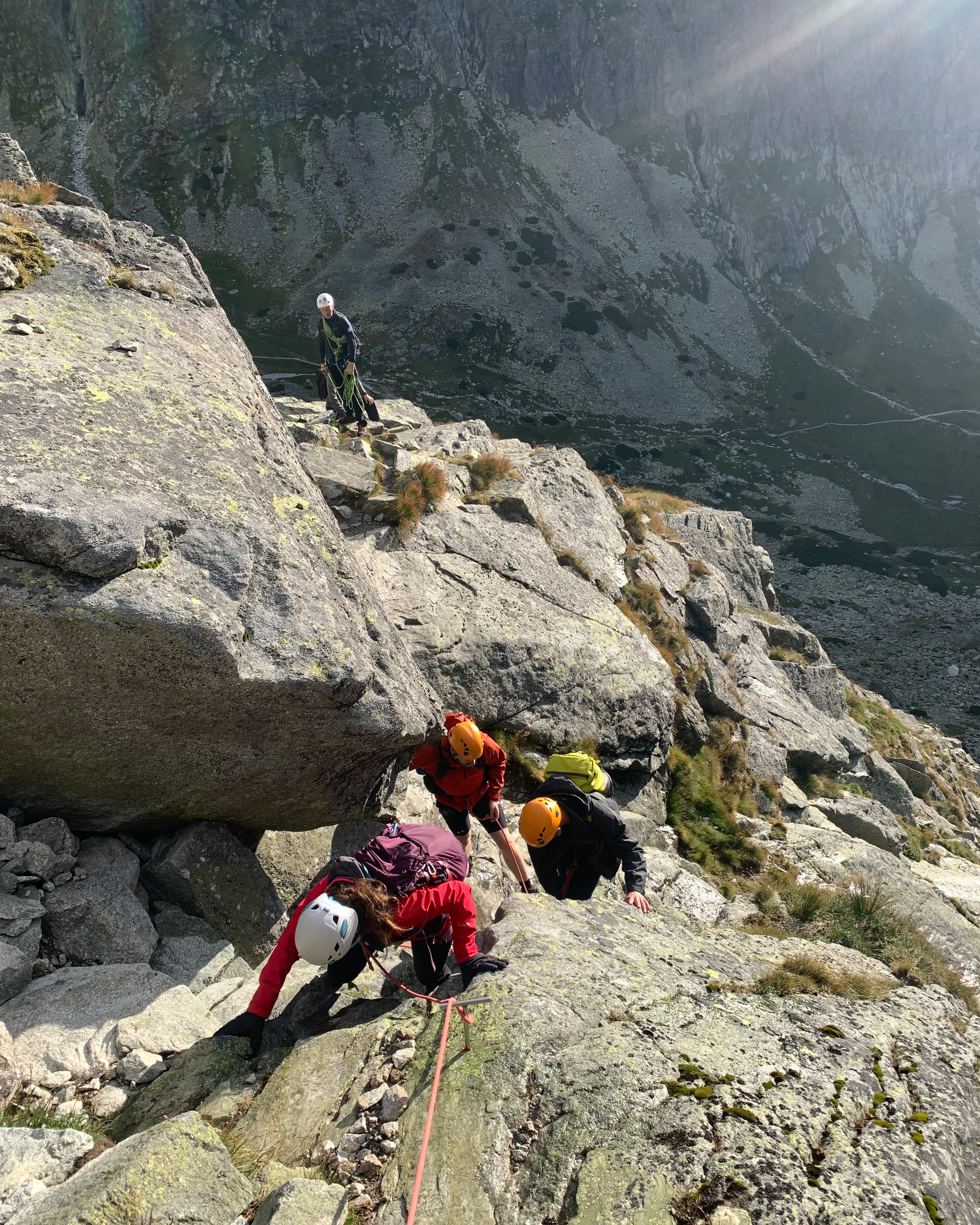
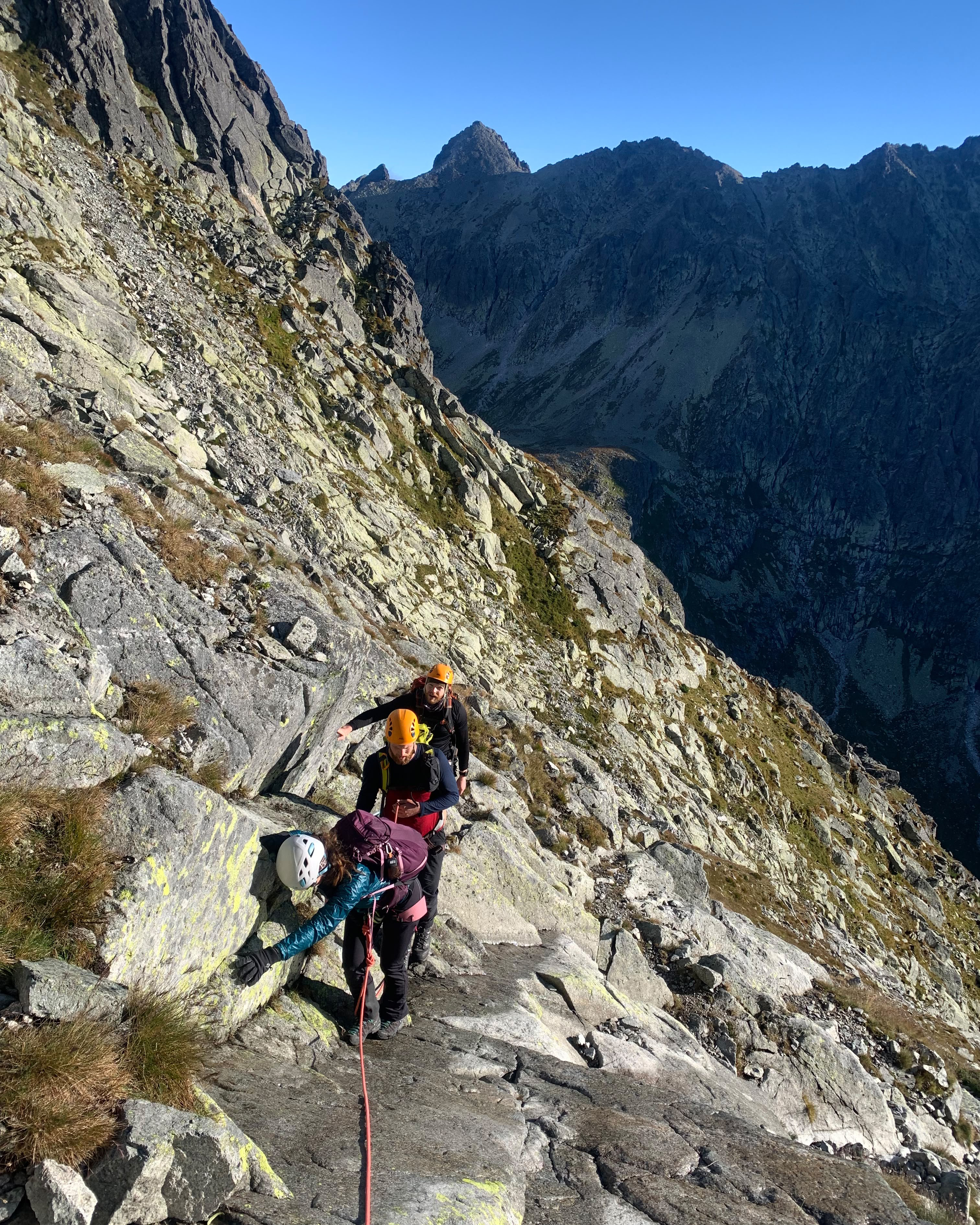
In this post, I’m combining photos taken by the three of us and the guide, so they might not be in perfect order. You might be able to tell from my changing top layers.
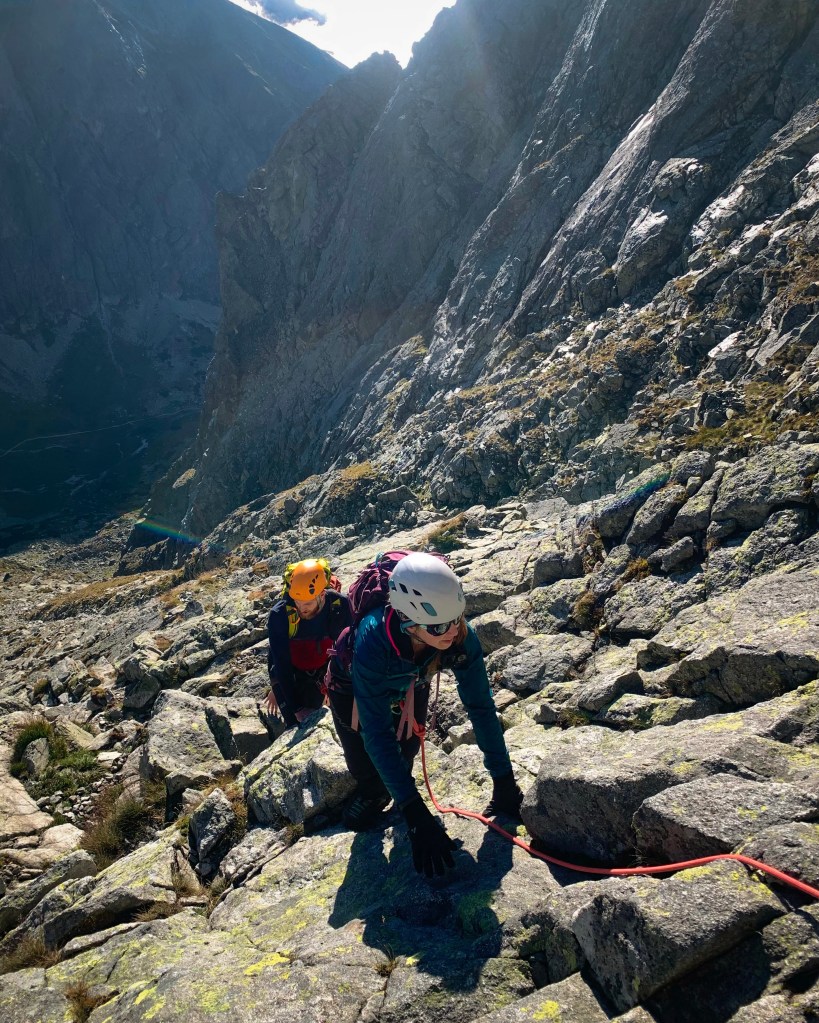
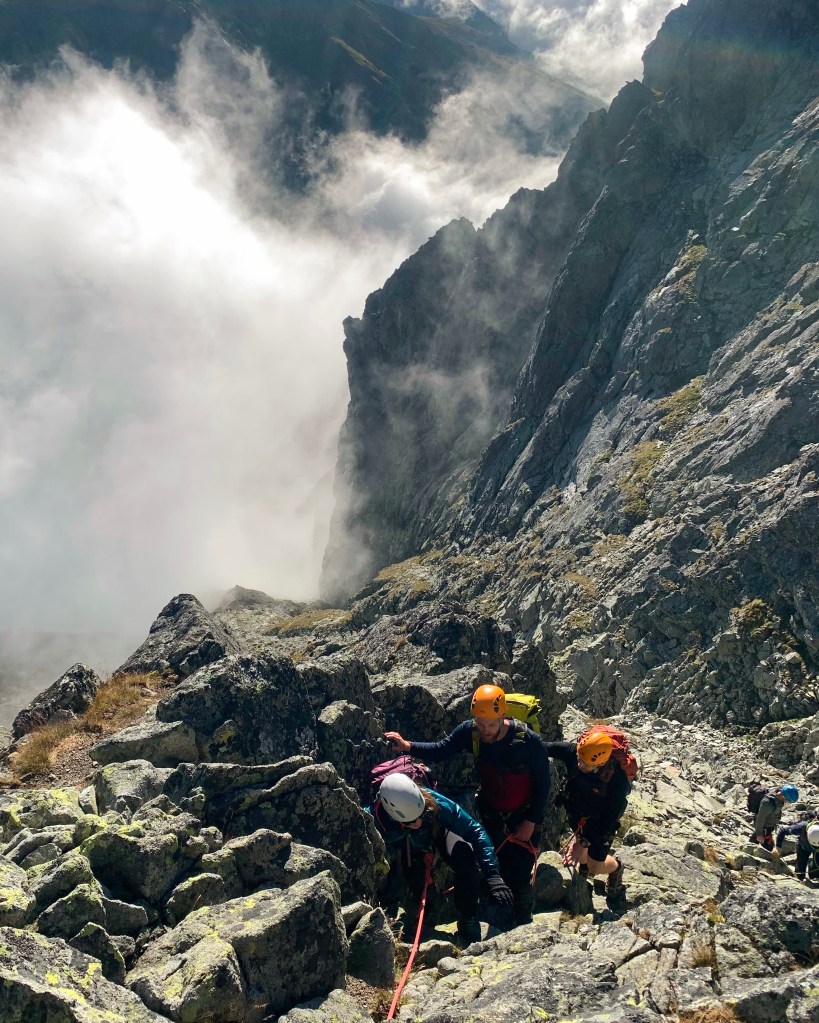
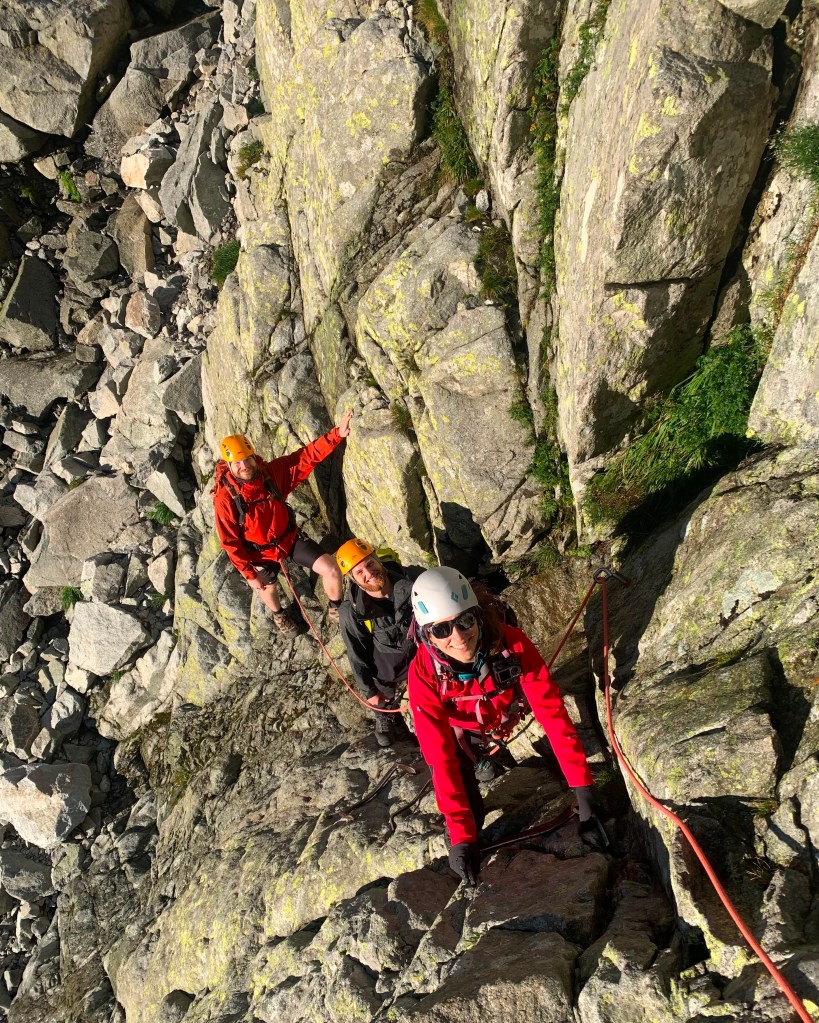
The scramble starts off quite steep but straightforward. It’s essentially a “test”, as the rest of the route doesn’t get easier. It then alternates between flatter and steeper sections for a bit. Then comes the final push to the start of the traverse, which was strenuous but felt secure. We passed another group having a snack break at a lookout point that was beautiful, but our guide encouraged us to continue for another 15 minutes to an even better spot..
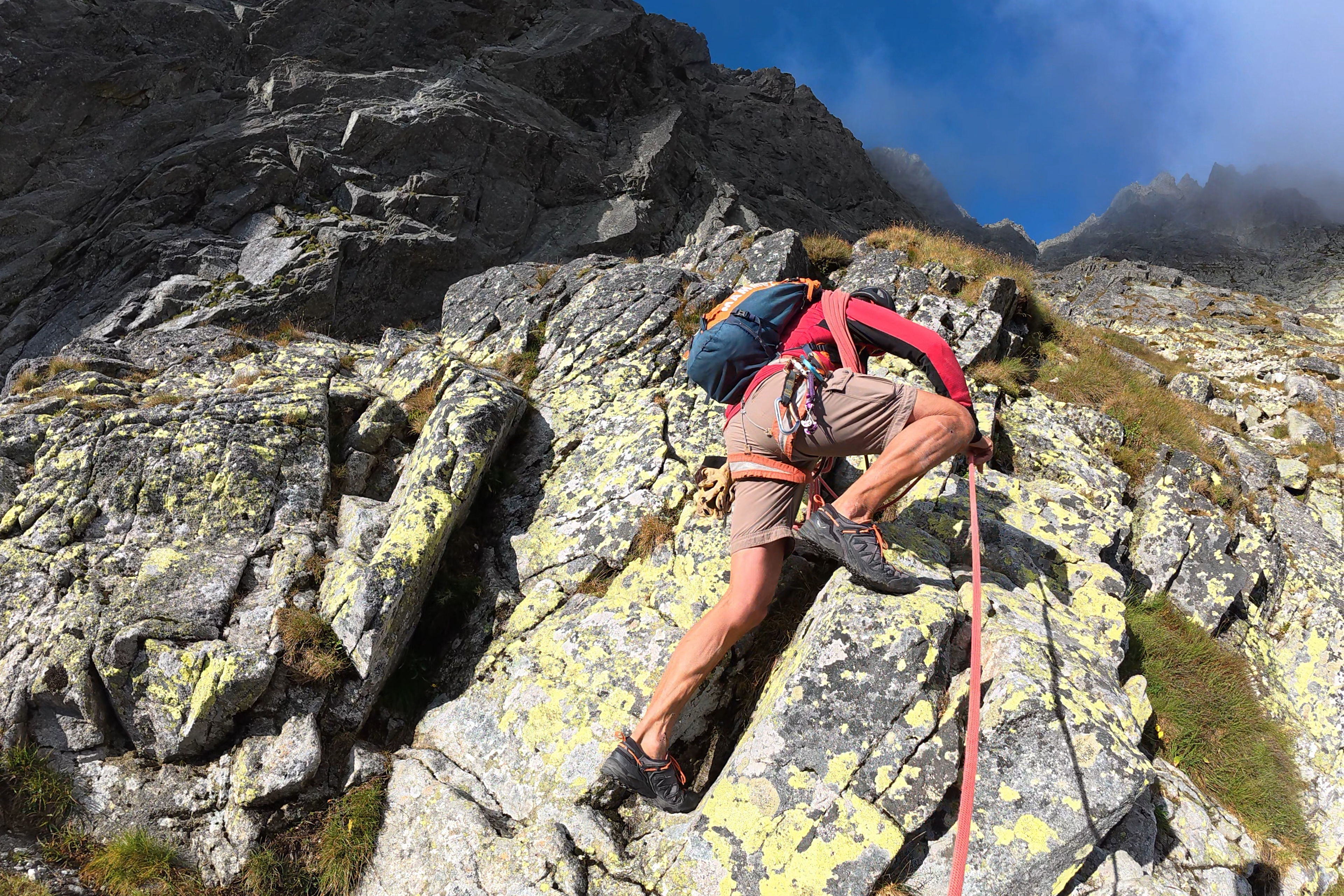
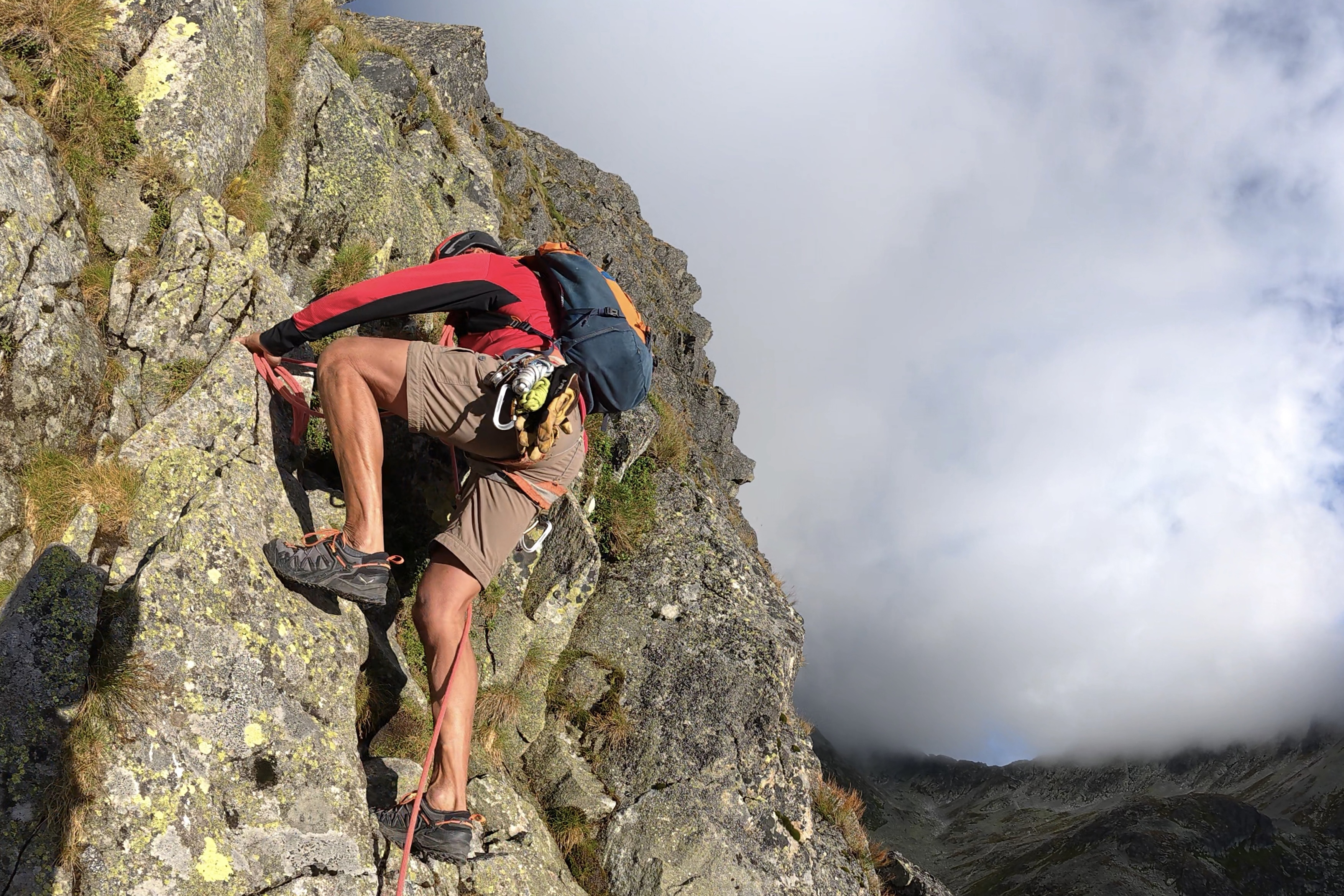
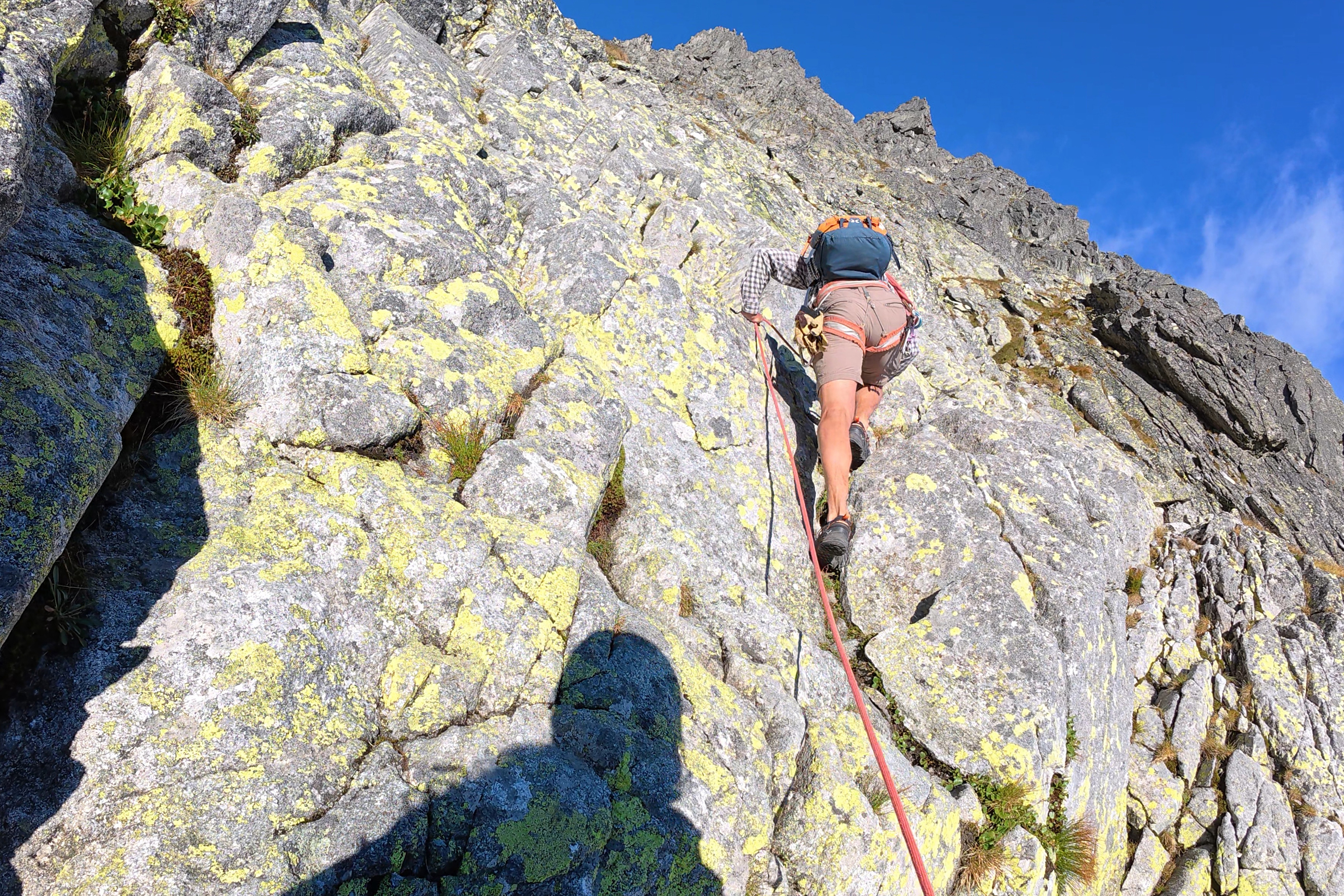
The spot was at the end of the main ascent, but before the traverse. This was a great choice for two reasons: 1) it gave us the best views of the side we’d come up, and 2) it meant that we could digest our snacks on a traverse, not have to immediately resume a steep ascent. Bonus reason: we had the spot to ourselves.
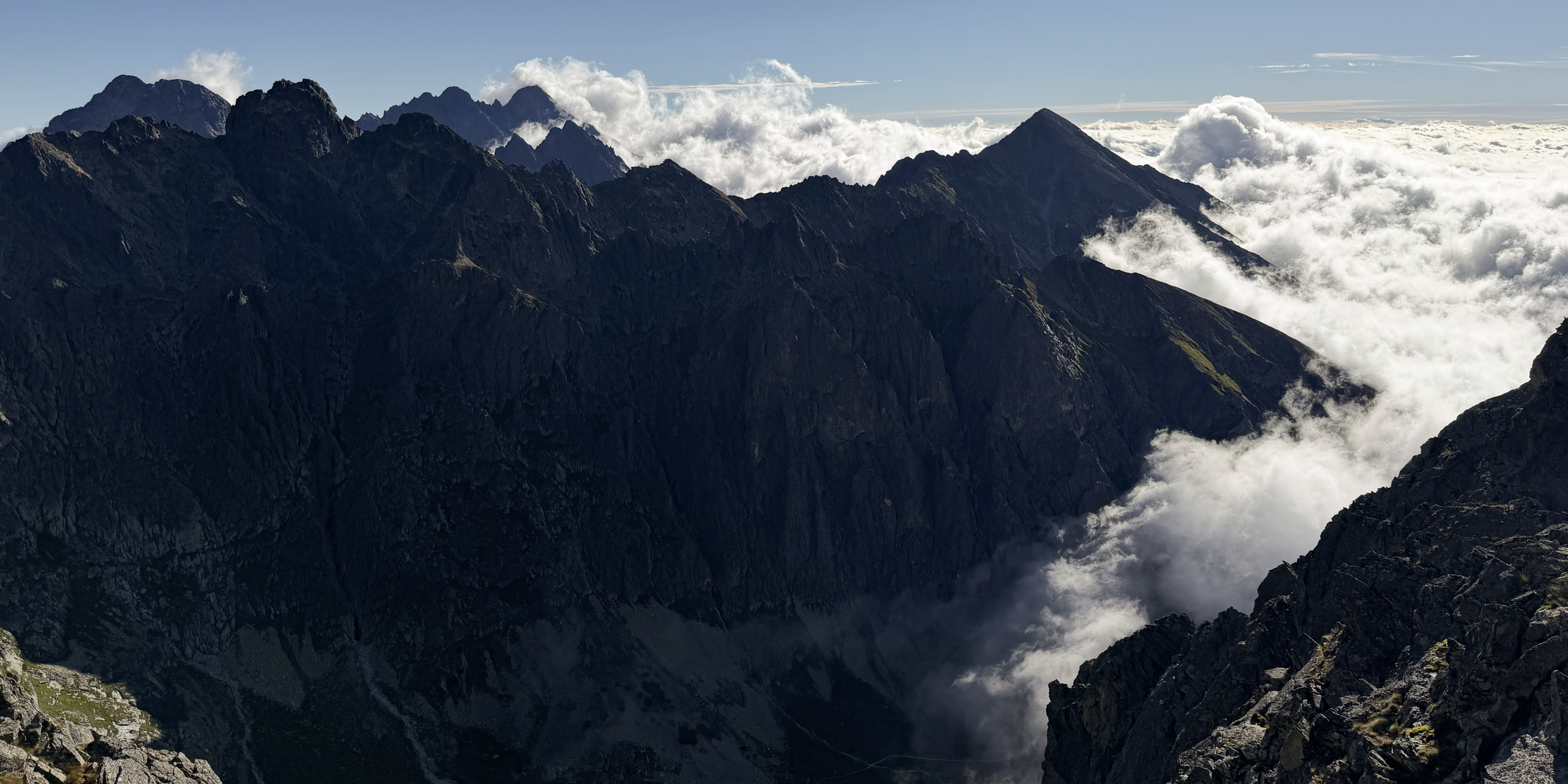
The traverse included some pigtails placed for extra security. Unlike on Gran Paradiso, where the mountain felt a bit crumbly at parts on the final scramble, these felt like more of a bonus (in good conditions) than necessity. My early impressions of the climb continued all the way to the summit, which was that it was more fun than overly challenging or sketchy. There are very few scrambles/climbs in this challenge where I’ve found this to be true; they’re usually either type 2 fun or not challenging at all. I’d group Triglav in with Gerlach.
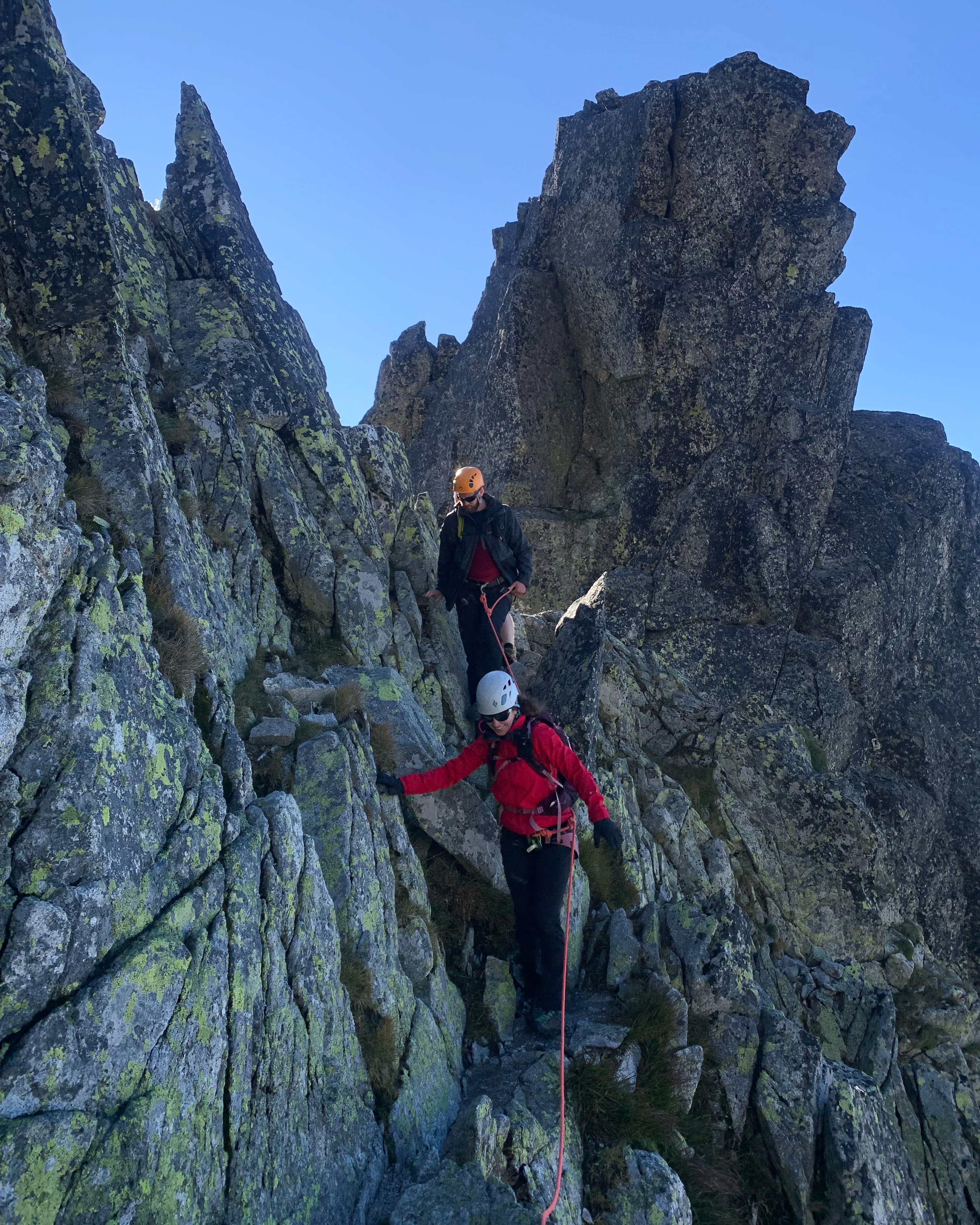
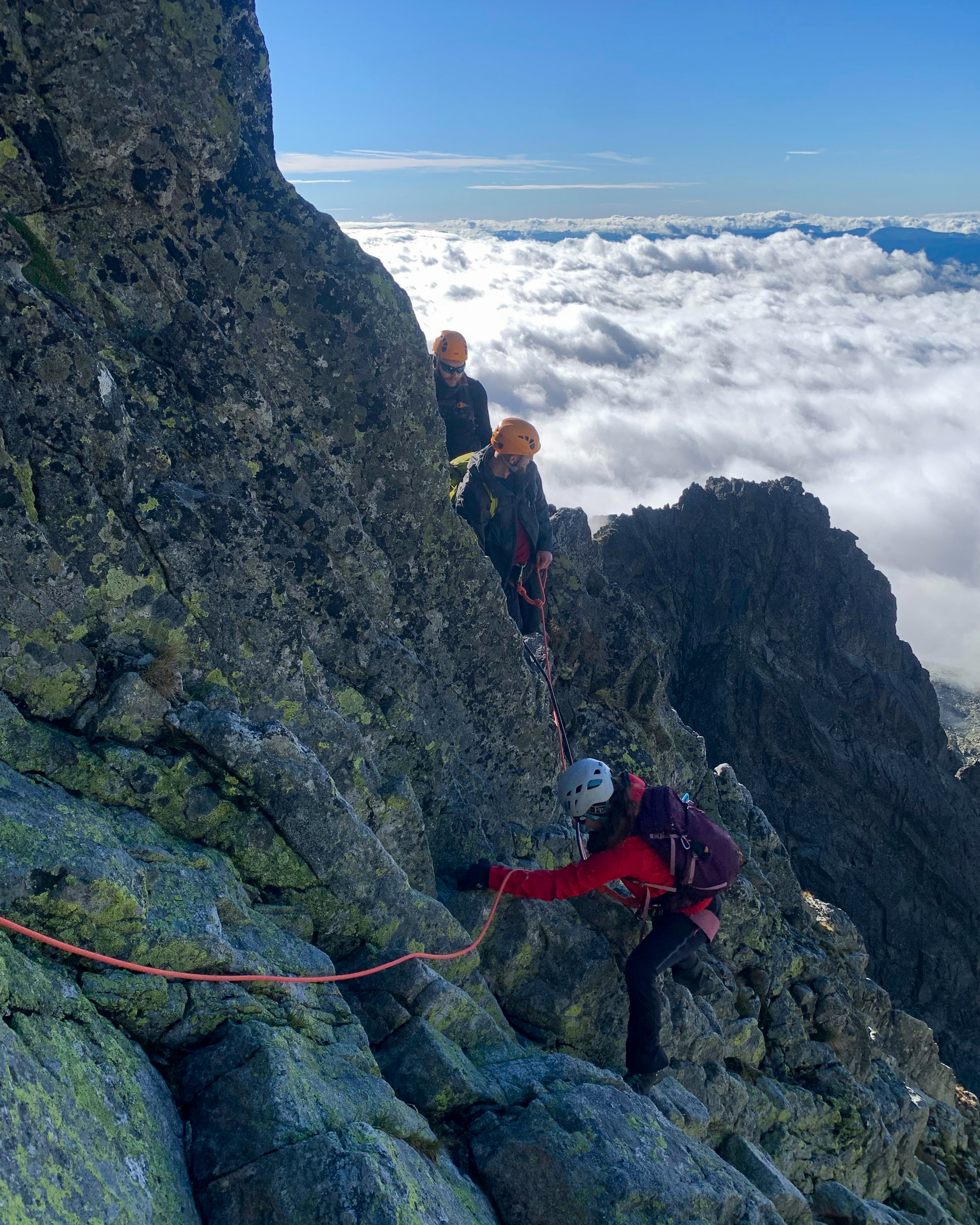
The rock was solid, we were moving well as a rope team, and the views were incredible the whole way. My Raynaud’s was even cooperating, so I could use my not-crazy-bulky gloves.
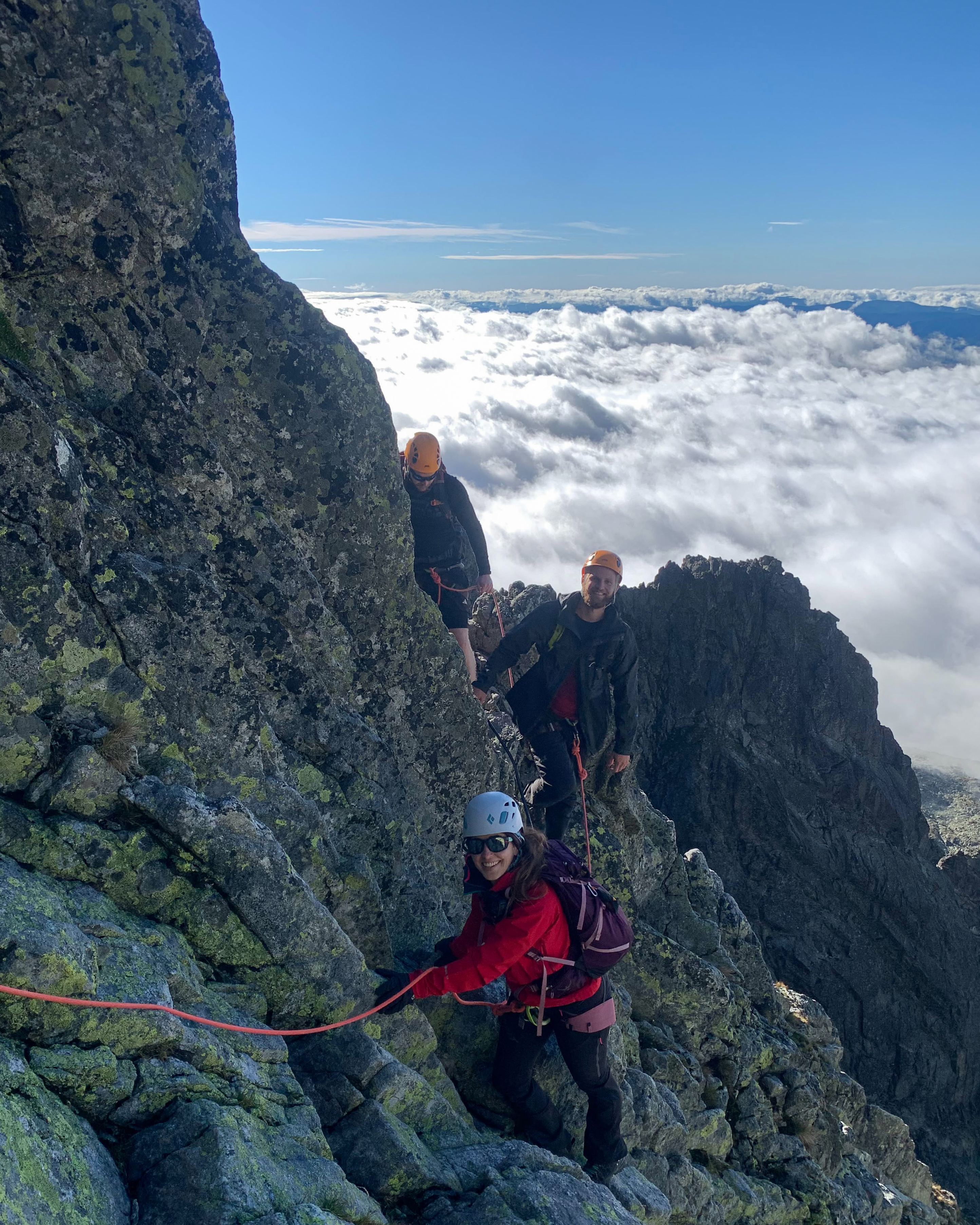
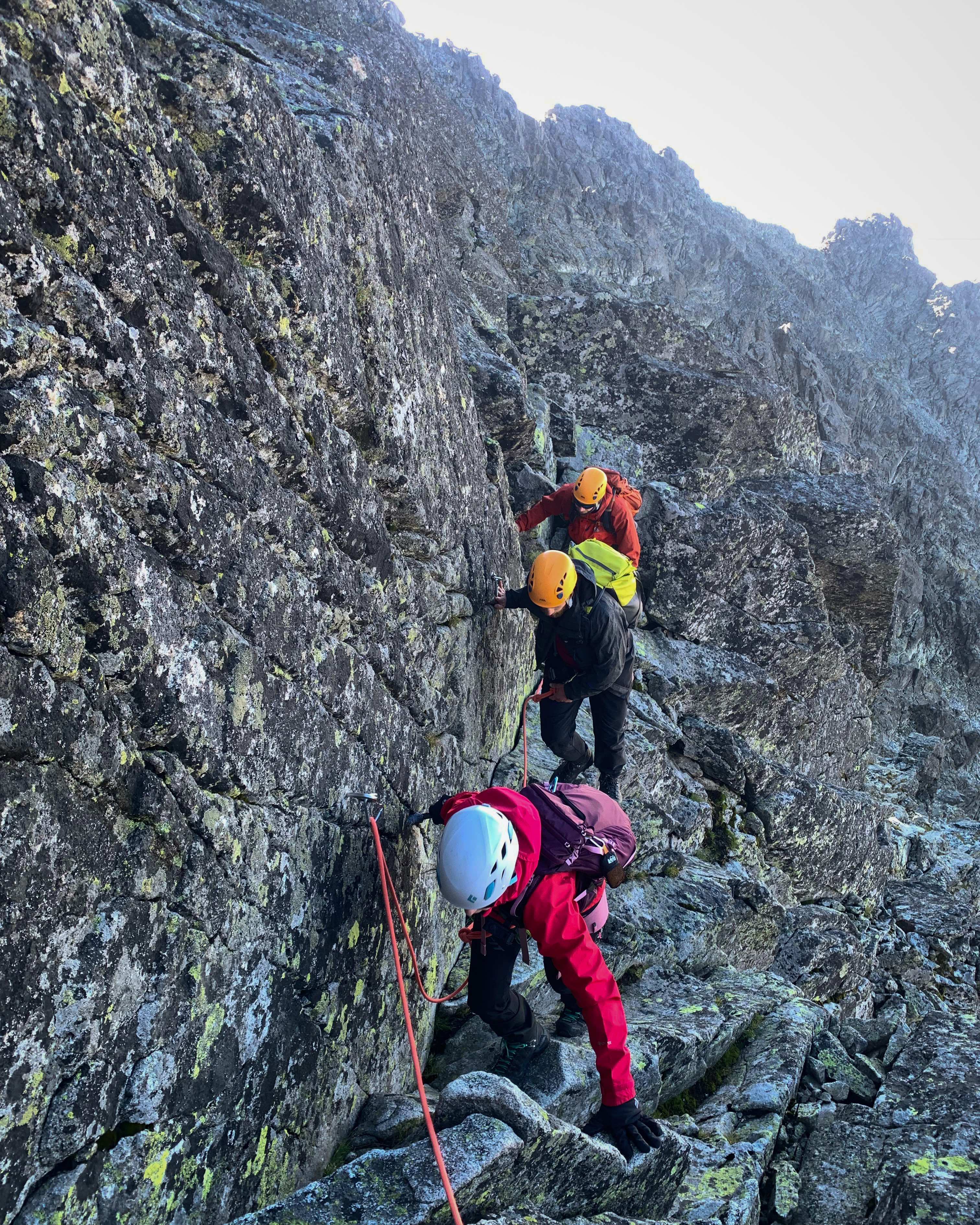
Igor had been up this route more times than he could count, and it showed. It’s easier to enjoy a scramble like this when the navigation piece is taken out, and we could just focus on our movements and the views.
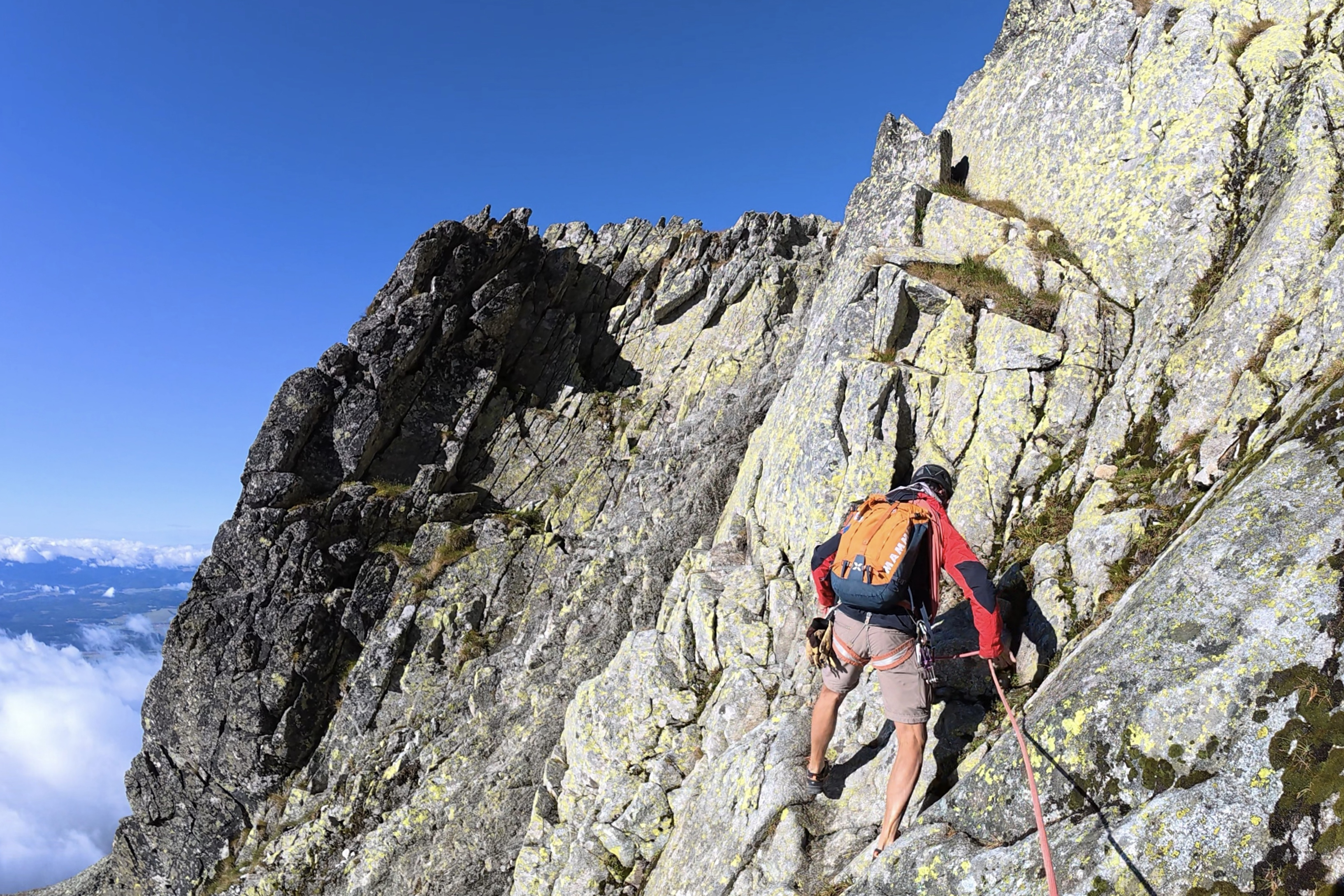
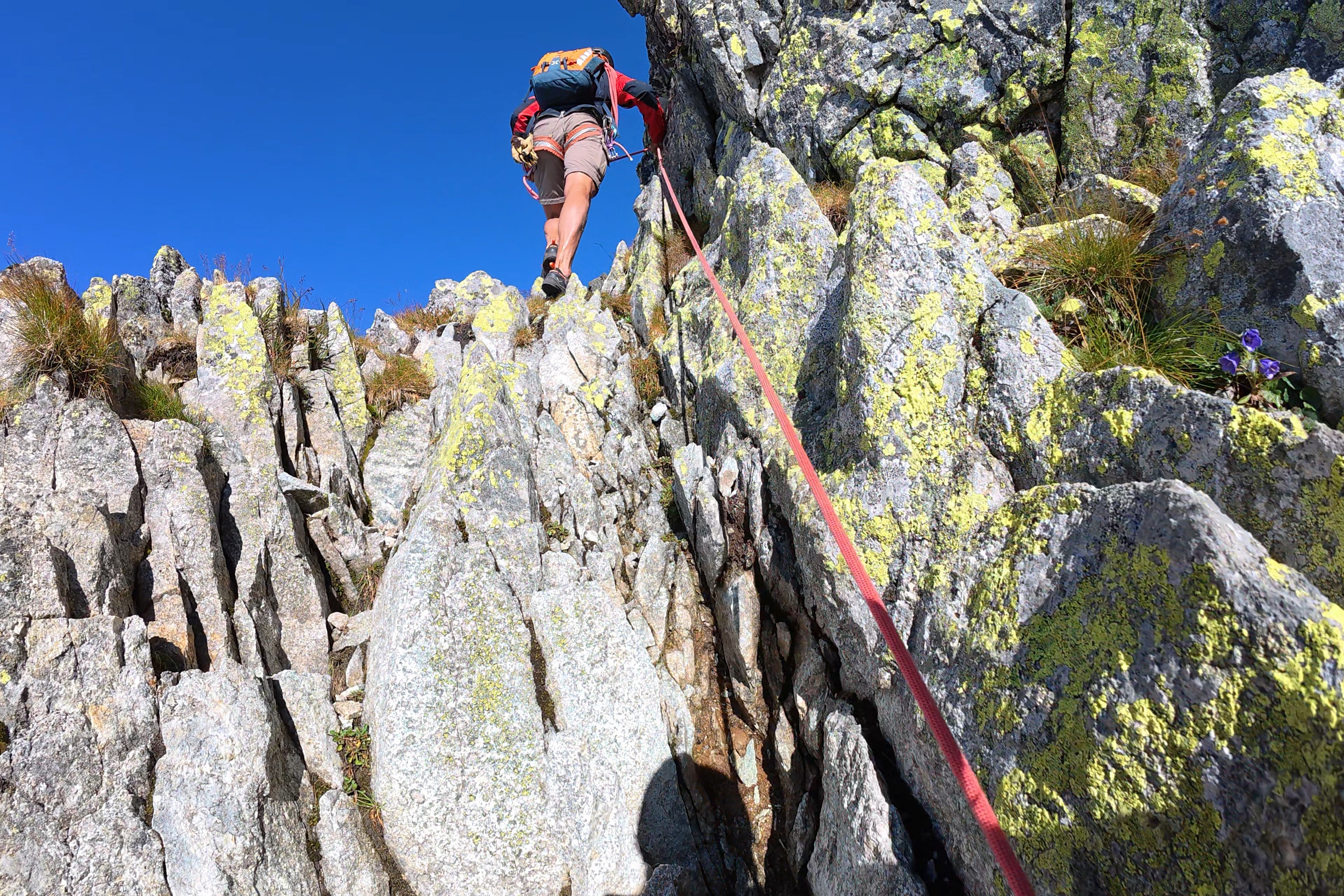
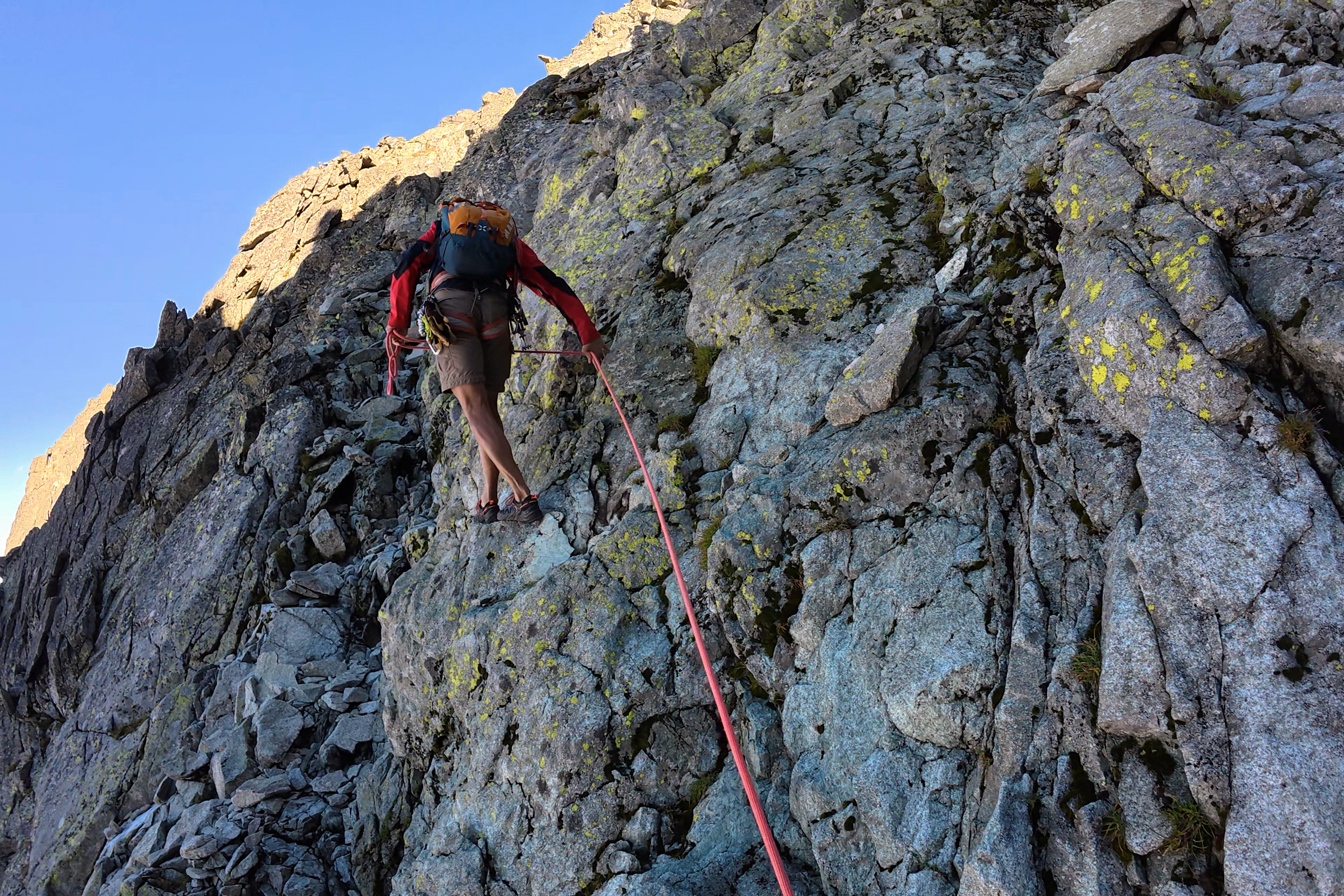
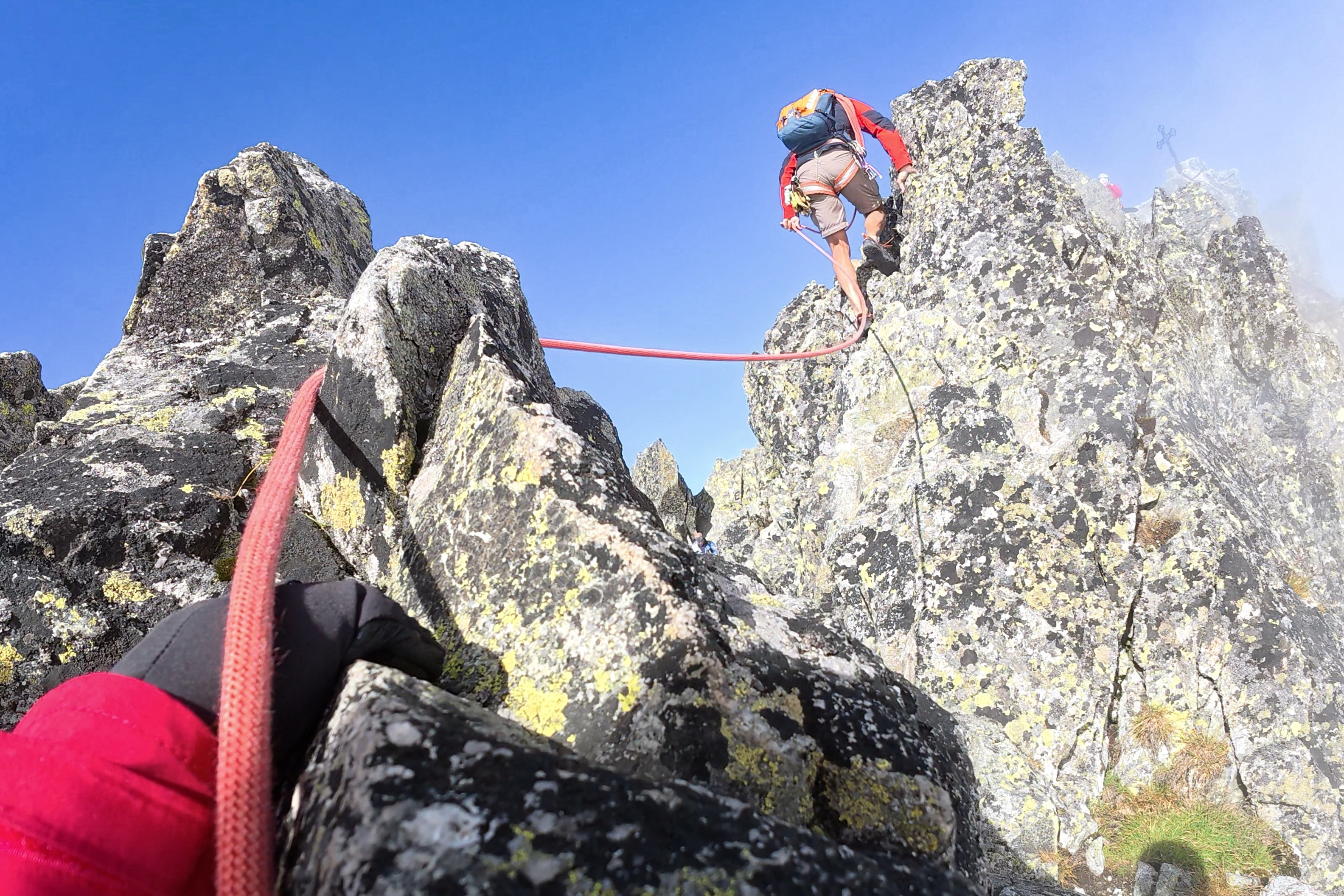
I would describe this route in seven segments: 1) the hike up to the scramble, 2) the initial ascent, 3) part 1 of the traverse (a true, flatter traverse), 4) part 2 of the traverse (more alternating mini ascents and descents), 5) the final push to the summit, 6) part 1 of the descent (grueling, still roped up), and 7) part 2 of the descent (final hike out). These photos are from segment 4.
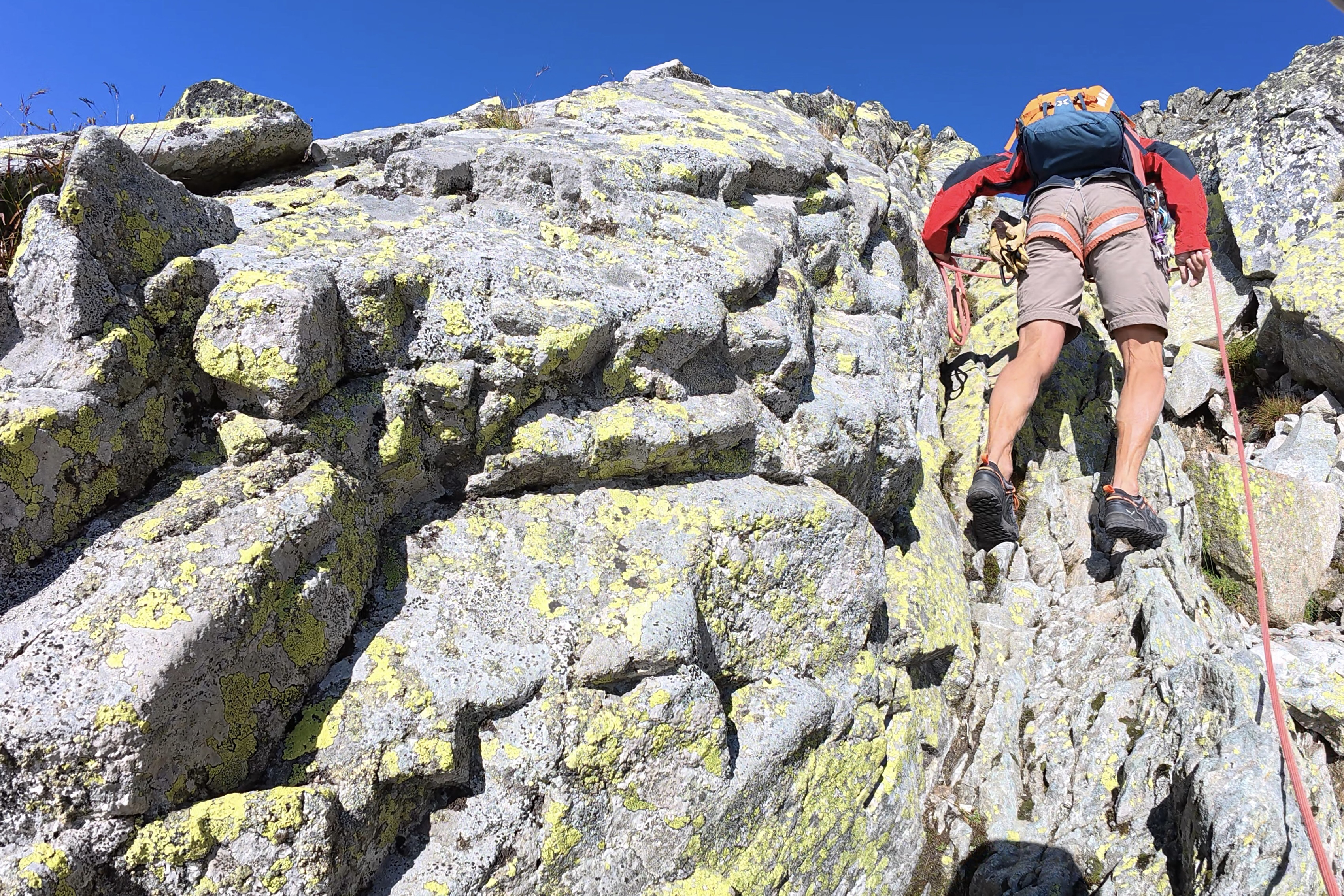
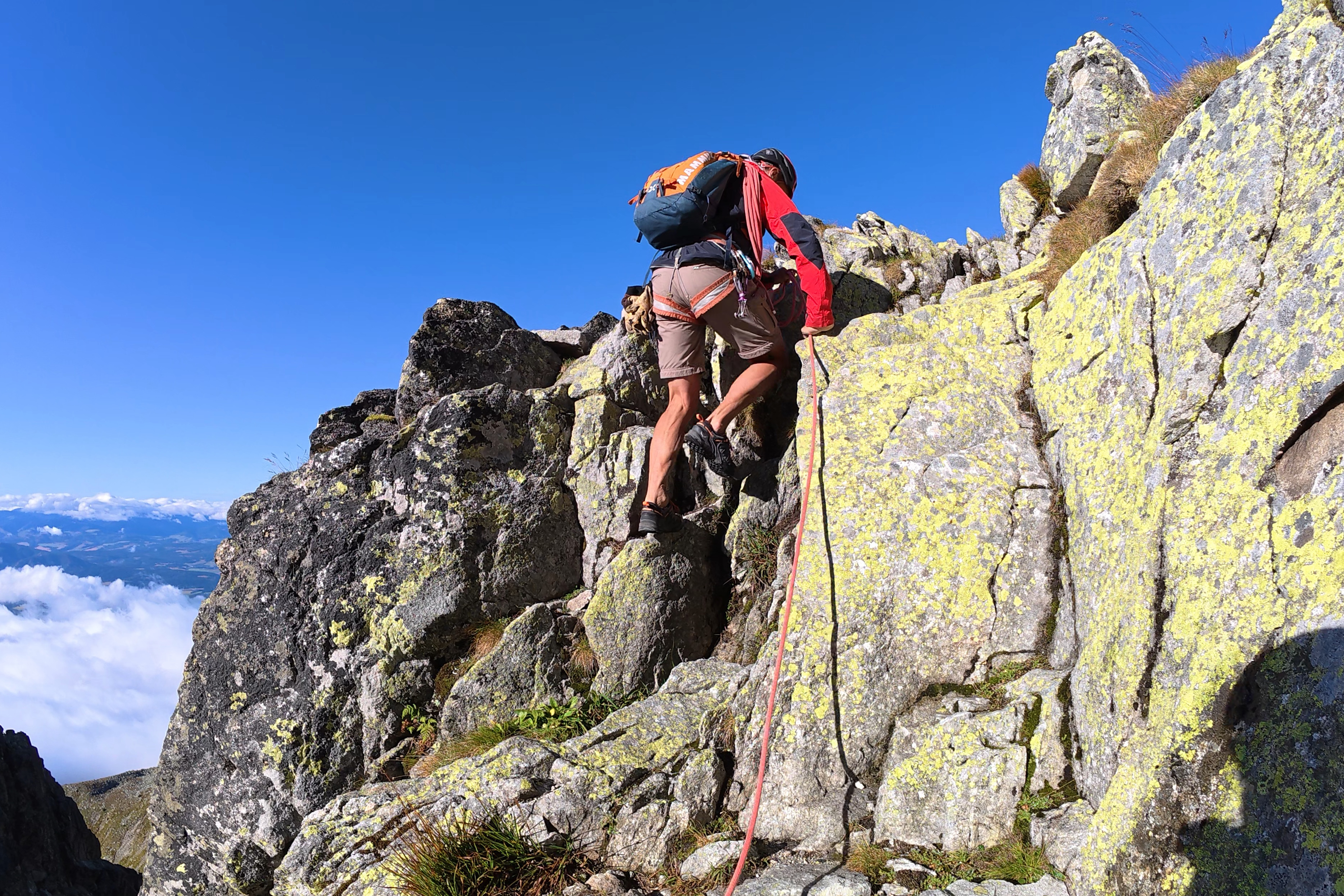
This part of the traverse had us winding around the mountain toward the summit.
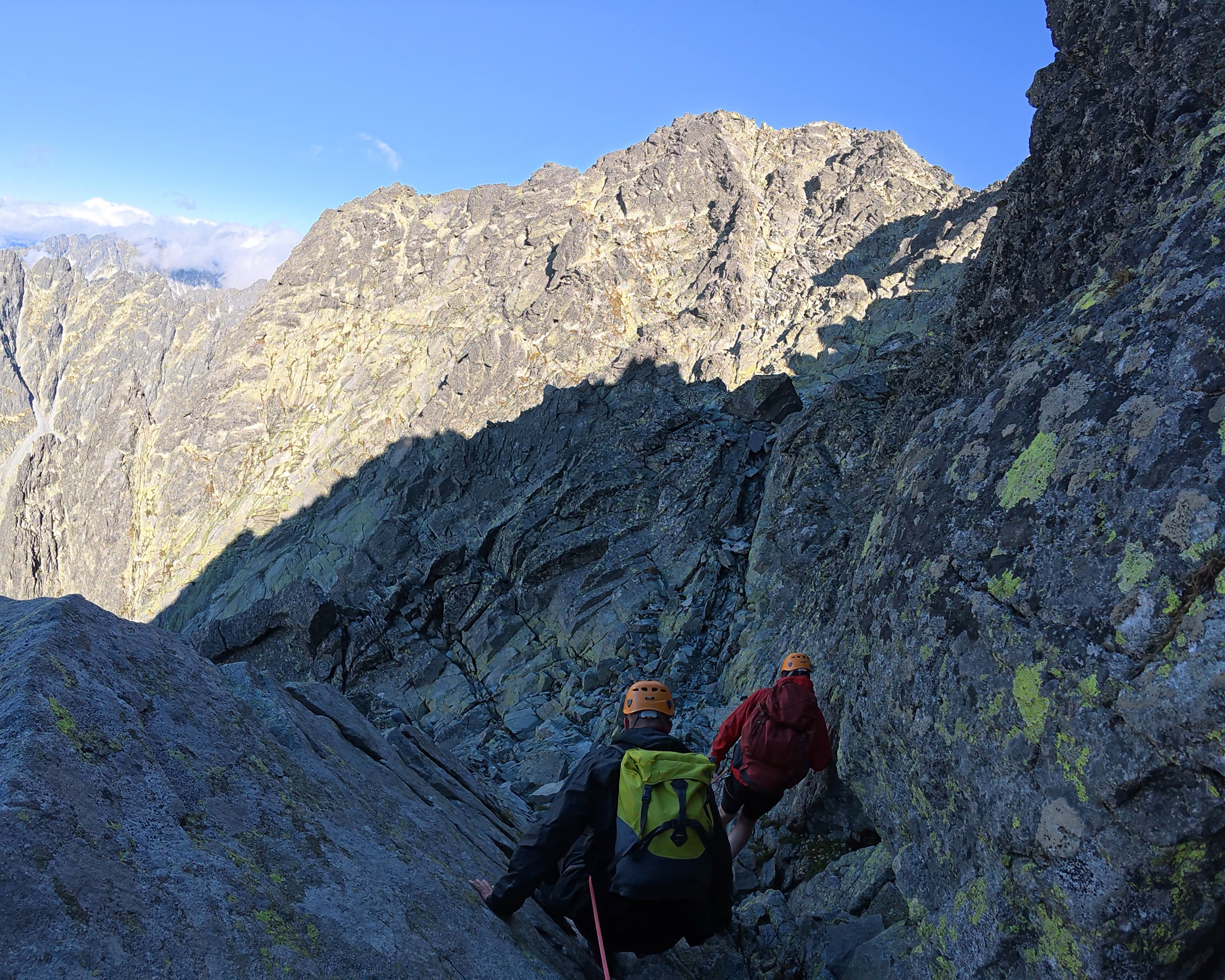
We were climbing right around the cloud line and hoped the summit itself would stay above it.
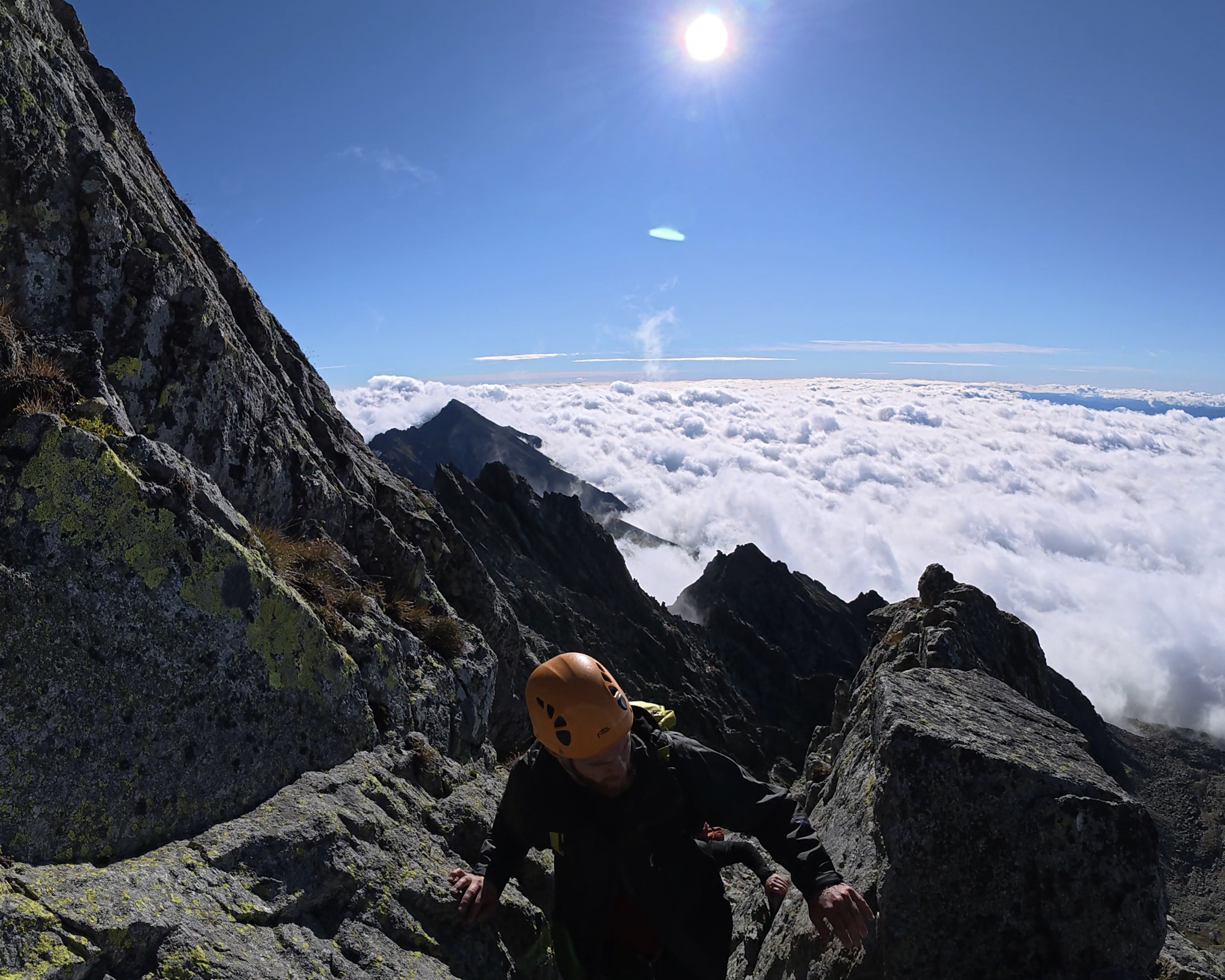
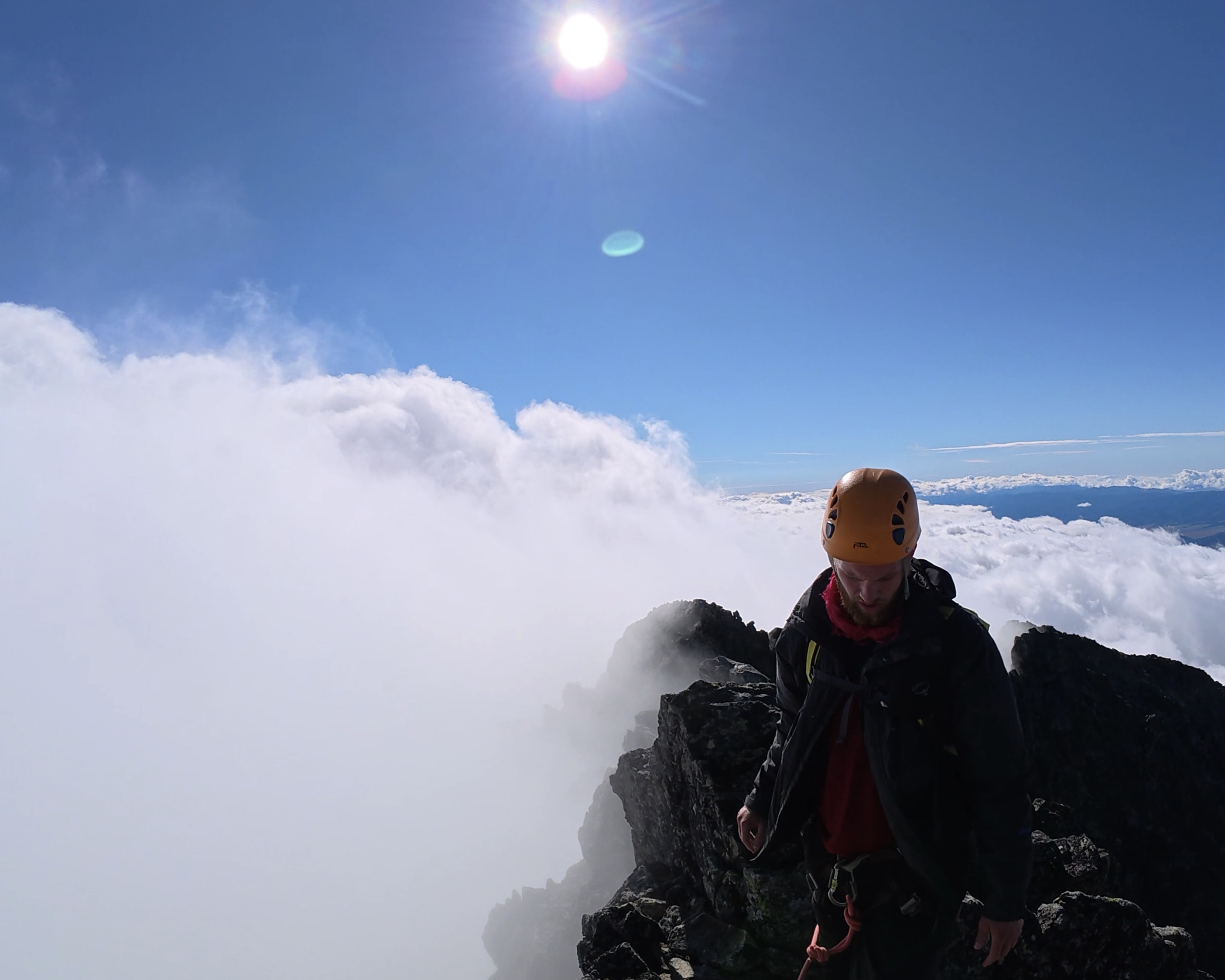
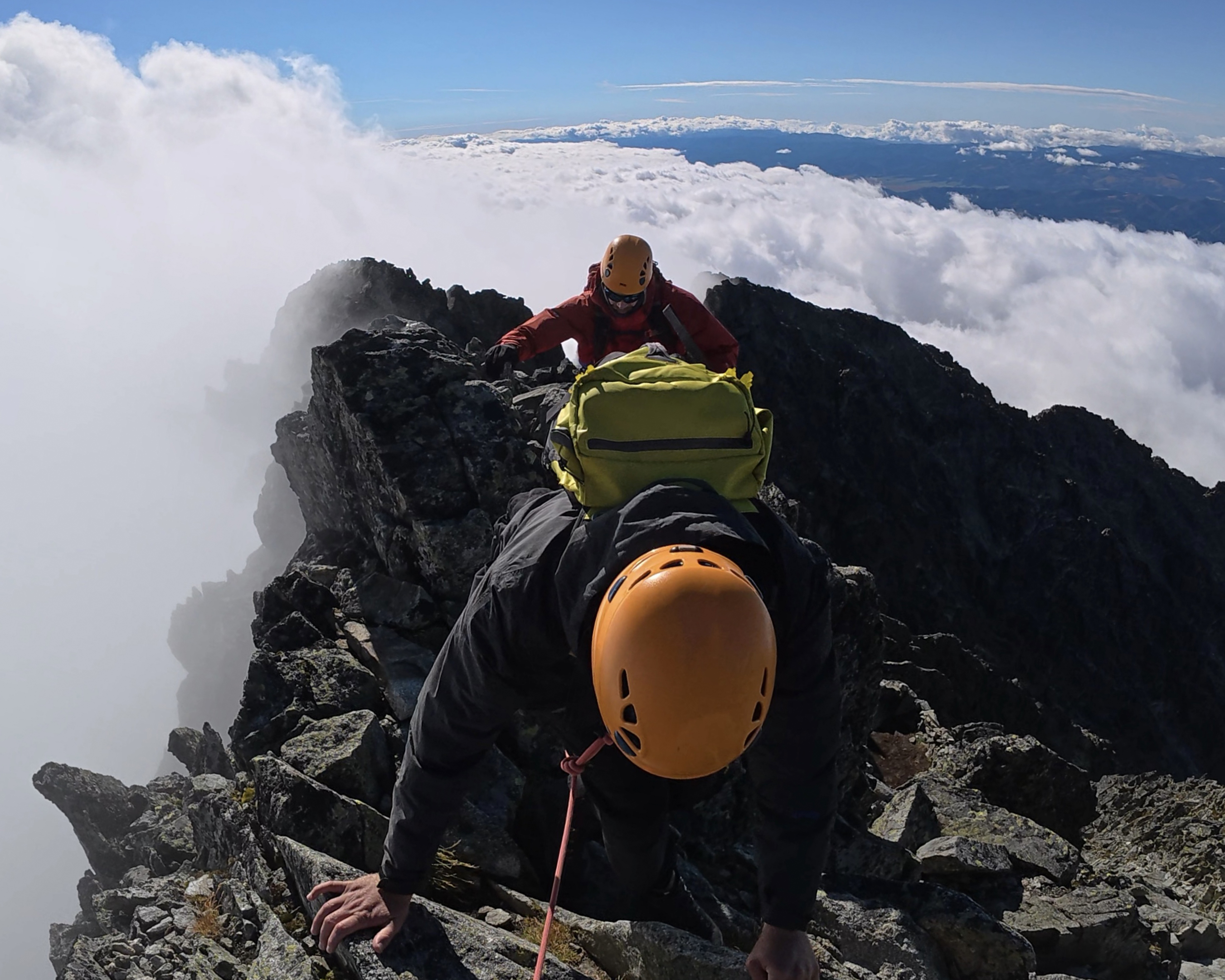
Only around 3 hours in, the summit came into view. We’d still need to climb for another 20-30 minutes to reach it, but I was happy to be so close without a single moment of real fear up to that point.
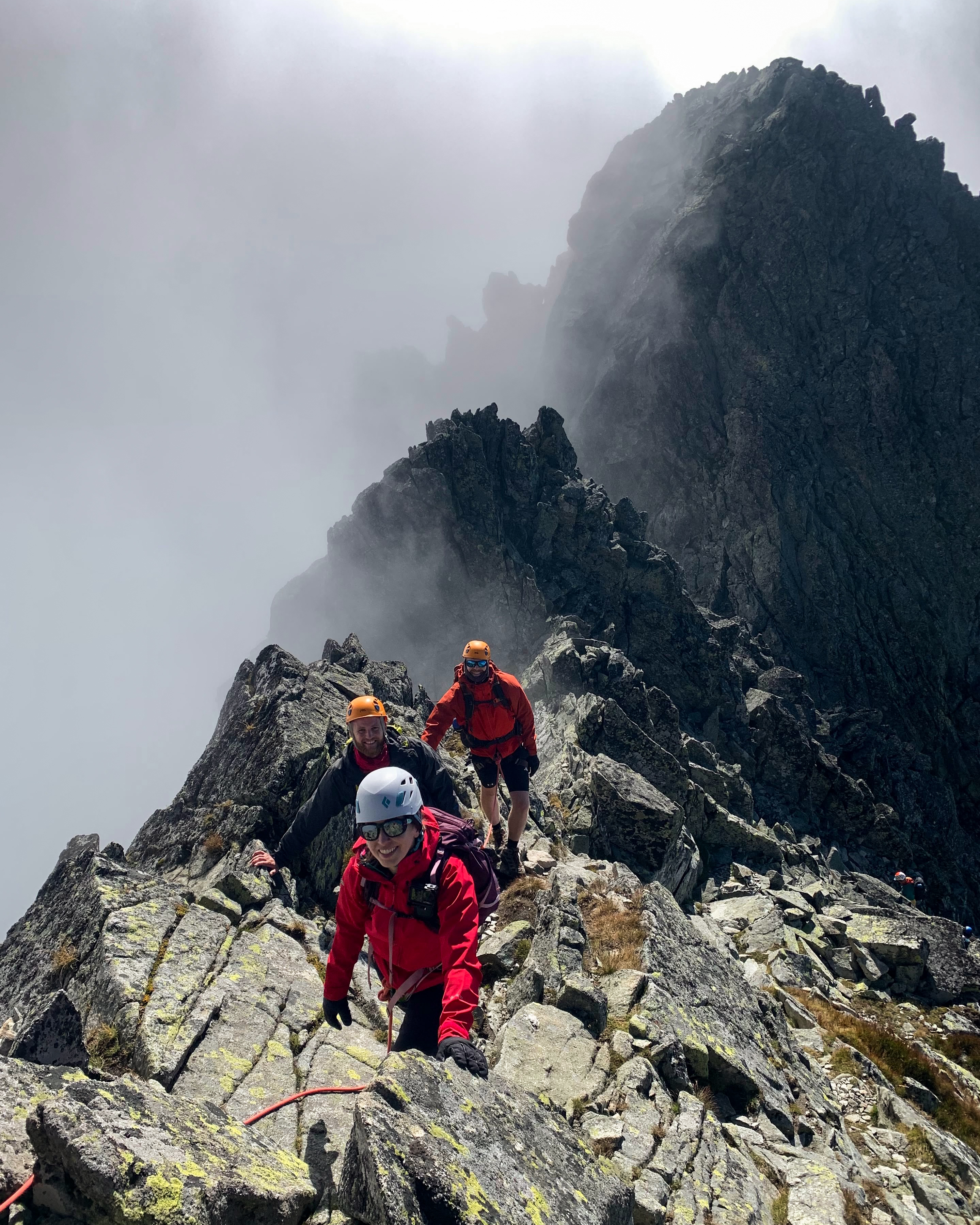
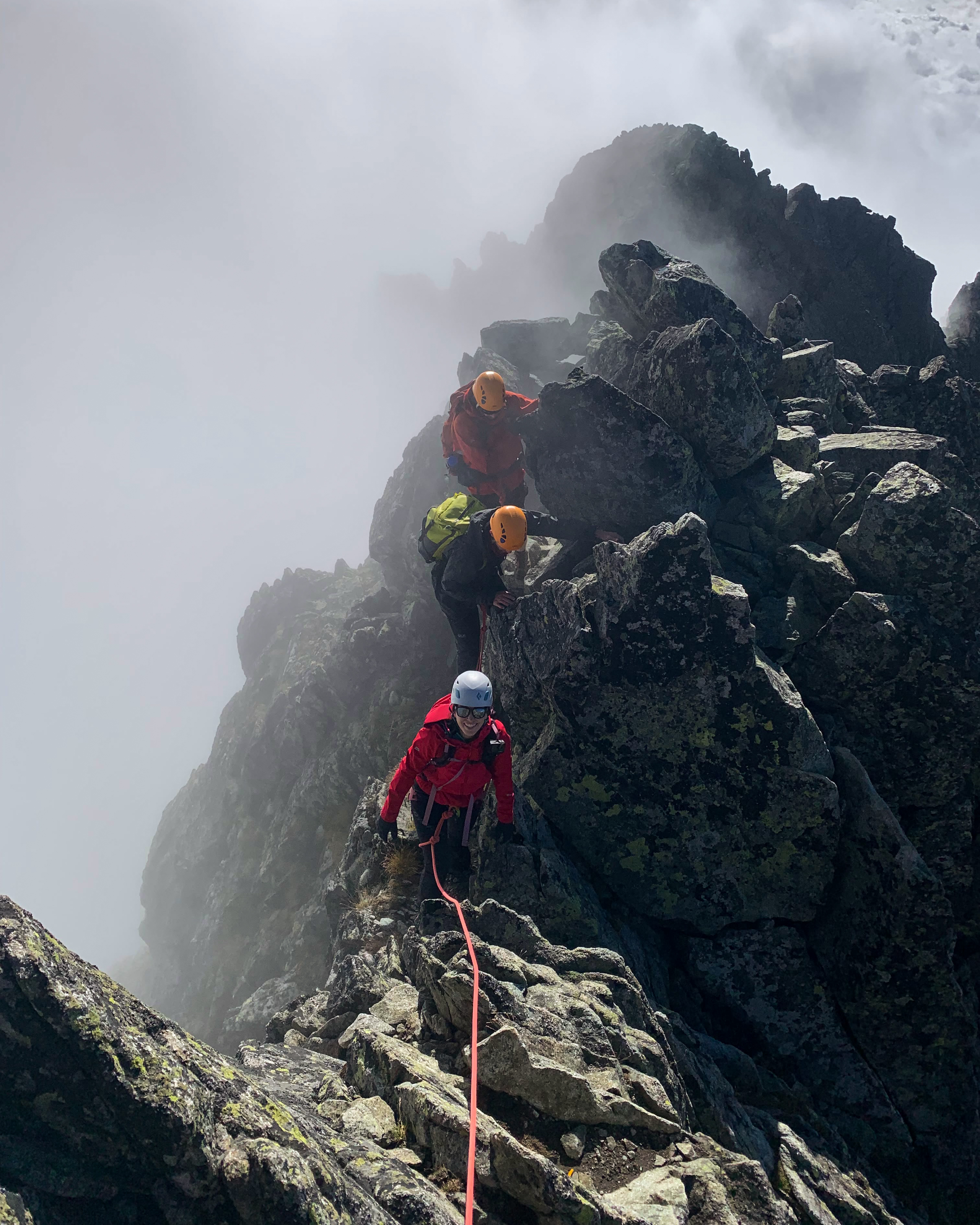
George was happy for a different reason: making good time would mean catching the first Manchester United game of the Premier League season at 1:30pm.
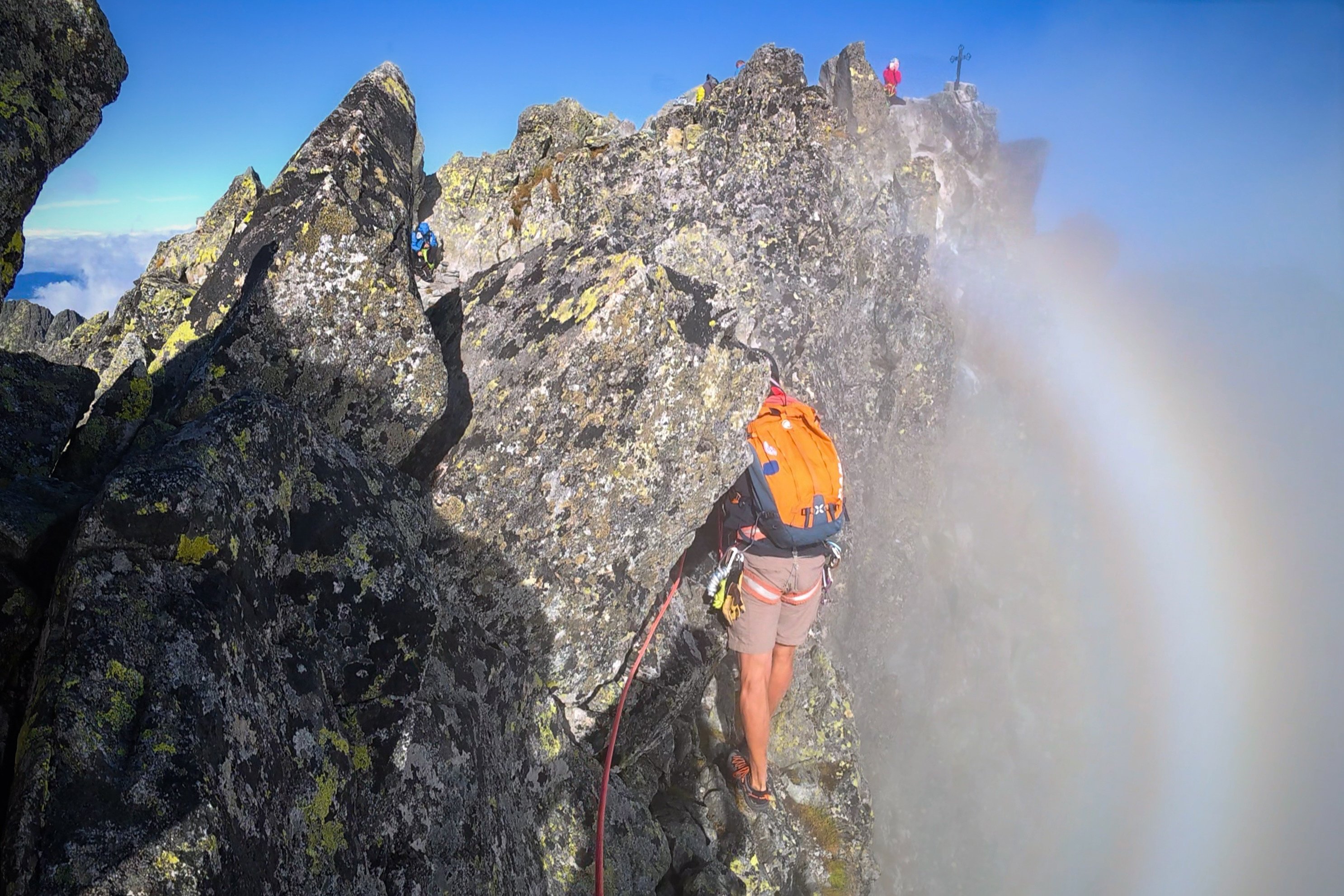
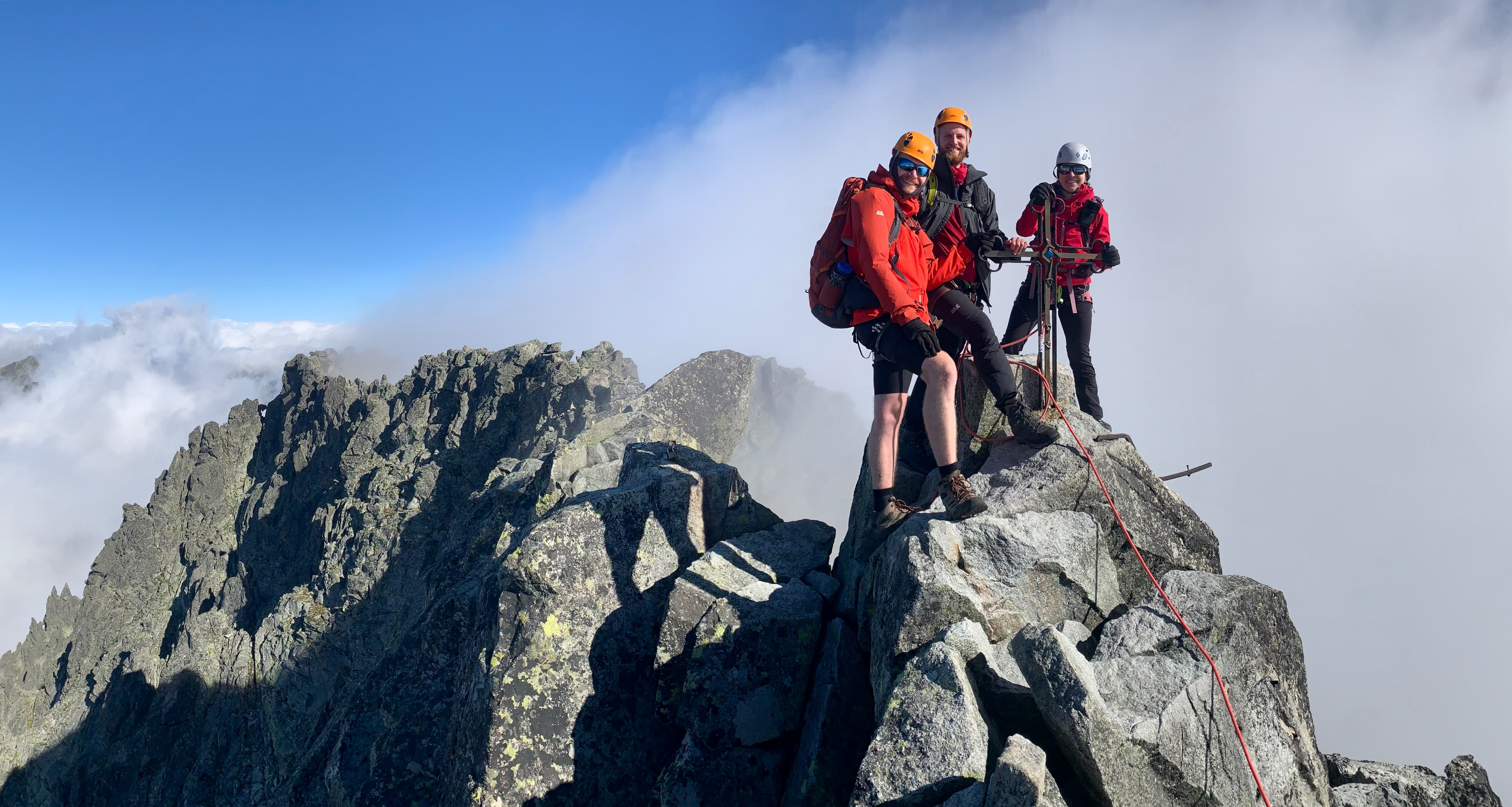
The last few minutes of our ascent rewarded us with a stunning glory (circular rainbow). We quickly got into position for our group summit photo!
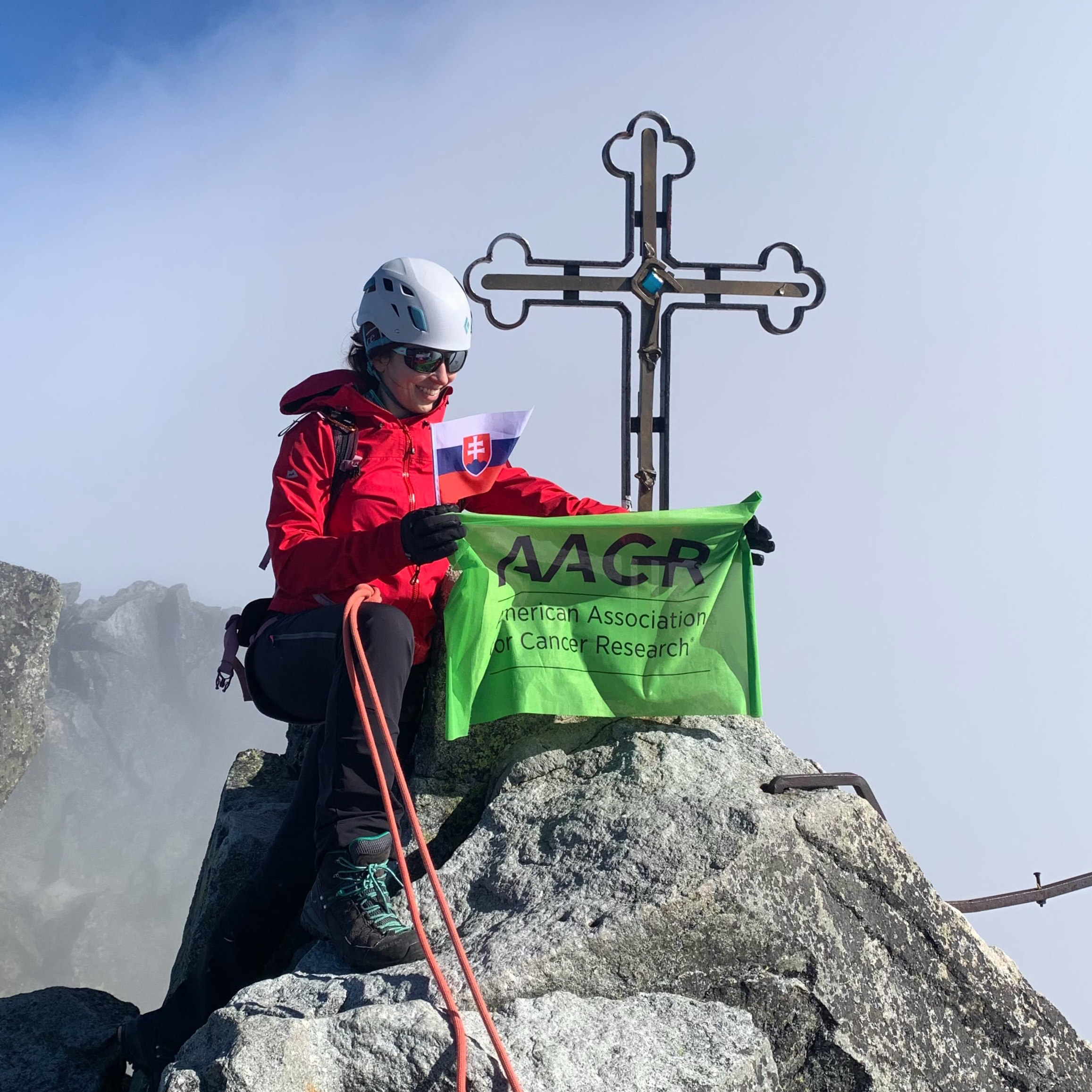
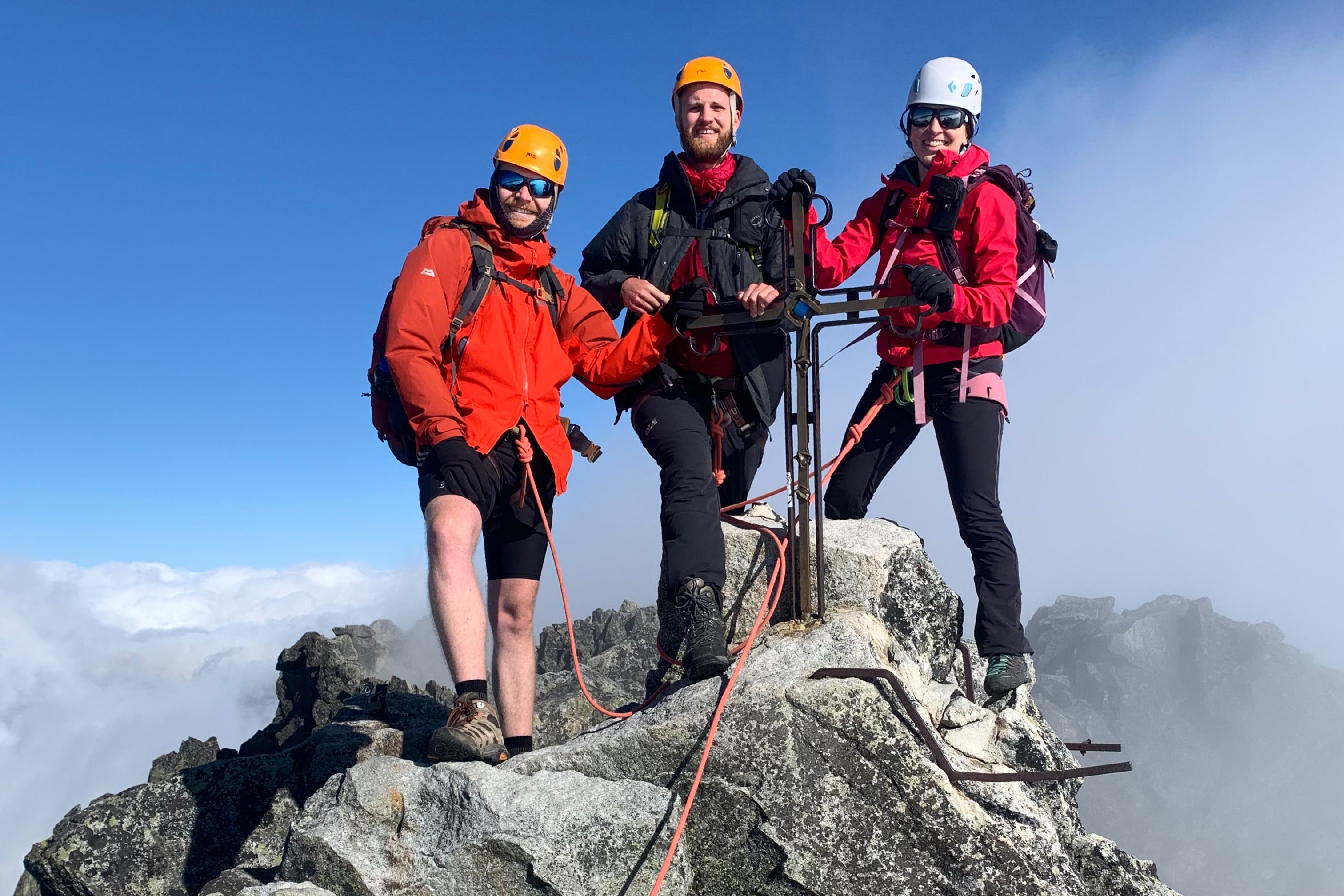
Another group was approaching right after us, so we didn’t have much time up by the cross. I took some quick solo photos with the flag, and we descended a few meters for another snack break before the descent.
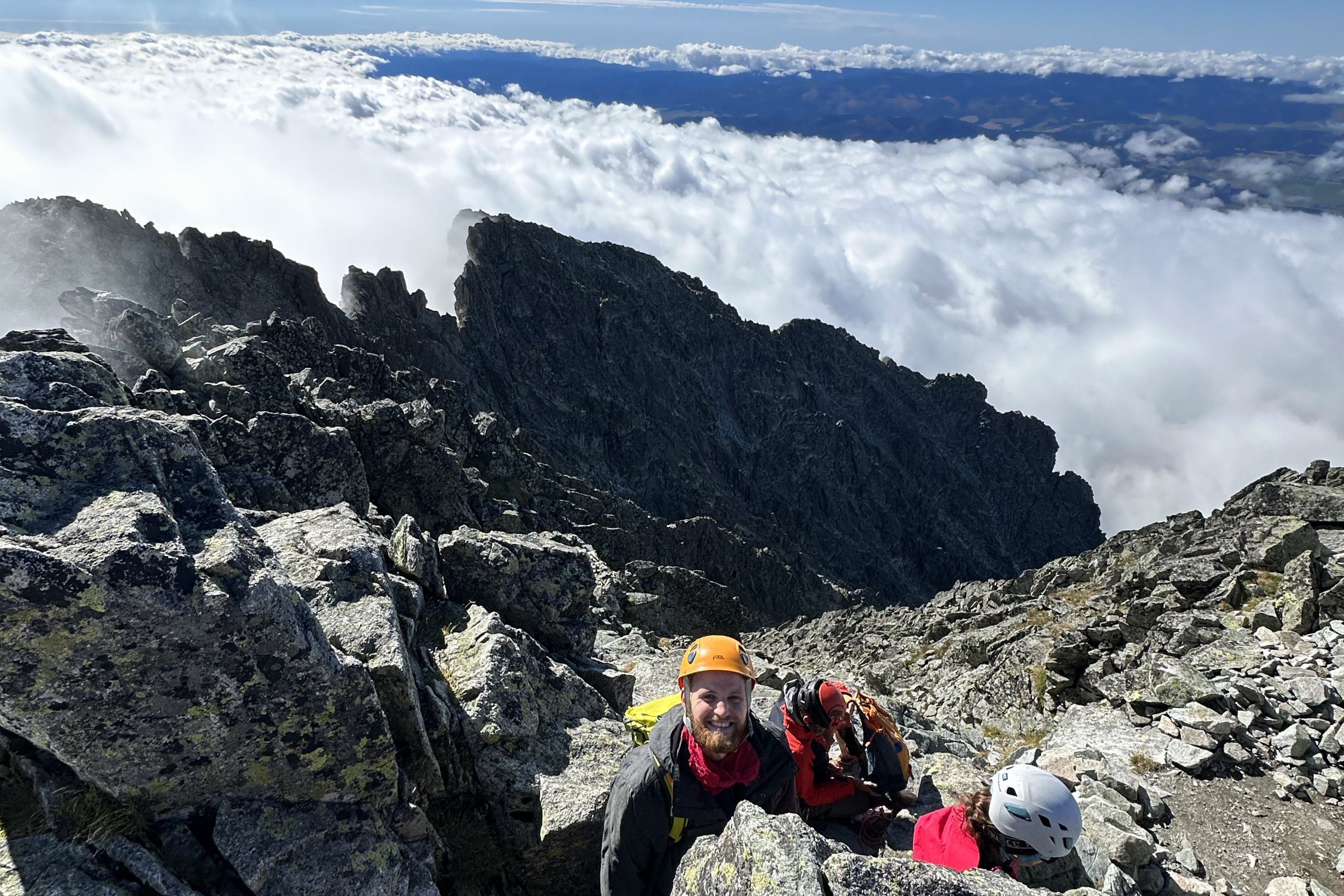
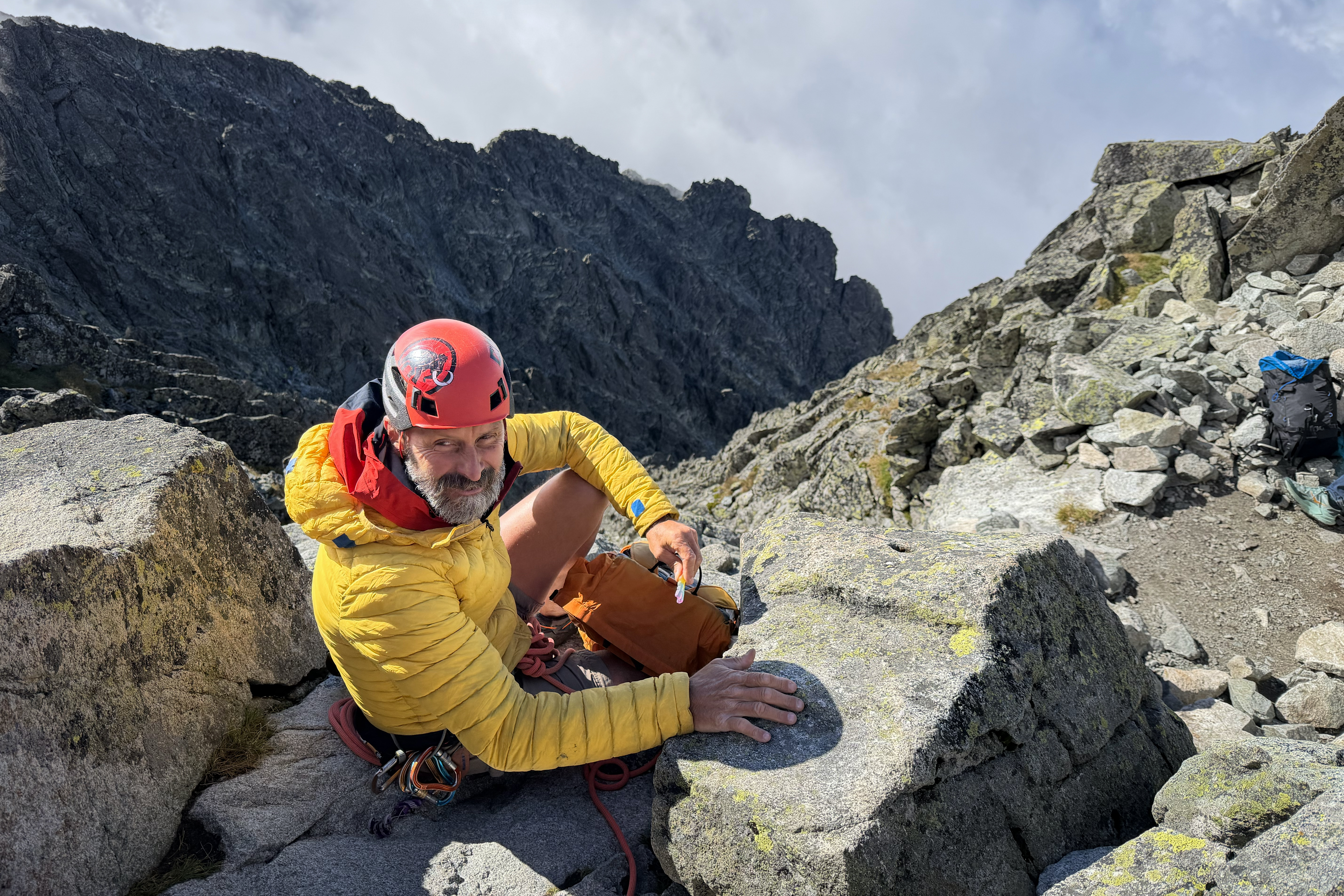
Almost immediately, it was clear that my knees were a bit shot, and that my tweaked quad tendon from Gran Paradiso was indeed still tweaked.
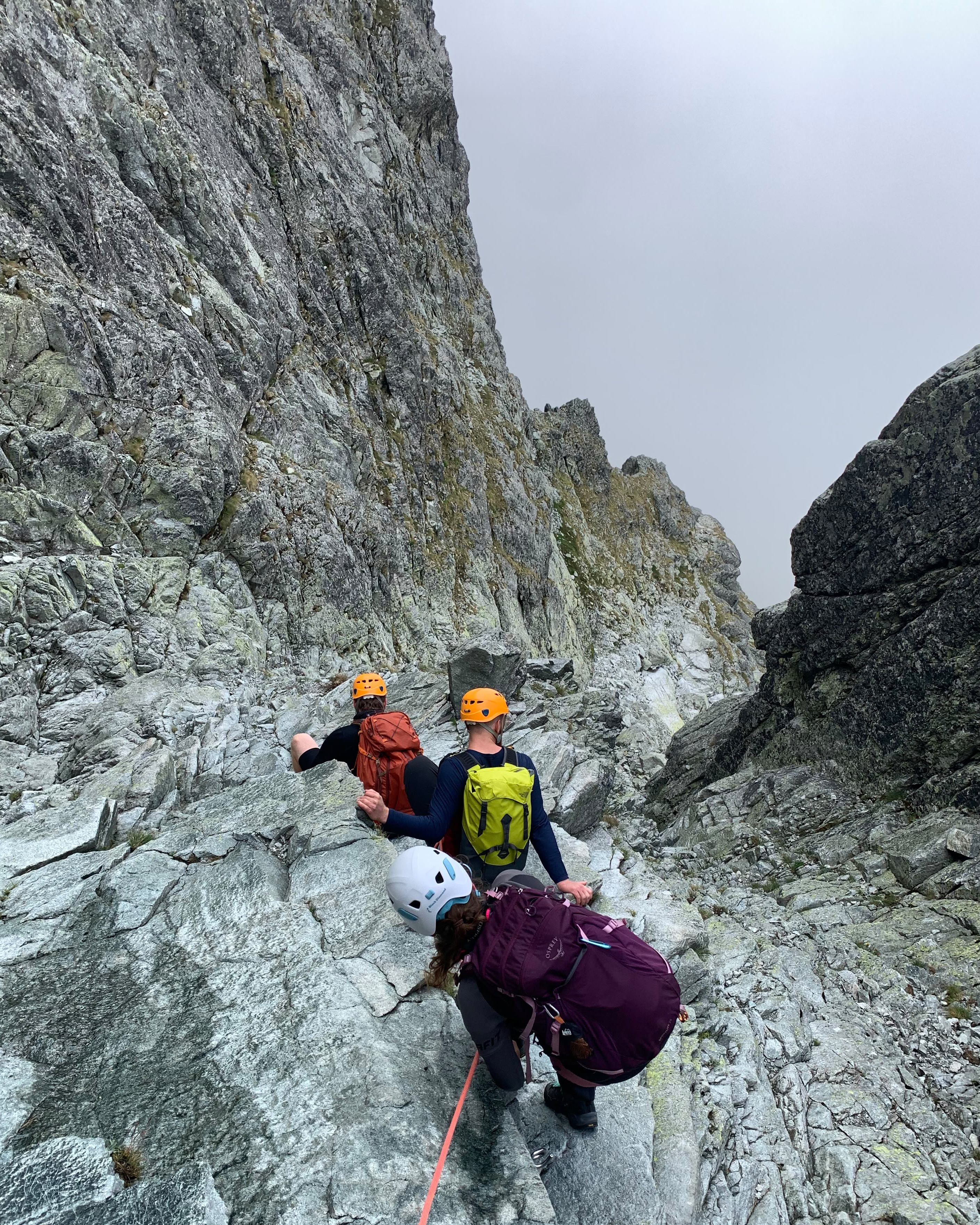
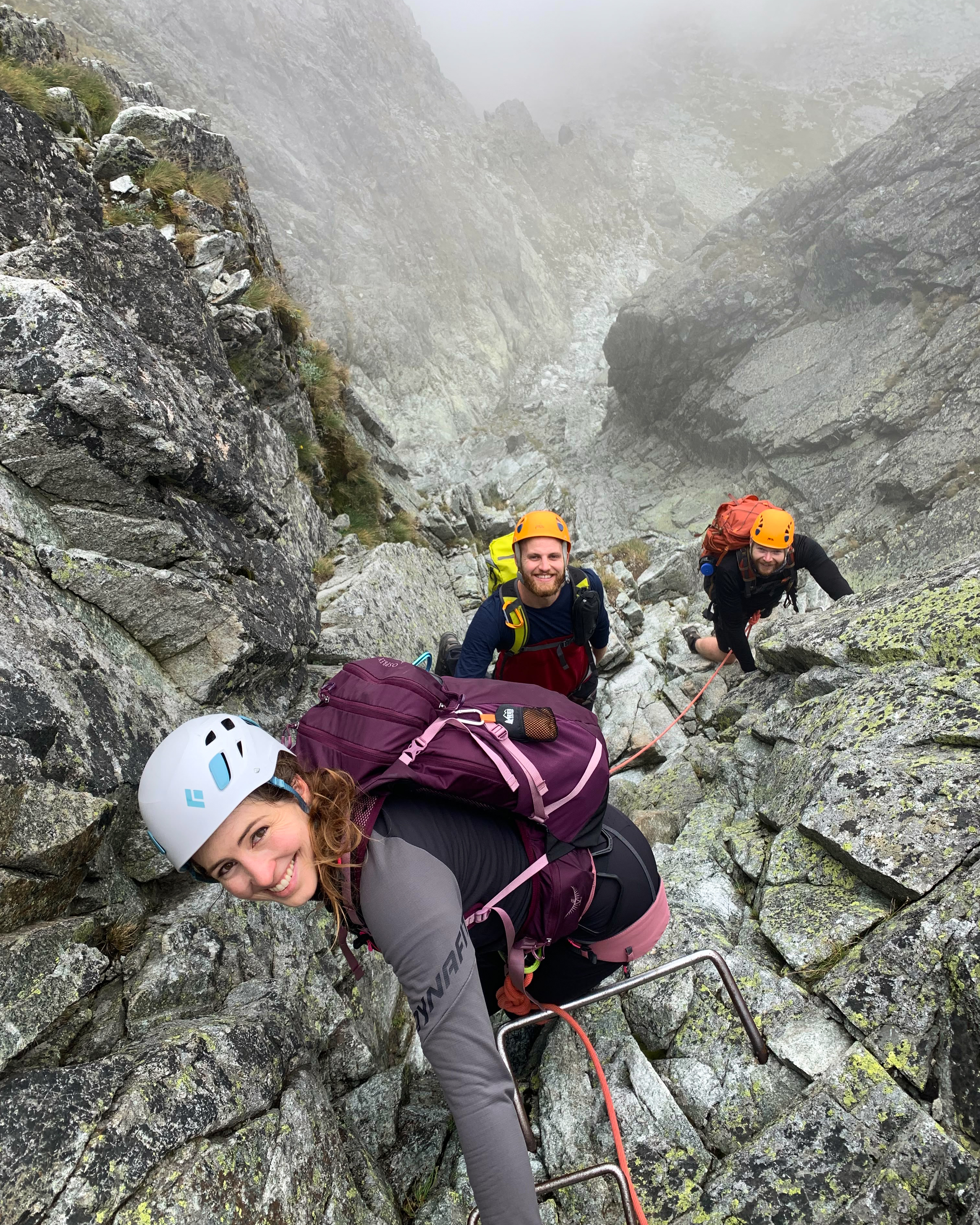
It soon became clear that all of our knees were suffering, as no knee-offloading tactics were off the table, including the butt scoot.
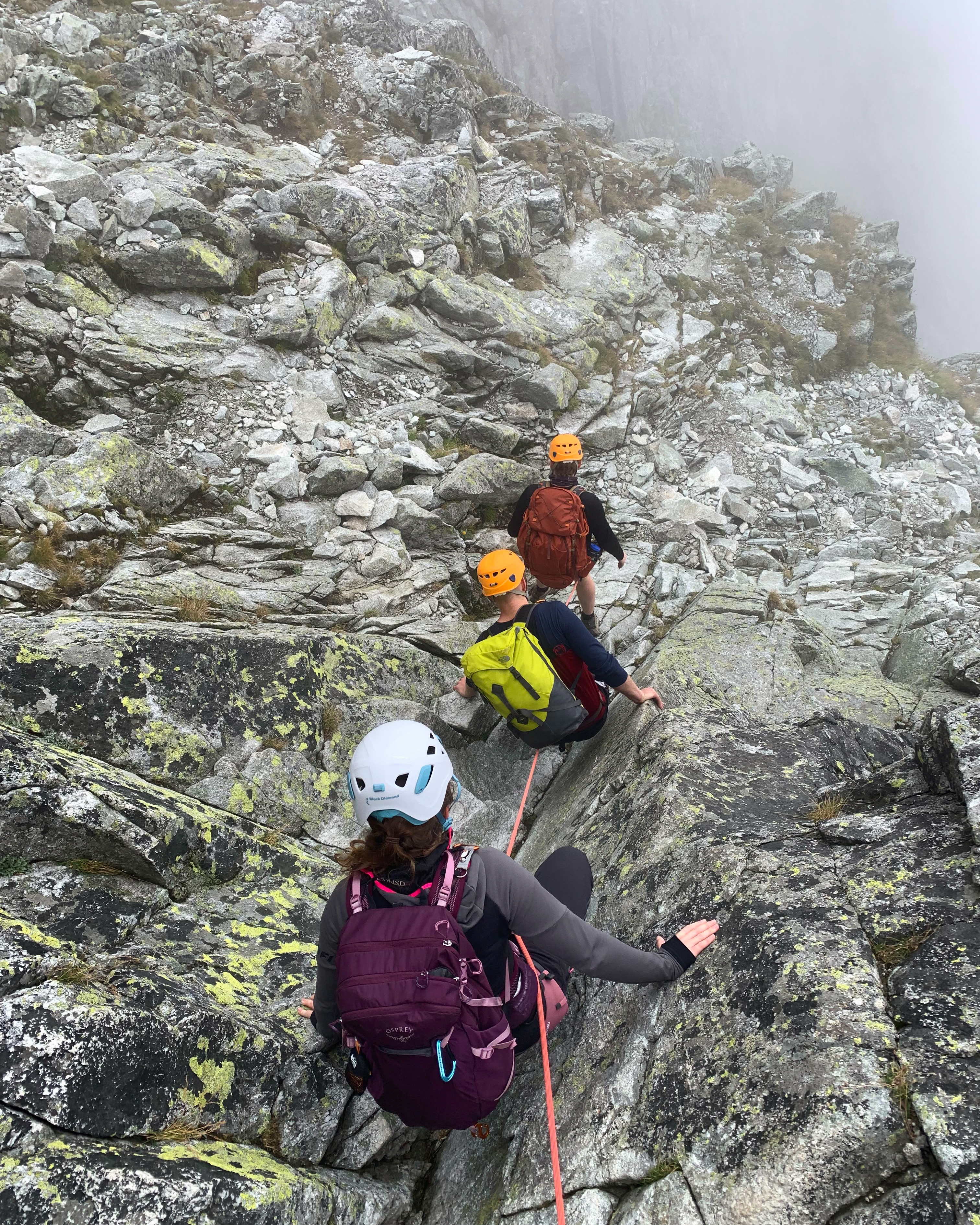
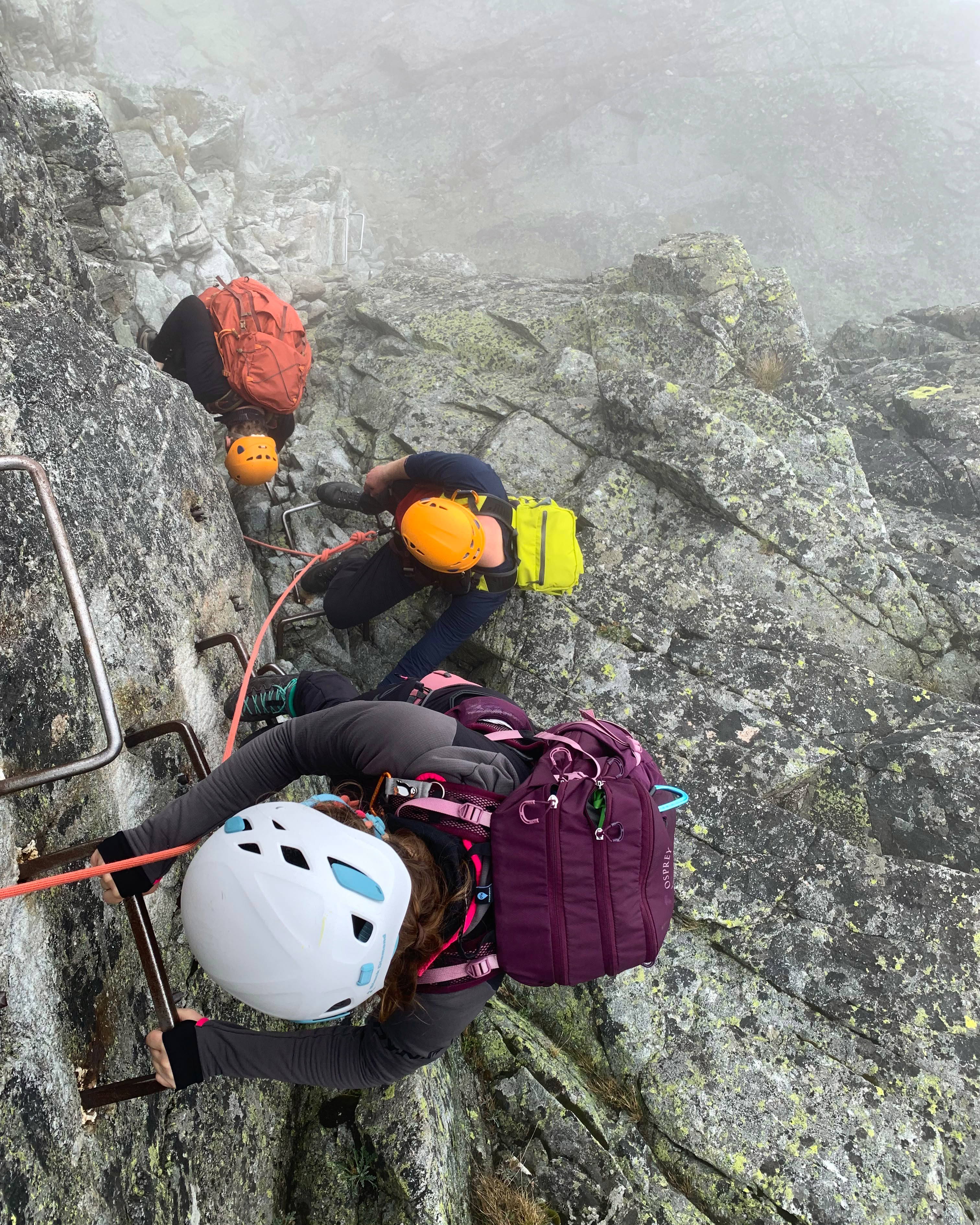
There is one notable moment on the descent that makes roping up very much worth it. For the rest of the scramble, it felt like an extra safety measure, but the difficulty wasn’t so far off from Olympus (which is often done unroped). The moment is somewhere around one of these ladders, with rungs spaced quite far apart. For short people, there is an extremely reachy move that requires trusting your upper body strength completely and controlled-falling back. If you don’t find the one usable foothold as you blindly hang back, you could be in a bit of trouble. I had the guys below me able to point out where to place my feet, and I didn’t slip or let go, but it would have been really difficult to commit to the move without the security of the rope. This was also true of an earlier moment of the descent (no photos of that part, unfortunately), where the holds weren’t ideal for short people, and it was easier to “rappel” by gripping the chain and walking down via foot friction.
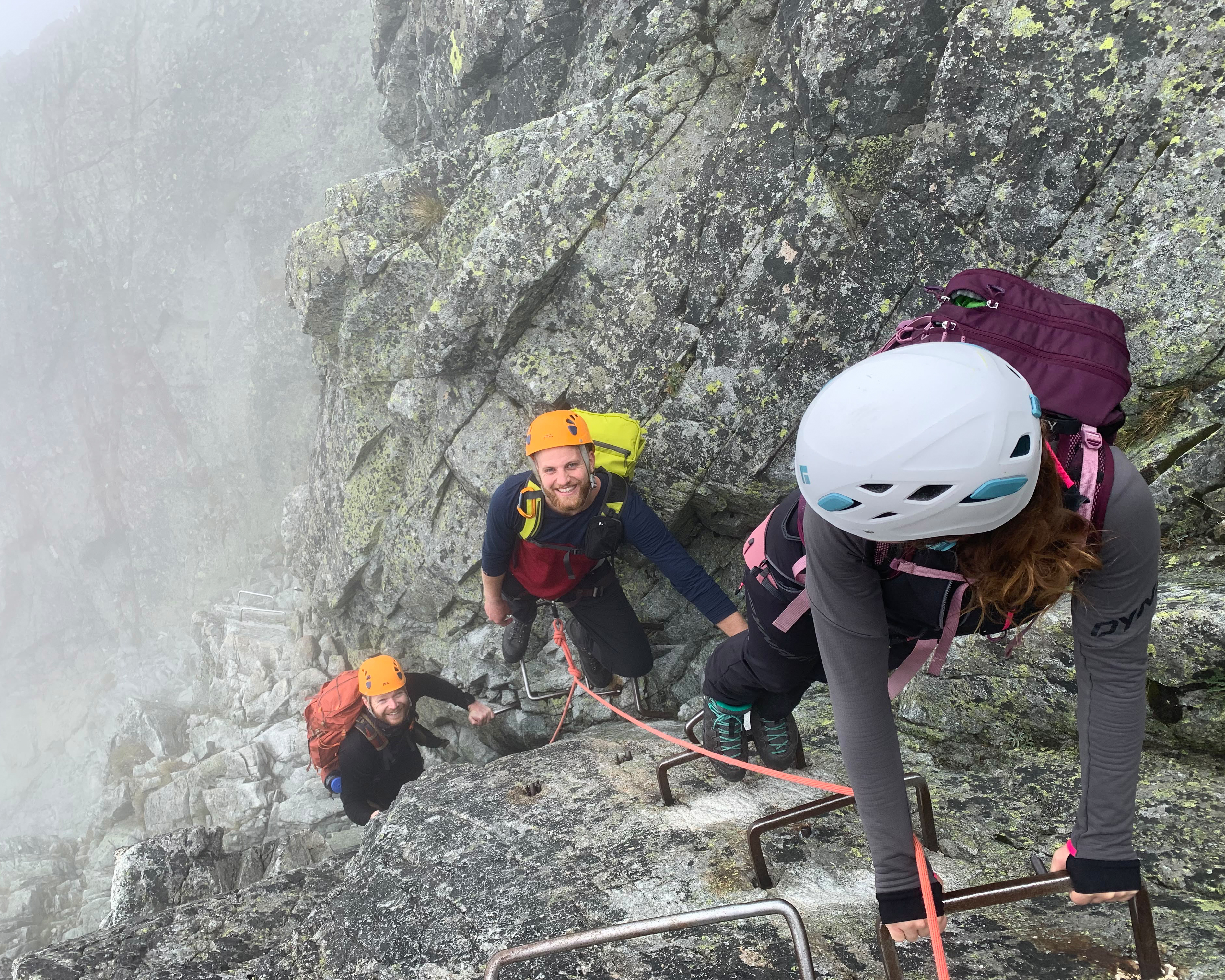
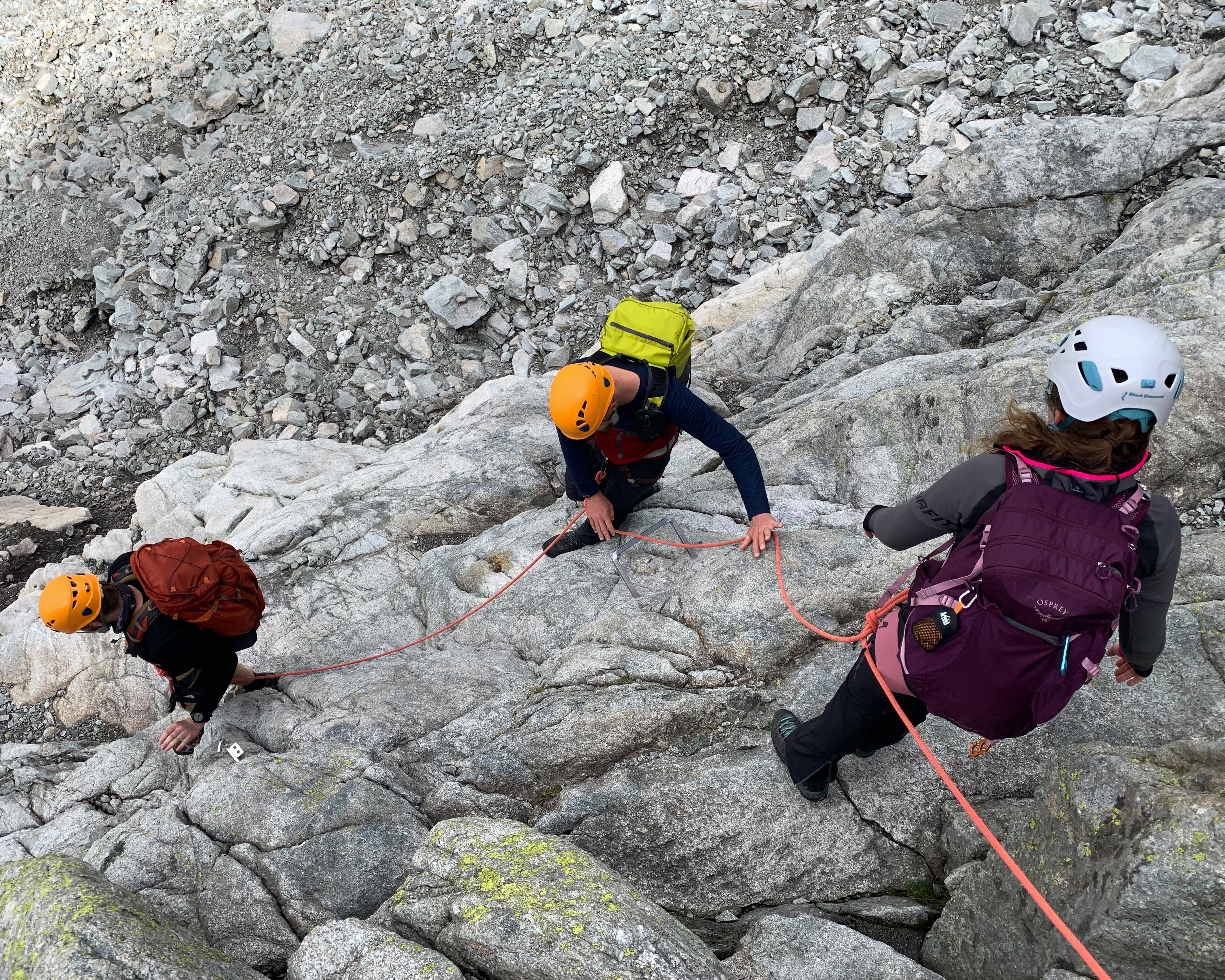
The photo above was taken somewhere near a seemingly insignificant section near the end of the scramble. The guide warned us about an extremely slippery patch of rock. Had I been unguided, there is no way I would have paid it any attention, as it looked no different from any other sections of slightly wet rock we’d been scrambling over without issues. I’m not sure what exactly was there on the surface, but I chose to test it cautiously. Even knowing it was there and barely making contact with it, I nearly fell over. This was one of many moments I was grateful to have Igor there. A slip there likely wouldn’t result in death, but most likely a severe injury. I don’t advise going unguided, hence not including any real route logistics here, but if you do, save mountain rescue a trip and tread extra carefully for last few minutes of the descent!
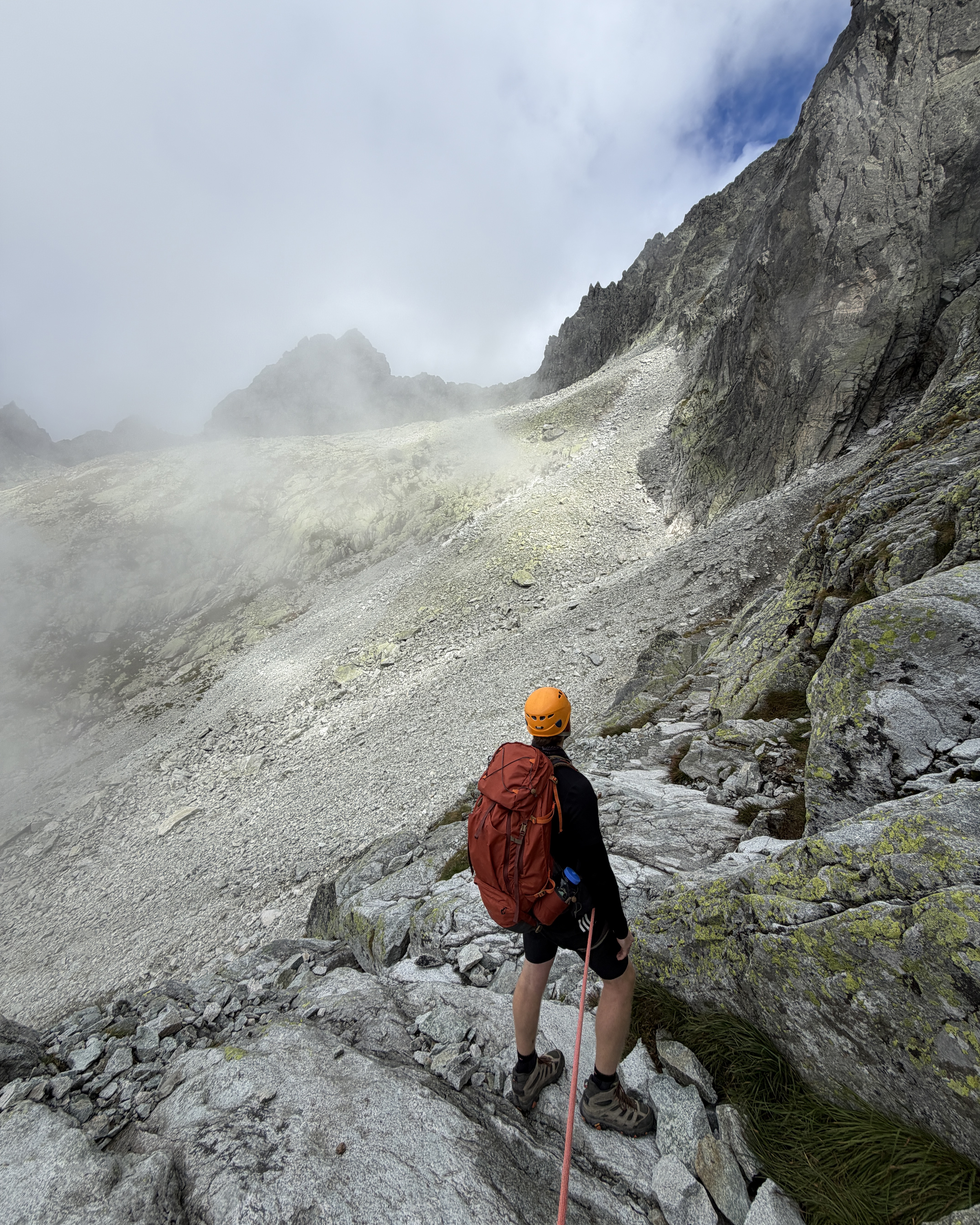
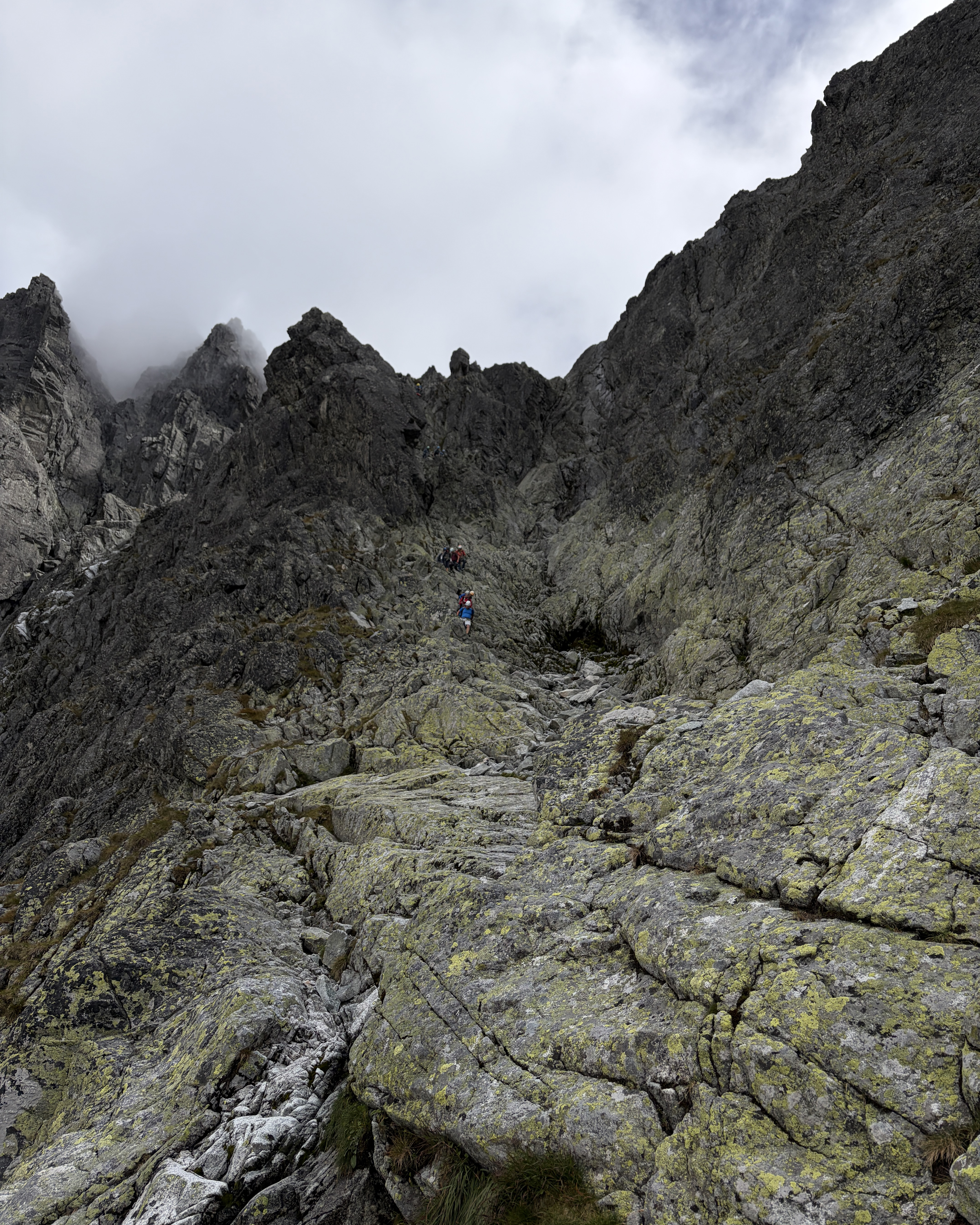
Our knees were pretty thrilled to see the trail again. We freed ourselves from the rope, packed away our gear, and walked an hour or so to a beautiful lake. For some hikers, it would be their destination, and it was easy to see why. It’s a perfect picnic spot! We passed by quite a few hikers on their way up, presumably from the hotel or the train/parking area further down the mountain.
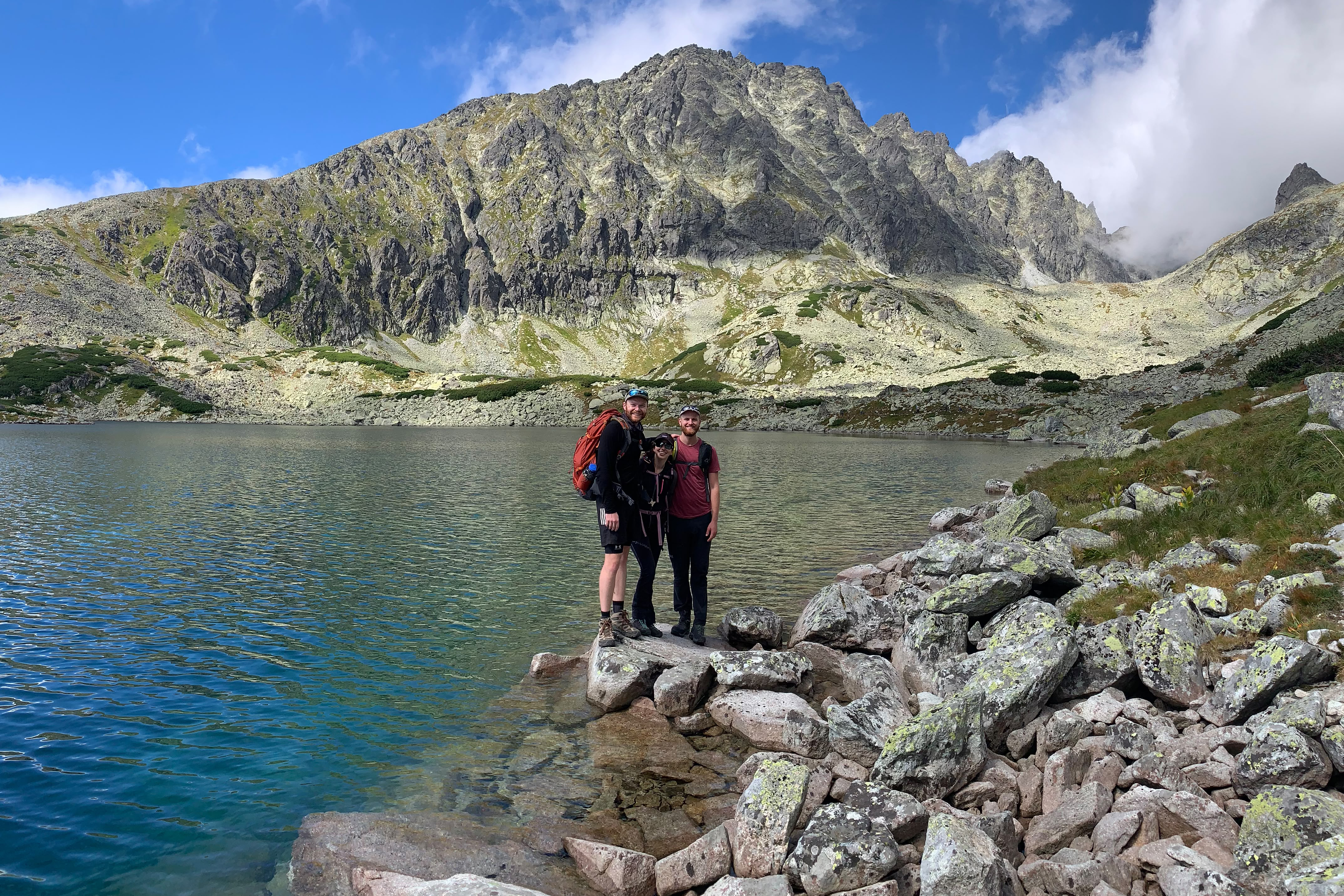
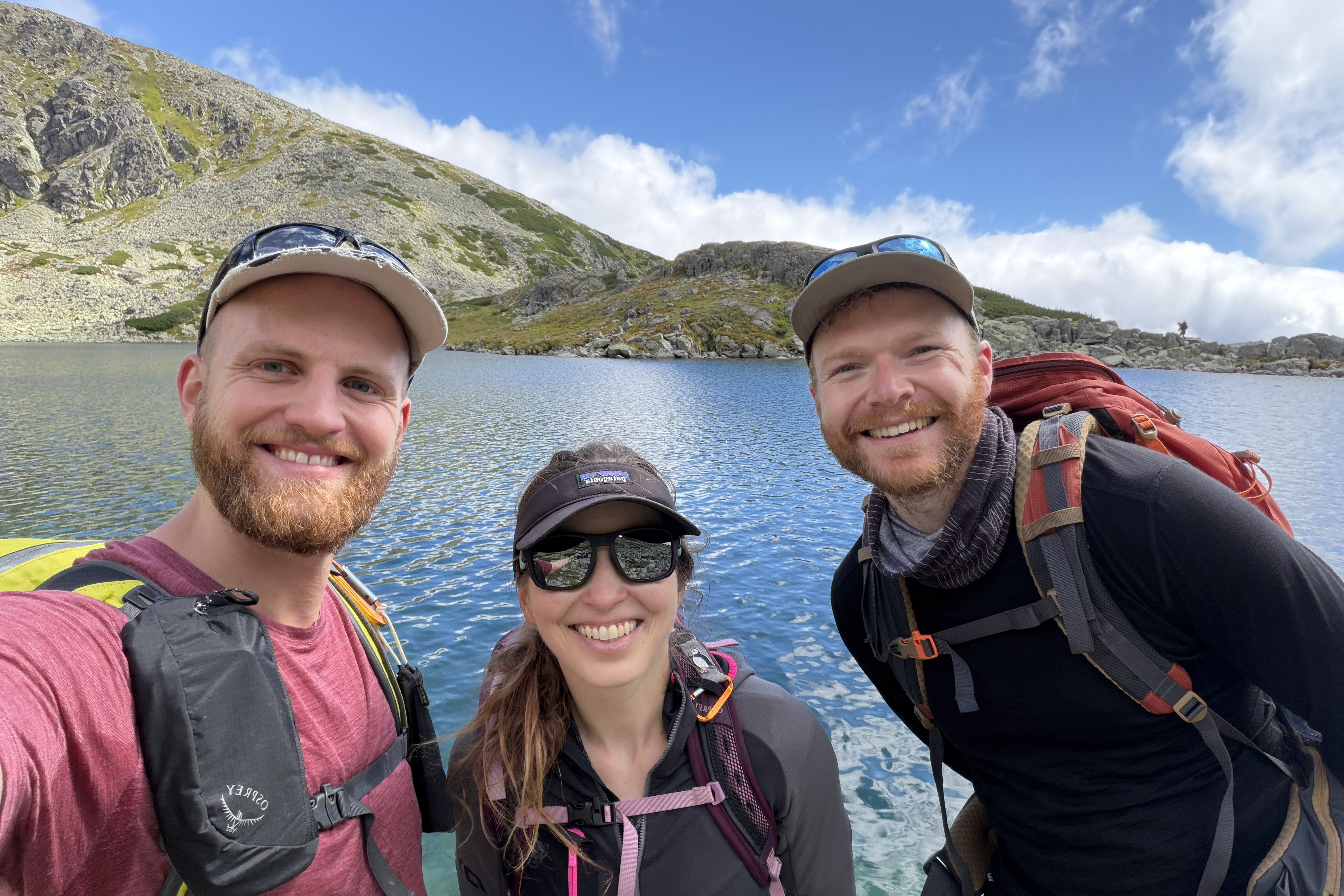
Still, we preferred to keep moving and give the legs a proper rest for the afternoon. We grabbed cappuccinos back at Sliezsky Dom while waiting for the shuttle, then headed to watch a bit of the Manchester United game (we made it in time! …for better or worse, depending on your allegiances) and drink some Kofola. I’d recommend getting this on tap if you’re hitting the road again and looking for a nonalcoholic reward. For something alcoholic, there is no shortage of beer.
While George and Val retreated to their hotel, I headed back to mine for an early bedtime. The next morning, I’d be driving to Kékes, the highest point of Hungary! That would be followed by a long day exploring Budapest – all in the next post.
THANK YOU ❤
Thanks for reading my thirty-first Crown of Cureope blog post! At the time I stood on Gerlach, we had raised $3,085 for the American Association for Cancer Research to fund lifesaving discoveries. As of publishing this post, we are at $3,389 raised. With some of the bigger peaks still remaining, it would be incredible to hit 5 figures!! Thank you so much to everyone who’s donated and spread the word, and to fellow hikers for tips and company along the way to these summits. Hungary up next! (:


Leave a Reply